10 results for "Poetry"

The anxiety of influence: a theory of poetry

Bloom, Harold
Through an insightful study of Romantic poets, Bloom puts forth his central vision of the relations between tradition and the individual artist. Although Bloom was never the leader of any critical "camp," his argument that all literary texts are a response to those that precede them had an enormous impact on the practice of deconstruction and poststructuralist literary theory in this country. The book remains a central work of criticism for all students of literature. Written in a moving personal style, anchored by concrete examples, and memorably quotable, Bloom's book maintains that the anxiety of influence cannot be evaded--neither by poets nor by responsible readers and critics.
Oxford University Press 1973 157 pages

Take arms against a sea of troubles: the power of the reader's mind over a universe of death

Bloom, Harold
"The great poems, plays, novels, stories teach us how to go on living. . . . Your own mistakes, accidents, failures at otherness beat you down. Rise up at dawn and read something that matters as soon as you can." So Harold Bloom, the most famous literary critic of his generation, exhorts readers of his last book: one that praises the sustaining power of poetry. "Passionate. . . . Perhaps Bloom's most personal work, this is a fitting last testament to one of America's leading twentieth-century literary minds." -- Publishers Weekly "An extraordinary testimony to a long life spent in the company of poetry and an affecting last declaration of [Bloom's] passionate and deeply unfashionable faith in the capacity of the imagination to make the world feel habitable"--Seamus Perry, Literary Review "Reading, this stirring collection testifies, 'helps in staying alive.'"-- Kirkus Reviews , starred review This dazzling celebration of the power of poetry to sublimate death--completed weeks before Harold Bloom died--shows how literature renews life amid what Milton called "a universe of death." Bloom reads as a way of taking arms against the sea of life's troubles, taking readers on a grand tour of the poetic voices that have haunted him through a lifetime of reading. "High literature," he writes, "is a saving lie against time, loss of individuality, premature death." In passages of breathtaking intimacy, we see him awake late at night, reciting lines from Dante, Shakespeare, Milton, Montaigne, Blake, Wordsworth, Hart Crane, Jay Wright, and many others. He feels himself "edged by nothingness," uncomprehending, but still sustained by reading. Generous and clear‑eyed, this is among Harold Bloom's most ambitious and most moving books.
Yale University Press 2021-10-12 672 pages

A map of misreading

Bloom, Harold
In print for twenty-seven years, A Map of Misreading serves as a companion volume to Bloom's other seminal work, The Anxiety of Influence. In this finely crafted text, Bloom offers instruction in how to read a poem, using his theory that patterns of imagery in poems represent both a response to and a defense against the influence of precursor poems. Influence, as Bloom conceives it, means that there are no texts, but only relationships between texts. Bloom discusses British and American poets including Milton, Wordsworth, Shelley, Keats, Tennyson, Browning, Whitman, Dickinson, Stevens, Warren, Ammons and Ashbery. A full-scale reading of one poem, Browning's "Childe Roland to the Dark Tower Came," represents this struggle between one poet and his precursors, the poem serving as a map for readers through the many versions of influence from Milton to modern poets. For the first time, in a new preface, Bloom will consider the map of misreading drawn by contemporary poets such as Ann Carson and Henri Cole. Bloom's new exploration of contemporary poetry over the last twenty years will illuminate how modern texts relate to previous texts, and contribute to the literary legacy of their predecessors.
Oxford University Press 2003 206 pages

Yeats

Bloom, Harold
At once praised and condemned by his contemporaries and by critics ever since for his highly complex poetic vision, William Butler Yeats remains one of the most important and controversial twentieth-century poets. In what has become a classic work of literary criticism, award-winning critic Harold Bloom breaks new ground with his radical interpretation of Yeats' relationship to the English Romantic tradition. Yeats tells the continuous story of the lifelong influence of Shelley, Blake, and the Romantic tradition upon Yeats' work. Through his analysis of the full spectrum of Yeats' poems and plays, Bloom offers a profound reinterpretation of poetic influence in general.
Oxford 1970 512 pages

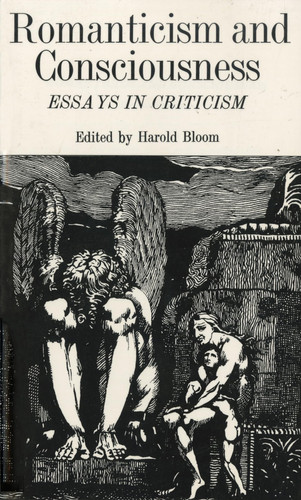
Romanticism and consciousness: essays in criticism

Bloom, Harold
'Romanticism and Consciousness' is a comprehensive collection of essays on Romanticism-its intellectual and political backgrounds, its place in literary history, its continued relevance to the present age, its relation to psychoanalysis and other modern trends of thought-and on the major English Romantic poets. The topics covered include the relations between nature and consciousness, nature and revolution, and nature and literary form; the principal poets studied are Blake, Wordsworth, Coleridge, Byron, Shelley, and Keats.
Norton 1970 405 pages

Poetry and repression: revisionism from Blake to Stevens

Bloom, Harold
This reinterpretation of the full sweep of English and American romantic poetry offers close readings of poems of Blake, Wordsworth, Shelley, Keats, Tennyson, Browning, Whitman, Yeats, and Stevens. It also reviews the crucial ideas of Emerson, Nietzsche, and in particular Freud, whose psychoanalytic theory of repression and defense Bloom undertakes to revise for purposes of literary criticism. "Bloom offers a fully defined alternative to the principal modes of contemporary criticism, from Freudian literary criticism (which he insists is neither Freudian nor literary criticism) to the New Criticism and structuralist and archetypal approaches. It is an original, vigorous, and passionate study which is both compelling and provocative."-The British Studies Monitor "Show me but one paragraph of Bloom's approaches to texts, and I'm hooked. . . . I find sheer delight in his ingenious ways."-Kenneth Burke "Bloom has made a remarkable contribution to poetic theory."-Phoebe Pettingell, The New Leader
Yale University Press 1976 293 pages