637 results for "Mathematics"

Games People Play

Eric Berne
Dr. Eric Berne, as the originator of transactional analysis, has attained recognition for developing one of the most innovative approaches to modern psychotherapy. Discover how many of these "secret games" you play everyday of your life: Iwfy (If it weren't for you); Sweetheart; Threadbare; Harried; Alcoholic, and many more. A groundbreaking book that bores deep into the heart of all our relationships, GAMES PEOPLE PLAY is a classic that should be read again and again.
Knopf Doubleday Publishing Group 1969-05 192 pages

A Briefer History of Time

Stephen Hawking,Leonard Mlodinow
Stephen Hawking’s worldwide bestseller, A Brief History of Time , has been a landmark volume in scientific writing. Its author’s engaging voice is one reason, and the compelling subjects he addresses is another: the nature of space and time, the role of God in creation, the history and future of the universe. But it is also true that in the years since its publication, readers have repeatedly told Professor Hawking of their great difficulty in understanding some of the book’s most important concepts. This is the origin of and the reason for A Briefer History of Time : its author’s wish to make its content more accessible to readers—as well as to bring it up-to-date with the latest scientific observations and findings. Although this book is literally somewhat “briefer,” it actually expands on the great subjects of the original. Purely technical concepts, such as the mathematics of chaotic boundary conditions, are gone. Conversely, subjects of wide interest that were difficult to follow because they were interspersed throughout the book have now been given entire chapters of their own, including relativity, curved space, and quantum theory. This reorganization has allowed the authors to expand areas of special interest and recent progress, from the latest developments in string theory to exciting developments in the search for a complete unified theory of all the forces of physics. Like prior editions of the book—but even more so— A Briefer History of Time will guide nonscientists everywhere in the ongoing search for the tantalizing secrets at the heart of time and space.
Random House Large Print 2005 260 pages

The Singularity is Near When Humans Transcend Biology

Ray Kurzweil
How Singular? How singular is the Singularity? Will it happen in an instant? Lets consider again the derivation of the word. In mathematics a singularity is a value that is beyond any limit - in essence, infinity. The Singularity as we have discussed it in this book, does not achieve infinite levels of computation, memory, as any other other measurable attribute. But it certainly achieves vast levels of all these qualities, including intelligence. With the reverse engineering of the human brain we will be able to apply the parallel, self-organizing, chaotic, algorithms of human intelligence to enormously powerful computational substrates. This intelligence will then be in a position to improve its own design, both hardware and software, in a rapidly accelerating iterative process.
Viking 2005 652 pages

An introduction to probability theory and its applications

Feller, William
· Introduction: The Nature of Probability Theory· The Sample Space· Elements of Combinatorial Analysis· Fluctuations in Coin Tossing and Random Walks· Combination of Events· Conditional Probability· Stochastic Independence· The Binomial and Poisson Distributions· The Normal Approximation to the Binomial Distribution· Unlimited Sequences of Bernoulli Trials· Random Variables· Expectation· Laws of Large Numbers· Integral Valued Variables· Generating Functions· Compound Distributions· Branching Processes· Recurrent Events· Renewal Theory· Random Walk and Ruin Problems· Markov Chains· Algebraic Treatment of Finite Markov Chains· The Simplest Time-Dependent Stochastic Processes
Wiley 1968 509 pages

Principles of mathematical analysis

Rudin, Walter mathématicien
The third edition of this well known text continues to provide a solid foundation in mathematical analysis for undergraduate and first-year graduate students. The text begins with a discussion of the real number system as a complete ordered field. (Dedekind's construction is now treated in an appendix to Chapter I.) The topological background needed for the development of convergence, continuity, differentiation and integration is provided in Chapter 2. There is a new section on the gamma function, and many new and interesting exercises are included. This text is part of the Walter Rudin Student Series in Advanced Mathematics.
MacGraw-Hill 1976-01-01 342 pages

What Is Mathematics? 2/Ed

Richard Courant; Herbert Robbins
For more than two thousand years a familiarity with mathematics has been regarded as an indispensable part of the intellectual equipment of every cultured person. Today, unfortunately, the traditional place of mathematics in education is in grave danger. The teaching and learning of mathematics has degenerated into the realm of rote memorization, the outcome of which leads to satisfactory formal ability but does not lead to real understanding or to greater intellectual independence. This new edition of Richard Courant's and Herbert Robbins's classic work seeks to address this problem. Its goal is to put the meaning back into mathematics. Written for beginners and scholars, for students and teachers, for philosophers and engineers, What is Mathematics?, Second Edition is a sparkling collection of mathematical gems that offers an entertaining and accessible portrait of the mathematical world. Covering everything from natural numbers and the number system to geometrical constructions and projective geometry, from topology and calculus to matters of principle and the Continuum Hypothesis, this fascinating survey allows readers to delve into mathematics as an organic whole rather than an empty drill in problem solving. With chapters largely independent of one another and sections that lead upward from basic to more advanced discussions, readers can easily pick and choose areas of particular interest without impairing their understanding of subsequent parts. Brought up to date with a new chapter by Ian Stewart, What is Mathematics?, Second Edition offers new insights into recent mathematical developments and describes proofs of the Four-Color Theorem and Fermat's Last Theorem, problems that were still open when Courant and Robbins wrote this masterpiece, but ones that have since been solved. Formal mathematics is like spelling and grammar--a matter of the correct application of local rules. Meaningful mathematics is like journalism--it t
Oxford University Press 2007-03-26 566 pages

Principles of Mathematical Analysis Textbook by Walter Rudin

Walter Rudin
The third edition of this well known text continues to provide a solid foundation in mathematical analysis for undergraduate and first-year graduate students. The text begins with a discussion of the real number system as a complete ordered field. (Dedekind's construction is now treated in an appendix to Chapter I.) The topological background needed for the development of convergence, continuity, differentiation and integration is provided in Chapter 2. There is a new section on the gamma function, and many new and interesting exercises are included. This text is part of the Walter Rudin Student Series in Advanced Mathematics.
Independently Published 2020-08-19 351 pages

Mathematics and the Imagination

Edward Kasner,James R. Newman
Anyone who gambles, plays cards, loves puzzles, or simply seeks an intellectual challenge will love this amusing and thought-provoking book. With wit and clarity, the authors deftly progress from simple arithmetic to calculus and non-Euclidean geometry. Their subjects: assorted geometries—plane and fancy; famous puzzles that made mathematical history; tantalizing paradoxes; and more. "Charming and exciting"—Saturday Review of Literature. 169 text figures.
Fireside 1971-02-15 380 pages

QED: the strange theory of light and matter

Feynman, Richard P.
Provides an introduction to QED (quantum electrodynamics), that part of quantum field theory describing the interactions of light with charged particles. Using everyday language, spatial concepts, visualizations, and his renowned "Feynman diagrams" instead of advanced mathematics, the author communicates both the substance and spirit of QED to the layperson.
Princeton University Press 2014 158 pages

Theory of Games and Economic Behavior

John Von Neumann,Oskar Morgenstern
This is the classic work upon which modern-day game theory is based. What began as a modest proposal that a mathematician and an economist write a short paper together blossomed, when Princeton University Press published Theory of Games and Economic Behavior. In it, John von Neumann and Oskar Morgenstern conceived a groundbreaking mathematical theory of economic and social organization, based on a theory of games of strategy. Not only would this revolutionize economics, but the entirely new field of scientific inquiry it yielded--game theory--has since been widely used to analyze a host of real-world phenomena from arms races to optimal policy choices of presidential candidates, from vaccination policy to major league baseball salary negotiations. And it is today established throughout both the social sciences and a wide range of other sciences.
Sidney Bond 2020-01-29 660 pages

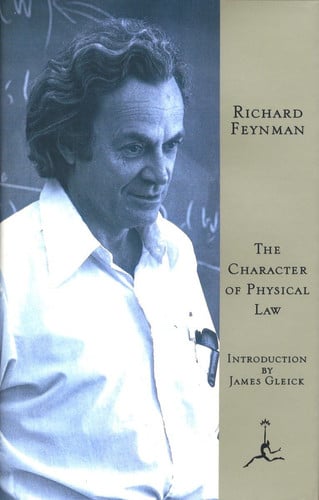
The character of physical law

Feynman, Richard P.
Like any set of oral reflections, The Character of Physical Law has special value as a demonstration of the mind in action. The reader is particularly lucky in Richard Feynman - one of the most eminent and imaginative modern physicists. In these Messenger Lectures, originally delivered at Cornell University and recorded for television by the BBC, Richard Feynman offers an overview of selected physical laws and gathers their common features into one broad principle of invariance. He maintains at the outset that the importance of a physical law is not ''how clever we are to have found it out - but . . . how clever nature is to pay attention to it'' and steers his discussions toward a final exposition of the elegance and simplicity of all scientific laws. Rather than an essay on the most significant achievements in modern science, The Character of Physical Law is a statement of what is most remarkable in nature. Feynman's enlightened approach, his wit, and his enthusiasm make this a memorable exposition of the scientist's craft. The law of gravitation is the author's principal example. Relating the details of its discovery and stressing its mathematical character, he uses it to demonstrate the essential interaction of mathematics and physics. He views mathematics as the key to any system of scientific laws, suggesting that if it were possible to fill out the structure of scientific theory completely, the result would be an integrated set of mathematical axioms. The principles of conservation, symmetry, and time irreversibility are then considered in relation to developments in classical and modern physics, and in his final lecture, Feynman develops his own analysis of the process and future of scientific discovery.
Modern Library 1994-11-08 167 pages

Real and complex analysis

Rudin, Walter
This is an advanced text for the one- or two-semester course in analysis taught primarily to math, science, computer science, and electrical engineering majors at the junior, senior or graduate level. The basic techniques and theorems of analysis are presented in such a way that the intimate connections between its various branches are strongly emphasized. The traditionally separate subjects of 'real analysis' and 'complex analysis' are thus united in one volume. Some of the basic ideas from functional analysis are also included. This is the only book to take this unique approach. The third edition includes a new chapter on differentiation. Proofs of theorems presented in the book are concise and complete and many challenging exercises appear at the end of each chapter. The book is arranged so that each chapter builds upon the other, giving students a gradual understanding of the subject. This text is part of the Walter Rudin Student Series in Advanced Mathematics.
McGraw-Hill 1974 452 pages

More Sideways Arithmetic from Wayside School

Louis Sachar
Everything in Mrs. Jewls's class has gone topsy-turvy...again. The report cards are scrambled, the pop quiz won't pop, and watermelons are falling out the windows. On top of all that, the boys are upset because Allison has announced that only two of them will be invited to her birthday party, since if more than two boys come, they'll all start acting silly. You never know how things will add up at Wayside School.
Scholastic Incorporated 1994 94 pages

THE EMPEROR'S NEW MIND: Concerning Computers, Minds, and the Laws of Physics

Penrose, Roger
For decades, proponents of artificial intelligence have argued that computers will soon be doing everything that a human mind can do. Admittedly, computers now play chess at the grandmaster level, but do they understand the game as we do? Can a computer eventually do everything a human mind can do? In this absorbing and frequently contentious book, Roger Penrose--eminent physicist and winner, with Stephen Hawking, of the prestigious Wolf prize--puts forward his view that there are some facets of human thinking that can never be emulated by a machine. Penrose examines what physics and mathematics can tell us about how the mind works, what they can't, and what we need to know to understand the physical processes of consciousness. He is among a growing number of physicists who think Einstein wasn't being stubborn when he said his "little finger" told him that quantum mechanics is incomplete, and he concludes that laws even deeper than quantum mechanics are essential for the operation of a mind. To support this contention, Penrose takes the reader on a dazzling tour that covers such topics as complex numbers, Turing machines, complexity theory, quantum mechanics, formal systems, Godel undecidability, phase spaces, Hilbert spaces, black holes, white holes, Hawking radiation, entropy, quasicrystals, the structure of the brain, and scores of other subjects. The Emperor's New Mind will appeal to anyone with a serious interest in modern physics and its relation to philosophical issues, as well as to physicists, mathematicians, philosophers and those on either side of the AI debate.
Oxford University Press 1990 466 pages

Introduction to biostatistics

Sokal, Robert R.
This popular and critically acclaimed text for undergraduate courses concentrates on the practical applications of statistics to biology. Its straightforward approach offers students with a minimal background in mathematics an accessible introduction to biostatistics. Worked-out examples appear throughout the book, illuminating highly relevant examples of solutions to problems in biological data analysis. The treatment progresses from descriptive statistics to fundamental distributions and the testing of elementary statistical hypotheses. It introduces the analysis of variance, presenting an in-depth survey that ranges from single-classification to two-way analysis of variance. Additional topics include regression, correlation, and analysis of frequencies. Numerous tables provide computational methods, from initial setup to final result, for solving a variety of biostatistical problems.
Freeman 1987 363 pages

The mathematica book

Wolfram, Stephen
This book is intended to be a complete introduction to Mathematica. It describes essentially all the capabilities of Mathematica, assuming no prior knowledge of the system. Mathematica is a system build on a fairly small set of very powerful principles. This book describes those principles, but by no means spells out all of their implications. This book describes the standard Mathematica kernel, as it exists on all computers that run Mathematica. Most major supported features of the kernel in Mathematica Version 5 are covered in this book. Many important features of the front end are also discussed. This book describes what readers should do when interacting directly with the standard Mathematica kernel and notebook front end. Mathematica is an open software system that can be customized in a wide variety of ways. It is important to realize that this book covers only the full basic Mathematica system. If the system readers are using has been customized in any way, then Mathematica may behave differently from what is described in this book.
Wolfram Media 2003 1464 pages