339 results for "Innovation"

Steve Jobs

Walter Isaacson
Walter Isaacson’s “enthralling” ( The New Yorker ) worldwide bestselling biography of Apple cofounder Steve Jobs. Based on more than forty interviews with Steve Jobs conducted over two years—as well as interviews with more than 100 family members, friends, adversaries, competitors, and colleagues—Walter Isaacson has written a riveting story of the roller-coaster life and searingly intense personality of a creative entrepreneur whose passion for perfection and ferocious drive revolutionized six industries: personal computers, animated movies, music, phones, tablet computing, and digital publishing. At a time when America is seeking ways to sustain its innovative edge, Jobs stands as the ultimate icon of inventiveness and applied imagination. He knew that the best way to create value in 21st century was to connect creativity with technology. He built a company where leaps of the imagination were combined with remarkable feats of engineering. Although Jobs cooperated with the author, he asked for no control over what was written. He put nothing off-limits. He encouraged the people he knew to speak honestly. And Jobs speaks candidly, sometimes brutally so, about the people he worked with and competed against. His friends, foes, and colleagues provide an unvarnished view of the passions, perfectionism, obsessions, artistry, devilry, and compulsion for control that shaped his approach to business and the innovative products that resulted. Driven by demons, Jobs could drive those around him to fury and despair. But his personality and products were interrelated, just as Apple’s hardware and software tended to be, as if part of an integrated system. His tale is instructive and cautionary, filled with lessons about innovation, character, leadership, and values. Steve Jobs is the inspiration for the movie of the same name starring Michael Fassbender, Kate Winslet, Seth Rogen, and Jeff Daniels, directed by Danny Boyle with a screenplay by Aaron Sorkin.
Simon and Schuster 2021-10-05 672 pages

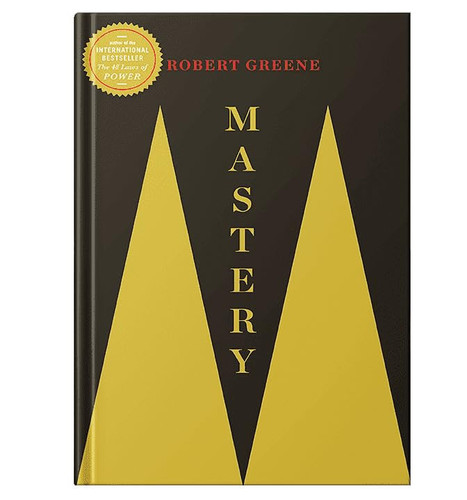
Mastery by Robert Greene

Robert Greene
Mastery by Robert Greene – Unlock Your Full Potential From the bestselling author of The 48 Laws of Power and The Laws of Human Nature, comes Mastery, a transformative guide revealing that the secret to mastery is already within you. This is the only authorized paperback edition in the US. Every person has the potential to achieve mastery in their chosen field. In Mastery, Robert Greene teaches readers how to unlock hidden potential, develop skills through deliberate practice, and achieve excellence by learning from the greatest minds in history. The book emphasizes the importance of apprenticeship, observation, and learning from mentors, showing how to absorb the wisdom and techniques of experts while avoiding common pitfalls that hinder progress. Through captivating stories of historical figures such as Leonardo da Vinci, Charles Darwin, and Albert Einstein, as well as contemporary masters in various fields, Greene outlines the step-by-step process for achieving mastery. Readers will learn how to: Develop deep focus and patience to excel in their craft. Cultivate creativity and innovation by observing and experimenting. Understand the patterns of success and failure across centuries. Navigate challenges and setbacks with resilience and strategy. Transform natural talents into world-class skills through disciplined practice. The book also explores the psychology behind mastery, showing how to harness intuition, avoid distractions, and sustain long-term commitment to one’s goals. With practical insights, historical examples, and actionable strategies, Mastery is both a guide and a roadmap for anyone determined to achieve personal excellence, professional success, and lifelong growth. The bestselling author of The 48 Laws of Power, The Art of Seduction, and The 33 Strategies of War, Robert Greene brings his expertise in human behavior, strategy, and personal development to this seminal work, making it an essential resource for aspiring masters in any field.
MYSTICMEADOW Incorporated 2023-07-12 340 pages

How Google works

Schmidt, Eric,Rosenberg, Jonathan
Both Eric Schmidt and Jonathan Rosenberg came to Google as seasoned Silicon Valley business executives, but over the course of a decade they came to see the wisdom in Coach John Wooden's observation that 'it's what you learn after you know it all that counts'. As they helped grow Google from a young start-up to a global icon, they relearned everything they knew about management. How Google Works is the sum of those experiences distilled into a fun, easy-to-read primer on corporate culture, strategy, talent, decision-making, communication, innovation, and dealing with disruption. The authors explain how the confluence of three seismic changes - the internet, mobile, and cloud computing - has shifted the balance of power from companies to consumers. The companies that will thrive in this ever-changing landscape will be the ones that create superior products and attract a new breed of multifaceted employees whom the authors dub 'smart creatives'. The management maxims ('Consensus requires dissension', 'Exile knaves but fight for divas', 'Think 10X, not 10%') are illustrated with previously unreported anecdotes from Google's corporate history. 'Back in 2010, Eric and I created an internal class for Google managers,' says Rosenberg. 'The class slides all read 'Google confidential' until an employee suggested we uphold the spirit of openness and share them with the world. This book codifies the recipe for our secret sauce: how Google innovates and how it empowers employees to succeed.'
John Murray 2014-09-25 286 pages

How to Lead Wisdom from the World's Greatest CEOs, Founders, and Game Changers

David M. Rubenstein
The New York Times Bestseller #1 Wall Street Journal Bestseller The essential leadership playbook. Learn the principles and guiding philosophies of Bill Gates, Jeff Bezos, Ruth Bader Ginsburg, Warren Buffett, Oprah Winfrey, and many others through illuminating conversations about their remarkable lives and careers. For the past five years, David M. Rubenstein—author of The American Story , visionary cofounder of The Carlyle Group, and host of The David Rubenstein Show —has spoken with the world’s highest performing leaders about who they are and how they became successful. How to Lead distills these revealing conversations into an indispensable leadership guidebook. Gain advice and wisdom from CEOs, presidents, founders, and master performers from the worlds of finance ( Warren Buffett, Jamie Dimon, Christine Lagarde, Ken Griffin ), tech ( Jeff Bezos, Bill Gates, Eric Schmidt, Tim Cook ), entertainment ( Oprah Winfrey, Lorne Michaels, Renee Fleming, Yo-Yo Ma ), sports ( Jack Nicklaus, Adam Silver, Coach K, Phil Knight ), government ( President Bill Clinton, President George W. Bush, Ruth Bader Ginsburg, Nancy Pelosi ), and many others. - Jeff Bezos harnesses the power of wandering, discovering that his best decisions have been made with heart and intuition, rather than analysis. - Richard Branson never goes into a venture looking to make a profit. He aims to make the best in field. - Phil Knight views Nike as a marketing company whose product is its most important marketing tool. - Marillyn Hewson , who grew up in a fatherless home with four siblings in Kansas, quickly learned the importance of self-reliance and the value of a dollar. How to Lead shares the extraordinary stories of these pioneering agents of change. Discover how each luminary got started and how they handle decision making, failure, innovation, change, and crisis. Learn from their decades of experience as pioneers in their field. No two leaders are the same.
Simon and Schuster 2020-09-01 448 pages

Start-up nation: the story of Israel's economic miracle

Senor, Dan,Singer, Saul
START-UP NATION addresses the trillion dollar question: How is it that Israel - a country of 7.1 million, only 60 years old, surrounded by enemies, in a constant state of war since its founding, with no natural resources-- produces more start-up companies than large, peaceful and stable nations like Japan, China, India, Korea, Canada and the UK? With the savvy of foreign policy insiders, Senor and Singer examine the lessons of the country's adversity-driven culture, which flattens hierarchy and elevates informality - all backed up by government policies focused on innovation. In a world where economies as diverse as Ireland, Singapore and Dubai have tried to re-create the Israel effect, there are entrepreneurial lessons well worth noting. As America reboots its own economy and can-do spirit, there's never been a better time to look at this remarkable and resilient nation for some impressive, surprising clues.
Twelve 2011 378 pages

After 1177 B. C.: the survival of civilizations

Cline, Eric H.
"In this gripping sequel to his bestselling 1177 B.C., Eric Cline tells the story of what happened after the Bronze Age collapsed-why some civilizations endured, why some gave way to new ones, and why some disappeared foreverAt the end of the acclaimed history 1177 B.C., many of the Late Bronze Age civilizations of the Aegean and Eastern Mediterranean lay in ruins, undone by invasion, revolt, natural disasters, famine, and the demise of international trade. An interconnected world that had boasted major empires and societies, relative peace, robust commerce, and monumental architecture was lost and the so-called First Dark Age had begun. Now, in After 1177 B.C., Eric Cline tells the compelling story of what happened next, over four centuries, across the Aegean and Eastern Mediterranean world. It is a story of resilience, transformation, and success, as well as failures, in an age of chaos and reconfiguration.After 1177 B.C. tells how the collapse of powerful Late Bronze Age civilizations created new circumstances to which people and societies had to adapt. Those that failed to adjust disappeared from the world stage, while others transformed themselves, resulting in a new world order that included Phoenicians, Philistines, Israelites, Neo-Hittites, Neo-Assyrians, and Neo-Babylonians. Taking the story up to the resurgence of Greece marked by the first Olympic Games in 776 B.C., the book also describes how world-changing innovations such as the use of iron and the alphabet emerged amid the chaos. Filled with lessons for today about why some societies survive massive shocks while others do not, After 1177 B.C. reveals why this period, far from being the First Dark Age, was a new age with new inventions and new opportunities"--
Princeton University Press 2024-04-16 314 pages

The revenge of analog: real things and why they matter

Sax, David
"By now, we all know the mythology of the digital revolution: it improved efficiency, eliminated waste, and fostered a boom in innovation. But as business reporter David Sax shows in this clear-sighted, entertaining book, not all innovations are written in source code. In fact, businesses that once looked outdated are now springing with new life. Behold the Revenge of Analog. Sax has found story after story of entrepreneurs, small business owners, and even big corporations who've found a market selling not apps but real, tangible things. As e-books are supposedly remaking reading, independent bookstores have sprouted up across the country. As music supposedly migrates to the cloud, vinyl record sales have grown more than ten times over the past decade, generating more than half a billion dollars in 2015 alone. Even the offices of Silicon Valley icons like Google and Facebook increasingly rely on analog technologies like pen and paper for their business. Sax's work reveals not just an underreported trend in business, but a more fundamental truth about how humans shop, interact, and even think. Blending psychology and observant wit with old-fashioned reportage, Sax shows that humans need to work, sell, and live in the real world--not on a screen"--
PublicAffairs 2016-11-08 282 pages

The innovators: how a group of hackers, geniuses, and geeks created the digital revolution

Isaacson, Walter
"Following his blockbuster biography of Steve Jobs, The Innovators is Walter Isaacson's revealing story of the people who created the computer and the Internet. It is destined to be the standard history of the digital revolution and an indispensable guide to how innovation really happens. What were the talents that allowed certain inventors and entrepreneurs to turn their visionary ideas into disruptive realities? What led to their creative leaps? Why did some succeed and others fail? In his masterly saga, Isaacson begins with Ada Lovelace, Lord Byron's daughter, who pioneered computer programming in the 1840s. He explores the fascinating personalities that cr eated our current digital revolution, such as Vannevar Bush, Alan Turing, John von Neumann, J.C.R. Licklider, Doug Engelbart, Robert Noyce, Bill Gates, Steve Wozniak, Steve Jobs, Tim Berners-Lee, and Larry Page. This is the story of how their minds worked and what made them so inventive. It's also a narrative of how their ability to collaborate and master the art of teamwork made them even more creative. For an era that seeks to foster innovation, creativity, and teamwork, The Innovators shows how they happen"--
Simon & Schuster 2014 542 pages

NeuroTribes: the legacy of autism and the future of neurodiversity

Silberman, Steve
A groundbreaking book that upends conventional thinking about autism and suggests a broader model for acceptance, understanding, and full participation in society for people who think differently. What is autism? A devastating developmental disorder, a lifelong disability, or a naturally occurring form of cognitive difference akin to certain forms of genius? In truth, it is all of these things and more -- and the future of our society depends on our understanding it. WIRED reporter Steve Silberman unearths the secret history of autism, long suppressed by the same clinicians who became famous for discovering it, and finds surprising answers to the crucial question of why the number of diagnoses has soared in recent years. Going back to the earliest days of autism research and chronicling the brave and lonely journey of autistic people and their families through the decades, Silberman proposes long-sought solutions to the autism puzzle, while mapping out a path for our society toward a more humane world in which people with learning differences and those who love them have access to the resources they need to live happier, healthier, more secure, and more meaningful lives. Along the way, he reveals the untold story of Hans Asperger, the father of Asperger's syndrome, whose "little professors" were targeted by the darkest social-engineering experiment in human history; exposes the covert campaign by child psychiatrist Leo Kanner to suppress knowledge of the autism spectrum for fifty years; and casts light on the growing movement of "neurodiversity" activists seeking respect, support, technological innovation, accommodations in the workplace and in education, and the right to self-determination for those with cognitive differences.
Avery 2016-08-23 548 pages

Dilla Time The Life and Afterlife of J Dilla, the Hip-Hop Producer Who Reinvented Rhythm

Dan Charnas
WINNER OF THE PEN/ JACQUELINE BOGRAD WELD AWARD FOR BIOGRAPHY NEW YORK TIMES BESTSELLER “This book is a must for everyone interested in illuminating the idea of unexplainable genius.” —QUESTLOVE Equal parts biography, musicology, and cultural history, Dilla Time chronicles the life and legacy of J Dilla, a musical genius who transformed the sound of popular music for the twenty-first century. He wasn’t known to mainstream audiences, even though he worked with renowned acts like D’Angelo and Erykah Badu and influenced the music of superstars like Michael Jackson and Janet Jackson. He died at the age of thirty-two, and in his lifetime he never had a pop hit. Yet since his death, J Dilla has become a demigod: revered by jazz musicians and rap icons from Robert Glasper to Kendrick Lamar; memorialized in symphonies and taught at universities. And at the core of this adulation is innovation: a new kind of musical time-feel that he created on a drum machine, but one that changed the way “traditional” musicians play. In Dilla Time , Dan Charnas chronicles the life of James DeWitt Yancey, from his gifted childhood in Detroit, to his rise as a Grammy-nominated hip-hop producer, to the rare blood disease that caused his premature death; and follows the people who kept him and his ideas alive. He also rewinds the histories of American rhythms: from the birth of soul in Dilla’s own “Motown,” to funk, techno, and disco. Here, music is a story of Black culture in America and of what happens when human and machine times are synthesized into something new. Dilla Time is a different kind of book about music, a visual experience with graphics that build those concepts step by step for fans and novices alike, teaching us to “see” and feel rhythm in a unique and enjoyable way. Dilla’s beats, startling some people with their seeming “sloppiness,” were actually the work of a perfectionist almost spiritually devoted to his music. This is the story of the man and his machines, his family, friends, partners, and celebrity collaborators. Culled from more than 150 interviews about one of the most important and influential musical figures of the past hundred years, Dilla Time is a book as delightfully detail-oriented and unique as J Dilla’s music itself.
Picador 2023-01-31 480 pages

Soonish: ten emerging technologies that'll improve and/or ruin everything

Weinersmith, Kelly,Weinersmith, Zach
An illustrated investigation into future technologies, it contains more than 100 of Zach's hilarious comics, that reveal the technologies which are shaping our future. From a top scientist and the creator of the hugely popular web comic Saturday Morning Breakfast Cereal, an illustrated investigation into future technologiesWhat will the world of tomorrow be like? How does progress happen? And why don't we have a lunar colony yet? In this witty and entertaining book, Zach and Kelly Weinersmith give us a snapshot of the transformative technologies that are coming next - from robot swarms to nuclear fusion powered-toasters - and explain how they will change our world in astonishing ways. By weaving together their own research, interviews with pioneering scientists and Zach's trademark comics, the Weinersmiths investigate why these innovations are needed, how they would work, and what is standing in their way
Particular Books 2017 358 pages

The genius of Israel

Senor, Dan,Singer, Saul
"From the coauthors of the New York Times bestseller Start-Up Nation: The Story of Israel's Economic Miracle comes the highly anticipated follow up, The Genius of Israel, which outlines the defining factors behind Israel's successful track record of innovation and explaining how other nations can learn from its development.In Start-Up Nation, Saul Singer and Dan Senor addressed the trillion dollar question: How is it that Israel-a country of 7.1 million, only sixty years old, surrounded by enemies, in a constant state of war since its founding, with no natural resources-produces more start-up companies than large, peaceful, and stable nations like Japan, China, India, Korea, Canada, and the UK? Providing an astute analysis of Israel's unique policies and culture, and practical conclusions about how other nations could learn from its example, Start-Up Nation became a worldwide bestseller, translated into thirty languages. Now in their illuminating follow-up, The Genius of Israel, Senor and Singer study the global innovation race and present a new universal metric to evaluate where different nations stand in the quest to achieve new levels of innovation. They analyze the favorable and unfavorable circumstances that affect a country's chance of making a dramatic leap forward, and illustrate how the world has greatly changed over the last decade. Bold, timely, and remarkably insightful, Senor and Singer's latest work shines an important light on the impressive innovative accomplishments of Israel"--.
Constable 2024 336 pages

Heart: an American medical odyssey

Cheney, Dick
"For as long as he has served at the highest levels of business and government, Vice President Dick Cheney has also been one of the world's most prominent heart patients. Now, for the first time ever, Cheney, together with his longtime cardiologist Jonathan Reiner, MD, shares the very personal story of his courageous thirty-five-year battle with heart disease, from his first heart attack in 1978 to the heart transplant he received in 2012. In 1978, when Cheney suffered his first heart attack, he received essentially the same treatment as President Eisenhower had in 1955. Since then, cardiac medicine has evolved in extraordinary ways, and Cheney has benefited from nearly every medical and technological breakthrough along the way. At each juncture, when Cheney faced a new health challenge, the technology was one step ahead of his disease. In many ways, Cheney's story is the story of the evolution of modern cardiac care. Heart is the riveting, singular memoir of both doctor and patient, tracking their relationship as it unfolds over many years and crises. Like no US politician has before him, Cheney opens up about his health struggles, sharing harrowing, never-before-told stories about the challenges he faced during a perilous time in our nation's history. Dr. Reiner provides his perspective on Cheney's case and also gives readers a fascinating glimpse into his own education as a doctor. He masterfully chronicles the important discoveries, radical innovations, and cutting-edge science that have changed the face of medicine and saved countless lives. Powerfully braiding science with story and the personal with the political, Heart is a sweeping, inspiring, and ultimately optimistic book that will give hope to the millions of Americans affected by heart disease"--
Scribner 2013-10-22 344 pages

Stealing fire: how Silicon Valley, the Navy SEALs, and maverick scientists are revolutionizing the way we live and work

Kotler, Steven,Wheal, Jamie
NATIONAL BESTSELLER CNBC and Strategy + Business Best Business Book of 2017 "Steven and Jamie have done a wonderful job of balancing the promises, perils, and how-to prescriptions of engineering peak states such as 'flow.'" —Tim Ferriss, #1 New York Times best-selling author of The 4-Hour Workweek It’s the biggest revolution you’ve never heard of, and it’s hiding in plain sight. Over the past decade, Silicon Valley executives like Eric Schmidt and Elon Musk, Special Operators like the Navy SEALs and the Green Berets, and maverick scientists like Sasha Shulgin and Amy Cuddy have turned everything we thought we knew about high performance upside down. Instead of grit, better habits, or 10,000 hours, these trailblazers have found a surprising short cut. They're harnessing rare and controversial states of consciousness to solve critical challenges and outperform the competition. New York Times bestselling author Steven Kotler and high performance expert Jamie Wheal spent four years investigating the leading edges of this revolution—from the home of SEAL Team Six to the Googleplex, the Burning Man festival, Richard Branson’s Necker Island, Red Bull’s training center, Nike’s innovation team, and the United Nations’ Headquarters. And what they learned was stunning: In their own ways, with differing languages, techniques, and applications, every one of these groups has been quietly seeking the same thing: the boost in information and inspiration that altered states provide. Today, this revolution is spreading to the mainstream, fueling a trillion dollar underground economy and forcing us to rethink how we can all lead richer, more productive, more satisfying lives. Driven by four accelerating forces—psychology, neurobiology, technology and pharmacology—we are gaining access to and insights about some of the most contested and misunderstood terrain in history. Stealing Fire is a provocative examination of what’s actually possible; a guidebook for anyone who wants to radically upgrade their life.
Dey St. 2018-05-08 293 pages

Our fragile moment: how lessons from Earth's past can help us survive the climate crisis

Mann, Michael E.
"The conditions that allowed humans to live on Earth are incredibly fragile. Climate variability has at times created new niches that humans or their ancestors could potentially exploit, and challenges that at times have spurred innovation. But there's a relatively narrow envelope of climate variability within which human civilization remains viable, and our survival depends on conditions remaining within that range. In this book, renowned climate scientist Michael Mann provides readers with the knowledge necessary to appreciate the gravity of the unfolding climate crisis, while emboldening them to act before it is too late"--
PublicAffairs 2023-09 306 pages

Conscientious objections: stirring up trouble about language, technology, and education

Postman, Neil
In a series of feisty and ultimately hopeful essays, one of America's sharpest social critics casts a shrewd eye over contemporary culture to reveal the worst -- and the best -- of our habits of discourse, tendencies in education, and obsessions with technological novelty. Readers will find themselves rethinking many of their bedrock assumptions: Should education transmit culture or defend us against it? Is technological innovation progress or a peculiarly American addiction? When everyone watches the same television programs -- and television producers don't discriminate between the audiences for Sesame Street and Dynasty -- is childhood anything more than a sentimental concept? Writing in the traditions of Orwell and H.L. Mencken, Neil Postman sends shock waves of wit and critical intelligence through the cultural wasteland.
Knopf 1988 201 pages