48 results for "Healthcare"

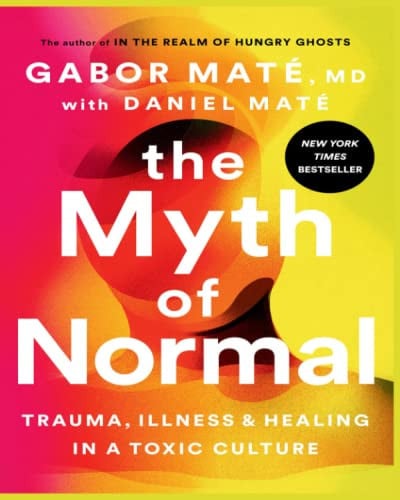
The Myth of Normal: Trauma, Illness, and Healing in a Toxic Culture Written by Gabor Maté with Daniel Maté

Gabor Maté
In this revolutionary book, renowned physician Gabor Mate eloquently dissects how in Western countries that pride themselves on their healthcare systems, chronic illness and general ill health are on the rise. Nearly 70 percent of Americans are on at least one prescription drug; more than half take two. In Canada, every fifth person has high blood pressure. In Europe, hypertension is diagnosed in more than 30 percent of the population. And everywhere, adolescent mental illness is on the rise. So what is really "normal" when it comes to health?
independently published 2022 515 pages

Public finance and public policy

Gruber, Jonathan
Jonathan Gruber's groundbreaking Public Finance and Public Policy was the first textbook to truly reflect the way public policy is created, implemented, and researched. Like no other text available, it integrated real-world empirical work and coverage of transfer programs and social insurance into the traditional topics of public finance. From its first edition, the book quickly became the market-leading text for Public Finance and Public Policy courses, and the margin is growing. Thoroughly updated, this timely new edition gives students the basic tools they need to understand the driving issues of public policy today, including healthcare, education, global climate change, entitlements, and more.
Worth Publishers 2013 771 pages

Why Our Health Matters

Andrew Weil
A landmark book that shows us exactly how we have let health and medicine become a crisis in our society and what we can all do to resolve it Healthcare is no longer just a public issue; for millions of Americans it is now a crisis on their own doorstep. Costs of medical care today are a leading cause personal bankruptcy. Although policy makers have weighed in on all sides, in this book, bestselling author Andrew Weil, M.D. identifies the root of the problem. He shows us exactly how we have become embroiled in the present situation and provides a solution that will not only make healthcare affordable, but will also put each one of us on the road to optimum health. Dr. Weil states that we have a right to good healthcare that is effective, accessible, and affordable. Many Americans would be surprised to know that our national health is far from the best in the world, even though we spend more money on it than any other country. The World Health Organization recently rated America thirty-seventh in health outcomes, on par with Serbia. Tackling head-on The Three Major Myths of American Medicine, Dr. Weil shows how medical schools fail to give future doctors the education they need to care for patients, how insurance companies have destroyed our opportunity to get excellent care, and how pharmaceutical companies have come to rule our lives. The solution involves nothing less than the creation of a completely new culture of health and medicine in this country, one that we can each start building today.
Thorndike Press 2009 393 pages

America's bitter pill: money, politics, backroom deals, and the fight to fix our broken healthcare

Brill, Steven
NEW YORK TIMES BESTSELLER • A NEW YORK TIMES NOTABLE BOOK • “A tour de force . . . a comprehensive and suitably furious guide to the political landscape of American healthcare . . . persuasive, shocking.” — The New York Times America’s Bitter Pill is Steven Brill’s acclaimed book on how the Affordable Care Act, or Obamacare, was written, how it is being implemented, and, most important, how it is changing—and failing to change—the rampant abuses in the healthcare industry. It’s a fly-on-the-wall account of the titanic fight to pass a 961-page law aimed at fixing America’s largest, most dysfunctional industry. It’s a penetrating chronicle of how the profiteering that Brill first identified in his trailblazing Time magazine cover story continues, despite Obamacare. And it is the first complete, inside account of how President Obama persevered to push through the law, but then failed to deal with the staff incompetence and turf wars that crippled its implementation. But by chance America’s Bitter Pill ends up being much more—because as Brill was completing this book, he had to undergo urgent open-heart surgery. Thus, this also becomes the story of how one patient who thinks he knows everything about healthcare “policy” rethinks it from a hospital gurney—and combines that insight with his brilliant reporting. The result: a surprising new vision of how we can fix American healthcare so that it stops draining the bank accounts of our families and our businesses, and the federal treasury. Praise for America’s Bitter Pill “An energetic, picaresque, narrative explanation of much of what has happened in the last seven years of health policy . . . [Brill] has pulled off something extraordinary.” —The New York Times Book Review “A thunderous indictment of what Brill refers to as the ‘toxicity of our profiteer-dominated healthcare system.’ ” — Los Angeles Times “A sweeping and spirited new book [that] chronicles the surprisingly juicy tale of reform.” — The Daily Beast “One of the most important books of our time.” —Walter Isaacson “Superb . . . Brill has achieved the seemingly impossible—written an exciting book about the American health system.” — The New York Review of Books
Random House 2015-08-18 528 pages

It's So Amazing! A Book about Eggs, Sperm, Birth, Babies, and Families

Robie H. Harris
From the trusted team of Robie H. Harris and Michael Emberley, a classic resource for younger children receives its most ambitiously updated edition yet. How does a baby begin and how is it born? How did I begin? Why are some parts of kids' bodies different from some parts of other kids' bodies? Most younger kids have questions about reproduction, babies, love, sex, and gender, too. Some also have concerns. For over twenty years, It's So Amazing! has provided children age seven and up with the honest answers they're looking for through age-appropriate, reassuring words and accurate, up-to-date, inclusive art. Throughout the book, two cartoon characters, Bird and Bee, are the voices of kids. They talk together to help children feel that they are not the only ones wondering how we all began. Rigorously vetted by experts and featuring updated and new facts on pregnancy, birth, adoption, bodies, sexuality, gender identity, OK touches, not OK touches, straight and LGBTQ+ families and people, and many other topics, this comprehensive resource for kids, parents, librarians, teachers, booksellers, and healthcare providers is the book that can help younger kids and their families talk together and find answers to their many questions.
Candlewick Press 2024-01-09 144 pages

U.S. Constitution for dummies

Arnheim, M. T. W.
Your complete guide to understanding the U.S. Constitution. Want to make sense of the U.S. Constitution? This new edition walks you through this revered document, explaining how the articles and amendments came to be and how they have guided legislators, judges, and presidents—and sparked ongoing debates along the way. You’ll get the lowdown on all the big issues—from separation of church and state to impeachment to civil rights—that continue to affect Americans' daily lives. Plus, you’ll find out about U.S. Constitution concepts and their origins, the different approaches to interpretation, and how the document has changed over the past 200+ years. Inside, you’ll find fresh examples of Supreme Court Rulings such as same sex marriage and Healthcare Acts such as Obamacare. Explore hot topics like what it takes to be elected Commander in Chief, the functions of the House and Senate, how Supreme Court justices are appointed, and so much more. Trace the evolution of the Constitution Recognize the power of the U.S. Supreme Court Get details on recent Supreme Court decisions Find new examples of the Bill of Rights Constitutional issues are dominating the news—and now you can join the discussion with the help of U.S. Constitution For Dummies .
John Wiley & Sons, Inc 2018-06-19 448 pages

Moonshot Inside Pfizer's Nine-Month Race to Make the Impossible Possible

Albert Bourla
The exclusive, first-hand, behind-the-scenes story of how Pfizer raced to create the first Covid-19 vaccine, told by Pfizer's CEO Dr. Albert Bourla A riveting, fast-paced, inside look at one of the most incredible private sector achievements in history, Moonshot recounts the intensive nine months in 2020 when the scientists at Pfizer, under the visionary leadership of Dr. Albert Bourla, made "the impossible possible"--creating, testing, and manufacturing a safe and effective Covid-19 vaccine that previously would have taken years to develop. Dr. Bourla chronicles how the brilliant, dedicated minds at Pfizer, under the enormous strains of the global pandemic, overcame a series of crises that were compounded by social and political unrest, and reveals the doubts, decisions, obstacles, and failures they encountered. As Dr. Bourla makes clear, Pfizer's success wasn't due to luck; it was because of preparation driven by four simple values--Courage, Excellence, Equity, and Joy. Moonshot is a story of leadership under the most unprecedented circumstances--how Dr. Bourla, a Greek immigrant, a child of Holocaust survivors, and a veterinarian, became the head of one of the world's largest corporations and initiated a dramatic transformation of the organization just before a global health crisis would serve to test the organization, its scientists and its leader, like never before. Moonshot describes best practices that can be used to address the multiple, unprecedented challenges our world faces, reveals Pfizer's implementation of scientific breakthroughs at a record-breaking pace, and offers leadership lessons that can help anyone successfully manage their own seemingly unsolvable problems. As Dr. Bourla explains, "I am sharing the story of our moonshot--the challenges we faced, the lessons we learned, and the core values that allowed us to make it happen--in hopes that it might inspire and inform your own moonshot, whatever that may be."
HarperCollins Publishers Limited 2022-03-16 288 pages

Health care reform: what it is, why it's necessary, how it works

Gruber, Jonathan
"Health Care Reform: What It Is, Why It's Necessary, How It Works is a deeply informed, opinionated, immediately accessible explanation of why health care reform is essential, why the legislation Congress passed is our best bet for solving the problem, and why it would be disastrous if we revoked it. Poll after poll shows that the majority of Americans are against health care reform. Polls also show that the majority of American's simply do not understand what is at stake, how reform works, and what its immediate and long-term consequences will be. Health Care Reform explains the stakes, means, and consequences with the immediacy of comics and the authority that only Jonathan Gruber can bring. And with Nathan Schreibers' illustrations using a visual style reminiscent of the political cartoons of Thomas Nash and Walt Kelly, the book will leave no one in doubt: Americans can no longer afford to be ignorant of the facts. Few experts know more about America's dire need of health care reform than Gruber. And of that short list, he is the only one prepared to enter the pages of a comic book to make the case. To be clear: Gruber is not an expert; he is the expert. An award-winning MIT economist and the director of the Health Care Program at the National Bureau of Economic Research, he was a key architect of the ambitious health care reform effort in Massachusetts and is a member of the Health Connector Board now implementing it; in 2006 he was named by Modern Healthcare as the nineteenth most powerful person in health care in the United States. In 2008 he was a consultant to the Clinton, Edwards, and Obama presidential campaigns. The national legislation passed by Congress in 2009 derives directly from Grubers' insights learned during the Massachusetts health care debate"--Provided by publisher.
Hill and Wang 2011-12-20 151 pages

White like me

Wise, Tim J.
In White Like Me, Tim Wise offers a highly personal examination of the ways in which racial privilege shapes the lives of most white Americans, overtly racist or not, to the detriment of people of color, themselves, and society. The book shows the breadth and depth of the phenomenon within institutions such as education, employment, housing, criminal justice, and healthcare. By critically assessing the magnitude of racial privilege and its enormous costs, Wise provides a rich memoir that will inspire activists, educators, or anyone interested in understanding the way that race continues to shape the experiences of people in the U.S. Using stories instead of stale statistics, Wise weaves a narrative that is at once readable and scholarly, analytical and accessible.
Soft Skull Press 2005 155 pages

Recognition and treatment of psychiatric disorders: a psychopharmacology handbook for primary care

Nemeroff, Charles B.
Mental health is an important public health issue. National survey data indicate that 48% of the U.S. adult population have reported a psychiatric disorder at some point in their lives and 30% have reported one in the past 12 months. With the changing healthcare environment, 60% of these patients are identified and receive treatment in the primary care setting. Recognition and Treatment of Psychiatric Disorders: A Psychopharmacology Handbook for Primary Care • developed to provide the busy primary care physician with practical and timely strategies for screening and treating patients who have psychiatric disorders. It covers• The continually growing number of drugs available for treatment of mental disorders.• An overview of the epidemiology, pathophysiology, presentation, diagnostic criteria, and screening tests for common psychiatric disorders including anxiety disorders, mood disorders, insomnia, somatization disorder, substance use disorder, eating disorders, dementia, and schizophrenia• Treatment algorithms and other step-by-step approaches to direct the physician who is treating patients with mental disorders including drug dosages, schedules, and routes of administration• Basic pharmacology, pharmacokinetics, drug interaction and safety concerns, and practical dosing issues for all classes of drugs used to treat mental disorders• Guidelines for primary care physicians on when to refer patients to psychiatrist colleagues This handbook is the quintessential resource for primary care physicians needing to screen and treat patients with mental disorders. Brief, but informative, this resource includes a glossary, a listing of printed and electronic mental health resources, a bibliography, and an appendix containing selected diagnostic rating scales.
American Psychiatric Press 1999 269 pages

You've Earned It, Don't Lose It: Mistakes You Can't Afford to Make When You Retire

Orman, Suze,Mead, Linda
It's Your Money. What Happens To It Will Directly Affect The Quality Of Your Life. "You don't want to become a story in one of my books, and you don't have to," says financial advisor Suze Orman, who goes beyond the usual financial primer to describe how to safeguard your financial future, illustrated with stories of ordinary, real-life people who faced misfortune because of naiveté, procrastination, or misinformation. So that you can avoid making similar mistakes and so you an better protect the money you have earned and saved, Orman gives you this easy-to-understand guide to eight vital areas essential for your security and well-being. With simplicity and clarity, complete with resource lists and glossary, she covers: Choosing and assessing financial advisors. Trusts, wills, gifts, joint tenancy: Which is right for you? Early retirement: What to do and how to avoid penalties when receiving your retirement money. Joint and survivor benefits: Making sure you protect those you love. Long-term care insurance: How to choose the right policy and what you should pay for it. Estate taxes and probate costs: How to avoid them. Durable power of attorney: How it works and why you should have one. Minimizing expenses and maximizing income: getting the most for your health-care money; getting the most for your life. As featured on QVC, CNN, FOX, and more. A selection of The Book-of-the-Month Club.
William Morrow Paperbacks 1997-04-01 240 pages

Man's 4th best hospital

Shem, Samuel
The sequel to the bestselling and highly acclaimed The House of God One of the most prominent and enduring titles in medical fiction is the bitingly funny House of God, which has sold more than 2 million copies, becoming required reading for generations of medical students and health care professionals. With Man's 4th Best Hospital, Samuel Shem "the comic genius and holy terror of medicine"* returns us to the hilarious and heartbreaking world of modern medicine. After The House of God, the resident known as The Fat Man and his eccentric band of interns scattered to the four corners of the country. Today Fats, now rich and famous, has been lured across town to the House of God's WASPy rival, Man's Best Hospital. But the august institution has sunk from being ranked the best hospital in the country to an embarrassing, and unacceptable, 4th! Fats' mission? To help the hospital climb back up the rankings. But as always, he's pursuing his own agenda. . . At his new Future of Medicine Clinic, the team comes back together to renew their life-changing friendships and teach a new generation of interns and residents. In a medical landscape dominated by computer screens and corrupted by money, they have a daunting goal: "To put the human back into healthcare." What follows is an emotional and laugh-out-loud novel that reflects the issues in American healthcare today, from the tyranny of computer screens to doctor burnout to the greed of the health insurance industry. * Bill McKibben
Berkley 2019-11 369 pages

Ladyparts A Memoir

Deborah Copaken
A frank, witty, and dazzlingly written memoir of one woman trying to keep it together while her body falls apart—from the “brilliant mind” (Michaela Coel, creator of I May Destroy You ) behind Shutterbabe “The most laugh-out-loud story of resilience you’ll ever read and an essential road map for the importance of narrative as a tool of healing.”—Lori Gottlieb, bestselling author of Maybe You Should Talk to Someone NAMED ONE OF THE BEST BOOKS OF THE YEAR BY REAL SIMPLE I’m crawling around on the bathroom floor, picking up pieces of myself. These pieces are not a metaphor. They are actual pieces. Twenty years after her iconic memoir Shutterbabe, Deborah Copaken is at her darkly comedic nadir: battered, broke, divorcing, dissected, and dying—literally—on sexism’s battlefield as she scoops up what she believes to be her internal organs into a glass container before heading off to the hospital . . . in an UberPool. Ladyparts is Copaken’s irreverent inventory of both the female body and the body politic of womanhood in America, the story of one woman brought to her knees by the one-two-twelve punch of divorce, solo motherhood, healthcare Frogger, unaffordable childcare, shady landlords, her father’s death, college tuitions, sexual harassment, corporate indifference, ageism, sexism, and plain old bad luck. Plus seven serious illnesses, one atop the other, which provide the book’s narrative skeleton: vagina, uterus, breast, heart, cervix, brain, and lungs. Copaken bounces back from each bum body part, finds workarounds for every setback—she transforms her home into a commune to pay rent, sells her soul for health insurance, turns FBI informant when her sexual harasser gets a presidential appointment—but in her slippery struggle to survive a steep plunge off the middle-class ladder, she is suddenly awoken to what it means to have no safety net. Side-splittingly funny one minute, a freak horror show the next, quintessentially American throughout, Ladyparts is an era-defining memoir.
Random House Publishing Group 2023-10-24 496 pages

Healthcare, guaranteed: a simple, secure solution for America

Emanuel, Ezekiel J.
America spends more than any other developed nation on healthcare—2.1 trillion in 2007 alone. But 47 million Americans remain uninsured, and of those Americans who are insured, many suffer from poor health. In his ground-breaking proposal, Dr. Ezekiel Emanuel offers up a plan to comprehensively restructure the delivery and quality of our healthcare. By eliminating employer-healthcare and establishing an independent program to evaluate healthcare plans and insurance companies, he offers a no-nonsense guide to how government can institute private insurance options that will allow each of us a choice of doctor and plan. With the rate of healthcare costs rapidly outpacing our gross domestic product, we can no longer afford to maintain our fragmented delivery of care, or entertain reforms that seek to patch, rather than cure, a fractured system. Accessible, straightforward, and revolutionary in its approach, Healthcare, Guaranteed is an inarguable guide to lasting healthcare reform.
PublicAffairs 2008-05-27 219 pages

Medicine in translation: journeys with my patients

Ofri, Danielle
For two decades, Dr. Danielle Ofri has cared for patients at Bellevue, the oldest public hospital in the country and a crossroads for the world's cultures. In Medicine in Translation , she introduces us, in vivid, moving portraits, to the patients she has known. They have braved language barriers, religious and racial divides, and the emotional and practical difficulties of exile in order to access quality health care. Sharing their journeys with them over the years, Danielle has witnessed some of their best and worst moments, and come to admire their resilience and courageous spirit. Danielle introduces us to her patients: Samuel Nwanko, who was brutally attacked by a Nigerian cult in his homeland and is attempting to create a new life in America; Jade Collier, an Aussie who refuses to let a small thing like a wheelchair keep her from being a homegrown ambassador to New York City; Julia Barquero, a Guatemalan woman who migrated to the States to save her disabled son but cannot obtain the lifesaving heart transplant she needs because she is undocumented. We meet a young Muslim woman threatened at knifepoint for wearing her veil, and the spitfire Señora Estrella, one of Danielle's many Spanish-speaking patients, whose torrent of words helps seal Danielle's resolve to improve her own Spanish, an essential skill in today's urban hospitals. And so she, her husband, and their two young children and seventy-five-pound dog relocate to Costa Rica, where they discover potholes the size of their New York City apartment, a casual absence of street signs or even street names, tangy green-skinned limon dulce dangling in the playground, and sudden rains surging over the craggy edges of roadside ditches. Ultimately, Danielle experiences being a patient in a foreign country when she gives birth to their third child, a "Costarricense" girl. With controversy over immigrants in our society escalating, and debate surrounding health-care reform becoming increasingly urgent, Ofri's riveting stories about her patients could not be more timely. Living and dying in the foreign country we call home, they have much to teach us about the American way, in sickness and in health.
Beacon Press 2010 251 pages

A Nation of Moochers America's Addiction to Getting Something for Nothing

Charles J. Sykes
Have we reached a tipping point where more Americans depend on the efforts of others than on their own? Are we becoming a nation of moochers? In A Nation of Moochers , Charles J. Sykes argues that we are already very close to that point, if we have not already crossed the line: from the corporate bailouts on Wall Street, to enormous pension, healthcare, and other entitlement costs, to questionable tax exemptions for businesses and individuals, to the alarming increases in personal default and dependency, the new moocher culture cuts across lines of class, race, and private and public sectors. A Nation of Moochers explores the shift in the American character as well as the economy. Much of the anger of the current political climate stems from the realization by millions of Americans that they are being forced to pay for the greed-driven problems of other people and corporations; increasingly, those who plan and behave sensibly are being asked to bail out the profligate. Sykes' argument is not against compassion or legitimate charity, but distinguishes between definable needs and the moocher culture, in which self-reliance and personal responsibility have given way to mass grasping after entitlements, tax breaks, benefits, bailouts, and other forms of feeding at the public trough. Persuasively argued and wryly entertaining, A Nation of Moochers is a rallying cry for Americans who are tired of playing by the rules and paying for those who don't.
St. Martin's Press 2013-04-16 320 pages

The Peace of Mind Prescription An Authoritative Guide to Finding the Most Effective Treatment for Anxiety and Depression

Dennis S. Charney,Charles B. Nemeroff
The Ultimate Guide to Identifying, Treating, and Overcoming Depression and Anxiety Two world-renowned psychiatrists have created a comprehensive and empowering guide to the science and treatment of anxiety and depression. At the heart of their message is the idea that treatment can and must be tailored to the individual and that armed with the right information, patients can get the support they need from their health-care providers. Practical and authoritative, The Peace of Mind Prescription has been unanimously praised as a valuable resource that offers hope to millions of sufferers. Dennis S. Charney, M.D., is the Dean of Research and the Anne and Joel Ehrenkranz Professor in the departments of psychiatry, neuroscience, and pharmacology and biochemistry at the Mount Sinai School of Medicine. Charles B. Nemeroff, M.D., Ph.D., is the Reunette W. Harris Professor and chairman of the department of psychiatry and behavioral sciences at Emory University's School of Medicine.
Houghton Mifflin 2006 259 pages

The healthcare fix: universal insurance for all Americans

Kotlikoff, Laurence J.
A simple, straightforward, and foolproof proposal for universal health insurance from a noted economist. The shocking statistic is that forty-seven million Americans have no health insurance. When uninsured Americans go to the emergency room for treatment, however, they do receive care, and a bill. Many hospitals now require uninsured patients to put their treatment on a credit card which can saddle a low-income household with unpayably high balances that can lead to personal bankruptcy. Why don't these people just buy health insurance? Because the cost of coverage that doesn't come through an employer is more than many low- and middle-income households make in a year. Meanwhile, rising healthcare costs for employees are driving many businesses under. As for government-supplied health care, ever higher costs and added benefits (for example, Part D, Medicare's new prescription drug coverage) make both Medicare and Medicaid impossible to sustain fiscally; benefits grow faster than the national per-capita income. It's obvious the system is broken. What can we do? In The Healthcare Fix , economist Laurence Kotlikoff proposes a simple, straightforward approach to the problem that would create one system that works for everyone and secure America's fiscal and economic future. Kotlikoff's proposed Medical Security System is not the "socialized medicine" so feared by Republicans and libertarians; it's a plan for universal health insurance. Because everyone would be insured, it's also a plan for universal healthcare. Participants -- including all who are currently uninsured, all Medicaid and Medicare recipients, and all with private or employer-supplied insurance -- would receive annual vouchers for health insurance, the amount of which would be based on their current medical condition. Insurance companies would willingly accept people with health problems because their vouchers would be higher. And the government could control costs by establishing the values of the vouchers so that benefit growth no longer outstrips growth of the nation's per capita income. It's a "single-payer" plan, but a single payer for insurance. The American healthcare industry would remain competitive, innovative, strong, and private. Kotlikoff's plan is strong medicine for America's healthcare crisis, but brilliant in its simplicity. Its provisions can fit on a postcard and Kotlikoff provides one, ready to be copied and mailed to your representative in Congress.
MIT Press 2007 116 pages