85 results for "Investing"

Intelligent Investor Third Edition Unabridged Pod the The Definitive Book on Value Investing

Benjamin Graham,Jason Zweig
75th Anniversary Edition The classic work on investing, filled with sound and safe principles that are as reliable as ever, now revised with an introduction and appendix by financial legend Warren Buffett--one of the author's most famous students--and newly updated commentaries on each chapter from distinguished Wall Street Journal writer Jason Zweig. "By far the best book about investing ever written."--Warren Buffett Since its original publication in 1949, Benjamin Graham's revered classic, The Intelligent Investor, has taught and inspired millions of people worldwide and remains the most respected guide to investing. Graham's timeless philosophy of "value investing" helps protect investors against common mistakes and teaches them to develop sensible strategies that will serve them throughout their lifetime. Market developments over the past seven decades have borne out the wisdom of Graham's basic policies, and in today's volatile market, The Intelligent Investor remains essential. It is the most important book you will ever read on making the right decisions to protect your investments and make them grow. Featuring updated commentaries which accompany every chapter of Graham's book--leaving his original text untouched--from noted financial journalist Jason Zweig, this newly revised edition offers readers an even clearer understanding of Graham's wisdom and how it should be applied by investors today. Supplemental enhancement PDF accompanies the audiobook.
HarperCollins 2024-10-22

Security analysis: principles and technique

Graham, Benjamin,Dodd, David L.,Klarman, Seth A.
"First published in 1934, Security Analysis is one of the most influential financial books ever written. With over a million copies sold, it has provided generations of investors with Benjamin Graham and David L. Dodd's timeless value investing philosophy and techniques. This seventh edition builds on the context and commentary of the sixth edition from ten of today's leading voices on Wall Street. These masters of value investing discuss the influence of Graham and Dodd on today's markets and contextualize the philosophy that influenced so many famous investors. Lead editor Seth Klarman, considered an intellectual successor to Warren Buffett in value investing, has assembled a team of contributors to provide commentary on Security Analysis in terms of today's markets and practices, including how today's value investors should assess markets, asset classes, and securities Graham and Dodd could not have possibly foreseen. New content includes:"--
McGraw Hill 2023 800 pages

The hard thing about hard things: building a business when there are no easy answers

Horowitz, Ben
In this book, Ben Horowitz, cofounder of Andreessen Horowitz, draws on his own story of founding, running, selling, buying, managing, and investing in technology companies to offer essential advice and practical wisdom for navigating the toughest problems business schools don't cover. His blog has garnered a devoted following of millions of readers who have come to rely on him to help them run their businesses. A lifelong rap fan, Horowitz amplifies business lessons with lyrics from his favorite songs and tells it straight about everything from firing friends to poaching competitors, from cultivating and sustaining a CEO mentality to knowing the right time to cash in. His advice is grounded in anecdotes from his own rise -- from cofounding the early cloud service provider Loudcloud to building the successful Andreessen Horowitz venture capital firm, both with fellow tech superstar Marc Andreessen (inventor of Mosaic, the Internet's first popular Web browser). This is no polished victory lap; he analyzes issues with no easy answers through his trials, including demoting (or firing) a loyal friend; whether you should incorporate titles and promotions, and how to handle them; if it's OK to hire people from your friend's company; how to manage your own psychology while the whole company is relying on you; what to do when smart people are bad employees; why Andreessen Horowitz prefers founder CEOs, and how to become one; and whether you should sell your company and how to do it.
Harper Business, an imprint of HarperCollins Publishers 2014-03-04 289 pages

Get a Financial Life Personal Finance in Your Twenties and Thirties

Beth Kobliner
The New York Times bestselling money guide for people in their twenties and thirties—it’s all-new, and just in time! This completely revised and updated 5th edition will help Gen Z and millennials get a financial life. If you’re in your twenties or thirties, you probably think you’ll never live as well as your parents. And who can blame you? Rents are higher than they’ve been in years, and the concept of buying a home of your own seems like a pipe dream. You’re carrying more student debt than any previous generation, while confronting an extremely tough job market in incredibly uncertain times. It’s not surprising that many of you have turned to credit cards—or your parents—to help you get by. Even if you are fortunate enough to have a job and a 401(k), the uncertainty of the economy, surging prices, and the volatility of the market make you worry if you’re investing in the right way. For three decades and counting, Beth Kobliner’s bestseller Get a Financial Life: Personal Finance in Your Twenties and Thirties has been the leading financial guide for young people. Whether you’re trying to climb the corporate ladder or doing your own thing, whether you’re single or partnered up, whether you’re financially inclined or fiscally challenged, this book offers advice that has stood the test of time—as well as fresh information to make smart decisions today. In this new edition, Kobliner teaches you how to pay down debt, get a good return on your savings, and plan for your future. Straight from the latest research, learn how to choose the right bank, avoid excessive fees, and rein in spending. You’ll get unbiased advice on the latest trends in personal finance—from neobanks and finfluencers to online fraud and cryptocurrency. And you’ll get answers to important questions: When is it smart to rent rather than buy (and vice versa)? How can I really improve my credit score? When is the right time to invest in the stock market—and how? How do I save money on my taxes? Get a Financial Life has already helped half a million people get a handle on their money, no matter how much or little they have. No wonder it’s remained the young money bible for more than thirty years.
Simon & Schuster 2026-04-07 352 pages

Worthy Opponents A Novel

Danielle Steel
From #1 New York Times bestselling author Danielle Steel comes a powerful novel about a woman running her family’s luxury department store and the wealthy investor who threatens to take it over. Spencer Brooke always knew she was destined to be CEO of her grandfather’s business—the most respected and luxurious department store in New York City. Brooke’s has been at the center of every happy memory she has, but it hasn’t been an easy journey. Seven years after her father’s death, her life is very different from the days when she walked through the store with her grandfather as a young girl. She may be the owner of Brooke’s, but she’s also now a divorced single mother of twin boys. And with the ever-evolving landscape of the fashion industry comes new challenges for Spencer and the legacy she’s inherited. Mike Weston is known for making enormous profits by transforming small businesses into bigger, more successful ones. With his marriage at a breaking point and his children grown up, investing is where he thrives—where he can build something greater. And Brooke’s feels like the perfect opportunity. Yet the firm’s beautiful and savvy CEO turns down the offer before they even meet. Spencer has no interest in outside investors meddling in her family business; her grandfather never saw the need for them, and neither does she. She refuses to be tempted by Mike’s offer, despite her big dreams of expanding the store. But when bad luck strikes, suddenly she is backed into a corner. In Worthy Opponents , Danielle Steel crafts a thrilling story about a powerful woman—and her equally formidable opponent.
National Geographic Books 2023-03-07 384 pages

Margin of Safety

Seth Klarman
Investors are all too often lured by the prospect of instant millions and fall prey to the many fads of Wall Street. The myriad approaches they adopt offer little or no real prospect for long-term success and invariably run the risk of considerable economic loss - they resemble speculation or outright gambling, not a coherent investment program. But value investing - the strategy of investing in securities trading at an appreciable discount from underlying value - has a long history of delivering excellent investment results with limited downside risk. Taking its title from Benjamin Graham's often-repeated admonition to invest always with a margin of safety, Klarman's 'Margin of Safety' explains the philosophy of value investing, and perhaps more importantly, the logic behind it, demonstrating why it succeeds while other approaches fail. The blueprint that Klarman offers, if carefully followed, offers the investor the strong possibility of investment success.
Lulu Press, Incorporated 2022-09-07 332 pages

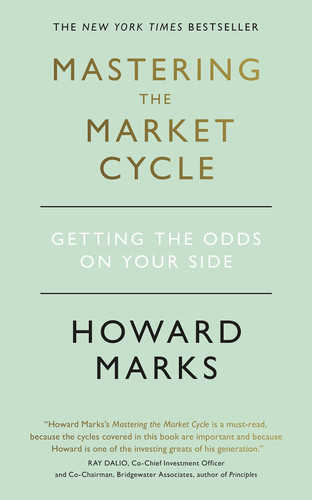
Mastering the market cycle: getting the odds on your side

Marks, Howard
A NEW YORK TIMES , WALL STREET JOURNAL , AND USA TODAY BESTSELLER The legendary investor shows how to identify and master the cycles that govern the financial markets. "A MUST-READ" Ray Dalio, bestselling author of Principles and Co-Chief Investment Officer and Co-Chairman, Bridgewater Associates "WHEN I SEE MEMOS FROM HOWARD MARKS IN MY MAIL, THEY'RE THE FIRST THING I OPEN AND READ" Warren Buffett " HOWARD IS A LEGENDARY INVESTOR" Tony Robbins We all know markets rise and fall, but when should you pull out, and when should you stay in? The answer is never black or white, but is best reached through a keen understanding of the reasons behind the rhythm of cycles. Confidence about where we are in a cycle comes when you learn the patterns of ups and downs that influence not just economics, markets, and companies, but also human psychology and the investing behaviors that result. If you study past cycles, understand their origins and remain alert for the next one, you will become keenly attuned to the investment environment as it changes. You'll be aware and prepared while others get blindsided by unexpected events or fall victim to emotions like fear and greed. By following Marks's insights - drawn in part from his iconic memos over the years to Oaktree's clients - you can master these recurring patterns to have the opportunity to improve your investing results. SEE WHAT REVIEWERS ARE SAYING ABOUT MASTERING THE MARKET CYCLE : ⭐⭐⭐⭐⭐ "This book lays the timeless fundamentals for investment success" ⭐⭐⭐⭐⭐ "A must-read" ⭐⭐⭐⭐⭐ " Excellent book on cycles and psychology"
Nicholas Brealey Publishing 2020-01-23 323 pages

Ask Suze

Suze Orman
Mutual funds offer investors some of the most diverse and effective ways of investing in the market. Whether you're a Wall Street newcomer or veteran, mutual funds allow you to participate in the full range of offerings while at the same time protecting you from the volatility of individual stocks. With the straight talk and savvy that have made her a trusted source of financial advise, Suze Orman ... explains the numerous options and investment strategies of stock and bond funds. In this same volume, Suze Orman clarifies a widely available but frequently misunderstood investment vehicle, the annuity. No matter where you are in your financial life, no matter what your goals, you will find sound, practical, enlightening advice in Ask Suze ... About Mutual Funds and Annuities. -- back cover.
Penguin Publishing Group 2000-03-28 135 pages

What It Takes

Schwarzman, Stephen A.
From Blackstone chairman, CEO, and co-founder Stephen A. Schwarzman, a long-awaited book that uses impactful episodes from Schwarzman's life to show readers how to build, transform, and lead thriving organizations. Whether you are a student, entrepreneur, philanthropist, executive, or simply someone looking for ways to maximize your potential, the same lessons apply. People know who Stephen Schwarzman is—at least they think they do. He’s the man who took $400,000 and co-founded Blackstone, the investment firm that manages over $500 billion (as of January 2019). He’s the CEO whose views are sought by heads of state. He’s the billionaire philanthropist who founded Schwarzman Scholars, this century’s version of the Rhodes Scholarship, in China. But behind these achievements is a man who has spent his life learning and reflecting on what it takes to achieve excellence, make an impact, and live a life of consequence. Folding handkerchiefs in his father’s linen shop, Schwarzman dreamed of a larger life, filled with purpose and adventure. His grades and athleticism got him into Yale. After starting his career in finance with a short stint at a financial firm called DLJ, Schwarzman began working at Lehman Brothers where he ascended to run the mergers and acquisitions practice. He eventually partnered with his mentor and friend Pete Peterson to found Blackstone, vowing to create a new and different kind of financial institution. Building Blackstone into the leading global financial institution it is today didn’t come easy. Schwarzman focused intensely on culture, hiring great talent, and establishing processes that allow the firm to systematically analyze and evaluate risk. Schwarzman’s simple mantra “don’t lose money” has helped Blackstone become a leading private equity and real estate investor, and manager of alternative assets for institutional investors globally. Both he and the firm are known for the rigor of their investment process, their innovative approach to deal making, the diversification of their business lines, and a conviction to be the best at everything they do. Schwarzman is also an active philanthropist, having given away more than a billion dollars. In philanthropy, as in business, he is drawn to situations where his capital and energy can be applied to drive transformative solutions and change paradigms, notably in education. He uses the skills learned over a lifetime in finance to design, establish, and support impactful and innovative organizations and initiatives. His gifts have ranged from creating a new College of Computing at MIT for the study of artificial intelligence, to establishing a first-of-its-kind student and performing arts center at Yale, to enabling the renovation of the iconic New York Public Library, to founding the Schwarzman Scholars fellowship program at Tsinghua University in Beijing—the single largest philanthropic effort in China’s history from international donors. Schwarzman’s story is an empowering, entertaining, and informative guide for anyone striving for greater personal impact. From deal making to investing, leadership to entrepreneurship, philanthropy to diplomacy, Schwarzman has lessons for how to think about ambition and scale, risk and opportunities, and how to achieve success through the relentless pursuit of excellence. Schwarzman not only offers readers a thoughtful reflection on all his own experiences, but in doing so provides a practical blueprint for success.
SIMON & SCHUSTER 2019-09-17 384 pages

Stocks for the Long Run [Hardcover] [Jan 01, 2014] Jeremy J. Siegel

Jeremy J. Siegel
Much has changed since the last edition of stocks for the long run. The financial crisis, the deepest bear market since the great depression and the continued growth of the emerging markets are just some of the contingencies directly affecting every portfolio in the world. To help you navigate markets and make the best investment decisions, jeremy siegel has updated his bestselling guide to stock market investing. This new edition of stocks for the long run answers all the important questions of today: how did the crisis alter the financial markets and the future of stock returns? what are the sources of long-term economic growth? how does the fed really impact investing decisions? should you hedge against currency instability? stocks for the long run, fifth edition, includes brand-new coverage of: the financial crisis - siegel provides an expert's analysis of the most important factors behind the crisis, the state of current stability or instability of the financial system and where t
McGraw-Hill 2014 448 pages

The interpretation of financial statements: the classic 1937 edition

Graham, Benjamin
"All investors, from beginners to old hands, should gain from the use of this guide, as I have." From the Introduction by Michael F. Price, president, Franklin Mutual Advisors, Inc. Benjamin Graham has been called the most important investment thinker of the twentieth century. As a master investor, pioneering stock analyst, and mentor to investment superstars, he has no peer. The volume you hold in your hands is Graham's timeless guide to interpreting and understanding financial statements. It has long been out of print, but now joins Graham's other masterpieces, The Intelligent Investor and Security Analysis, as the three priceless keys to understanding Graham and value investing. The advice he offers in this book is as useful and prescient today as it was sixty years ago. As he writes in the preface, "if you have precise information as to a company's present financial position and its past earnings record, you are better equipped to gauge its future possibilities. And this is the essential function and value of security analysis." Written just three years after his landmark Security Analysis, The Interpretation of Financial Statements gets to the heart of the master's ideas on value investing in astonishingly few pages. Readers will learn to analyze a company's balance sheets and income statements and arrive at a true understanding of its financial position and earnings record. Graham provides simple tests any reader can apply to determine the financial health and well-being of any company. This volume is an exact text replica of the first edition of The Interpretation of Financial Statements, published by Harper & Brothers in 1937. Graham's original language has been restored, and readers can be assured that every idea and technique presented here appears exactly as Graham intended. Highly practical and accessible, it is an essential guide for all business people--and makes the perfect companion volume to Graham's investment masterpiece The Intelligent Investor.
HarperBusiness 1998-05-06 122 pages

The Most Important Thing

Howard Marks
Legendary investor Howard Marks is chairman and co-founder of Oaktree Capital Management, which has $100 billion under management. He is sought out by the world's leading value investors and his client memos brim with insightful commentary and a time-tested, fundamental philosophy. Now for the first time, readers can benefit from Mark's wisdom, concentrated into a single lifetime of experience and study, The Most Important Thing explains the keys to successful investment and the pitfalls that can destroy capital or ruin a career. Utilising passages from his memos to illustrate his ideas, Marks teaches by example, detailing the development of an investment philosophy that fully acknowledges the complexities of investing and the perils of the financial world. Brilliantly applying insight to today's volatile markets, Marks offers a volume that is part memoir, part creed, with a number of broad takeaways.
HarperCollins Publishers India 2018-08-25 194 pages

The most important thing illuminated: uncommon sense for the thoughtful investor

Marks, Howard
Howard Marks's The Most Important Thing distilled the investing insight of his celebrated client memos into a single volume and, for the first time, made his time-tested philosophy available to general readers. In this edition, Marks's wisdom is joined by the comments, insights, and counterpoints of four renowned investors and investment educators: Christopher C. Davis (Davis Funds), Joel Greenblatt (Gotham Capital), Paul Johnson (Nicusa Capital), and Seth A. Klarman (Baupost Group). These experts lend insight into such concepts as "second-level thinking," the price/value relationship, patient opportunism, and defensive investing. Marks also adds his own annotations, expanding on his book's original themes and issues. A new chapter addresses the importance of reasonable expectations, and a foreword by Bruce C. Greenwald, called "a guru to Wall Street's gurus" by the New York Times , speaks on value investing, productivity, and the economics of information. *** Howard Marks, the chairman and cofounder of Oaktree Capital Management, is renowned for his insightful assessments of market opportunity and risk. After four decades spent ascending to the top of the investment management profession, he is today sought out by the world's leading value investors, and his client memos brim with insightful commentary and a time-tested, fundamental philosophy. Now for the first time, all readers can benefit from Marks's wisdom, concentrated into a single volume that speaks to both the amateur and seasoned investor. Informed by a lifetime of experience and study, The Most Important Thing explains the keys to successful investment and the pitfalls that can destroy capital or ruin a career. Utilizing passages from his memos to illustrate his ideas, Marks teaches by example, detailing the development of an investment philosophy that fully acknowledges the complexities of investing and the perils of the financial world. Brilliantly applying insight to today's volatile markets, Marks offers a volume that is part memoir, part creed, with a number of broad takeaways. Marks expounds on such concepts as "second-level thinking," the price/value relationship, patient opportunism, and defensive investing. Frankly and honestly assessing his own decisions--and occasional missteps--he provides valuable lessons for critical thinking, risk assessment, and investment strategy. Encouraging investors to be "contrarian," Marks wisely judges market cycles and achieves returns through aggressive yet measured action. Which element is the most essential? Successful investing requires thoughtful attention to many separate aspects, and each of Marks's subjects proves to be the most important thing. "This is that rarity, a useful book."--Warren Buffett
Columbia Business School Pub 2013-01-08 226 pages

The education of a value investor: my transformative quest for wealth, wisdom, and enlightenment

Spier, Guy
"What happens when a young Wall Street investment banker spends a small fortune to have lunch with Warren Buffett? He becomes a real value investor. In this fascinating inside story, Guy Spier details his career from Harvard MBA to hedge fund manager. But the path was not so straightforward. Spier reveals his transformation from a Gordon Gekko wannabe, driven by greed, to a sophisticated investor who enjoys success without selling his soul to the highest bidder. Spier's journey is similar to the thousands that flock to Wall Street every year with their shiny new diplomas, aiming to be King of Wall Street. Yet what Guy realized just in the nick of time was that the King really lived 1,500 miles away in Omaha, Nebraska. Spier determinedly set out to create a new career in his own way. Along the way he learned some powerful lessons which include: why the right mentors and partners are critical to long term success on Wall Street; why a topnotch education can sometimes get in the way of your success; that real learning doesn't begin until you are on your own; and how the best lessons from Warren Buffett have less to do with investing and more to do with being true to yourself. Spier also reveals some of his own winning investment strategies, detailing deals that were winners but also what he learned from deals that went south. Part memoir, part Wall Street advice, and part how-to, Guy Spier takes readers on a ride through Wall Street but more importantly provides those that want to take a different path with the insight, guidance, and inspiration they need to carve out their own definition of success"--
Palgrave Macmillan 2014-09-09 214 pages

How to make money in any market

Cramer, Jim
"Renowned personal finance expert, bestselling author, host of CNBC's Mad Money, and cohost of Squawk on the Street Jim Cramer returns with how to make money in any market for every investor. Except for the one percent of the one percent, nobody learns how to make your money grow in the stock market. Jim Cramer has spent his career determined to change that. Now a household name after twenty seasons of Mad Money with Jim Cramer, cohost of Squawk on the Street, and host of CNBC's Investing Club, Cramer shows you how to get rich by understanding the market and investing in the right growth and income stocks--ones that he can help you identify. How to Make Money in Any Market is your guide to overcoming your fear about investing, to be able to make bigger money with what you have, no matter how small--in any market."-- Provided by publisher.
Simon & Schuster 2025-09-30 320 pages

Tales of Pirx the pilot

Lem, Stanisław
@In Pilot Pirx, Lem has created an irresistibly likable character: an astronaut who gives the impression of still navigating by the seat of his pants-a bumbler but an inspired one. By investing Pirx with a range of human foibles, Lem offers a wonderful vision of the audacity, childlike curiosity, and intuition that can give humans the courage to confront outer space. Translated by Louis Iribarne. A Helen and Kurt Wolff Book@@
Mandarin 1990 206 pages

Principles of macroeconomics

Stiglitz, Joseph E.
The study of economics has always been fascinating, yet it is difficult to remember a more exciting or important time in the discipline. This book includes - Macroeconomics and the Economic Perspective; The process system; Households and firms in the labor and capital markets; Measurement of economic output and unemployment; The cost of living and inflation; The full-employment model; Government finance at full employment; The open economy at full employment; Economic growth; Money, the price level, and the federal reserve; Introduction to macroeconomic fluctuations; Aggregate expenditures and income; Aggregate demand and inflation; The federal reserve and interest rates; The role of macroeconomic policy; International trade and trade policy; The international financial system; Policy in the open economy; Development and transition; Inflation and unemployment; Controversies in macroeconomic policy; A student's guide to investing.
W.W. Norton & Co 2006 20 pages