5 results for "Poetry"

A map of misreading

Bloom, Harold
In print for twenty-seven years, A Map of Misreading serves as a companion volume to Bloom's other seminal work, The Anxiety of Influence. In this finely crafted text, Bloom offers instruction in how to read a poem, using his theory that patterns of imagery in poems represent both a response to and a defense against the influence of precursor poems. Influence, as Bloom conceives it, means that there are no texts, but only relationships between texts. Bloom discusses British and American poets including Milton, Wordsworth, Shelley, Keats, Tennyson, Browning, Whitman, Dickinson, Stevens, Warren, Ammons and Ashbery. A full-scale reading of one poem, Browning's "Childe Roland to the Dark Tower Came," represents this struggle between one poet and his precursors, the poem serving as a map for readers through the many versions of influence from Milton to modern poets. For the first time, in a new preface, Bloom will consider the map of misreading drawn by contemporary poets such as Ann Carson and Henri Cole. Bloom's new exploration of contemporary poetry over the last twenty years will illuminate how modern texts relate to previous texts, and contribute to the literary legacy of their predecessors.
Oxford University Press 2003 206 pages

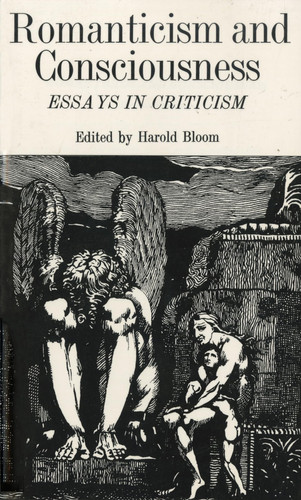
Romanticism and consciousness: essays in criticism

Bloom, Harold
'Romanticism and Consciousness' is a comprehensive collection of essays on Romanticism-its intellectual and political backgrounds, its place in literary history, its continued relevance to the present age, its relation to psychoanalysis and other modern trends of thought-and on the major English Romantic poets. The topics covered include the relations between nature and consciousness, nature and revolution, and nature and literary form; the principal poets studied are Blake, Wordsworth, Coleridge, Byron, Shelley, and Keats.
Norton 1970 405 pages

Poetry and repression: revisionism from Blake to Stevens

Bloom, Harold
This reinterpretation of the full sweep of English and American romantic poetry offers close readings of poems of Blake, Wordsworth, Shelley, Keats, Tennyson, Browning, Whitman, Yeats, and Stevens. It also reviews the crucial ideas of Emerson, Nietzsche, and in particular Freud, whose psychoanalytic theory of repression and defense Bloom undertakes to revise for purposes of literary criticism. "Bloom offers a fully defined alternative to the principal modes of contemporary criticism, from Freudian literary criticism (which he insists is neither Freudian nor literary criticism) to the New Criticism and structuralist and archetypal approaches. It is an original, vigorous, and passionate study which is both compelling and provocative."-The British Studies Monitor "Show me but one paragraph of Bloom's approaches to texts, and I'm hooked. . . . I find sheer delight in his ingenious ways."-Kenneth Burke "Bloom has made a remarkable contribution to poetic theory."-Phoebe Pettingell, The New Leader
Yale University Press 1976 293 pages