2 results for "History"

History from loss: a global introduction to histories written from defeat, colonization, exile and imprisonment

Marnie Hughes-Warrington,Daniel Woolf
"History from Loss challenges the common thought that 'history is written by the winners' and explores how history makers in different times and places across the globe have written histories from loss, even when this has come at the threat to their own safety. A distinguished group of historians from around the globe offer an introduction to different history-makers' lives and ideas, and important extracts from their works which highlight various meanings of loss: from physical ailments to social ostracism, exile to imprisonment, and from dispossession to potential execution. Throughout the volume consideration of the information 'bubbles' of different times and places helps to show how information has been weaponised to cause harm. In this way, the text helps to put current debates about the biases and weaponization of platforms such as social media into global and historical perspective. In combination, the chapters build a picture of history from loss which is global, sustained, and anything but a simple mirror of history made by victors. The volume also includes an Introduction and Afterword which draw out the key meanings of history from loss, and which offer ideas for further exploration. History from Loss provides an invaluable resource for students, teachers, and general readers who wish to put current debates on bias, the politicization of history, and threats to history makers into global and historical perspective"--
Routledge 2023 250 pages

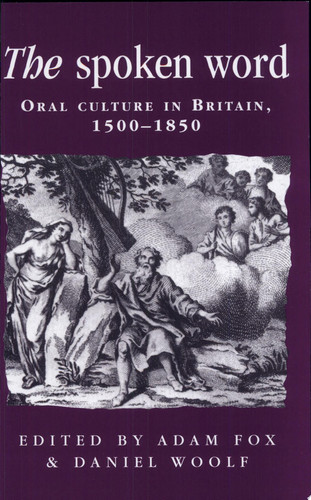
The spoken word: oral culture in Britain, 1500-1850

Adam Fox,Daniel Woolf
"The early modern period was of great significance throughout Europe with respect to its gradual transition from a largely oral to a fundamentally literate society. On the one hand, the spoken word remained of the utmost importance to the dissemination of ideas, the communication of information and the transmission of the cultural repertoire. On the other hand, the proliferation of written documents of all kinds, the development of printing and the spread of popular literacy combined to transform the nature of communication. Studies previous to this have traditionally focused on individual countries or regions, and emphasised the contradictions between oral and literate culture. The essays in this fascinating collection depart from these approaches in several ways. By examining not only English, but also Scottish and Welsh oral culture, they provide the first pan-British study of the subject. The authors also emphasise the ways in which oral and literate culture continued to compliment and inform each other, rather than focusing exclusively on their incompatibility, or on the 'inevitable' triumph of the written word. The chronological focus, ranging from the sixteenth to the mid-nineteenth century, with glances ahead to the twentieth, set the problem against a longer chronological span than most other studies, providing a link between early modern and modern oral and literate cultures. This book it will be of interest to students and scholars of British history, Linguistics, Literary Studies and Folklore Studies"--Publisher's description.
Manchester University Press 2002 286 pages