11 results for "Science"

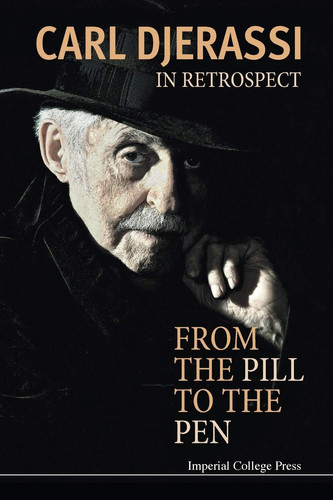
In retrospect: from the pill to the pen

Djerassi, Carl
These are the reflections of a nonagenarian polymath describing the shift from a fifty-year-long career as a world-famous chemist to a subsequent twenty-five-year immersion in "science-in-fiction" and "science-in-theater," a change virtually unique among contemporary scientists. Sharply self-critical yet full of humor, this autobiographical account covers themes such as the future of sex in an age of technological reproduction, the history of the Pill seen through the eyes of one of its inventors, innovative--even unique--pedagogic experiments, the insoluble homelessness of a refugee, suicide, and art collecting.--Adapted from publisher description
Imperial College Press 2015 388 pages

Sex in an age of technological reproduction: ICSI and Taboos

Djerassi, Carl
Carl Djerassi is one of "the fathers of the Pill"--he was awarded the National Medal of Science for the first synthesis of a steroid oral contraceptive--and has had a prolific additional career as a writer of fiction, plays, and dialogues about science. In these two plays, ICSI and Taboos , he dramatizes the social transformations and contested viewpoints created by advances in reproductive science and technology. Two of the most startling developments in contemporary science have radically disrupted the historical connection between sex and reproduction: in vitro fertilization and intracytoplasmic sperm injection (ICSI)--an assisted reproductive technique that directly injects a single sperm into an egg. The word play ICSI --designed for classroom readings--presents, in the format of a contentious talk-show dialogue, the science of direct-injection fertilization and the ethical issues connected with it. A DVD included in the book provides video of the ICSI injection process as viewed through a microscope, to be used in performances of the ICSI one-act dialogue. Taboos, a full-length play, turns the screws on characters that reflect a polarized America. Two couples--lesbian partners and a conservative husband and wife struggling with infertility--must make choices in a drama that examines the disjunction of sexual reproduction and the physical act of sex.
University of Wisconsin Press 2008 115 pages

Oxygen: a play in two acts

Djerassi, Carl
Was treibt Wissenschaftler an? Der Konkurrenzkampf, das Bestreben etwas Neues als erster zu entdecken, ist eine wichtige Motivation. Die moralischen Konsequenzen werden in dem Stück "Oxygen" behandelt, in dem es um die Entdeckung von Sauerstoff geht, dem für das Leben auf der Erde wichtigsten Element. Im Zentrum des Stückes stehen chemische und politische Revolutionen sowie der Nobel-Preis, der 2001 zum 100. Mal vergeben wird. Das Stück spielt 1777 und 2001; zur Aufführung werden drei Schauspieler und drei Schauspielerinnen benötigt, die elf Personen darstellen. Die Urauffühung wird im Frühjahr 2001 in San Diego stattfinden, die deutsche Premiere im September. Die weltberühmten Autoren Carl Djerassi und Roald Hoffmann bürgen aufgrund ihrer Erfahrungen als Wissenschaftler - Carl Djerassi ist bekannt als "Vater der Pille" und Roald Hoffmann erhielt 1982 den Nobelpreis für Chemie - und als Schriftsteller - Djerassi schrieb mehrere erfolgreiche Romane, Hoffmann viel beachtete Lyrik - für Kompetenz und Spannung.
Wiley-VCH 2001-03-05 119 pages

From the lab into the world: a pill for people, pets, and bugs

Djerassi, Carl
Carl Djerassi, world famous for the first synthesis of the active progestational ingredient of the Pill, speaks out on a wide variety of topics in this captivating book. Djerassi's personal growth from laboratory scientist to spokesman on scientific issues as well as the myriad ways that developments in the laboratory can affect people all over the world are presented in this engaging collection of essays. Djerassi's starting point is the Pill; he describes the history of its development and its future in view of the public's unattainable desire for a risk-free Pill, special testing requirements, and the unfavorable climate for contraception research. From contraceptives, Djerassi broadens his scope to include the entire area of birth control and gives his opinions on factors influencing abortion, the relationship of abortion to the availability of contraceptives, the problem of teenage pregnancy in the United States, the need for chemical abortion inducers, and the possibilities for a male contraceptive agent. He also delves into the reasons why Orwellian approaches to birth control, such as adding contraceptives to the water supply, will not work. From this point, Djerassi branches out even further to discuss the danger of extrapolating animal toxicity studies to humans. He examines the multifaceted role of the pharmaceutical industry in bringing a new drug to market and focuses on the deleterious effects of over-regulation, inappropriate testing requirements, and litigation. He proposes changes that the FDA should make in approval procedures and stresses the need for an appeal procedure. He emphasizes the necessity of doing collaborative research with Third World countries and thedesirability of establishing centers for basic research. But Djerassi's interests are still wider. He informs us on topics as varied as insect control, pesticide development, why there are not more women in academia, and how improved mentoring could be a remedy for preventing ethical misconduct among scientists. He describes his use of fiction to explain the culture of scientists by way of a literary medium that he calls "science-in-fiction". Finally, he discusses the pleasures of collecting art, his collection of the works of Paul Klee, and his sponsorship of artists through the Djerassi Resident Artists Program. In this intriguing book, this very learned and cultured man shows us the breadth of his interests and knowledge. Anyone who is interested in the very important issues of our time will profit from and enjoy this book.
American Chemical Society 1994 230 pages

The pill, pygmy chimps, and Degas' horse: the autobiography of Carl Djerassi

Djerassi, Carl
Father of the birth control pill, developer of antihistamines, founder of biomedical companies, teacher of world-class chemists, best-selling novelist.... As The Scientist notes, "Few can match Carl Djerassi's juggling act for success and longevity". Here is Djerassi's remarkable autobiography. Blending vivid descriptions of the lucrative world of drug development with controversial chapters on the politics of contraception and poignant disclosures about his personal life, this book tells the story of one of the most productive and socially conscious chemists working today. The Pill, Pygmy Chimps, and Degas' Horse tells how Djerassi, while still in his twenties and leading a small team in an obscure laboratory in Mexico City, used a locally grown yam first to synthesize cortisone and then, within twelve months, to create the first steroid effective as a birth control pill. Dubbed for this latter work "the father of the pill", a title he often shares with Gregory Pincus and John Rock, who performed the biological and clinical studies to confirm the pill's efficacy in humans, Djerassi has spent a lifetime thinking and rethinking, discussing and debating, the social, economic, and biological consequences of the changed attitudes toward contraception engendered by the pill. In two riveting chapters entitled "The Pill at Twenty" and "The Pill at Forty: What Now?" Djerassi recounts the fascinating history of the pill's journey from its first days in the laboratory to widespread public use--from being hailed as an agent of the sexual revolution to condemnation as an agent of the new promiscuity, to being accused of being an expression of the scientific community's sexism (Why was there no malebirth control pill?). And then, in a powerful consideration of where the politics of contraception have taken us, he discusses why so few innovations in contraception are being investigated today, and why even fewer are making their way to the public. The Pill, Pygmy Chimps, and Degas' Horse chronicles Djerassi's many successful careers in science, business, the academy, and the arts (he is a published poet and novelist, as well as the founder of an artists' colony). His growing appreciation for the soft side of science--its human and humane aspects--have long been reflected in the courses he teaches at Stanford, in the plot of his novel, Cantor's Dilemma, and in his decision to found one of the first environmentally aware pesticide companies. In this intellectually challenging book, the reader is let into the fertile mind and psyche of one of the few Renaissance men of twentieth-century science.
Basic Books 1992-04-26 319 pages

Menachem's seed: a novel

Djerassi, Carl
In Menachem's Seed , Carl Djerassi , world-renowned scientist and inventor of the birth-control pill, brings us a new novel that explores the human--and passionate--side of science. Melanie Laidlaw and Menachem Dvir meet at a series of international conferences where jet-setting scientists come together to discuss the global implications of their discoveries. Melanie runs a foundation that awards grants for innovations in reproductive technology; Menachem is an infertile nuclear engineer and a married man. Naturally, they fall in love. What follows is a story of sexual steam, stolen seed, and religious conversion--a very modern romance that hinges on a cutting-edge scientific breakthrough. As Melanie and Menachem discover, what science makes possible, only two hearts can make right.
Penguin Books 1998-09-01 196 pages

Newton's darkness: two dramatic views

Djerassi, Carl
”What purpose is served by showing that England's greatest natural philosopher is flawed … like other mortals?” asks one of the characters in Newton's Darkness. “We need unsullied heroes ” But what if the hero is sullied? At stake is an issue that is as germane today as it was 300 years ago: a scientist's ethics must not be divorced from scientific accomplishments. There is probably no other scientist of whom so many biographies and other historical analyses have been published than Isaac Newton — all of them in the standard format of documentary prose because of their didactic purpose to transmit historical information. Newton's Darkness, however, illuminates the darker aspects of Newton's persona through two historically grounded plays dealing with two of the bitterest struggles in the history of science.The name of Isaac Newton appears in virtually every survey of the public's choice for the most important persons of the second millennium. Yet the term “darkness” can be applied to much of Newton's personality. Adjectives that have been used to describe facets of his personality include “remote”, “lonely”, “secretive”, “introverted”, “melancholic”, “humorless”, “puritanical”, “cruel”, “vindictive” and, perhaps worst of all, “unforgiving”. The trait most relevant to the present book is Newton's obsessively competitive nature, which was often out of proportion to the warranted facts, as demonstrated in three of Newton's best-known bitter conflicts: with the physicist Robert Hooke, the astronomer royal John Flamsteed, and a German contemporary of almost equal intellectual prowess, Gottfried Wilhelm Leibniz — the last fight eventually turning into an England vs Continental Europe competition. It is two of these three relentless drawn-out battles that are illuminated in Newton's Darkness in the form of historically grounded drama.After a summary of the historical evidence, the book starts with the Newton-Hooke struggle (Chapter 2), which was conducted mano a mano, and is then followed by little-known aspects of the Newton-Leibniz confrontation (Chapter 3), which was fought largely through surrogates — notably the infamous, anonymous committee of 11 Fellows of the Royal Society.
Imperial College Press 2003 184 pages

Chemistry in theatre: insufficiency, phallacy or both

Djerassi, Carl
This book examines the questions "What can science do for the theatre?" and "What can the theatre do for science?" which raise challenges for both theatre professionals and scientists. Unusually, this book deals with plays first and foremost as reading material -- as texts to be read alone or in dramatic readings -- rather than emphasizing performances on the stage. Concrete examples are given to demonstrate the potential pedagogic value of using the dialogic style and plot structure of plays in science, with a special focus on chemistry.Very few books have dealt with the subject of science-in-theatre and virtually none with chemistry-in-theatre. Texts of the author's two recent plays, Insufficiency and Phallacy, are included in their entirety to offer concrete examples of plays dealing with actual (rather than invented) chemistry. Insufficiency represents an example from the field of beer and champagne bubbles, where the topics of academic tenure and fashion in chemistry are analyzed, whereas in Phallacy, a case history of the similarities and differences between science and art is presented for debate.
Imperial College Press 2012 112 pages

The Bourbaki gambit: a novel

Djerassi, Carl
This novel, like Jurassic Park , hinges on the real-world technology incorporated in the polymerase chain reaction (PCR), one of the most important breakthroughs in biomedical science. The 1993 Nobel Prize in chemistry recognized the immense significance of PCR, which is a process for quickly generating and then infinitely replicating fragments of genetic material. An impostor takes all of the credit in Carl Djerassi's fictionalized account of PCR's discovery and development. As the scientific community eventually discovers, Professor Diana Skordylis is not really one of their own, she is four of their own--three men and a woman--who publish their collaborative work under the Skordylis pseudonym. Two of them American, one Japanese, and one Austrian, they average around sixty-five years of age. Their archetype is a famous group of French mathematicians who actually have been publishing collectively for several decades under the nom de plume of Nicolas Bourbaki. Revenge is the Skordylis group's initial motivation. Victims of subtle age discrimination, they have all seen their research budgets and faculty privileges curtailed; two have been forcibly retired. Each Skordylis project they complete, each paper they publish under her name, is a satisfying poke at a scientific community that marginalized its senior members. But PCR is different. It is not only their best work, it is among the best work done by any scientist in recent memory. Professional jealousy soon threatens Diana Skordylis's life, as some group members struggle with the urge to claim their share of the fame and separately seek out PCR's most innovative applications. Djerassi writes engagingly--and from experience--about the collaborative nature at the heart of the scientific enterprise and the desire for personal recognition in the hearts of most scientists; about the graying of Western science; and about the human frailties and humanistic concerns of its practitioners.
University of Georgia Press 1994 230 pages