2 results for "History"

Revelation and authority: Sinai in Jewish scripture and tradition

Sommer, Benjamin D.
At once a study of biblical theology and modern Jewish thought, this volume describes a participatory theory of revelation as it addresses the ways biblical authors and contemporary theologians alike understand the process of revelation and hence the authority of the law. Benjamin Sommer maintains that the Pentateuch's authors intend not only to convey God's will but to express Israel's interpretation of and response to that divine will. Thus Sommer's close readings of biblical texts bolster liberal theologies of modern Judaism, especially those of Abraham Joshua Heschel and Franz Rosenzweig. This bold view of revelation puts a premium on human agency and attests to the grandeur of a God who accomplishes a providential task through the free will of the human subjects under divine authority. Yet, even though the Pentateuch's authors hold diverse views of revelation, all of them regard the binding authority of the law as sacrosanct. Sommer's book demonstrates why a law-observant religious Jew can be open to discoveries about the Bible that seem nontraditional or even antireligious. (Publisher).
Yale University Press 2018 419 pages

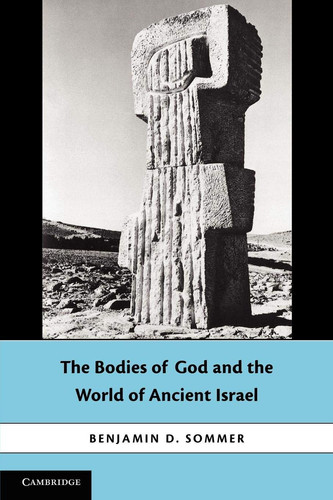
The bodies of God and the world of ancient Israel

Sommer, Benjamin D.
Sommer utilizes a lost ancient Near Eastern perception of divinity according to which a god has more than one body and fluid, unbounded selves. Though the dominant strains of biblical religion rejected it, a monotheistic version of this theological intuition is found in some biblical texts. Later Jewish and Christian thinkers inherited this ancient way of thinking; ideas such as the sefirot in Kabbalah and the trinity in Christianity represent a late version of this theology. This book forces us to rethink the distinction between monotheism and polytheism, as this notion of divine fluidity is found in both polytheistic cultures (Babylonia, Assyria, Canaan) and monotheistic ones (biblical religion, Jewish mysticism, Christianity), whereas it is absent in some polytheistic cultures (classical Greece). The Bodies of God and the World of Ancient Israel has important repercussions not only for biblical scholarship and comparative religion but for Jewish-Christian dialogue.
Cambridge University Press 2011-01-17 334 pages