34 results for "Biography"

Orwell's roses

Solnit, Rebecca
"A fresh take on George Orwell as a far more nature-loving figure than is often portrayed, and a dazzlingly rich meditation on roses, gardens, and the value and use of beauty and pleasure in the face of brutality and horror. "In the spring of 1936 a man planted roses." That man was George Orwell, shortly before he went off to fight against fascism in Spain. Today, those rosebushes are still thriving. This is the starting point for Rebecca Solnit's new book, which presents another side of Orwell, a neglected arcadian Orwell who took enormous pleasure in the natural world and found great meaning and value in it. Orwell's planting of the roses is an axle from which Solnit's chapters radiate out like spokes as she brilliantly explores its various contexts, perspectives, and meanings, following the contours of Orwell's life and tracking how deeply enmeshed the love of nature is in all his writing. Journeying to the cottage in Wallingford where Orwell lived in 1936, she examines his desire to be agrarian and settled, how gardening restored him, and how planting something can be an act of fidelity and faith. Probing at the beauty and meaning of roses, she draws in the revolutionary photography and politics of Tina Modotti and makes a clandestine visit to a Columbian rose factory, where 80% of America's roses for sale are grown. She tracks the history of gardening, showing how the desire to garden is culturally determined and often rooted in class, recounts the immense battles over breeding and genetics in Russia during Stalin's time, and probes into the colonialist roots of Orwell's forebears, who worked in opium production in India and profiteered from sugar and slavery in Jamaica. Solnit shows how these points of intersection illuminate Orwell's work, and how that illumination shines forth on larger questions about beauty, pleasure, meaning, relationship, and hope. Her book establishes that "Orwellian" could stand for something more than ominous, corrupt, and sinister"--
Viking 2021 308 pages

Fantastic Mr Dahl

Rosen, Michael
"A true genius . . . Roald Dahl is my hero" David Walliams Life story of Roald Dahl, World's No.1 storyteller, creator of Charlie and the Chocolate Factory, Fantastic Mr Fox, Matilda, The BFG, James and the Giant Peach and many more, brought to life by Michael Rosen - author, top children's poet and former Children's Laureate. Written especially for children, with fun pages and illustrations by Quentin Blake. So, how did Roald Dahl get into writing? Where did he get his ideas from? What ingredients in his life turned him into the kind of writer he was? Michael Rosen comes up with some of the answers to these key questions in his lively biography, specially for children, of the world's No.1 storyteller. Full of stories and funny anecdotes from Roald Dahl's school days and family life, Michael Rosen's fascinating observations creates a vivid picture of one of the most famous writers of all time.
Puffin 2012 162 pages

Tom Stoppard: a life

Lee, Hermione
"A perfect match of writer and subject: one of our most brilliant biographers takes on one of our greatest living playwrights--with his cooperation and access to a trove of hitherto unseen material. Tom Stoppard is a towering and beloved literary figure. Known for his dizzying narrative inventiveness and intense attention to language, he deftly deploys art, science, history, politics, and philosophy in works that span a remarkable spectrum of literary genres: theater, radio, film, TV, journalism, and fiction. His most acclaimed creations--Rosencrantz and Guildenstern are Dead, The Real Thing, Arcadia, The Coast of Utopia, Shakespeare in Love--remain as fresh and moving as when they dazzled their first audiences. Stoppard's life, too, is fascinating: born in Czechoslovakia, he escaped the Nazis with his mother and spent his early years in Singapore and India before arriving in England at age eight. Skipping university, he embarked on a brilliant career, becoming close friends over the years with an astonishing array of writers, actors, directors, musicians, and political figures, from Peter O'Toole, Harold Pinter, and Stephen Spielberg to Mick Jagger and Vaclav Havel. Having long described himself as a "bounced Czech," Stoppard was surprised to learn late in life of his Jewish family and the relatives he lost to the Holocaust, secrets his mother had kept from him. Lee's in-depth analysis seamlessly weaves Stoppard's life and work together into a vivid, insightful, and always riveting portrait of a remarkable man"--
Alfred A. Knopf 2021 872 pages

Arthur Koestler: the homeless mind

Cesarani, David
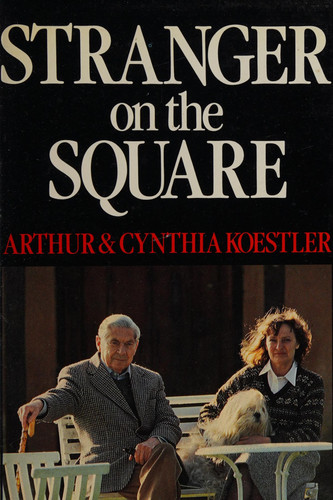
Along with Satre, Camus and Orwell, Arthur Koestler helped to shape the ideas of today. Once a communist, he saw through Marxism and led the intellectual counter-attack that culminated in the fall of the Berlin Wall. His writings on science introduced millions to cutting-edge theories of evolution and the workings of the human mind. His speculations on human nature and the future of mankind in the atomic age stamped a generation that grew up in the shadow of the Bomb. As restless in his personal relationships as he was in politics, his violent affairs with women were legendary. His fascinating study is t he first to make use of Koestler's private papers and draws on previously secret documents held by the KGB and the FBI, exposing the depth of his involvement in the Communist Party and, later, his relations with the CIA. It also reveals the darker side to his nature, which led to the tragic dual suicide with his third wife, Cynthia, in 1983. David Cesarani has ensured Koestler's place in the pantheon of intellectual giants of the twentieth century as surely as the 'warts and all' approach is guaranteed to perpetuate the controversy that swirled around Koestler in his life and death.
Vintage 1999 646 pages

Winner takes all: a life of sorts

Winner, Michael
Michael Winner, the legendary film director, writer, and food critic, is a colorful figure who has led a remarkable life. He has a reputation for being outspoken, and, true to form, in his autobiography he tells it like it is with sharp and insightful observations. Winner gained his first taste of fame at age 14, when he met the stars for a showbusiness column in 20 London local papers. At Cambridge he edited the student newspaper and became a local celebrity. Winner recounts his early life with relish and provides fascinating accounts of his experiences directing some of the world's most famous actors and actresses, including Charles Bronson, Sophia Loren, Joan Collins, Orson Welles, Marlon Brando, and Anthony Hopkins. Many of them became close friends. As a food critic, Michael Winner is famous for shooting from the hip, and love him or hate him, he is constantly in the public eye.
Robson 2004 360 pages

The actual one: how I tried, and failed, to avoid adulthood forever

Suttie, Isy
A hilarious, razor-sharp debut memoir about the moment when you realize that your friends have all grown up and left you behind, for readers of Caitlin Moran’s How To Be A Woman, Jenny Lawson’s Let’s Pretend This Never Happened, and Kelly Williams Brown’s Adulting. Isy Suttie wakes up one day in her late twenties to discover that the deal she’d struck with her friends, to put off growing up for as long as possible, had been entirely in her head. Everyone around her is suddenly into mortgages, farmers’ markets, and going off the Pill, rather than running naked into the sea or getting hammered in a country pub with eighty-year-old men. After a particularly crushing breakup precipitated by Isy’s gifting of a human-size papier-mâché penguin to her boyfriend, her dearest friend advises Isy not to worry: the next guy she meets will be The Actual One. Heartened by this promise, Isy decides to keep delaying the onset of adulthood, whether that means standing on the side of a highway in nothing but an old fur coat and sneakers, dating a man who speaks only in rhyme, or conquering her fears of Alpine skiing by wildly overestimating her athletic ability. Insightful and laugh-out-loud funny, The Actual One is an ode to the confusing wilderness of your late twenties, alongside a quest for a genuinely good relationship . . . or at the very least, a good story to tell.
HarperPerennial 2016 272 pages

Lenten lands

Gresham, Douglas H.
Including the True Story of the Remarkable Love Affair between Joy Davidman and C. S. Lewis There has probably never been a less likely couple: she, an American divorcee and the mother of two young boys; he, an Oxford don and confirmed bachelor who inhabited an eccentric household with his brother, a retired Royal Army major. Yet the relationship of C. S. Lewis and Joy Davidman, portrayed in this moving autobiography by her son Douglas Gresham, was destined to become of the most deeply moving love stories of our time.
HarperSanFrancisco 1994-06-03 225 pages

Olaf Stapledon, a man divided

Fiedler, Leslie A.
One of the most imaginative figures to emerge from the science fiction field. Olaf Stapledon left an indelible mark on many other writers, from Arthur C. Clarke to Saul Bellows, but never won a mass following himself. This study by a renowned American literary critic provides a long-needed introduction to the life and work of the man Brian Aldiss called "the great classical example, the cold pitch of perfection as he turns scientific concepts into ontological epic prose poems, the ultimate science fiction writer." Probing the recurrent themes and images of Stapledon's novels -- which include Last and First Men, Odd John, Star Maker, and Sirius -- Leslie A. Fiedler brilliantly illuminates the complexity and richness that underlie Stapledon's fiction. As Fiedler demonstrates, Stapledon was very much a product of the 1930s, embracing a set of leftist attitudes that were common to many other "Oxbridge-educated sons of the English upper classes." But, as Fiedler further shows, there is much more to Stapleton's books than their superficial ideological content: his works are unique in their awe-inspiring vision of the breadth of the physical universe and the depths of the human psyche. "Certainly since encountering him," Fielder writes, "I have never been able to stare up at thee night sky with the same secure faith that either God exists or he does not; anymore than I have been able between sleeping and waking to be sure that the nighttime "I" preparing to dream is identical with or totally different from the conscious "I" about to surrender its dominion."
Oxford University Press 1983 236 pages

Not Prince Hamlet: literary and theatrical memoirs

Meyer, Michael Leverson
Michael Meyer's translations of Strindberg and Ibsen have often been described as definitive, as have his biographies of both writers. His Strindberg translations made him the first Englishman to receive the Gold Medal of the Swedish Academy, and his life of Ibsen won the Whitbread Biography prize. He has now turned his attention to his own life and his friendships with some of this century's most famous literary and theatrical names.
Secker & Warburg 1989 291 pages

Mother's boy

Jacobson, Howard
"Howard Jacobson's funny, revealing and tender memoir of his path to becoming a writer. It's my theory that only the unhappy, the uncomfortable, the gauche, the badly put together, aspire to make art. Why would you seek to reshape the world unless you were ill-at-ease in it? And I came out of the womb in every sense the wrong way round. In Mother's Boy, Booker-Prize winner Howard Jacobson reveals how he became a writer. It is an exploration of belonging and not-belonging, of being an insider and outsider, both English and Jewish. Jacobson was forty when his first novel was published. In Mother's Boy he traces the life that brought him there. Born to a working-class family in 1940s Manchester, the great-grandson of Lithuanian and Russian immigrants, Jacobson was raised by his mother, grandmother and aunt Joyce. His father was a regimental tailor, as well as an upholsterer, a market-stall holder, a taxi driver, a balloonist, and a magician. Grappling always with his family's history and his Jewish identity, Jacobson takes us from the growing pains of childhood to studying at Cambridge under F.R. Leavis, and landing in Sydney as a maverick young professor on campus." --
Jonathan Cape 2022 279 pages