55 results for "World History"

Midnight in Washington: how we almost lost our democracy and still could

Schiff, Adam B.
"From the congressman who led the first impeachment of Donald J. Trump, the vital inside account of American democracy in its darkest hour, and a warning that the forces of autocracy unleashed by Trump remain as potent as ever. In the years leading up to the election of Donald Trump, Congressman Adam Schiff had already been sounding the alarm over the resurgence of autocracy around the world, and the threat this posed to the United States. But as he led the probe into Donald Trump's Russia and Ukraine-related abuses of presidential power, Schiff came to the terrible conclusion that the principal threat to American democracy now came from within. In Midnight in Washington, Schiff argues that the Trump presidency has so weakened our institutions and compromised the Republican Party that the peril will last for years, requiring unprecedented vigilance against the growing and dangerous appeal of authoritarianism. The congressman chronicles step by step just how our democracy was put at such risk, and traces his own path to meeting the crisis--from serious prosecutor, to congressman with an expertise in national security and a reputation for bipartisanship, to liberal lightning rod, scourge of the right, and archenemy of a president. Schiff takes us inside his team of impeachment managers and their desperate defense of the constitution amid the rise of a distinctly American brand of autocracy. Deepening our understanding of prominent public moments, Schiff reveals the private struggles, the internal conflicts, and the triumphs of courage that came with defending the republic against a lawless president--but also the slow surrender of people that he had worked with and admired to the dangerous immorality of a president engaged in an historic betrayal of his office. Schiff's fight for democracy is one of the great dramas of our time, told by the man who became the president's principal antagonist. It is a story that began with Trump but does not end with him, taking us through the disastrous culmination of the presidency and Schiff's account of January 6, 2021, and how the anti-democratic forces Trump unleashed continue to define his party, making the future of democracy in America more uncertain than ever."--Publisher's website.
Random House 2022-08-16 518 pages

How to change the world: reflections on Marx and Marxism

Hobsbawm, E. J.
"The ideas of capitalism's most vigorous and eloquent enemy have been enlightening in every era, the author contends, and our current historical situation of free-market extremes suggests that reading Marx may be more important now than ever. Hobsbawm begins with a consideration of how we should think about Marxism in the post-communist era, observing that the features we most associate with Soviet and related regimes--command economies, intrusive bureaucratic structures, and an economic and political condition of permanent was--are neither derived from Marx's ideas nor unique to socialist states. Further chapters discuss pre-Marxian socialists and Marx's radical break with them, Marx's political milieu, and the influence of his writings on the anti-fascist decades, the Cold War, and the post--Cold War period. Sweeping, provocative, and full of brilliant insights, How to Change the World challenges us to reconsider Marx and reassess his significance in the history of ideas."--Publisher's website.
Yale University Press 2011 470 pages

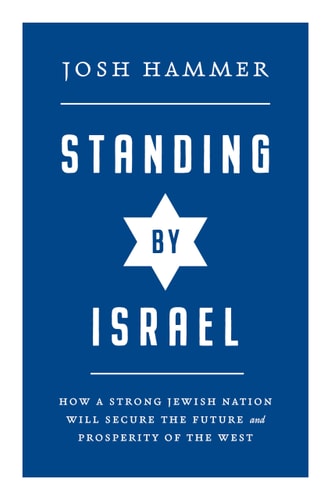
Israel and civilization: the fate of the Jewish nation and the destiny of the West

Hammer, Josh
"In Israel and Civilization, acclaimed journalist, legal expert, and pundit Josh Hammer makes a righteous case that the key to the prosperity of the West is the flourishing of the Jewish people and the Jewish State of Israel. Hammer's uplifting offense is our best defense against the enemies of the Jewish people's right to self-determination in their ancestral homeland. And as Hammer makes clear, manifesting the promise of Israel requires action by the United States and its allies. There can be no overstating the impact of the trauma of October 7, 2023, on the Jewish people. Yet the anti-Israel reactions the world over have been equally devastating. Rallies of hundreds of thousands explicitly or implicitly promoting Hamas violence; demonstrations of Ivy League professors celebrating the pogrom as awesome and exhilarating; so-called human rights organizations that refuse to unequivocally condemn the use of rape as a weapon of war; and a hydra of multiculturalism, postmodern relativism, and tolerance--it all threatens the physical and metaphysical survival of the West and our essential Jewish heritage. Preserving the best of what's been thought and said throughout history and ensuring that there will be centuries more requires a West that is proud of its Jewish heritage. In other words, the continued existence of the Jewish people is inextricably tied to the endurance of Western civilization. Israel is the center of the battle, and Israel and Civilization explains why and how the Jewish state must win."--
Radius Book Group 2025-03-18 293 pages

The swerve: how the Renaissance began

Greenblatt, Stephen
In this book the author transports readers to the dawn of the Renaissance and chronicles the life of an intrepid book lover who rescued the Roman philosophical text On the Nature of Things from certain oblivion. In this work he has crafted both a work of history and a story of discovery, in which one manuscript, plucked from a thousand years of neglect, changed the course of human thought and made possible the world as we know it. Nearly six hundred years ago, a short, genial, cannily alert man in his late thirties took a very old manuscript off a library shelf, saw with excitement what he had discovered, and ordered that it be copied. That book was the last surviving manuscript of an ancient Roman philosophical epic, On the Nature of Things, by Lucretius, a beautiful poem of the most dangerous ideas: that the universe functioned without the aid of gods, that religious fear was damaging to human life, and that matter was made up of very small particles in eternal motion, colliding and swerving in new directions. The copying and translation of this ancient book, the greatest discovery of the greatest book-hunter of his age, fueled the Renaissance, inspiring artists such as Botticelli and thinkers such as Giordano Bruno; shaped the thought of Galileo and Freud, Darwin and Einstein; and had a revolutionary influence on writers such as Montaigne and Shakespeare and even Thomas Jefferson.
Bodley Head 2011 356 pages

Putinism: Russia and its future with the West

Laqueur, Walter
"A timely, topical book grounding Russia's recent turn towards conservativism in pre-1917 culture and explaining what this shift could mean for the rest of the world" ; "There is no question that tensions between Russia and America are on the rise. The forced annexation of Crimea, the downing of Malaysia Airlines flight 17, and the Russian government's treatment of homosexuals have created diplomatic standoffs and led to a volley of economic sanctions. Much of the blame for Russia's recent hostility towards the West has fallen on steely-eyed President Vladimir Putin, and Americans have begun to wonder if they are witnessing the rebirth of Cold War-style dictatorship. Not so fast, argues veteran historian Walter Laqueur. For two decades Laqueur has been ahead of the curve, predicting events in post-Soviet Russia with uncanny accuracy. In Putinism, he deftly demonstrates how three long-standing pillars of Russian ideology: a strong belief in the Orthodox Church, a sense of Eurasian 'manifest destiny, ' and a fear of foreign enemies, continue to exert a powerful influence on the Russian populace. As a result, Putin may well be much more a servant of his people than we think. Topical and provocative, Putinism contains much more than historical analysis. Looking to the future, Laqueur explains how the tendency to view Russia as a Cold War relic is dangerous and premature. Russia can, and will, continue to challenge the West so it is in our best interest to figure out exactly who it is we are facing--and what they want--before it is too late"
Thomas Dunne Books 2015-06-30 271 pages

Israel: the will to prevail

Danon, Danny
Danny Danon has been a vocal opponent of disengaging in the Gaza Strip and West bank, and transforming the stalemate "two state/one state" dialogue to include regional partners, at times standing in direct opposition to his own party's leadership. A well-known and frequent speaker in the global arena, he is the rising voice for a fresh movement toward nationalism among the generation of Israelis currently coming to power. Here, Danon shares this vision with the world. It is a bold and uncompromising stance in the face of attacks on Israel's sovereignty by other Middle Eastern nations as the United States sends mixed signals of support to further its own goals in the region. Danon dissects the missteps and wrong turns that Israel's politicians have taken in the past by working to appease the United States and not offend their neighbors, instead of prioritizing their nation's own viability. With electrifying zeal, he tackles the challenges Israel faces today to undo what he sees as a consequence brought on by years of acquiescence to US policy. Danon believes "US pressure on Israel is hurting Israel and will do nothing to advance peace". Danon leads the charge toward a victorious future with an invitation for the United States and the Middle East to participate in, and not just dictate, Israel's international relations and policies (as opposed to an Israel cuckolded with an endless array of caveats toward those who would see it fall). No stranger to controversy, Danon's unabashed insights are a welcome revelation in the current quagmire of Middle-East international relations. A leading speaker to both Jewish groups and Christian Conservatives, the LA Jewish Journal says "What Danny says is what Bibi is actually thinking." For Danny Danon, this is only the beginning.
Palgrave Macmillan 2012-09-04 230 pages

Revolutionary Jews from Spinoza to Marx: the fight for a secular world of universal and equal rights

Israel, Jonathan
"In the eighteenth and early nineteenth centuries a small but conspicuous fringe of the Jewish population became the world's most resolute, intellectually driven, and philosophical revolutionaries, among them the pre-Marxist Karl Marx. Yet the roots of their alienation from existing society and determination to change it extend back to the very heart of the Enlightenment, when Spinoza and other philosophers living in a rigid, hierarchical society colored by a deeply hostile theology first developed a modern revolutionary consciousness. Leading intellectual historian Jonathan Israel shows how the radical ideas in the early Marx's writings were influenced by this legacy, which, he argues, must be understood as part of the Radical Enlightenment. He traces the rise of a Jewish revolutionary tendency demanding social equality and universal human rights throughout the Western world. Israel considers how these writers understood Jewish marginalization and ghettoization and the edifice of superstition, prejudice, and ignorance that sustained them. He investigates how the quest for Jewish emancipation led these thinkers to formulate sweeping theories of social and legal reform that paved the way for revolutionary actions that helped change the world from 1789 onward-but hardly as they intended"--
University of Washington Press 2021 549 pages

The Anglo-Dutch moment: essays on the Glorious Revolution and its world impact

Jonathan I. Israel
Much new research and writing on the Glorious Revolution of 1688-91 in England, Scotland, Ireland and North America, and on the Dutch role in the Revolution, has materialized in the last few years in connection with the tercentenary celebrations of 1988 and 1989 and the various accompanying conferences, symposia, and exhibitions in Britain, the Netherlands and the United States. There has also been a spate of associated publications. This is, however, the first large-scale work to emerge from the tercentenary commemoration, and the first to attempt to bring together the main strands of the new research and writing for the general reader and for the student, placing the English Revolution of 1688-89 for the first time in its full British, European and American setting, and showing how fundamentally our picture of the Revolution itself, as well as the Revolutionary process of 1688-91 as a whole, is now being transformed.
Cambridge University Press 1991-07-26 502 pages

Conversations

Reich, Steve
A surprising, enlightening series of conversations that shed new light on the music and career of "our greatest living composer" (New York Times) Steve Reich is a living legend in the world of contemporary classical music. As a leader of the minimalist movement in the 1960s, his works have become central to the musical landscape worldwide, influencing generations of younger musicians, choreographers and visual artists. He has explored non-Western music and American vernacular music from jazz to rock, as well as groundbreaking music and video pieces. He toured the world with his own ensemble and his compositions are performed internationally by major orchestras and ensembles. Now Reich sits down with past collaborators, fellow composers and musicians as well as visual artists influenced by his work to reflect on his prolific career as a composer as well as the music that inspired him and that has been inspired by him, including: David Lang Brian Eno Richard Serra Michael Gordon Michael Tilson Thomas Russell Hartenberger Robert Hurwitz Stephen Sondheim Jonny Greenwood David Harrington Elizabeth Lim-Dutton David Robertson Micaela Haslam Anne Teresa de Keersmaeker Julia Wolfe Nico Muhly Beryl Korot Colin Currie Brad Lubman
Hanover Square Press 2022 347 pages

Golden harvest: events at the periphery of the Holocaust

Gross, Jan Tomasz
The starting point of Jan Tomasz and Irena Grudzinska Gross's Golden Harvest, this haunting photograph in fact depicts a group of peasants--"diggers"--atop a mountain of ashes at Treblinka, where some 800,000 Jews were gassed and cremated. The diggers are searching for gold and precious stones that Nazi executioners may have overlooked. The story captured in this grainy black-and-white photograph symbolizes the vast, continent-wide plunder of Jewish wealth that went hand-in-hand with the Holocaust. The seizure of Jewish assets during World War II occasionally generates widespread attention when Swiss banks are challenged to produce lists of dormant accounts, or national museums are forced to return stolen paintings. But the theft of Europe's Jewish population was not limited to conquering armies, leading banks, or museums. It was perpetrated also by local people, such as those pictured in the photograph.
Oxford University Press 2016 135 pages

Salvation is from the Jews (John 4:22): the role of Judaism in salvation history from Abraham to the Second Coming

Schoeman, Roy H.
Traces the role of Judaism and the Jewish people in God's plan for the salvtion of mankind, from Abraham through the Second Coming, as revealed by the Catholic faith and by a thoughtful examination of history. It will give both Jews and Christians a deeper understanding of Judaism, both as a religion in itself and as a central component of salvation history. The book examines the unique and central role Judaism plays in the destiny of the world. It documents that throughout history attacks on Jews and Judasim have been rooted, not in Christianity, but in the most anti-Christian of forces. Areas addressed in depth include: the Messianic prophecies in Jewish Scripture; the very anti-Christian roots of Nazi anti-Semitism; the links between Nazism and Arab anti-Semitism; the theological insights of well-known Jewish converts; and the role of the Jews in the Second Coming.
Ignatius Press 2003 392 pages

Ramesses III: the life and times of Egypt's last hero

Eric H. Cline,David B. OConnor
In the tumultuous and vivid history of New Kingdom Egypt, Ramesses III's reign was prosperous and culturally rich. He fended off attacks by the "Sea Peoples" and others who threatened the state, he built the great temple of Medinet Habu, and he left wonderfully complete documents describing contemporary social structure and the economy. Amazingly, we even have an account from a contemporary judicial document that describes events leading to Ramesses III's assassination. This edited collection presents a detailed and informative look at the life, career, and world of one of Egypt's most important pharaohs, providing insight both on his reign and its aftermath and on the study of the political and cultural history of ancient Egypt.
University of Michigan Press 2012 542 pages

Stranger in my own country: a Jewish family in modern Germany

Mounk, Yascha
"A moving and unsettling exploration of a young man's formative years in a country still struggling with its past As a Jew in postwar Germany, Yascha Mounk felt like a foreigner in his own country. When he mentioned that he is Jewish, some made anti-Semitic jokes or talked about the superiority of the Aryan race. Others, sincerely hoping to atone for the country's past, fawned over him with a forced friendliness he found just as alienating. Vivid and fascinating, Stranger in My Own Country traces the contours of Jewish life in a country still struggling with the legacy of the Third Reich and portrays those who, inevitably, continue to live in its shadow. Marshaling an extraordinary range of material into a lively narrative, Mounk surveys his countrymen's responses to "the Jewish question." Examining history, the story of his family, and his own childhood, he shows that anti-Semitism and far-right extremism have long coexisted with self-conscious philo-Semitism. But of late a new kind of resentment against Jews has come out in the open. Unnoticed by much of the outside world, the desire for a "finish line" that would spell a definitive end to the country's obsession with the past is feeding an emphasis on German victimhood. Mounk shows how, from the government's pursuit of a less "apologetic" foreign policy to the way the country's idea of the "Volk" makes life difficult for its immigrant communities, a troubled nationalism is shaping Germany's future"--
Farrar, Straus and Giroux 2014-01-07 261 pages

My search for Ramanujan

Ono, Ken,Aczel, Amir D.
The son of a prominent Japanese mathematician who came to the United States after World War II, Ken Ono was raised on a diet of high expectations and little praise. Rebelling against his pressure-cooker of a life, Ken determined to drop out of high school to follow his own path. To obtain his father's approval, he invoked the biography of the famous Indian mathematical prodigy Srinivasa Ramanujan, whom his father revered, who had twice flunked out of college because of his single-minded devotion to mathematics. Ono describes his rocky path through college and graduate school, interweaving Ramanujan's story with his own and telling how at key moments, he was inspired by Ramanujan and guided by mentors who encouraged him to pursue his interest in exploring Ramanujan's mathematical legacy. Picking up where others left off, beginning with the great English mathematician G.H. Hardy, who brought Ramanujan to Cambridge in 1914, Ono has devoted his mathematical career to understanding how in his short life, Ramanujan was able to discover so many deep mathematical truths, which Ramanujan believed had been sent to him as visions from a Hindu goddess. And it was Ramanujan who was ultimately the source of reconciliation between Ono and his parents. Ono's search for Ramanujan ranges over three continents and crosses paths with mathematicians whose lives span the globe and the entire twentieth century and beyond. Along the way, Ken made many fascinating discoveries. The most important and surprising one of all was his own humanity
Springer 2016-04-12 238 pages

Great catastrophe: Armenians and Turks in the shadow of genocide

De Waal, Thomas
The destruction of the Armenians of the Ottoman Empire in 1915-16 was the greatest atrocity of World War I. Around one million Armenians were killed, and the survivors were scattered across the world. Although it is now a century old, the issue of what most of the world calls the Armenian Genocide of 1915 is still a live and divisive issue that mobilizes Armenians across the world, shapes the identity and politics of modern Turkey, and has consumed the attention of U.S. politicians for years. In Great Catastrophe, the eminent scholar and reporter Thomas de Waal looks at the aftermath and politics of the Armenian Genocide and tells the story of recent efforts by courageous Armenians, Kurds, and Turks to come to terms with the disaster as Turkey enters a new post-Kemalist era. The story of what happened to the Armenians in 1915-16 is well-known. Here we are told the "history of the history" and the lesser-known story of what happened to Armenians, Kurds, and Turks in the century that followed. De Waal relates how different generations tackled the issue of the "Great Catastrophe" from the 1920s until the failure of the Protocols signed by independent Armenia and Turkey in 2010. Quarrels between diaspora Armenians supporting and opposing the Soviet Union broke into violence and culminated with the murder of an archbishop in 1933. The devising of the word "genocide," the growth of modern identity politics, and the 50th anniversary of the massacres re-energized a new generation of Armenians. In Turkey the issue was initially forgotten, only to return to the political agenda in the context of the Cold War and an outbreak of Armenian terrorism. More recently, Turkey has started to confront its taboos. In an astonishing revival of oral history, the descendants of tens of thousands of "Islamized Armenians," who have been in the shadows since 1915, have begun to reemerge and reclaim their identities. Drawing on archival sources, reportage and moving personal stories, de Waal tells the full story of Armenian-Turkish relations since the Genocide in all its extraordinary twists and turns. He looks behind the propaganda to examine the realities of a terrible historical crime and the divisive "politics of genocide" it produced. The book throws light not only on our understanding of Armenian-Turkish relations but also of how mass atrocities and historical tragedies shape contemporary politics.
Oxford University Press 2015 304 pages

Icon of evil: Hitler's Mufti and the rise of radical Islam

Dalin, David G.
A political biography of Haj Amin al-Husaini (1895-1974), the Palestinian Arab nationalist leader and one-time Mufti of Jerusalem. Husaini adopted aggressive antisemitism in his youth, while studying in Cairo. He bears responsibility for the bloody anti-Jewish riots in the Land of Israel in 1920, 1921, and 1929, and was an instigator of the Arab revolt of 1936-39 in the country. In the 1930s he was close with Nazi leaders, with whom he shared extreme antisemitism and the goal of annihilation of the Jews. In the 1940s Husaini was instrumental in the establishment of pro-Nazi Muslim military formations in Europe, among them the Bosnian SS division "Handschar", which killed 12,600 Bosnian Jews. Argues that Husaini's legacy is alive in the modern Muslim world. He was the link between World War II antisemitism and the modern Islamic one, as well as a founding father of radical Islamic antisemitism. Dwells on the latter, which adopted from the West belief in the "Protocols of the Elders of Zion", blood libels, Holocaust denial, etc.
Transaction Publishers 2009 227 pages

Holocaust literature: a history and guide

Roskies, David G.,Diamant, Naomi
"What is Holocaust literature? When does it begin and how is it changing? Is there an essential core of diaries, eyewitness accounts of the concentration camps, tales of individual survival in hiding? Is it the same everywhere: in the West as in the East, in Australia as in the Americas, in poetry as in prose? Is this literature sacred and sui generis, or can it be studied in the light of other literatures? What of the perpetrators and bystanders, the hidden children, the children of Holocaust survivors: Do they speak with the same authority? What works of Holocaust literature will be read a hundred years from now--and why? Here, for the first time and told from beginning to end, is an historical survey of Holocaust literature in all genres, countries, and major languages. Beginning in wartime, it proceeds from the literature of mobilization and mourning in the Free World to the vast and varied literature produced in the Nazi-occupied ghettos, the bunkers and places of hiding, the transit and concentrations camps. Within weeks of the liberation, in displaced persons camps, a new memorial and testamentary literature begins to take shape. Moving from Europe to Israel, the U.S., and beyond, the authors situate the writings by real and proxy witnesses within three distinct postwar periods: a period of "communal memory," still internal and internecine; a period of "provisional memory" in the '60s and '70s that witnesses the birth of a self-conscious Holocaust genre; to the period of "authorized memory" in which we live today, following the collapse of the Soviet Union (1989-91), and the opening of the US Holocaust Museum (1993). Twenty book covers - first editions in their original languages - and an eminently readable guide to the "first hundred books" together show the multilingual scope, historical depth, the moral and artistic range of this extraordinary body of writing."--Publisher's website.
Brandeis University Press 2012 355 pages

Great catastrophe: Armenians and Turks in the shadow of genocide

De Waal, Thomas
The destruction of the Armenians of the Ottoman Empire in 1915-16 was the greatest atrocity of World War I. Around one million Armenians were killed, and the survivors were scattered across the world. Although it is now a century old, the issue of what most of the world calls the Armenian Genocide of 1915 is still a live and divisive issue that mobilizes Armenians across the world, shapes the identity and politics of modern Turkey, and has consumed the attention of U.S. politicians for years. In Great Catastrophe, the eminent scholar and reporter Thomas de Waal looks at the aftermath and politics of the Armenian Genocide and tells the story of recent efforts by courageous Armenians, Kurds, and Turks to come to terms with the disaster as Turkey enters a new post-Kemalist era. The story of what happened to the Armenians in 1915-16 is well-known. Here we are told the "history of the history" and the lesser-known story of what happened to Armenians, Kurds, and Turks in the century that followed. De Waal relates how different generations tackled the issue of the "Great Catastrophe" from the 1920s until the failure of the Protocols signed by independent Armenia and Turkey in 2010. Quarrels between diaspora Armenians supporting and opposing the Soviet Union broke into violence and culminated with the murder of an archbishop in 1933. The devising of the word "genocide," the growth of modern identity politics, and the 50th anniversary of the massacres re-energized a new generation of Armenians. In Turkey the issue was initially forgotten, only to return to the political agenda in the context of the Cold War and an outbreak of Armenian terrorism. More recently, Turkey has started to confront its taboos. In an astonishing revival of oral history, the descendants of tens of thousands of "Islamized Armenians," who have been in the shadows since 1915, have begun to reemerge and reclaim their identities. Drawing on archival sources, reportage and moving personal stories, de Waal tells the full story of Armenian-Turkish relations since the Genocide in all its extraordinary twists and turns. He looks behind the propaganda to examine the realities of a terrible historical crime and the divisive "politics of genocide" it produced. The book throws light not only on our understanding of Armenian-Turkish relations but also of how mass atrocities and historical tragedies shape contemporary politics.
Oxford University Press 2015 298 pages

Grimm legacies: the magic spell of the Grimms' folk and fairy tales

Zipes, Jack
In Grimm Legacies, esteemed literary scholar Jack Zipes explores the legacy of the Brothers Grimm in Europe and North America, from the nineteenth century to the present. Zipes reveals how the Grimms came to play a pivotal and unusual role in the evolution of Western folklore and in the history of the most significant cultural genre in the world-the fairy tale.Folklorists Jacob and Wilhelm Grimm sought to discover and preserve a rich abundance of stories emanating from an oral tradition, and encouraged friends, colleagues, and strangers to gather and share these tales. As a result, hundreds of thousands of wonderful folk and fairy tales poured into books throughout Europe and have kept coming. Zipes looks at the transformation of the Grimms' tales into children's literature, the Americanization of the tales, the "Grimm" aspects of contemporary tales, and the tales' utopian impulses. He shows that the Grimms were not the first scholars to turn their attention to folk tales, but were vital in expanding readership and setting the high standards for folk-tale collecting that continue through the current era. Zipes concludes with a look at contemporary adaptations of the tales and raises questions about authenticity, target audience, and consumerism.With erudition and verve, Grimm Legacies examines the lasting universal influence of two brothers and their collected tales on today's storytelling world.
Princeton University Press 2016-08-02 286 pages