463 results for "Economic History"

Barbarism and civilization: a history of Europe in our time

Wasserstein, Bernard
"Here is the definitive history of contemporary Europe, a controversial but authoritative and lively narrative that is destined to become the standard account of the period from 1914 to the present. In this important new book, University of Chicago historian Bernard Wasserstein offers the first serious, full-length history of a century of convulsive change. It is a history of barbarism and civilization, of cruelty and tenderness, of technological achievement and environmental blight, of imperial expansion and withdrawal, of authoritarian repression and of individualism resurgent. Wasserstein provides both a narrative of the main contours of the political, diplomatic, and military history and an analysis of the underpinnings of demographic, economic, and social developments. Most notably, the book explores the evolution of values and sensibilities in a period when, for the first time, God disappeared as a living presence in the minds of most Europeans. Wasserstein argues that barbarism and civilization were not polar opposites: rather they marched hand in hand. Twentieth-century Europe saw incontestable improvements in living conditions for most inhabitants of the continent: average life span was extended by more than half; real incomes increased dramatically; illiteracy was all but eliminated; women, ethnic minorities, and homosexuals advanced closer to equality of respect and opportunity. Yet the century also witnessed some of the most brutish episodes in the recorded history of our species. Hence Wasserstein's conclusion that "greed, selfishness, lies, and cruelty are the stuff of the history of Europe in our time." Drawing on the latest scholarly findings,including recent disclosures of intelligence materials and archival revelations that followed the fall of Communism in Eastern Europe, Wasserstein captures the essence of contemporary European history in an engaging narrative that is by turns grim, humorous, surprising, and enlightening." -- Publisher.
Oxford University Press 2007 901 pages

Free enterprise: an American history

Glickman, Lawrence B.
"Throughout the twentieth century, 'free enterprise' has been a contested keyword in American politics, and the cornerstone of a conservative philosophy that seeks to limit government involvement into economic matters. Lawrence B. Glickman shows how the idea first gained traction in American discourse and was championed by opponents of the New Deal. Those politicians, believing free enterprise to be a fundamental American value, held it up as an antidote to a liberalism that they maintained would lead toward totalitarian statism. Tracing the use of the concept of free enterprise, Glickman shows how it has both constrained and transformed political dialogue. He presents a fascinating look into the complex history, and marketing, of an idea that forms the linchpin of the contemporary opposition to government regulation, taxation, and programs such as Medicare."--Publisher's web-site
Yale University Press 2019-08-20 340 pages

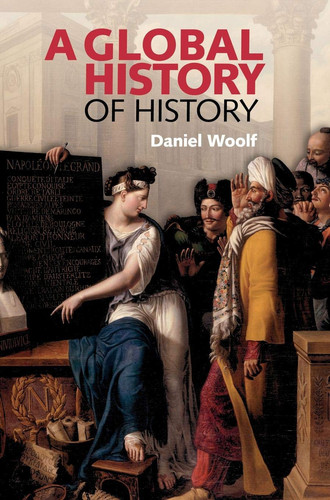
A global history of history

Woolf, D. R.
A global history of historical writing, thought and the development of the historical discipline from the ancient world to the present. This is a definitive guide to human efforts to recover, understand and represent the past, bringing together different historical traditions and their social, economic, political and cultural contexts. Daniel Woolf offers clear definitions of different genres and forms of history and addresses key themes such as the interactions between West and East, the conflict of oral, pictographic, and written accounts of the past and the place of history in society and in politics. Numerous textual extracts and illustrations in every chapter capture the historical cultures of past civilizations and demonstrate the different forms that historical consciousness has taken around the world. The book offers unique insights into the interconnections between different historical cultures over 3000 years and relates the rise of history to key themes in world history. --
Cambridge University Press 2011-02-17 568 pages

The populist temptation: economic grievance and political reaction in the modern era

Eichengreen, Barry J.
" In the last few years, populism--of the right, left, and center varieties--has spread like wildfire throughout the world. The impulse reached its apogee in the United States with the election of Trump, but it was a force in Europe ever since the Great Recession sent the European economy into a prolonged tailspin. In the simplest terms, populism is a political ideology that vilifies economic and political elites and instead lionizes 'the people.' The people, populists of all stripes contend, need to retake power from the unaccountable elites who have left them powerless. And typically, populists' distrust of elites shades into a catchall distrust of trained experts because of their perceived distance from and contempt for 'the people.' Another signature element of populist movements is faith in a savior who can not only speak directly to the people, but also serve as a vessel for the plain people's hopes and dreams. Going back to the 1890s, a series of such saviors have come and gone in the US alone, from William Jennings Bryan to Huey Long to--finally--Donald Trump. In The Populist Temptation, the eminent economic historian Barry Eichengreen focuses on the global resurgence of populism today and places it in a deep context. Alternating between the present and earlier populist waves from modern history, he argues that populists tend to thrive most in the wake of economic downturns, when it is easy to convince the masses of elite malfeasance. Yet while there is more than a grain of truth that bankers, financiers, and 'bought' politicians are responsible for the mess, populists' own solutions tend to be simplistic and economically counterproductive. Moreover, by arguing that the ordinary people are at the mercy of extra-national forces beyond their control--international capital, immigrants, cosmopolitan globalists--populists often degenerate into demagoguery and xenophobia. There is no one solution to addressing the concerns that populists raise, but Eichengreen argues that there is an obvious place to start: shoring up and improving the welfare state so that it is better able to act as a buffer for those who suffer most during economic slumps. For example, America's patchwork welfare state was not well equipped to deal with the economic fallout that attended globalization and the decline of manufacturing in America, and that played no small part in Trump's victory. Lucidly explaining both the appeals and dangers of populism across history, this book is essential reading for anyone seeking to understand not just the populist phenomenon, but more generally the lasting political fallout that follows in the wake of major economic crises. "--
Oxford University Press 2018 244 pages

1967: Israel, the War, and the Year that Transformed the Middle East

Tom Segev
Product Description From Israel's leading historian, a sweeping history of 1967--the war, what led up to it, what came after, and how it changed everything Tom Segev's acclaimed works One Palestine, Complete and The Seventh Million overturned accepted views of the history of Israel. Now, in 1967--a number-one bestseller in Hebrew--he brings his masterful skills to the watershed year when six days of war reshaped the country and the entire region. Going far beyond a military account, Segev re-creates the crisis in Israel before 1967, showing how economic recession, a full grasp of the Holocaust's horrors, and the dire threats made by neighbor states combined to produce a climate of apocalypse. He depicts the country's bravado after its victory, the mood revealed in a popular joke in which one soldier says to his friend, "Let's take over Cairo"; the friend replies, "Then what shall we do in the afternoon?" Drawing on unpublished letters and diaries, as well as government memos and military records, Segev reconstructs an era of new possibilities and tragic missteps. He introduces the legendary figures--Moshe Dayan, Golda Meir, Gamal Abdul Nasser, and Lyndon Johnson--and an epic cast of soldiers, lobbyists, refugees, and settlers. He reveals as never before Israel's intimacy with the White House as well as the political rivalries that sabotaged any chance of peace. Above all, he challenges the view that the war was inevitable, showing that a series of disastrous miscalculations lie behind the bloodshed. A vibrant and original history, 1967 is sure to stand as the definitive account of that pivotal year. From Booklist It is now 40 years since the Six Days' War, in which Israel routed the armies of Egypt, Syria, and Jordan and transformed the geography and political landscape of the Middle East. Segev is a columnist for Ha'aretz, Israel's leading left-of-center daily newspaper, and he clearly views the events leading to the war as well as the aftermath of the conflict with a predictable bias. Still, many of his revelations are both startling and credible. A substantial portion of the book is devoted to an analysis of Israeli society on the eve of the war. Segev portrays a nation plagued by disillusionment, communal tensions, and anxiety about national survival. The idealism that inspired the early Zionist pioneers had waned, and the Ashkenazi and Sephardic communities seemed increasingly resentful of each other. An increased awareness of the Holocaust by the younger generation combined with the extreme rhetoric of Arab leaders contributed to a sense of impending doom. Segev asserts that the outbreak of war was hardly inevitable and was precipitated by gross miscalculations by both sides. Freeman, Jay Copyright © American Library Association. All rights reserved Review "Today we know that Israel's triumph in 1967 was a Pyrrhic victory. Tom Segev's 1967 makes that more clear than anything written on the subject . . . Segev documents this historic tragedy brilliantly, authoritatively, as no one has before."--Amos Elon, Ha'aretz "Tom Segev's 1967 offers a brilliant description of the Six Day War in its widest context: the international scene, the Middle Eastern confrontations, the political and social situation of Israel, as well as fascinating snippets of everyday life. The crucial role of individual actors is deftly woven into the general picture, the description of the military events is enthralling. This is probably the best book on those most fateful days in the history of Israel and the Middle East."--Saul Friedlander, author of The Years Of Extermination: Nazi Germany And The Jews, 1939-1945 "The year 1967 divides the history of Israel in two: what came before and what came after. Tom Segev's book makes this abundantly clear, and demonstrates the difference between a military victory and a political one."--Daniel Barenboim About the Author Tom Segev is a columnist for H
Metropolitan Books 2007-05-29 688 pages

The Golden Bees: The story of the Bonapartes

Aronson, Theo
Napoleon III, being accused on one occasion of having nothing of the Great Napoleon about him, replied with as much exasperation as wit, that he did, on the contrary, have his relations. This book is a domestic chronicle of the incredible Bonaparte family, a greedy, amorous, quarrelsome and hot-blooded Corsican clan who provided nineteenth-century Europe — and America — not only with two French emperors but also with a dazzling assortment of pretenders and parvenus, statesmen and eccentrics, great ladies and adventurers. Plumped onto the thrones of Europe by the career of Napoleon I, who probably took better care of his family than any other conqueror in history, the Bonapartes survived the wreck of the two empires they ruled, buzzing around the honeypots of the continent with all the persistence of the imperial bees of Napoleon's crest. This is a personal history, not a political one. It is the family, with its eccentricities, vulgarities and fascinations manifesting themselves in generation after generation, which holds the centre of the stage. The great political, economic and military events of the time are heard dimly as 'noises off'. Napoleon I himself appears as a son, brother, husband, father and above all as the founder of a dynasty, rather than as a great public figure. Theo Aronson paints this family portrait with a wealth of detail based on many years of research with historical documents and original records, letters, memoirs and family diaries. Praise for The Golden Bees: ‘A very considerable feat… a long, comfortable, easy-going sort of narrative full of tit-bits of information, stuffed with anecdotes’ - Observer ‘This is a hugely entertaining book. Neither biography nor history; but a mixture of both.… All lovers of royal gossip, of sprightly anecdotes and of the scandal and personal drama of history should delight in it’ - New York Times Theo Aronson is the author of over twenty works of royal historical biography, published in eleven languages. Among the widely read are Grandmama of Europe, The King in Love, Napoleon and Josephine and a biography of Princess Margaret. In the course of researching and writing these books he has interviewed major and minor members of Britain’s royal family and members of the royal households, as well as various officials, servants, friends and others whose lives are in some way connected with the monarchy.
Independently published 2021-05-28 494 pages

The Peasants' Revolt of 1381

Richard Barrie Dobson
"This lengthy and detailed collection of original documents provides a basic handbook to the story, significance and problems of the English Peasants' Revolt of 1381. Although one of the most famous and dramatic episodes in English history, the great revolt of 1381 is still a largely unsolved mystery. Hitherto the original authorities for the history of the rebellion have been allowed to rest in unnecessary obscurity: and it seems due time to restore the Peasants' Revolt to the comments of its participants and observers. These extracts therefore exploit all the available types of evidence for the history of the 1381 Revolt, ranging from the trial records of captured rebels to contemporary poems. Fortunately the great majority of the primary chronicles for the rebellion, as well as a representative selection from surviving governmental and legal archives, can be presented within the covers of one book. With few exceptions these documents have been especially translated from the original Latin or Norman-French texts - almost all of which are difficult of access or out of print. In several cases translations have been made directly from unpublished records in the Public Record Office, London. The Peasants' Revolt has been examined primarily for its own sake; and at the heart of this book lie the various and often contradictory accounts of the outbreak of the rising in Kent and Essex, the rebels entry into London and the final great confrontation between the young Richard I| and Wat Tyler at Smithfield. But considerable attention is paid to the risings in East Anglia and elsewhere in England as well as to the political and social background of the revolt. The suppression and aftermath of the rebellion are also illustrated in detail. Indirectly this collection of documents therefore provides an insight into the economic status and social aspirations of the late mediaeval English peasantry. The work includes detailed chronological tables (the most ambitious yet attempted), a select guide to sources, three maps and a detailed bibliography. The author's introduction discusses the implications of the revolt in general terms and its significance as an early example of a pre-industrial popular movement. A warning is sounded against any too crude a sociology of rebellion; and the book ends with a series of very different and often hilariously misconceived interpretations of the Peasants' Revolt - from Gower and Froissart, Thomas Paine and Robert Southey to Engels and William Morris."-Publisher.
Macmillan 1970 427 pages

Barons of Labor The San Francisco Building Trades and Union Power in the Progressive Era

Michael Kazin
From the depression of the 1890s through World War I, construction tradesman held an important place in San Francisco's economic, political, and social life. Michael Kazin's award-winning study delves into how the city’s Building Trades Council (BTC) created, accumulated, used, and lost their power. He traces the rise of the BTC into a force that helped govern San Francisco, controlled its potential progress, and articulated an ideology that made sense of the changes sweeping the West and the country. Believing themselves the equals of officeholders and corporate managers, these working and retired craftsmen pursued and protected their own power while challenging conservatives and urban elites for the right to govern. What emerges is a long-overdue look at building trades as a force in labor history within the dramatic story of how the city's 25,000 building workers exercised power on the job site and within the halls of government, until the forces of reaction all but destroyed the BTC.
University of Illinois Press 1988-12 338 pages

The invention of enterprise: entrepreneurship from ancient Mesopotamia to modern times

David S. Landes,Joel Mokyr,William J. Baumol
Whether hailed as heroes or cast as threats to social order, entrepreneurs - and their innovations - have had an enormous influence on the growth and prosperity of nations. "The Invention of Enterprise" gathers together, for the first time, leading economic historians to explore the entrepreneur's role in society from antiquity to the present. Addressing social and institutional influences from a historical context, each chapter examines entrepreneurship during a particular period and in an important geographic location. The book chronicles the sweeping history of enterprise in Mesopotamia and Neo-Babylon; carries the reader through the Islamic Middle East; offers insights into the entrepreneurial history of China, Japan, and Colonial India; and, describes the crucial role of the entrepreneur in innovative activity in Europe and the United States, from the medieval period to today. In considering the critical contributions of entrepreneurship, the authors discuss why entrepreneurial activities are not always productive and may even sabotage prosperity. They examine the institutions and restrictions that have enabled or impeded innovation, and the incentives for the adoption and dissemination of inventions. They also describe the wide variations in global entrepreneurial activity during different historical periods and the similarities in development, as well as entrepreneurship's role in economic growth. The book is filled with past examples and events that provide lessons for promoting and successfully pursuing contemporary entrepreneurship as a means of contributing to the welfare of society.
Princeton University Press 2010-01-31 566 pages

Zionism and the Palestinians

Flapan, Simha
This book is a study of the roots of present day Israeli policy towards the Arabs. The point of departure is that Israeli olitical thinking was moulded during the pre-state period and in its crystallisation made a ritual of several basic concepts: gradual build-up of an economic and military potential as the basis for achievement of political aims: alliance with a great power external to the Middle East: noon-recognition of the existence of a Palestine national entity: Zionism's civilising mission in an undeveloped area: economic, social and cultural regregation as prerequisited for the renaissance of Jewish national life; the concept of 'peace for strength'. Part one of the bood describes the attitudes of the Zionist leaders in the pre-state period of 1917-48 towards the Arab national movement in general and towards the Palestinian Arabs in particular. Part two deals with the application of these attitudes in a number of critical situations which constituted turning points in Jewish-Arab relations: the Arab Revolt and the Zionist struggle for partition in 1936-8; the "White Paper' policy 1939-45 and the 1948 war in Palestine.
Croom Helm [etc.] 1979 361 pages

Hometown

Peter Davis
Illuminating the experiences of life in small-town America, award-winning writer for CBS News Peter Davis pens an ode to a small town thirty miles north of Cincinnati—documenting its strengths and struggles over the course of a year. After a scandal involving a high school teacher caught his interest, award-winning news writer Peter Davis spent a year studying life in Hamilton, Ohio. While examining the small town during an intense time of change, including segregation of schools and economic decline, Davis shares an honest, full scope view of the life in a small town during the 1960s. Hometown takes readers into the forces that unite and divide the small-town community of Hamilton through a look at politics, sports, marriage, crime, and social lives in a variety of classes.
Simon & Schuster 2013-11-02 336 pages

The Marxism of Che Guevara

Michael Lowy
In this seminal exploration of Che Guevara's contributions to Marxist thinking, Michael Lswy traces Che's ideas about Marxism both as they related to Latin America and to more general philosophical, political, and economic issues. Now revised and updated, this edition includes a chapter on Guevara's search for a new paradigm of socialism and a substantive essay by Peter McLaren on Che's continued relevance today. This book eloquently captures his views on humanity, his contributions to the theory of revolutionary warfare, and his ideas about society's transition to socialism, offering a cohesive, nuanced introduction to the range of Guevara's thought.
Monthly Review Press 1973-10 128 pages

True Believer: Hubert Humphrey's Quest for a More Just America

Traub, James
A celebrated historian recounts Hubert Humphrey’s role as a liberal hero of twentieth-century America Hubert Humphrey was liberalism’s most dedicated defender, and its most public and tragic sacrifice. As a young politician in 1948, he defied segregationists and forced the Democratic Party to commit itself to civil rights. As a senator in 1964, he made good on that commitment by helping pass the Civil Rights Act. But as Lyndon B. Johnson’s vice president, his support for the war in Vietnam made him a target for both Right and Left, and he suffered a shattering loss in the presidential election of 1968. Though Humphrey’s defeat was widely seen as the end of America’s era of liberal optimism, he never gave up. Even after his humiliation on the most public stage, he crafted a new vision of economic justice to counter the yawning political divisions consuming American politics. This biography reveals a deep-dyed idealist willing to compromise and even fight ugly in pursuit of a better society. Elegantly crafted and strikingly relevant to the present, True Believer celebrates Hubert Humphrey’s long struggle for justice for all.
Basic Books 2026-02-17 528 pages

Sailing the wine-dark sea: International trade and the late bronze age aegean

Cline, Eric H.
A reissue of Eric H. Cline's highly regarded study of trade in the Late Bronze Age Aegean, first published in 1994 and out-of-print since 2000. The monograph is composed of three principal parts: 1) an analytical section discussing the trade and contacts which occurred between the Aegean, Italy, Egypt, and the Near East during the latter half of the second millennium BC, and the social, economic and cultural implications of such contacts; 2) first, a catalogue of literary and pictorial references to the LBA Aegean found in outside areas - primarily Egypt and the Near East - with transliterations and translations of the appropriate texts, and second, a compilation of the references to, and loanwords from, other areas of the Mediterranean found in the Linear B texts in the Aegean; and 3) a catalogue, by object type, of all the Orientalia and Occidentalia found in LBA contexts within the Aegean area. The monograph utilizes the catalogues in combination with previously published works by a variety of scholars to provide a detailed analysis of the trade and contacts between the LBA Aegean, Italy, Egypt and the Near East. The work is divided into six sections, each consisting of a series of interlinked essays. Section One provides an introduction to the topic, a brief overview of the previous scholarship in this area, and a discussion of the chronological problems involved. Section Two consists of an initial chapter discussing LBA trade and contact between the Aegean, Italy, Egypt and the Near East by centuries, followed by chapters discussing trade between the LBA Aegean and individual Mediterranean countries. Section Three contains discussions of the trade mechanisms involved, the trade routes, merchant nationalities, goods, motivations, and partnerships, plus a brief look at the Ulu Burun (Kas) and Cape Gelidonya shipwrecks. Section Four presents an overview of the conclusions reached by this study and reiterates that the current work presents much raw data and some preliminary observations but is only the tip of the iceberg in terms of tapping the wealth of information which may be extracted from the accompanying catalogues.
British Archaeological Reports 2009 348 pages

China's great train: Beijing's drive west and the campaign to remake Tibet

Lustgarten, Abrahm
"A great yarn . . . [Lustgarten] also accomplishes something more valuable: He provides insight into the seat-of-the-pants nature of many of China's massive schemes."— The Washington Post Book World When the "sky train" to Tibet opened in 2006, the Chinese government fulfilled a fifty-year plan first envisioned by Mao Zedong. As China grew into an economic power, the railway had become an imperative, a critical component of China's breakneck expansion and the final maneuver in strengthening the country's grip over this last frontier. In China's Great Train , Abrahm Lustgarten, an investigative reporter with ProPublica, explores the lives of the Chinese and Tibetans swept up in the project. He follows Chinese engineer Zhang Luxin as he makes the train's route over the treacherous mountains and permafrost possible (for now), and struggling Tibetan shopkeeper Renzin, who is caught in a boomtown that favors the Han Chinese. As the railway—the highest and steepest in the world—extends to Lhasa, their lives and communities fundamentally change, sometimes for the better, sometimes not. Lustgarten offers an absorbing and provocative firsthand account of the promise and costs of the Chinese boom.
Times Books 2009-05-12 305 pages

Red army: the radical network that must be defeated to save America

Klein, Aaron
In this original investigative work, the bestselling authors of The Manchurian President expose one of the most important untold stories of the decade: how a nexus of radical socialist groups have seized political power, shaped Obama’s presidential agenda, and threaten the very future of our country. For decades, a radical socialist movement has been quietly infiltrating the major institutions of American power: our schools, our military, our economy, our media, and Congress itself. This progressive Red Army is an organized network consisting of numerous specialized groups that target specific policy areas while cooperating more broadly in a concerted decades-long campaign to transform America. Now, for the first time, investigative reporters Aaron Klein and Brenda J. Elliott not only expose the key players, organizations, and relationships in this radical network but chart their spheres of influence, their nefarious objectives, their role in shaping Barack Obama’s agenda, and their long-term plans for the nation. Among some of their finds, Klein and Elliott reveal the existence of a powerful “Marxist-socialist” bloc in Congress (explicitly formed as an arm of the Democratic Socialists of America) and examine its far-reaching goals in policy areas that affect all Americans, including the complete socialization of health care and comprehensive immigration reform, which seeks to change the very nature of the American electorate. The authors expose the shocking misinformation campaign behind Obama’s economic policies, discussing the crafting of the massive “stimulus” legislation, as well as his plans for future economic “reform.” In two chapters that every American must read, entirely new information is laid bare on the left’s unprecedented assault on our already over-liberalized education system. And in just one astonishing discovery, Klein and Elliott bring to light how federal stimulus money was used to fund an education group tied to radical educator (and unrepentant Pentagon bomber) Bill Ayers. The authors also expose the multipronged policy offensive aimed at disarming America by emboldening our enemies within and without, spurning traditional allies, subjecting us to the authority of foreign tribunals, and systematically dismantling the U.S. military. The authors also detail how elements of the news media not only collude with these radical groups, but are in some cases members of the very same extremist organizations they ought to be investigating. This radical network runs far deeper than the Obama administration and, if not stopped, will far outlast his presidency. From health care and manufacturing to immigration and environmental policy, Red Army documents how these radical groups are working to spread America’s wealth and transform the country into their vision of a socialist utopia.
Broadside Books 2011-10-25 485 pages