

339 results for "Innovation"

Jonathan Adler on happy chic colors
No one has a happier sense of hue and pattern than Jonathan Adler! Inspiring readers to be fearless in their decorating choices, Adler guides us through color-drenched rooms, from True Blue and Going Rouge to Champagne Sparkle. Every chapter is devoted to his thoughts on one color scheme, and he reveals his go-to paint chips, favorite fabrics, and personal color muses, like Diana Vreeland and Grace Jones.

Freud in his time and ours
Élisabeth Roudinesco offers a bold and modern reinterpretation of the iconic founder of psychoanalysis. Based on new archival sources, this is Freud's biography for the twenty-first century--a critical appraisal, at once sympathetic and impartial, of a genius greatly admired and yet greatly misunderstood in his own time and in ours. Roudinesco traces Freuds life from his upbringing as the eldest of eight siblings in a prosperous Jewish-Austrian household to his final days in London, a refugee of the Nazis' annexation of his homeland. She recreates the milieu of fin de siecle Vienna in the waning days of the Habsburg Empire--an era of extraordinary artistic innovation, given luster by such luminaries as Gustav Klimt, Stefan Zweig, and Gustav Mahler. In the midst of it all, at the modest residence of Berggasse 19, Freud pursued his clinical investigation of nervous disorders, blazing a path into the unplumbed recesses of human consciousness and desire. Yet this revolutionary who was overthrowing cherished notions of human rationality and sexuality was, in his politics and personal habits, in many ways conservative, Roudinesco shows. In his chauvinistic attitudes toward women, and in his stubborn refusal to acknowledge the growing threat of Hitler until it was nearly too late, even the analytically-minded Freud had his blind spots. Alert to his intellectual complexity--the numerous tensions in his character and thought that remained unresolved--Roudinesco ultimately views Freud less as a scientific thinker than as the master interpreter of civilization and culture.

Touched
Intergalactic visions, deadly threats, and explosive standoffs between mostly good and completely evil converge in a dystopian fantasy that could only be conceived by the inimitable Walter Mosley, one of the country's most beloved and acclaimed writers Martin Just wakes up one morning after what feels like, and might actually be, a centuries-long sleep with two new innate pieces of knowledge: Humanity is a virus destined to destroy all existence. And he is the Cure. Martin begins slipping into an alternate consciousness, with new physical strengths, to violently defend his family--the only Black family in their neighborhood in the Hollywood Hills of Los Angeles-- against pure evil. Think Octavia Butler meets Jeff VanderMeer meets Jordan Peele. Expansive and innovative, sexy and satirical, Touched brilliantly imagines the ways in which human life and technological innovation threaten existence itself.

The real deal: the autobiography of Britain's most controversial media mogul
From the age of five, when he helped his deaf father negotiate advertising contracts, Richard Desmond has always had an eye for business. In The Real Deal he offers a no-holds-barred account of an extraordinary career that has taken him from cloakroom attendant at a north London club to billionaire media owner. En route he tells of his early life as a rock and roll drummer, his first steps in the world of magazine publishing as a purveyor of leisure and top-shelf titles, and finally, after decades of paying his dues building smaller brands, his arrival in the big league with the launch of OK! magazine and the acquisition of Express Newspapers, his purchase and sale of Channel 5, and his £80 million investment in the Health Lottery, combining business innovation with help for good causes. Along the way, he imparts many of the secrets of his astounding success, as well as giving his forthright opinion (and he always has one) on such diverse subjects as politicians, religion, and the similarities between being a rock and roll drummer and running a business – as well as his views on a cast of characters ranging from Alan Sugar to Victoria Beckham and from Simon Cowell to Jennifer Aniston. Often controversial, frequently revelatory, always entertaining, The Real Deal is the brilliantly frank account of a life spent at the sharp end.

The worth of the university
DIV Published on the occasion of Richard C. Levin’s retirement as president of Yale University, this captivating collection of speeches and essays from the past decade reflects both his varied intellectual passions and his deep commitment to university life and leadership. Whether discussing the economic implications of climate change or speaking to an incoming class of Yale freshmen, he argues for the vital importance of scholarship and the critical role that universities play in educating students and promoting the overall well-being of our society. This collection is a sequel to The Work of the University , which contained the principal writings from Levin’s first decade as Yale’s president, and it enunciates many of the same enduring themes: forging a strong partnership with the city of New Haven, rebuilding Yale’s physical infrastructure, strengthening science and engineering, and internationalizing the university. But this companion volume also captures the essence of university leadership. In addressing topics as varied as his personal sources of inspiration, the development of Asian universities, and the university’s role in promoting innovation and economic growth, Levin challenges the reader to be more engaged, more creative, more innovative, and above all, a better global citizen. Throughout, his commitment to and affection for Yale shines through. /div

Augustine and the Jews: a Christian defense of Jews and Judaism
In Augustine and the Jews, Fredriksen draws us into the life, times, and thought of Augustine of Hippo (396–430). Focusing on the period of astounding creativity that led to his new understanding of Paul and to his great classic, The Confessions, she shows how Augustine’s struggle to read the Bible led him to a new theological vision, one that countered the anti-Judaism not only of his Manichaean opponents but also of his own church. The Christian Empire, Augustine held, was right to ban paganism and to coerce heretics. But the source of ancient Jewish scripture and current Jewish practice, he argued, was the very same as that of the New Testament and of the church—namely, God himself. Accordingly, he urged, Jews were to be left alone. Conceived as a vividly original way to defend Christian ideas about Jesus and about the Old Testament, Augustine’s theological innovation survived the collapse of the Western Roman Empire, and it ultimately served to protect Jewish lives against the brutality of medieval crusades. Augustine and the Jews sheds new light on the origins of Christian anti-Semitism and, through Augustine, opens a path toward better understanding between two of the world’s great religions.

A machine to make a future: biotech chronicles
A Machine to Make a Future represents a remarkably original look at the present and possible future of biotechnology research in the wake of the mapping of the human genome. The central tenet of Celera Diagnostics--the California biotech company whose formative work during 2003 is the focus of the book--is that the emergent knowledge about the genome, with its profound implications for human health, can now be turned into a powerful diagnostic apparatus--one that will yield breakthrough diagnostic and therapeutic products (and, potentially, profit). Celera's efforts--assuming they succeed--may fundamentally reshape the fabric of how health and health care are understood, practiced, and managed. Presenting a series of interviews with all of the key players in Celera Diagnostics, Paul Rabinow and Talia Dan-Cohen open a fascinating window on the complexity of corporate scientific innovation. This marks a radical departure from other books on the biotech industry by chronicling the vicissitudes of a project during a finite time period, in the words of the actors themselves. Ultimately, the authors conclude, Celera Diagnostics is engaged in a future characterized not by geniuses and their celebrated discoveries but by a largely anonymous and widely distributed profusion of data and results--a "machine to make a future." In their new afterword, Rabinow and Dan-Cohen revisit Celera Diagnostics as its mighty machine grinds along, wondering, along with the scientists, "what constitutes success and what constitutes failure?" The pathos of the situation turns on how one poses the question as much as how one answers it.

Rethinking international trade
Over the past decade, a small group of economists has challenged traditional wisdom about international trade. "Rethinking International Trade provides a coherent account of this research program and traces the key steps in an exciting new trade theory that offers, among other possibilities, new arguments against free trade. Krugman's introduction is a valuable guide to research that has delved anew into the causes of international trade and reopened basic questions about the international pattern of specialization, the effects of protectionism, and what constitutes an optimal trade policy In the four sections that follow, he takes a revisionary look at the causes of international trade, and discusses growth and the role of history, technological change and trade, and strategic trade policy. Essays in part I review and challenge the theories of Ricardo and his successors, rethinking a 160-year tradition of looking at international trade. Models are presented in which trade frequently arises because of opportunities to exploit increasing returns through exports rather than from comparative advantage. In part II, Krugman traces the resulting pattern of trade specialization not only to the influence of comparative advantage but also to more arbitrary factors such as historical events, the rachet effect of cumulative processes, technological changes, and temporary economic shocks. Part III expands on the theme of technological change as a key factor in determining the pattern of specialization in international trade and addresses questions about the effects of innovation, or lack of it, on a country's international trade position. The concluding essays examine the issue of protectionismalong with other elements of trade policy, showing how protectionist policies, used as an export enhancement device by some national governments, may shift world specialization to the advantage of the protectionist nations. Paul R. Krugman is Professor of Economics at MIT.

That's the way it crumbles: the American conquest of English
"Are we tired of hearing that fall is a season, sick of being offered fries and told about the latest movie? Yeah. Have we noticed the sly interpolation of Americanisms into our everyday speech? You betcha. And are we outraged? Hell, yes. But do we do anything? Too much hassle. Until now. In That's The Way It Crumbles Matthew Engel presents a call to arms against the linguistic impoverishment that happens when one language dominates another. With dismay and wry amusement, he traces the American invasion of our language from the early days of the New World, via the influence of Edison, the dance hall and the talkies, right up to the Apple and Microsoft-dominated present day, and explores the fate of other languages trying to fend off linguistic takeover bids. It is not the Americans' fault, more the result of their talent for innovation and our own indifference. He explains how America's cultural supremacy affects British gestures, celebrations and way of life, and how every paragraph and conversation includes words the British no longer even think of as Americanisms. Part battle cry, part love song, part elegy, this book celebrates the strange, the banal, the precious and the endangered parts of our uncommon common language"--Amazon.com

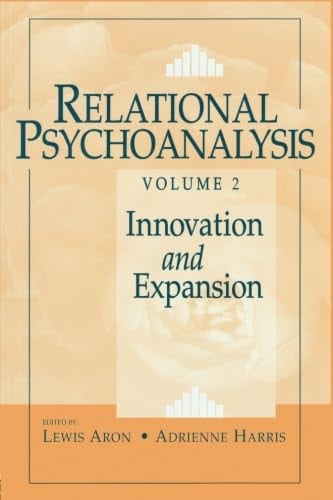
Relational psychoanalysis
The "relational turn" has transformed the field of psychoanalysis, with an impact that cuts across different schools of thought and clinical modalities. In the six years following publication of Volume 1, Relational Psychoanalysis: The Emergence of a Tradition, relational theorizing has continued to develop, expand, and challenge the parameters of clinical discourse. It has been a period of loss, with the passing of Stephen A. Mitchell and Emmanuel Ghent, but also a period of great promise, marked by the burgeoning publication of relational books and journals and the launching of relational training institutes and professional associations. Volume 2, Relational Psychoanalysis: Innovation and Expansion, brings together key papers of the recent past that exemplify the continuing growth and refinement of the relational sensibility. In selecting these papers, Editors Lewis Aron and Adrienne Harris have stressed the shared relational dimension of different psychoanalytic traditions, and they have used such commonalities to structure the best recent contributions to the literature. The topics covered in Volume 2 reflect both the evolution of psychoanalysis and the unique pathways that leading relational writers have been pursuing and in some cases establishing.
The American Congress: the building of democracy
Congress is the heart and soul of our democracy, the place where interests are brokered, laws are established, and innovation is turned into concrete action. It is also where some of democracy's greatest virtues clash with its worst vices: idealism and compromise meet corruption and bitter partisanship. The American Congress unveils the rich and varied history of this singular institution. Julian E. Zelizer has gathered together forty essays by renowned historians to capture the full drama, landmark legislation, and most memorable personalities of Congress. Organized around four major periods of congressional history, from the signing of the Constitution to the creation of the Department of Homeland Security, this volume brings a fresh perspective to familiar watershed events: the Civil War, Watergate, the Vietnam War. It also gives a behind-the-scenes look at lesser-known legislation debated on the House and Senate floors, such as westward expansion and war powers control. Here are the stories behind the 1868 vote to impeach President Andrew Johnson; the rise of Jeannette Rankin, the first woman elected to Congress and a leading advocate for pacifism; and the controversy surrounding James Eastland of Mississippi, who carried civil rights bills in his pockets so they could not come up for a vote. Sidebars further spotlight notables including Huey Long, Sam Rayburn, and Tip O'Neill, bringing the sweeping history of our lawmaking bodies into sharp focus. If you've ever wondered how Congress worked in the past or what our elected officials do today, this book gives the engaging, often surprising, answers.

If you really want to change the world: a guide to creating, building, and sustaining breakthrough ventures
"Silicon Valley's popular approach to creating new ventures is rooted in trial and error-test markets with new concepts and a minimum amount of capital, and hope for valuable businesses to emerge. But this fail-fast, hit-or-miss, step-and-pivot, or tech-first philosophy can leave a trail of destruction and loss in its wake. It can be like a random walk in the forest-without a compass. This book is about helping the great entrepreneurs find true north. Henry Kressel and Norman Winarsky-technologists, inventors, and investors with stellar track records-have an approach for those who wish to create a market-leading company that will make an impact on the world: a disciplined and staged approach they've used to launch, invest in, and develop dozens of successful companies-and to create whole new markets. The method they describe takes the entrepreneur by the hand, step-by-step, through the critical stages of development of a great venture, from concept to acquisition or public offering, to being a mature company seeking to maintain its culture of innovation. It is a guide by innovators and for innovators, with approaches that are timeless. If You Really Want to Change the World is your guide to creating massively successful ventures. Drawing on the authors' experiences as well as those of their partners from around the world, Kressel and Winarsky share the stories of their triumphs and misses as of a way of demonstrating their method and inspiring their readers. They guide entrepreneurs and innovators in companies of all scale-start-ups, research institutions, government agencies, and corporations-on how to execute with the aim of creating companies that can change the world. "--

The making of Americans: democracy and our schools
From the bestselling author of Cultural Literacy , a passionate and cogent argument for reforming the way we teach our children "Ought to be read by anyone interested in the education and training of the next generation of Americans."--Glenn C. Altschuler, Boston Globe Why, after decades of commissions, reforms, and efforts at innovation, do our schools continue to disappoint us? In this comprehensive and thought-provoking book, educational theorist E. D. Hirsch, Jr. offers a masterful analysis of how American ideas about education have veered off course, what we must do to right them, and most importantly why . He argues that the core problem with American education is that educational theorists, especially in the early grades, have for the past sixty years rejected academic content in favor of "child-centered" and "how-to" learning theories that are at odds with how children really learn. The result is failing schools and widening inequality, as only children from content-rich (usually better-off) homes can take advantage of the schools' educational methods. Hirsch unabashedly confronts the education establishment, arguing that a content-based curriculum is essential to addressing social and economic inequality. A nationwide, specific, grade-by-grade curriculum established in the early school grades can help fulfill one of America's oldest and most compelling dreams: to give all children, regardless of language, religion, or origins, the opportunity to participate as equals and become competent citizens. Hirsch not only reminds us of these inspiring ideals, he offers an ambitious and specific plan for achieving them.

The reproach of hunger: food, justice, and money in the twenty-first century
"In a groundbreaking book based on six years of reporting, leading expert on humanitarian aid and development David Rieff offers a review of whether the end of extreme poverty and widespread hunger are within our reach. Some of the most brilliant scientists, world politicians, and development experts agree that the eradication of hunger is an essential task for the new millennium. Yet in the last decade, the prices of wheat, soy and rice have soared. This has condemned the hundreds of millions of the world's population who live on less than one dollar per day to a state of hunger and insecurity. Rieff searches for the causes of this food security crisis, as well as what lies behind the failures to respond to disaster: failures to address climate change, poor governance, and misguided optimism. Rieff cautions against the increased privatization of aid, as well as the interventions of celebrity campaigners, whose business-led solutions rob development of political urgency. He dismisses the idle hope of Bill Gates and Warren Buffett that food scarcity can be solved by technological innovation alone. The path ahead, Rieff reminds us, demands we rethink the fundamental causes of the world's grotesque inequalities and understand that what is at stake is a political challenge we are failing to confront".

While Canada slept: how we lost our place in the world
Canada emerged from World War II with the world's fourth-largest military and the infrastructure to build nuclear weapons if it wanted. Today, its military is a shadow of its once-glorious self, and Canada's diplomatic influence in the world is in decline, according to Andrew Cohen, a journalism professor at Ottawa's Carleton University. In his book While Canada Slept, Cohen laments the "aimlessness" of Canada's foreign policy and the "lethargy" of its politicians at a time of world turmoil. He admits he isn't the first to make the argument. His innovation is to survey Canada's once-great influence and its woeful present through the eyes of three pioneers of its foreign-affairs establishment: Hume Wrong, a legendary senior external affairs official; Norman Robertson, a clerk of the Privy Council; and Lester Pearson, the prime minister. The three men gave Canada a reputation for "punching above its weight" and contributed to Canada's towering diplomatic role of the 1950s and 1960s. ?Cohen writes that the three would be saddened by what has become of their country. Canadians are a people "without memory," he suggests, citing a survey that found 88 percent of those aged 18 to 34 could not identify Pearson's role in defusing the Suez crisis in 1956. "We are no longer as strong a soldier, as generous a donor and as effective a diplomat, and it has diminished us as a people," he writes. While Cohen claims not to be partisan, he is especially critical of Jean Chrétien's government for cutting funds from the military, foreign aid, and diplomatic service. Some of Cohen's arguments have indeed been made before, and they fall flat at times. He doesn't explain, for example, why Canada should spend as much on the military as during the Korean War, when it devoured 7.3 percent of GDP. The book could also use an index. But generally it is a decent effort to enliven the dry issue of Canada's foreign policy and is most interesting as a survey of the country's diplomatic heyday.

The San Francisco oracle, facsimile edition: the psychedelic newspaper of the Haight-Ashbury, 1966-1968
A complete, full-color recreation in book form of all 12 issues of the legendary psychedelic newspaper originally published in the Haight-Ashbury 1966-68. Edited by Allen Cohen $175.00 Library Edition (ISBN 0-916147-11-8) / $700.00 Collector's Edition (ISBN 0-916147-12-6) / 431 pp / 11" x 14"/ hardbound / archival paper / Library Edition limited to 1700 copies / Collectors Edition limited to 200 copies The San Francisco Oracle, published in the Haight-Ashbury from 1966 to 1968, was one of the most unique and beautiful publications of the 60's. It is remembered for it's extraordinary graphic design by major San Francisco artists, its rainbow colors and the cultural explorations and breakthroughs in its articles, interviews and poetry. At its height, over 120,000 copies of each issue of The Oracle were printed and distributed, and each copy was read by many people. The Oracle is quoted and praised in most of the histories of the 60's. Writers who appeared in The Oracle include: Gary Snyder, William Burroughs, Allen Ginsberg, Alan Watts, Stephen Levine, Lenore Kandel, Tim Leary, Michael McClure, Paul Krassner, Buckminster Fuller, Carl Rogers, Richard Alpert (Ram Dass), Robert Theobald, Lawrence Ferlinghetti and others. Artists include many of the great San Francisco Poster artists such as: Rick Griffin, Stanley Mouse, Alton Kelly, Bruce Conner, Michael Bowen and Gary Grimshaw. During the 60's there was an incredible surge of creative innovation in journalism. In response to the mainstream media's control of information regarding the Vietnam War, the anti-war movement and the cultural changes that were sweeping America, every large city, many college campuses and even some high schools created their own underground newspapers. Out of this creative ferment arose one publication that burst the boundaries of the newspaper format both in graphic and in written content;The San Francisco Oracle. The Oracle printed artwork in bold colors, merging written content and artistic vision. At times it was difficult to tell if the paper was reflecting the changes in the new culture or originating them. Its style and technical innovations were copied by many of the alternative papers and some of the more adventurous mainstream media. The Oracle is now a cherished legend. Those who remember it compare its beauty to the medieval illuminated manuscripts and the illustrated books of Blake and Dori.

Revisiting "The culture of the school and the problem of change"
Part I reproduces the 2nd edition of "The culture of the school and the problem of change"; in part II, Dr. Sarason "revisits" the text.

Everyday chaos: technology, complexity, and how we're thriving in a new world of possibility
Modern science, the Internet, big data, and AI are each saying the same thing to us: the world is -- and always has been -- far more complex and unpredictable than we've allowed ourselves to see. As a result we're undergoing a sea change in our understanding of how things happen, and in our deepest strategies for predicting, preparing for, and managing our lives and our businesses. For example, machine learning allows us to make better predictions (think the weather, stock performance, online clicks) but we know less about why those predictions are right--and we need to get used to that. And in fact, over the past twenty years we've been unintentionally developing strategies that avoid anticipating what will happen so we don't have to depend on unreliable revenue forecasts, assumptions about customer needs, and hypotheses about how a product will be used. By embracing these strategies, we're flourishing by creating yet more possibilities and yet more unpredictability. In wide-ranging stories and characteristically all-encompassing syntheses, technology researcher, internet expert, and philosopher David Weinberger reveals the trends that hide in so many aspects of our lives--and shows us how they matter.--

What Went Wrong? Case Studies of Process Plant Disasters
"What Went Wrong?" has revolutionized the way industry views safety. The new edition continues and extends the wisdom, innovations and strategies of previous editions, by introducing new material on recent incidents, and adding an extensive new section that shows how many accidents occur through simple miscommunications within the organization, and how strightforward changes in design can often remove or reduce opportunities for human errors. Kletz' approach to learning as deeply as possible from previous experiences is made yet more valuable in this new edtion, which for the first time brings together the approaches and cases of "What Went Wrong" with the managerially focussed material previously published in "Still Going Wrong." Updated and supplemented with new cases and analysis, this fifth edition is the ultimate resource of experienced based anaylsis and guidance for the safety and loss prevention professionals. * A million dollar bestseller, this trusted book is updated with new material, including the Texas City and Buncefield incidents, and supplemented by material from Trevor Kletz's 'Still Going Wrong' * Now presents a complete analysis of the design, operational and for the first time, managerial causes of process plant accidents and disasters, plus their aftermaths * Case histories illustrate what went wrong, why it went wrong, and then guide readers in how to avoid similar tragedies: learn from the mistakes of others
