262 results for "Jewish History"

Between the lines: readings on Israel, the Palestinians, and the U.S. "war on terror"

Honig-Parnass, Tikva
This compilation of essays, edited by a Palestinian writer and an Israeli journalist, constitutes a challenge to critically rethink the Israeli-Palestinian conflict. Between the Lines presents a groundbreaking study that brings together insights from across the lines of conflict to put the latest chapter of Israeli apartheid and Palestinian resistance into context. Contributors include: Marwan Bargouti, Dr. Azmi Bishara, Dr. Sami Shalom Chetrit, Dr. Saleh Abdel Jawwad, Husam Khader, Eileen Kuttab, Dr. Yitzhak Laor, Dr. Adi Ophir, Dr. Ilan Pappe, Linda Tabar, Graham Usher and Dr. Jamal Zahalqa. "The destruction of a nation is not an everyday event in history. It is being carried out before our eyes, systematically and consciously, with cruelty and self-righteousness, and with the backing of the global superpower. These acute and informed essays develop a perspective on the background and unfolding of these events that is remote from anything likely to be heard in the West. They merit close attention and thoughtful consideration." --Noam Chomsky "This collection provides a lucid and critical analysis of the Israeli and American policies in the Middle East. The disastrous repercussions of this unholy alliance are presented in this collection through incisive and timely contributions. In the best tradition of [the journal] Between the Lines, readers will be rewarded by this collection that unmasks and exposes what the mainstream media refuses to report or admit." --Ilan Pappe, Israeli historian and author of A History of Modern Palestine Toufic Haddad is a Palestinian American activist who was formerly co-editor with Tikva Honig-Parnass of the Jerusalem-based magazine Between the Lines. Tikva Honig-Parnass is a Jewish Israeli active in radical anti-occupation movements.
Haymarket Books 2007 405 pages

Insider/outsider: American Jews and multiculturalism

David Biale,Michael Galchinsky,Susannah Heschel
Twelve distinguished historians, political theorists, and literary critics present new perspectives on multiculturalism in this important collection. Central to the essays (all but one is appearing in print for the first time) is the question of how the Jewish experience can challenge the conventional polar opposition between a majority "white monoculture" and a marginalized "minorities of color multiculture." This book takes issue with such a dichotomy by showing how experiences of American Jews can undo conventional categories. Neither a complaint against multiculturalism by Jews who feel excluded from it, nor a celebration of multiculturalism as the solution to contemporary Jewish problems, Insider/Outsider explores how the Jews' anomalous status opens up multicultural history in different and interesting directions. The goal of the editors has been to transcend the notion of "comparative victimology" and to show the value of a narrative that does not rely on competing histories of persecution. Readers can discover in these essays arguments that will broaden their understanding of Jewish identity and multicultural theory and will enliven the contemporary debate about American culture generally. Twelve distinguished historians, political theorists, and literary critics present new perspectives on multiculturalism in this important collection. Central to the essays (all but one is appearing in print for the first time) is the question of how the Jewish experience can challenge the conventional polar opposition between a majority "white monoculture" and a marginalized "minorities of color multiculture." This book takes issue with such a dichotomy by showing how experiences of American Jews can undo conventional categories. Neither a complaint against multiculturalism by Jews who feel excluded from it, nor a celebration of multiculturalism as the solution to contemporary Jewish problems, Insider/Outsider explores how the Jews' anomalous status opens up multicultural history in different and interesting directions. The goal of the editors has been to transcend the notion of "comparative victimology" and to show the value of a narrative that does not rely on competing histories of persecution. Readers can discover in these essays arguments that will broaden their understanding of Jewish identity and multicultural theory and will enliven the contemporary debate about American culture generally.
University of California Press 1998 280 pages

Intimate politics: how I grew up Red, fought for free speech, and became a feminist rebel

Aptheker, Bettina
Set amidst the political upheaval of the McCarthy trials, the Vietnam War, and the rise of the women's movement, Intimate Politics is a courageous and uncompromising account of one woman's personal and political transformation, and a fascinating portrayal of a key chapter in our nation's history. At eight years old, Bettina Aptheker watched her family's politics play out in countless living rooms across the country when her father, historian and U.S. Communist Party leader Herbert Aptheker, testified on television in front of the House on Un-American Activities Committee in 1953. Born into one of the most influential U.S. Communist families whose friends included W. E. B. Du Bois, Paul Robeson, and Elizabeth Gurley Flynn, Bettina lived her parents' politics witnessing first-hand one of the most dramatic upheavals in American history. She also lived with a terrible secret: incest at the hands of her famous father and a frightening and lonely life lived inside a home wrought with family tensions. A gripping and beautifully rendered memoir, Intimate Politics is at its core the story of one woman's struggle to still the demons of her personal world while becoming a controversial public figure herself. This is the story of childhood sexual abuse, abortion, sexual violence, activism, and the triumph over one's past. It's about FBI harassment and persecution, Jewish heritage, and lesbian identity. It is, finally, about the courage to speak one's truth despite the consequences and to break the sacred silence of family secrets.
Seal Press 2006-09-26 549 pages

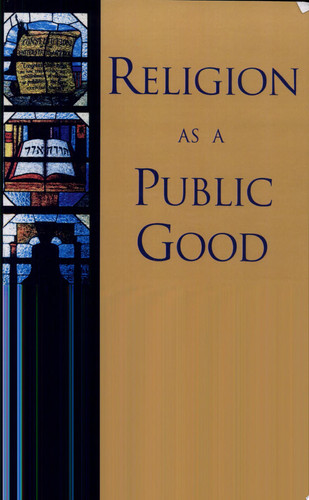
Religion as a public good: Jews and other Americans on religion in the public square

Alan Mittleman
Religion as a Public Good: Jews and Other Americans on Religion in the Public Square explores the often controversial topic of how religion ought to relate to American public life. The sixteen distinguished contributors, both Jewish and Christian, reflect on the topic out of their own disciplines-social ethics, political theory, philosophy, law, history, theology, and sociology. and take a stand based on their religious convictions and political beliefs. The volume is at once scholarly and committed, polemic and civil, reflective and activist. Written in the shadow of 9/11, it invites a new consideration of how religion enhances democratic public life with full awareness of the dangers that religion can sometimes pose. The volume is polemical, as befits the topic, but also civil, as befits a dialogue about an issue of profound significance for democratic citizenship.
Rowman & Littlefield 2003-12-09 336 pages

The rabbi's wife: the rebbetzin in American Jewish life

Schwartz, Shuly Rubin
2006 National Jewish Book Award, Modern Jewish Thought Long the object of curiosity, admiration, and gossip, rabbis' wives have rarely been viewed seriously as American Jewish religious and communal leaders. We know a great deal about the important role played by rabbis in building American Jewish life in this country, but not much about the role that their wives played. The Rabbi’s Wife redresses that imbalance by highlighting the unique contributions of rebbetzins to the development of American Jewry. Tracing the careers of rebbetzins from the beginning of the twentieth century until the present, Shuly Rubin Schwartz chronicles the evolution of the role from a few individual rabbis' wives who emerged as leaders to a cohort who worked together on behalf of American Judaism. The Rabbi’s Wife reveals the ways these women succeeded in both building crucial leadership roles for themselves and becoming an important force in shaping Jewish life in America.
New York University Press 2006-01-01 312 pages

Prologue to annihilation: ordinary American and British Jews challenge the Third Reich

Norwood, Stephen H.
"American and British appeasement of Nazism during the early years of the Third Reich went far beyond territorial concessions. In Prologue to Annihilation: Ordinary American and British Jews Challenge the Third Reich, Stephen H. Norwood examines the numerous of ways that the two nations' official position of tacit acceptance of Jewish persecution enabled the policies that ultimately led to the Final Solution and how Nazi annihilationist intentions were clearly discernible even during the earliest years of Hitler's rule. Further, Norwood looks at the nature and impact of American and British Jewish resistance to Nazi persecution and the efforts of Jews at the grassroots level to press Jewish organizations to respond more forcefully to the Nazi menace. He examines the worldwide protest and boycott movements against Germany and German goods as well as mass demonstrations by working-class and lower-middle-class Jews in many American and British cities. Prologue to Annihilation details how the events of 1930-1936 tested American and British societies' willingness to accept Nazism and its anti-Jewish philosophy and illuminates the divisions that existed even within the Jewish community about how best to challenge Nazi antisemitic policies and atrocities"--
Indiana University Press 2021 347 pages

Jacob Adler: a life on the stage

Adler, Jacob P.
(Applause Books). Jacob Adler, with his performances in the Yiddish King Lear , Uriel Acosta and Shylock in The Merchant of Venice , became first a megastar of the exploding Yiddish theatre, and then all of Broadway. His memoirs, originally written and published in Yiddish and now translated (by his granddaughter) into English provides not only a compelling portrait of one of America's greatest actors but a fascinating social history of his time.
Applause 2001-05 403 pages

From Suburb to Shtetl The Jews of Boro Park

Egon Mayer,William B. Helmreich
"From Suburb to Shtetl" is an outstanding ethnography that moves beyond simple demographics. Mayer weaves an intricate tapestry of how family, school, and community leaders influence each other. Whether discussing the role of the rebbe or the matchmaker, those who know these communities will find what he says as relevant today as it was when first penned. This is hardly surprising, for the ultra-Orthodox community takes great pride in not changing, in maintaining itself as it was in Europe despite the allure of modern American society. His discussion of synagogue life is particularly informative and evocative. Those in charge of helping immigrants adopted the path of least resistance, allowing and even encouraging them to retain their identities except for those few aspects that might threaten the country's national interests. The American Orthodox community was tremendously augmented by the arrival from Europe, after World War Two, of thousands of Orthodox Jews who remained devoted to that way of life. Egon Mayer was himself part of a smaller, but significant group of Jews who came to the U.S. and settled mostly in Boro Park in the wake of the 1956 Hungarian Revolution. The interaction between the Hasidim and their less fervent Orthodox counterparts described and analyzed in this volume tells us a great deal about how people negotiate their beliefs, values, and norms when forced into close contact with each other in an urban setting within the larger American culture. By exploring these and many other related issues Mayer has given us the chance to assess and forecast the future of American Jewish life as a whole.
Taylor & Francis Group 2017-10-12 214 pages

Facing Black and Jew: literature as public space in twentieth-century America

Newton, Adam Zachary
A reading of African American and Jewish American writers from Henry Roth and Ralph Ellison to Philip Roth and David Bradley. Reading the work of such writers alongside and through one another, Newton's book offers an original way of juxtaposing two major traditions in modern American literature, and rethinking the sometimes vexed relationship between two constituencies ordinarily confined to sociopolitical or media commentary alone. Newton combines Emmanuel Levinas's ethical philosophy and Walter Benjamin's theory of allegory in shaping an innovative kind of ethical-political criticism. Through artful, dialogical readings of Saul Bellow and Chester Himes, David Mamet and Anna Deavere Smith, and others, Newton seeks to represent American Blacks and Jews outside the distorting mirror of 'Black-Jewish Relations', and restrictive literary histories alike. A final chapter addresses the Black/Jewish dimension of the O. J. Simpson trial.
Cambridge University Press 1999-07-15 218 pages

The Jewish bishop and the Chinese bible: S.I.J. Schereschewsky (1831-1906)

Eber, Irene
A study of the life and times of Bishop S.I.J. Schereschewsky (1831-1906) and his translation of the Hebrew Old Testament into northern vernacular (Mandarin) Chinese. Based largely on archival materials, missionary records and letters, the book includes an analysis of the translated Chinese text together with Schereschewsky's explanatory notes. The book examines his Jewish youth in Eastern Europe, conversion, American seminary study, journey to Shanghai and Beijing, mission routine, the translating committee's work, his tasks as Episcopal bishop in Shanghai and the founding of St. John's University. Concluding chapters analyze the controversial "Term Question" (the Chinese term for God) and Schereschewsky's techniques of translating the Hebrew text. Included are useful discussions of the Old Testament's Chinese reception and the role of this translation for subsequent Bible translating efforts.
Brill 1999 287 pages

Rupture and reconstruction: the transformation of contemporary orthodoxy

Soloveitchik, Haym
"The essay that forms the core of this book is an attempt to understand the developments that have occurred in Orthodox Jewry in America in the last seventy years, and to analyse their implications. The prime change is what is often described as 'the swing to the right', a marked increase in ritual stringency, a rupture in patterns of behaviour that has had major consequences not only for Jewish society but also for the nature of Jewish spirituality. For Haym Soloveitchik, the key feature at the root of this change is that, as a result of migration to the 'New Worlds' of England, the US, and Israel and acculturation to its new surroundings, American Jewry--indeed, much of the Jewish world-- had to reconstruct religious practice from normative texts: observance could no longer be transmitted mimetically, on the basis of practices observed in home and street. In consequence, behaviour once governed by habit is now governed by rule. This new edition allows the author to deal with criticisms raised since the essay, long established as a classic in the field, was originally published, and enables readers to gain a fuller perspective on a topic central to today's Jewish world and its development."
Littman Library of Jewish Civilization, in association with Liverpool University Press 2021 132 pages

Love in black and white: a memoir of race, religion, and romance

Cohen, William S.
Streaming Video on Love In Black & White now available at Expandedbooks.com Most Americans regard the World War II period as belonging to the "greatest generation," but it was also a time when religious intolerance and racial violence flourished. Shamefully, it was commonplace to see signs that read "Whites Only" or "Jews Not Allowed." It is within this world that this compelling memoir is set. William Cohen, born in Bangor, Maine, was the eldest son of a Jewish father and a Protestant Irish mother. Janet Langhart, an African-American, was raised in Indianapolis, Indiana by her single parent mother, a Southern Baptist. The book draws fascinating parallels between the histories of two people from different regions, races, and religions, as both are witnesses to and targets of the social tensions of the day. Throughout Love in Black and White, readers accompany Bill and Janet in their struggle to overcome to the barriers of ethnic and racial bigotry and hatred. The stories are rich and profound. At times they are amusing. Other times, harrowing. Against impossible odds, Bill would be elected to serve his country as a U.S. Congressman and Senator, and Janet would become a prominent television personality, activist, and highly respected businesswoman and author. Opposites in so many ways―in color, faith and culture―seemingly a bundle of contradictions, they meet in 1974, become friends, and eventually fall in love. They decide to marry on Valentine's Day 1996 in the very place that once harbored some of the nation's most prominent racists-the U.S. Capitol. They receive the surprise of a lifetime when Bill is asked by President Bill Clinton to serve as the nation's 20th Secretary of Defense. It is a calling that proves to be life transforming for both him and Janet, as they lead, inspire and bring comfort to the men and women who defend our nation. It is at the Pentagon where they witness just how powerful our nation ca
Rowman & Littlefield Publishers 2007 373 pages

Antisemitism and the American far left

Norwood, Stephen H.
"Stephen H. Norwood has written the first systematic study of the American far left's role in both propagating and combating antisemitism. This book covers Communists from 1920 onward, Trotskyists, the New Left and its black nationalist allies, and the contemporary remnants of the New Left. Professor Norwood analyzes the deficiencies of the American far left's explanations of Nazism and the Holocaust. He explores far left approaches to militant Islam, from condemnation of its fierce antisemitism in the 1930s to recent apologies for jihad. Norwood discusses the far left's use of long-standing theological and economic antisemitic stereotypes that the far right also embraced. The study analyzes the far left's antipathy to Jewish culture, as well as its occasional efforts to promote it. He considers how early Marxist and Bolshevik paradigms continued to shape American far left views of Jewish identity, Zionism, Israel, and antisemitism"--
Cambridge University Press 2013-08-19 318 pages

An American Orthodox dreamer: Rabbi Joseph B. Soloveitchik and Boston's Maimonides School

Farber, Seth
Rabbi Joseph B. Soloveitchik, born in 1903 and scion of a preeminent Lithuanian Orthodox family, was one of the most towering intellectual figures of American Orthodoxy in the twentieth century. After receiving rabbinic ordination and completing his studies toward a Ph.D., he immigrated to America where he served as the Rosh Yeshiva at the Rabbi Isaac Elchanan Theological Seminary of Yeshiva University. As the leader of centrist Orthodoxy in America for more than fifty years, his many accomplishments included his founding of the Maimonides School in Boston in 1937. Rabbi Soloveitchik served as the intellectual and spiritual force behind the Maimonides School from its founding and was responsible for its innovative curriculum. Synthesizing American educational methodologies and European Orthodox approaches to education, the Maimonides School became a prototype for an American Orthodox educational institution. Unique among contemporary Orthodox day schools, the coeducational nature of the classes at Maimonides, and to some extent the curriculum, was groundbreaking. Characterized by academic excellence in both Judaic studies and other subjects, the school offered boys and girls exactly the same education. Rabbi Soloveitchik’s school was particularly innovative by offering Talmud classes to girls on the same level as boys. The Maimonides School became a paradigm for the fledgling Orthodox Jewish day school movement nationwide. The character of the education there influenced later developments in the Orthodox community, such as the emphasis on higher level Torah study for women. By articulating a philosophy that advocated both traditional Orthodoxy as well as modernism and Americanism, the school gradually affected Boston’s Orthodox community, which came to be guided by its principles. As Seth Farber points out, the school, once rejected by the Jewish establishment in Boston, was eventually embraced by it. A community that saw no contradiction between democratic values and traditional Orthodox lifestyle emerged in Boston. This modern Orthodox community ultimately represented a significant voice in Boston’s Jewish and America's Orthodox cultures.
University Press of New England 2004 201 pages

Aerograms across the ocean: a love story in letters

Biale, David,Biale, Rachel
"In August 1970, David Biale, a 21-year-old American Jewish student, arrived at Kibbutz Kfar Ruppin in Israel's Bet She'an Valley as a volunteer. There, he met Rachel Korati, nine days shy of her eighteenth birthday. They began an intense dialogue about how a secular Jew might be Jewish and what the role of Israel and kibbutz ought to be in modern Jewish life. They also found a common language in the counter-culture of the 1960s to which both were drawn. Upon David's return to university studies in Berkeley and Rachel's first steps into independent adulthood - living in a town near Tel Aviv and working as a youth movement counselor -- the two commenced a correspondence in which they continued their intellectual and ideological discussions from the summer, engaging Jewish sources on the one hand, and contemporary events on the other. Gradually, the letters became more intimate and so began an epistolary romance, which one might associate more with the nineteenth century and which would be inconceivable in today's world of texting and email. Over the next two years, the correspondence continued, often on a daily basis. Twice, David's plans to come to Israel were dashed. The two struggled to hold onto a relationship composed primarily of written words. In the fall of 1971, Rachel was drafted into the Israeli Army and David had his own brush with the American draft in the last phase of the Vietnam War. Aerograms Across the Ocean: A Love Story in Letters opens a rare window into the lives and thoughts of two passionate young people, trying to find their identities and life trajectories in the tumultuous early 1970s. By turns philosophical and playful, poetic and prosaic, idealistic and uncertain, pensive and erotic, this jointly-written memoir is a coming-of-age story in Israel after the Six Day War and in America in the shadow of the Vietnam War. The book is organized around the 258 letters the authors exchanged, a correspondence that takes readers back into a different age, half a century ago." --
Wildcat Books 2021-12-15 232 pages

Identity papers: contemporary narratives of American Jewishness

Meyers, Helene
Identity Papers argues that contemporary Jewish American literature revises our understanding of Jewishness and Jewish difference. Moving beyond the reductive labeling of texts and authors as “too Jewish” or “not Jewish enough,” and focusing instead on narratives that portray Jewish regeneration through feminist Orthodoxy, queerness, off-whiteness, and intermarriage, Helene Meyers resists a lachrymose view of contemporary Jewish American life. She argues that such gendered, sexed, and raced debates about Jewish identity become opportunities rather than crises, signs of creative potential rather than symptoms of assimilation and deracination. Thus, feminist debates within Orthodoxy are allied to Jewish continuity by Rebecca Goldstein, Allegra Goodman, and Tova Mirvis; the geography of Jewish identity is racialized by Alfred Uhry, Tony Kushner, and Philip Roth; and the works of Jyl Lynn Felman, Judith Katz, Lev Raphael, and Michael Lowenthal queer the Jewish family as they reveal homophobia to be an abomination. Even as Identity Papers expands Jewish literary horizons and offers much-needed alternatives to the culture wars between liberal and traditional Jews, it argues that Jewish difference productively troubles dominant narratives of feminist, queer, and whiteness studies. Meyers demonstrates that the evolving Jewish American literary renaissance is anything but provincial; rather, it is engaged with categories of difference central to contemporary academic discourses and our national life.
SUNY Press 2012-07-02 239 pages