225 results for "Novel"

Jumping the line: the adventures and misadventures of an American radical

Herrick, William
An eye-opening account of time served in the great battles of our century - for workers' rights, against Fascism, Communism, and racism - Jumping the Line is the life story of an American original. William Herrick relates his adventures and misadventures on the front lines of the Spanish Civil War, in (and very much out of) the Communist Party, driving a tractor on a communal farm in Michigan, jumping the line as a hobo, organizing African American sharecroppers in Georgia, at work with Orson Welles, and immersed in his own writing. When Paul Berman interviewed Herrick in the Village Voice in 1986, for the fiftieth anniversary of the Spanish Civil War, Herrick's remarks so incensed other veterans of the Abraham Lincoln battalion that they picketed the paper. What William Herrick has to say doesn't always go down easily. But for those who like the truth, with a dash of wit and a healthy dose of history, it can be exhilarating.
University of Wisconsin Press 1998 283 pages

Life out of context: which includes a proposal for the non-violent takeover of the House of Representatives

Mosley, Walter
Life Out of Context begins as a powerful, brooding and humorously honest examination of Mosley's own sense of cultural dislocation as an African American writer. But due to a series of serendipitous events -- the screening of a documentary about Africa, an encounter with Harry Belafonte and Hugh Masakela -- Mosley, rather like the protagonist in one of his mystery novels, has a series of epiphanies on the role of a black intellectual in America. He asks: What can we do to fight injustice, poverty, exploitation, and racism? What is globalization doing to us? Through these late night meditations, Mosley attempts to transcend his earlier feelings of living a "life out of context" and seeks instead to find a political context. He ends with a call to arms, proposing that African Americans have to break their historic ties with the Democrat Party, and form a party of their own.
Nation Books 2006 103 pages

American Taboo A Murder in the Peace Corps

Philip Weiss
In 1975, a new group of Peace Corps volunteers landed on the island nation of Tonga. Among them was Deborah Gardner -- a beautiful twenty-three-year-old who, in the following year, would be stabbed twenty-two times and left for dead inside her hut. Another volunteer turned himself in to the Tongan police, and many of the other Americans were sure he had committed the crime. But with the aid of the State Department, he returned home a free man. Although the story was kept quiet in the United States, Deb Gardner's death and the outlandish aftermath took on legendary proportions in Tonga. Now journalist Philip Weiss "shines daylight on the facts of this ugly case with the fervor of an avenging angel" (Chicago Tribune), exposing a gripping tale of love, violence, and clashing ideals. With bravura reporting and vivid, novelistic prose, Weiss transforms a Polynesian legend into a singular artifact of American history and a profoundly moving human story.
HarperCollins 2005-06-28 416 pages

The last of all possible worlds: and, The temptation to do good

Drucker, Peter F.
"Rich and intriguing."— Kirkus Reviews on The Last of All Possible Worlds "Convincing and haunting."— Publishers Weekly on The Temptation to Do Good Best-selling author Peter F. Drucker wrote just two novels. Here for the first time in paperback are both. In The Last of All Possible Worlds , royalty, bankers, lovers, and wives intertwine to create a vivid portrait of Europe in the early 1900s. We meet wise and worldly Prince Sobieski, Vienna’s ambassador in London, his enchanting wife, her English lover, and her enigmatic lifelong companion, Josefa. When Sobieski’s illegitimate daughter makes a demand of her influential father, the unspoken rules of the family are challenged. Sobieski’s world is further upset when two powerful merchant bankers, the tragic McGregor Hinton and the ambitious Julius von Mosenthal, arrive in London—both with their own requirements of the prince. The Temptation to Do Good tells the story of Father Heinz Zimmerman, the well-regarded president of an American Catholic university. When he attempts to help a chemistry teacher who has been denied tenure he accidentally opens the door to the underlying tensions in the university.
Paul Dry Books 2016 348 pages

Gross exaggerations: the meshuga comic strips

Gross, Milt
"The king of "screwball" comic strips, Milt Gross had a varied career in movies and animation, humorous poetry and illustrated novels, and, most prolifically, comic strips. Beginning in the 1920s, his comics were born of the Yiddish humor in vaudeville and expanded to lampooning all the foibles and fallacies of American life. Filled with bizarre characters and frenzied, slapstick action, Gross's newspaper comics entertained readers for decades."--
Sunday Press Books 2020 144 pages

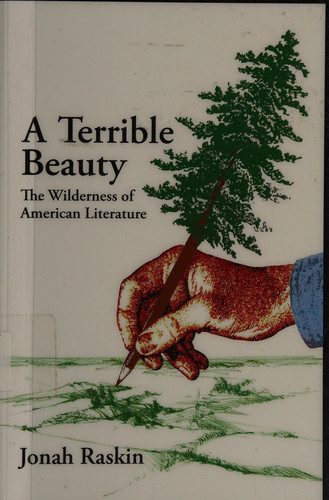
A terrible beauty: the wilderness of American literature

Raskin, Jonah
ABOUT THE BOOK Shortly before he published Walden; or Life in the Woods, Henry David Thoreau called ¿The library a wilderness of books.¿ He also noted that while Americans were ¿clearing the forest in our westward progress, we are accumulating a forest of books in our rear, as wild and unexplored as any of nature¿s primitive wildernesses.¿ In "A Terrible Beauty: the Wilderness of American Literature," Jonah Raskin takes a long close look at the forest of books that poets, novelists and essayists mapped and explored before and after Thoreau. The first work of cultural criticism to look back at writing in the United States from the perspective of the contemporary environmental crisis, Raskin offers insights for students, teachers and lovers of literature as well as for backpackers and hikers who have trekked across untrammeled forests, deserts and mountains. ABOUT THE AUTHOR Jonah Raskin, Phd, has taught American literature at Sonoma State University, the State University of New York at Stony Brook and as a Fulbright professor at the University of Antwerp and the University of Ghent in Belgium. The author of fifteen books, he earned his B.A. at Columbia College in New York, his M.A. at Columbia University and his Ph.D. at the University of Manchester, Manchester, England. He lives in northern California and has written for The San Francisco Chronicle, The L.A. Times, The Nation, The Redwood Coast Review and Catamaran.
Regent Press 2014 366 pages

When men were the only models we had: my teachers Barzun, Fadiman, and Trilling

Heilbrun, Carolyn G.
"Once upon a time there were three men who exemplified, without knowing it, my ideal in life. All of them became famous as writers, influential thinkers, and public figures. Their names are Clifton Fadiman, Lionel Trilling, and Jacques Barzun. They met in college, they remained aware of one another as friends or, if less than friends, companions and fellow crusaders on behalf of similar ideals. Although one of them never knew of my existence, the second ignored it, and the third treated me with formal kindness, without them I would have had no concrete model in my youth of what I wanted to become. Theirs was the universe in which I wished to have my being." With these words, Carolyn Heilbrun begins a personal, pointed, and surprisingly moving account of how a woman, destined to become one of the leading feminist critics of her day as well as one of our most popular mystery novelists, found the models for the life she aspired to in men who neither imagined nor countenanced women as their equals or colleagues. Remembering these three figures as they were when she hung upon their printed words and professorial presences, reappraising them now half a century later, Heilbrun vividly evokes what these remarkable individuals had to offer to an admiring young woman who could not acknowledge—and later would not accept—the impossibility of following in their paths. In the admired anthologies, magazine articles, and introductions through which Fadiman transmitted the world of high culture to an educated general public, he indicated no devotion to questions of female destiny; yet long before Heilbrun could imagine the life in the academy that was denied to Fadiman but would eventually be hers, his was the career to which she privately aspired. Later, in her days as a graduate student at Columbia, it was Trilling who would have the most powerful intellectual effect upon her, formulating as he did the tensions inherent in the desire to salvage what was of worth from a sad, almost moribund culture, even if he frankly admitted to no interest in teaching women or in considering their destinies beyond the domestic sphere. Only the courtly Barzun, also a mentor at Columbia, seemed capable of respecting female accomplishment and eschewing stereotyped views of women. Yet together, all three men unconsciously made Heilbrun's life as a feminist possible, by representing both what she wished to join and what she needed to struggle against. When Men Were the Only Models We Had is a loving, admiring, but stringent account of youthful enthusiasms, of the romance of ideas, of the intellectual brilliance of three unwitting mentors, and of the hopelessness of female ambition in the years before the feminist movement of the last three decades of the last century. And it is, in the end, a book that offers splendid proof that the models we once had are no longer the only ones before us.
University of Pennsylvania Press 2002 159 pages

The end of the Jews: a novel

Mansbach, Adam
Tristan Brodsky, sprung from the asphalt of the Depression-era Bronx, goes on to become one of the swaggering Jewish geniuses who remake American culture, but slowly suffocates his poet wife, who harbors secrets of her own. Nina Hricek, a driven young Czech photographer, escapes from behind the Iron Curtain with a group of black American musicians, only to find herself trapped yet again, this time in a doomed love affair. And finally, Tris Freedman, grandson of Tristan and lover of Nina, a graffiti artist and unanchored revolutionary, cannibalizes his family history to feed his muse. In the end, their stories converge, and the survival of each requires the sacrifice of another.
Spiegel & Grau 2008-03-18 310 pages

Namedropping: mostly literary memoirs

Elman, Richard M.
In the course of the same old race I find myself writing about knowing some people--how fame seems to set some people apart from us, once known: I was astonished by Ernest Hemingway's small, weak handshake when we were introduced at Scribners by John Hall Wheelock and by the jolt of force with which Elie Wiesel squeezed my hand. How long ago seems knowing, too: when I first meet Isaac Singer he asks me, "Who is Mr. Saul Bellow?" We're on the Upper West Side in his apartment next to the funeral parlor. A yellow parakeet hops around on Singer's bald forehead. Singer's great comic story of faith, "Gimpel the Fool," has only recently been published from Yiddish into English in a translation by Saul Bellow. They're both still a long way from Stockholm. "Do you know him? Can you tell me who this Mr. Bellow is?" he asks. It was not always possible to guess Singer's motives in acting as though he was not impressed with worldly reputations. His features of a medieval Polish saint, even to a faint white-haired tonsure effect around the crown of his skull, were backlit by the glowing monitor from his mischievous incubus.--from the Preface These are Richard Elman's candid snapshots in prose of the various, mostly literary celebrities he encountered during his four decades as a working writer and journalist--among them Isaac Bashevis Singer, Tillie Olsen, Bernard Malamud, Faye Dunaway, Hunter S. Thompson, and other important artists and writers who were Elman's teachers and, occasionally, adversaries. Engagingly written and never superficial, these portraits and anecdotes in many cases strike to the center of each subject's art. To many readers, these persons are just "names"; Elman brings them to life while never simplifying or overdramatizing their work.
State University of New York Press 1998-01-01 277 pages

Conversations with Chaim Potok

Potok, Chaim
One of America's most popular Jewish writers, Chaim Potok (b. 1929) is the author of such novels as The Chosen (1967), The Promise (1969), The Book of Lights (1981), and Davita's Harp (1985). Each of his novels explores the tension between tradition and modernity, and the clash between Jewish culture and contemporary Western civilization, which he calls "core-to-core culture confrontation." Although primarily known as a novelist, Potok is an ordained Conservative rabbi and a world-class Judaic scholar who has also published children's books, theological discourses, biographies, and histories. Conversations with Chaim Potok presents interviews ranging from 1976 to 1999. Potok discusses the broad range of his writing and the deep influence of non-Jewish novels-in particular, Evelyn Waugh's Brideshead Revisited and James Joyce's Portrait of the Artist as a Young Man -on his work. Interviews bear witness to Potok's many other influences-Orthodox Jewish doctrine, Freudian psychoanalytical theory, Picasso's Guernica, and Jewish kabbalah mysticism. Though labeled an American Jewish writer, Potok argues that Flannery O'Connor should then be called an American Catholic writer and John Updike an American Protestant writer. "In his mind," editor Daniel Walden writes, "just as Faulkner was a writer focused on a particular place, Oxford, Mississippi, . . . so Potok's territory was a small section of New York City." Potok often explores conflict in his writings and in his interviews. Strict Jewish teachings deem fiction an artifice and therefore unnecessary, yet since the age of sixteen Potok has been driven to write novels. At the root of all of these conversations is Potok's intense interest in the turmoil between Jewish culture, religion, and tradition and what he calls "Western secular humanism." As he discusses his work, he continually includes broader issues, such as the state of Jewish literature and art, pointing out with pride and enthusiasm his belief that Jewish culture, in the twentieth century, has finally begun to have a significant role in producing and shaping the world's art and literature. Whether discussing the finer details of Talmudic textual analysis or his period of chaplaincy during the Korean War, Potok is articulate and philosophical, bringing deep consideration into what may seem small subjects. Although his novels and histories take place primarily in the recent past, the Chaim Potok that emerges from this collection is a writer deeply rooted in the tensions of the present. Daniel Walden is Professor Emeritus of American Studies, English and Comparative Literature at Penn State University. He has written or edited several books, including On Being Jewish (1974), Twentieth Century American Jewish Writers (1984), The World of Chaim Potok (1985), and American Jewish Poets: The Roots and the Stems (1990).
University Press of Mississippi 2001 181 pages

Between the Middle East and the Americas: the cultural politics of diaspora

Evelyn Alsultany,Ella Habiba Shohat
Between the Middle East and the Americas: The Cultural Politics of Diaspora traces the production and circulation of discourses about "the Middle East" across various cultural sites, against the historical backdrop of cross-Atlantic Mahjar flows. The book highlights the fraught and ambivalent situation of Arabs/Muslims in the Americas, where they are at once celebrated and demonized, integrated and marginalized, simultaneously invisible and spectacularly visible. The essays cover such themes as Arab hip-hop's transnational imaginary; gender/sexuality and the Muslim digital diaspora; patriotic drama and the media's War on Terror; the global negotiation of the Prophet Mohammad cartoons controversy; the Latin American paradoxes of Turcophobia/Turcophilia; the ambiguities of the bellydancing fad; French and American commodification of Rumi spirituality; the reception of Iranian memoirs as cultural domestication; and the politics of translation of Turkish novels into English. Taken together, the essays analyze the hegemonic discourses that position "the Middle East" as a consumable exoticized object, while also developing complex understandings of self-representation in literature, cinema/TV, music, performance, visual culture, and digital spaces. Charting the shifting significations of differing and overlapping forms of Orientalism, the volume addresses Middle Eastern diasporic practices from a transnational perspective that brings postcolonial cultural studies methods to bear on Arab American studies, Middle Eastern studies, and Latin American studies. Between the Middle East and the Americas disentangles the conventional separation of regions, moving beyond the binarist notion of "here" and "there" to imaginatively reveal the thorough interconnectedness of cultural geographies.
University of Michigan Press 2012 334 pages

Haunted in the New World: Jewish American culture from Cahan to The Goldbergs

Weber, Donald
Discusses Jewish identity in America as reflected in the culture of immigrants and descendants of immigrants. Self-hatred or, at least, ambivalence about oneself in the face of native American values is one theme. Ch. 5 (pp. 98-125), "To Make 'a Jew': Projecting Antisemitism in Post-War America", analyzes two novels - Arthur Miller's "Focus" and Saul Bellow's "The Victim" - that explore the psychosocial dimensions of postwar antisemitism. They raise the question whether possibilities of Jewish-Gentile relations might lead to personal and social renovation. In "Focus", a crypto-fascist antisemite who has internalized racist stereotypes finally identifies symbolically as a Jew. In "The Victim", both Jew and Gentile partially overcome their mutual stereotyping. The main Jewish protagonist also overcomes some negative aspects of his self-image.
Indiana University Press 2005-06-08 250 pages

Rochester knockings: a novel of the Fox sisters

Haddad, Hubert
""The Fox sisters grew up just outside of Rochester, NY, in a house that had a reputation for being haunted, due in large part to a series of strange "rappings" or "knockings" that plagued its inhabitants. Fed up by whatever was responsible for the knockings, the youngest of the sisters (who was twelve at the time) challenged the ghost and ended up communicating with the spirit of Charles Haynes, who had been murdered in the house and buried in the cellar.Thanks to the enthusiasm of one Isaac Post, the Fox sisters became instantly famous for talking to the dead, launching the Spiritualist Movement in the US. After taking Rochester by storm, the sisters moved to New York where they were the most famous mediums of the time, giving seances for hundreds of people.Then, it all fell apart, and the sisters were exposed as frauds. Nevertheless, even today the Fox sisters are considered to be the founders of Spiritualism, one of the most popular religious movements of the past couple centuries (consider the success of Long Island Medium and the hundreds of thousands who visit Lily Dale every year). Rich in historical detail, Rochester Knockings novelizes the rise and fall of these most infamous of mediums. Hubert Haddad was born in Tunisia, and is the author of dozens of works, including the novels Palestine (winner of the Prix des Cinq Continents de la Francophonie), Tango chinois, and La Condition magique (winner of the Grand Prix du Roman de la Socie;te; des Gens de Lettres)"--
Open Letter 2015 309 pages

Above Empyrean: a novel of the final days of the war on Islamic terrorism

Herschensohn, Bruce
America is under attack. Islamist revolutionary terrorists have taken over and are hell bent on obliterating the country's way of life, and-worst of all-the President is nowhere to be found. Eli Jared is the President's most trusted advisor, but there's little he can do when he's holed up in a secret government command center without any weapons or communication with the outside world. Still, Jared must find a way to wrest the fate of the nation away from the terrorists before it's too late.
Beaufort Books 2008 208 pages

The American presidency: an interpretation

Laski, Harold J.
First Published in 1940, The American Presidency is the first full length study of the presidency in action in America to be written by an Englishman. It explains the working of the complicated system over which the President presides and particularly the vexed question of the dual control of foreign relations in the United States. Professor Laski offers a new theory of the place of the presidency in American life and, incidentally, throws light on the inner nature of the other great Anglo-Saxon democracy. His Book is more than a formal description. It is essentially a novel interpretation of the greatest elective office in the democratic world. This is a must-read historical reference work for students of politics, American politics, and American history.
Routledge 2024-09-02 282 pages