

58,196 results in 0.09 seconds

In the money
First published by New Directions in 1940, In the Money is a sequel to White Mule, and the second volume in Dr. Williams's "Stecher Trilogy," but it also stands alone as a novel complete in itself. White Mule is a study of childhood--of the baby Flossie Stecher and her sister Lottie, and their parents, Joe and Gurlie Stecher, of German and Norwegian origin, living in New York before the first World War. In the Money is Joe Stecher's success story--the tale of his fight against graft and injustice to found his own business and get "into the money." Joe is by nature quiet and reserved. But his wife Gurlie is full of ambition and drives him on toward the things she wants--position and a home of her own. It is a simple story, yet a meaningful one--a typical American situation. As a novelist, one of Dr. Williams's strengths is his striking use of detail, an "objectivism," related to the style of his poetry; which achieves great, even symbolic force in its enlargement of the minutiae of American life and character.

Life along the Passaic River

Pictures from Brueghel and other poems: collected poems 1950-1962
A collection of poems written between 1950 and 1962 by the Pulitzer Prize-winning poet, including the complete texts of two earlier volumes, as well as a selection of previously uncollected works.

Step right up! I'm gonna scare the pants off America
From the heyday of the '50s B-movies through the disaster genre of the '70s, William Castle was an extraordinary movie mogul who produced such classic thrillers as Straight Jacket, Homicidal and Rosemary's Baby. Here are the outrageous memoirs of an American original whose life was every bit as outlandish as his movies. Photographs. Filmography.

The classic elements of cryptanalysis
This is a great beginner-level book to learn about the art and science of breaking cipher systems. What makes this book even more valuable is that many dozens of problems, all carefully selected and constructed, are keyed to the text, so that the student can solve problems while learning.

Falsettoland: Vocal Selections
A Day in Falsettoland * Something Bad Is Happening * What More Can I Say? * Everyone Hates His Parents * The Baseball Game * Holding to the Ground * Unlikely Lovers * What Would I Do * You Gotta Die Sometime.

Who were the early Israelites and where did they come from?
This book addresses one of the most timely and urgent topics in archaeology and biblical studies -- the origins of early Israel. For centuries the Western tradition has traced its beginnings back to ancient Israel, but recently some historians and archaeologists have questioned the reality of Israel as it is described in biblical literature. In Who Were the Early Israelites and Where Did They Come From? William Dever explores the continuing controversies regarding the true nature of ancient Israel and presents the archaeological evidence for assessing the accuracy of the well-known Bible stories. Confronting the range of current scholarly interpretations seriously and dispassionately, Dever rejects both the revisionists who characterize biblical literature as "pious propaganda" and the conservatives who are afraid to even question its factuality. Attempting to break through this impasse, Dever draws on thirty years of archaeological fieldwork in the Near East, amassing a wide range of hard evidence for his own compelling view of the development of Israelite history. In his search for the actual circumstances of Israel's emergence in Canaan, Dever reevaluates the Exodus-Conquest traditions in the books of Exodus, Numbers, Joshua, Judges, and 1 & 2 Samuel in the light of well-documented archaeological evidence from the late Bronze Age and early Iron Age. Among this important evidence are some 300 small agricultural villages recently discovered in the heartland of what would later become the biblical nation of Israel. According to Dever, the authentic ancestors of the "Israelite peoples" were most likely Canaanites -- together with some pastoral nomads and small groups of Semitic slaves escaping from Egypt -- who, through the long cultural and socioeconomic struggles recounted in the book of Judges, managed to forge a new agrarian, communitarian, and monotheistic society. Written in an engaging, accessible style and featuring fifty photographs that help bring the archaeological record to life, this book provides an authoritative statement on the origins of ancient Israel and promises to reinvigorate discussion about the historicity of the biblical tradition.

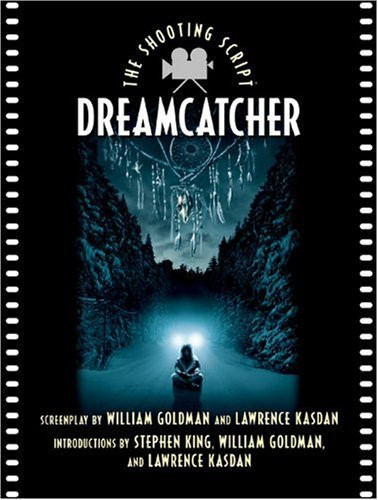
Dreamcatcher: the shooting script
Author Stephen King, scriptwriter William Goldman, and director Lawrence Kasdan describe how they approached the adaptation of King's novel Dreamcatcher into film. The book presents the full shooting script, a summary of the adaptation process, and detailed scene analysis, and includes abundant b&w illustrations and movie stills. Annotation 2003 Book News, Inc., Portland, OR
No Way to Treat a Lady

William Goldman's The temple of gold
Acclaimed for such Academy Award—winning screenplays as Butch Cassidy and the Sundance Kid and such thrillers as Marathon Man, not to mention the bestselling classic The Princess Bride, William Goldman stands as one of the most beloved writers in America. But long before these triumphs, he caused a sensation with his brilliant first novel, a powerful story of reckless youth that was hailed as a worthy rival to The Catcher in the Rye. THE TEMPLE OF GOLD Ray Trevitt is coming of age in the American midwest of the late 1950s. Handsome, restless, eager to live life and to find his place in the world, Ray hurtles headlong through a young man’s rite of passage–searching for answers and somewhere to belong. What he discovers is that within friendships and love affairs, army tours and married life, victory and tragedy, lie the experiences that will shape his destiny, scar his soul, and ultimately teach him profound lessons he never expected.

Sloths: a celebration of the world's most misunderstood mammal
In public estimation, sloths have undergone an astonishing transformation in the course of the past few years. Thanks largely to YouTube clips posted by the sloth orphanage in Costa Rica, sloths have attracted a vast audience of admirers. Instead of seeing them as ridiculous anachronisms of which we know little, they have turned into creatures considered by many to be the most endearing on earth. Over much the same period, scientific investigations have also changed our view of sloths. No longer are they seen as total misfits in the modern world but, in the words of one specialist sloth investigator, they are "masters of an alternative lifestyle." This wonderfully entertaining book reveals the fascinating history of the sloth, from the prehistoric ground sloth to modern pygmy sloths in Panama, explores the current state of the science of sloths, and reveals the truth behind sloth behavior.

Global civil war: capitalism post-pandemic
"An original and cutting-edge exposé of the radical transformation of global capitalism now underway, driven by new digital technologies and turbo-charged by the pandemic. Critically-acclaimed scholar and activist William I. Robinson provides shocking data and analysis on the concentration of power and control in the hands of corporate conglomerates, tech giants, mega-banks, and the military-industrial complex. The book documents the extent of unprecedented global inequalities as the mass of humanity faces violent dispossession and uncertain survival. Enabled by digital applications, the ruling groups, unless they are pushed to change course by mass pressure from below, will turn to ratcheting up the global police state to contain the global revolt. If the book issues a dire warning against the emergence of a dystopic digitalized dictatorship it also finds great hope and inspiration in the burgeoning social movements of the poor and the dispossessed as humanity descends into global civil war. While deeply analytical and theoretically sophisticated, the study is written in such a style that it is eminently accessible to a wider public beyond the academy. While the work will satisfy scholars, it is destined to become a companion text to those struggling on the frontlines for global social justice and a more hopeful future."

The Crescent Dictionary of Mathematics
Book by Karush, William

Law and Economic Policy in America
William Letwin's thorough, carefully argued, and elegantly written work is the only book length study of the Sherman Antitrust Act, a law designed to shape the economic life of a large complex society through maintaining the "correct" level of competition in the economy. This is a superb history and complete analysis of the Act, from its English and American common law antecedents to the events that led to the first revisions of the Act in the form of the Clayton Antitrust and Federal Trade Commission Acts.

Mayflower Madam The Secret Life of Sydney Biddle Barrows
With flair, humor, and style, Sydney Biddle Barrows tells the whole intriguing story of how she merged business and sex to create Cachet--the escort service of choice among rich, powerful, and prominent men. Adapting business management methods of the 1980s to the world's oldest profession, in this frank, surprising, and insightful, book, Ms. Barrows emerges as a woman who seized a chance and made the most of it.

Before the fall: an inside view of the pre-Watergate White House
William Safire was a speechwriter for Richard Nixon from 1968 to 1973. During that time, as a Washington insider, Safire was able to observe the thirty-seventh president in his entirety: as noble and mean-spirited; as good and bad; as a man desirous of greatness. Rarely has there been a White House memoir more intimate or revealing in its exploration of the great events that took place "before the fall" of Watergate. In this anecdotal history, Nixon and his associates come alive, not as caricatures, but as men with high and low purpose: Henry Kissinger, William Rogers, H. R. (Bob) Haldeman, John Ehrlichman, Charles Colson, and Arthur Burns struggle not just for power, but for ideals. As William Safire says in his Prologue: "In this memoir, which is neither a biography of [Nixon] nor an autobiography of me nor a narrative history of our times, there is an attempt to figure out what was good and bad about him, what he was trying to do and how well he succeeded, how he used and affected some of the people around him, and an effort not to lose sight of all that went right in examining what went wrong." The book is divided into ten sections, in which run three main themes: the President, the Partisan, and the Person. As a president, Safire discusses Nixon and the Vietnam War, foreign policy, economics, and race relations. As a partisan, he discusses Nixon's attempt to form an alignment across party lines, successful in many respects before the president tolerated the excesses that eventually corrupted his administration. And as a person, Safire finds that Nixon was a mixture of Woodrow Wilson, Machiavelli, Theodore Roosevelt, and Shakespeare's Cassius--an idealistic conniver evoking the strenuous life while he thinks too much. This paperback edition of a classic primary source for historians includes a new introduction by its author. Studded with direct quotations that put the reader in the room where history was being made, Before the Fall is a realistic, shades-of-gray study of the Nixon years. William Safire joined the New York Times in 1973 as a political columnist, where he also writes a Sunday column, "On Language," about grammar, usage, and etymology. The author of several books including Freedom , Full Disclosure , and Scandalmonger , he is the winner of the 1978 Pulitzer Prize for distinguished commentary and served nine years as a member of the Pulitzer Board.

Beyond the stars: quest for tomorrow

Star Trek V The Final Frontier
Script from the 5th Star Trek movie.

Tekwar
"Everyone's favorite starship captain has boldly gone where he has never ventured before!"--Wall Street Journal.. William Shatner now turns his talent to a stunning novel of future shock--drug wars in the Los Angeles of the 21st century. HC: Putnam.
