

381 results for "Finance"

The future of money

Bargain Junkie
Forget fashionistas. Meet the bargainista. SEINFELD's Annie Korzen (Doris Klompus) is a thrifty woman with expensive tastes. Raised by an immigrant mother who reused tea bags, Annie learned early on how to be an economista.In Bargain Junkie, Korzen shares her hilarious tales from the trenches--the garage sales, estate sales, thrift stores, rummage sales, and online auctions. Korzen haggles, scrimps, saves, and stretches her dollars and her imagination so she can afford to travel, dress well, and eat out whenever possible.Whether she's getting a cardiovascular workout at the mall, getting revenge on a yard sale con artist, or eating herself sick at the free green room buffet before appearing on The Oprah Winfrey Show, Annie is the ultimate bargainista.

The growth of Papal government in the Middle Ages
This book reveals how the medieval papacy grew from modest beginnings into an impressive institution in the Middle Ages and deals with a wide field. It charts the history of the papacy and its relations to East and West from the 4th to the 12th centuries, embraces such varied subjects as law, finance, diplomacy, liturgy, and theology. The development of medieval symbolism is also discussed as are the view of eminent political scientists of the period. This re-issues reprints the revised, 3rd edition of 1970.

John Turner: an intimate biography of Canada's 17th prime minister
One of the most glamorous and successful politicians in Canadian history In this masterful and engaging biography, acclaimed journalist Steve Paikin brings to life John Turner (1929-2020), one of the most glamorous and successful politicians in Canadian history. Born in England, raised in BC, Turner was a champion sprinter and a Rhodes scholar who captured the national imagination as escort for Princess Margaret on her 1959 Canadian tour. Elected to Parliament in 1962, he served in Prime Minister Lester Pearson's cabinet and as Pierre Trudeau's attorney general, minister of justice, and finance minister. In 1984, he won a hotly-contested Liberal leadership contest and served a brief four months as Canada's seventeenth prime minister before falling to Brian Mulroney in a Progressive Conservative landslide. In this surprisingly candid and personal book, Paikin draws on unprecedented access to Turner's personal and public papers to show how he struggled to meet the towering expectations that came with his abundant gifts, and keep his faith in Canadian democracy despite the challenges of his own career.

The Informational Role of Prices
Over the past decade, Sanford Grossman's contributions to the economics ofinformation have significantly altered the way economists think about rational expectations. Herehis articles are collected in one place, providing a uniform framework for understanding how pricesconvey information in securities markets.Grossman elaborates a new model of economic equilibriumthat casts a dual role for prices both as constraints that affect the immediate costs or benefits ofacts and as conveyers of information about the probable future costs and benefits of those acts. Hepoints to the Wall Street panic of October 1987 as an example of the informational role of priceswhere volatility actually represented sophisticated trading strategies by relatively uninformedindividuals.In the first two chapters, Grossman interprets the ideas presented in the articles inlight of recent developments in financial markets, looks at selected contributions to the new andstill expanding literature on the informational role of prices, and introduces the rationalexpectations model of demand price equilibrium.Six chapters then take up the informational role ofprices in competitive stock markets, and future markets (where Grossman's "noisy rationalexpectations" model provides rewards for discovering new information). They look at theimpossibility of informationally efficient markets, the implications of program trading and dynamichedging strategies for stock and futures price volatility, and takeover bids. The last two chaptersconcentrate on the informational role of contracts -- warranties and private disclosure aboutproduct quality, and the implication of unemployment with observable aggregate shocks. Economistscollaborating with Grossman on several chapters include J. E. Stiglitz, Oliver Hart, and EricMaskin.Sanford Grossman is Professor of Finance at The Wharton School, University of Pennsylvania.The Informational Role of Prices is included in the Wicksell Lectures series.

Reimagining Britain: foundations for hope
In a time of political turbulence, and as the Welfare State totters under the strain in a country that has changed dramatically since 1945, Archbishop Justin Welby sets out to identify the values that will enable us to reimagine, and to enact, a more hopeful future. The thesis is that the work of reimagining is as great as it was in 1945, and will happen either by accident – and thus badly – or deliberately. The author draws on Britain's history and Christian tradition to identify this country's foundational values, and the building blocks necessary to implement them in a post-Brexit, multicultural society. He explores the areas in which values are translated into action, including the traditional three of recent history: health (especially public, and mental), housing and education. To these he adds family; the environment; economics and finance; peacebuilding and overseas development; immigration; and integration. He looks particularly at the role of faith groups in enabling, and contributing to, a fairer future. When so many are immobilized by political turmoil, this book builds on our past to offer hope for the future, and practical ways of achieving a more equitable society.

It's Your Business: 183 Essential Tips that Will Transform Your Small Business
Based upon one of MSNBC's longest-running series (YOUR BUSINESS with JJ Ramberg), this collection of hard-earned practical advice is culled from the thousands of successful small business owners and entrepreneurs who have appeared on J.J.'s show. With advice from Ramberg and such notable entrepreneurs as Blake Mycoskie and Mike Michalowicz, this right-to-the-point book covers topics from human resources to finance, public relations to sales, and much, much more -- all geared towards the small business owner. Knowing that entrepreneurs have no time to waste, Ramberg presents simple and effective guidance that can be put to use right away. This book will be indispensable for every small business owner, from a family-owned store to a venture capitalist-backed start up.

Eva's spell
She was a legend in her own lifetime.Eva Duarte, the small-time actress and radio announcerwho turned Juan Peron from an ambitious soldier into the most charismatic leader Argentina had everknown.Peron was ambitious, and had used the ferment of World War Two to secure massive favour-and finance - with the Nazis. But it was Eva's magic, her flairfor publicity and her instinctforthe will of the people which brought his careerto its pinnacle.Together, Juan and Eva formed the most electric partnership in South America. Insatiably power- hungry and utterly ruthless, for a while the world was theirs, until the wheel of fortune began to turn again ...Ingrid Pitt and Tony Rudlin's sweeping novel of the Perons' rise and fall vividly recreates the drama and tragedy of the nation who fell under Eva s spell.

Fooling some of the people all of the time: a long short story
In 2002, Einhorn spoke publicly about Allied Capital--a leader in the private finance industry--presenting it as an excellent short opportunity. Einhorn describes the incredible events that followed his speech and how Allied and the investment community attacked him to protect the company--and its stock price. Informative and intriguing, "Fooling Some of the People All of the Time" details how the current environment on Wall Street--and the world of hedge funds in particular-- not only allows for such behavior, but how it protects the companies and attacks those who attempt to uncover them.--From publisher's description.

The most dangerous branch: inside the Supreme Court's assault on the Constitution
"In a richly reported, behind-the-scenes portrait of the Supreme Court and the secret world of its nine justices, veteran national journalist David A. Kaplan shows how the Court, far from being the "least dangerous branch" of government, in the words of Alexander Hamilton, has become in many respects the most dangerous branch, subverting democracy and betraying the Constitution. Never before has the Supreme Court been more central to American politics. A sizable percentage of voters in the most recent presidental election chose a candidate based largely on who they thought Hillary Clinton or Donald Trump would nominate to replace the fiery Antonin Scalia. In the face of a dysfunctional and paralyzed Congress, it is the Court, rather than our elected officials, that decides such divisive issues as gerrymandering, abortion, gun rights, voting rights, same sex marriage, immigration, and campaign finance. In a sweeping narrative that examines the personalities and quirks of the Justices, The Most Dangerous Branch shows how, going as far back as Roe v Wade, the Court has re-shaped America's political and social landscape in key cases on the left and the right. As much as the Chief Justice claims to be only calling balls and strikes, in fact the Court has not hesitated to put its collective thumb on the scale of justice to swing the law in the majority's direction. As a result, nine nonelected life-tenured lawyers, trained at but two elite universities (Harvard and Yale) have taken it upon themselves to decide the fate and direction of the nation. Kaplan's book gets at the heart of who these Justices are, and uncovers their personal agendas -- including that of Neil Gorsuch, President Trump's impatient and quietly radical new appointee. And with the retirement of even a single justice, the Court could, under Trump and a filibuster-proof Senate, be transformed into a insurrmountable conservative voting block that will reign even more supreme over America for a generation"--

Madison's music: on reading the First Amendment
"Are you sitting down? It turns out that everything you learned about the First Amendment is wrong. For too long, we've been treating small, isolated snippets of the text as infallible gospel without looking at the masterpiece of the whole. Legal luminary Burt Neuborne argues that the structure of the First Amendment as well as of the entire Bill of Rights was more intentional than most people realize, beginning with the internal freedom of conscience and working outward to freedom of expression and finally freedom of public association. This design, Neuborne argues, was not to protect discrete individual rights--such as the rights of corporations to spend unlimited amounts of money to influence elections--but to guarantee that the process of democracy continues without disenfranchisement, oppression, or injustice. Neuborne, who was the legal director of the ACLU and has argued numerous cases before the Supreme Court, invites us to hear the "music" within the form and content of Madison's carefully formulated text. When we hear Madison's music, a democratic ideal flowers in front of us, and we can see that the First Amendment gives us the tools to fight for campaign finance reform, the right to vote, equal rights in the military, the right to be full citizens, and the right to prevent corporations from riding roughshod over the weakest among us. Neuborne gives us an eloquent lesson in democracy that informs and inspires."--

Crowdfunding Basics In 30 Minutes: How to use Kickstarter, Indiegogo, and other crowdfunding platforms to support your entrepreneurial and creative dreams
New crowdfunding guide! Just a few short years ago, if you wanted to produce a new gadget or raise money to make an independent film, you had no choice but to scrape together funding on your own ... or hope a generous friend or relative might put up seed capital. These days, there's a new approach: crowdfunding. Sites such as Kickstarter, Indiegogo, and GoFundMe can not only help you raise money to fund your idea or cause, they can also help you establish a community of enthusiastic supporters. In Crowdfunding Basics In 30 Minutes, author and crowdfunding expert Michael J. Epstein explains how to plan and execute a successful crowdfunding campaign. In a single sitting, you will learn about the different types of crowdfunding projects that are possible, including entrepreneurial startups, creative or artistic projects, charities and community causes, individual support campaigns, and patronage funding. This crowdfunding book covers budgeting basics as well as goal-setting, not to mention the importance of preparing professional-looking campaign assets such as video clips, photographs, and calls-to-action. The author explains how to design reward tiers that not only attract backers, but also won't bankrupt your budget. Other topics include: Determining how much money you can raise Pros and cons of platforms including Kickstarter, Indiegogo, GoFundMe, Patreon, and more All-or-nothing campaigns vs. partial funding campaigns vs. patronage systems How to plan and budget a crowdfunding campaign Time requirements for organizers Hidden costs, from shipping to backer melt Taxes and legal requirements Best practices for tiered rewards Telling your story with images, video, and text Ten top tips for creating a great campaign video Six tips for an effective text pitch Nine best practices for tiered rewards Why campaigns fail: 10 pitfalls to avoid How to keep momentum going in a lagging campaign The art of communicating with crowdfunding backers Throughout Crowdfunding Basics In 30 Minutes, Epstein cites his extensive experience organizing crowdfunding campaigns as well examples from some of the hundreds of other campaigns he has backed. If you have been dreaming about launching your own crowdfunding project, this crowdfunding book will be an invaluable guide. Order it today!

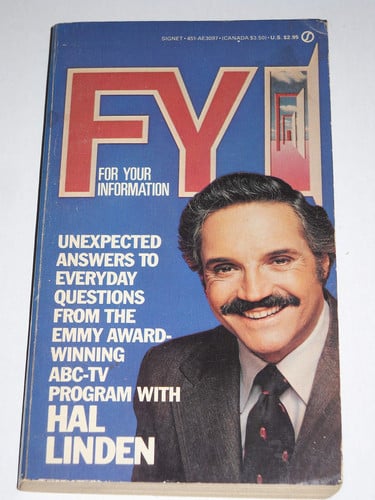
FYI, For Your Information : Unexpected Answers to Everday Questions Based on the Award-winning ABC-TV Program
A collection of unusual tips and advice offers answers to questions on medicine, psychology, sex, child care, finances, and many other topics
Transforming the development landscape: the role of the private sector
" Private sector activity is crucial for development. It shapes the investment climate, mobilizes innovation and financing in areas such as global health, and can either cause or mitigate social and environmental harm. Yet so far, the international development debate has not focused on the role of the private sector. This volumewritten by members of the private sector, philanthropic organizations, and academiainvestigates ways to galvanize the private sector in the fight against global poverty. Using a bottom-up approach, they describe how the private sector affects growth and poverty alleviation. They also review the impediments to private capital investment, and discuss various approaches to risk mitigation, including public sector enhancements, and identify some specific new plans for financing development in neglected markets, including an equity-based model for financing small-to-medium-sized enterprises. From the top-down, the authors look at the social and environmental impact of private sector activities, investigate public-private partnerships, explore new perspectives on the role of multinationals, and discuss an in-depth case study of these issues as they relate to global public health. In addition to providing a broad overview of the current issues, this forward-looking volume assesses the action-oriented initiatives that already exist, and provides templates and suggestions for new initiatives and partnerships. Contributors include David DeFerranti (Brookings Institution), Timothy Freundlich (Calvert Social Investment Foundation), Ross Levine (World Bank), Sylvia Mathews (Gates Foundation), Jane Nelson (Harvard University's Kennedy School of Government), Alan Patricof (APAX Partners), Warrick Smith (World Bank), and Julie Sunderland (APAX Partners). "

Up against the sprawl: public policy and the making of Southern California
America's first truly twenty-first-century metropolis, Los Angeles is often depicted as diverse, fragmented, polarized, and ungovernable, a city without a unifying geographic center or civic culture. The sprawling evolution of the city and its infamous problems-traffic, pollution, growing inequality-are usually attributed to a Wild West version of capitalism-the triumph of an unregulated free market over comprehensive urban planning. But market choices and lack of planning did not set the terrain of Southern California: Los Angeles has been profoundly shaped by a wide range of local, state, and federal public policies and programs. Up against the Sprawl details how governmental policies and public agencies have dictated many aspects of the region's growth: infrastructure, transportation, housing, immigration, finances, civic and regional administration, the environment. The authors also argue that since public policy set the landscape, it can help forge the future. They explore countermovements by progressive activists to use innovative policies-from smart growth initiatives to the actions of living wage advocates-for greater social, economic, and environmental justice. This book is a major contribution to our understanding of past and present urban processes and policy, and highlights practical lessons for urban and regional policy makers and activists in Los Angeles and beyond. Contributors: Carolyn B. Aldana, California State U, San Bernadino; Carol S. Armstrong; Michael Dear, U of Southern California; Gary Dymski, U of California Riverside; Steven P. Erie, USC; Gregory Freeman; William Fulton; Elizabeth Gearin, USC; Genevieve Giuliano, USC; Pascale Joassart-Marcelli, U ofMassachusetts, Boston; Enrico A. Marcelli; Myra A. Marks, Loyola Marymount U; Juliet Musso, USC; Stephanie Pincetl, USC; Laura Pulido; Christine M. Ryan; John P. Wilson. Jennifer Wolch is professor of geography and director of the Center for Sustainable Cities at the University of Southern California. Manuel Pastor Jr. is professor of Latino and Latin American studies and director of the Center for Justice, Tolerance, and Community at the University of California, Santa Cruz. Peter Dreier is Clapp Distinguished Professor and director of the Urban and Environmental Policy Program at Occidental College.

The Laws of Spirit A Tale of Transformation
The Laws of Spirit opens with the story of Dan Millman's encounter with a sage in the wooded hills near his home. Through stories, tests, and experiences in the wild, the sage challenges Millman to examine 12 core principles that underlie human existence: balance, choice, process, presence, compassion, faith, expectation, integrity, action, cycles, surrender, and unity. The book shows how these keys -- at the heart of every religion, culture, and moral system -- can lead to a deeper sense of meaning, connection, and harmony with the world. It also shows readers how these principles can transform relationships, careers, finance, and health. Quotations and reminders from across the centuries inform and inspire readers as they accompany Millman on his journey.

Capital and credit in British overseas trade: the view from the Chesapeake, 1700-1776
In a model study Jacob Price illuminates the dynamic growth of Britain’s foreign trade in the eighteenth century through an investigation of the investment patterns and credit institutions that financed that expansion. Concentrating on the trade between Britain and the Chesapeake tobacco colonies of Virginia and Maryland, for which a unique set of records exists, Price surveys the ways in which commerce developed and working capital was mobilized in Britain to support expanding overseas trade. Price develops the clearest picture ever of the financial environment within Britain as it affected Southern colonies in the preindustrial age. He does so by determining the kind of capital resources merchants in foreign trade actually commanded and measuring how much of their own wealth merchants brought to trade. In great and absorbing detail he discusses also the development of merchant-oriented banks in London and other ports, reinvestment of profits, long-term borrowing on bond, and the long-term credit provided to export merchants by wholesalers in textiles, ironmongery, and other industries. The relationship of debt to the coming of the American Revolution is also treated. Tobacco growers suffered more than others from a psychological unease caused by immense debt and were more revolutionary than farmers with less intensive capital needs and, hence, with lighter debt. This history will enlighten Anglo-American historians, economic historians, and historians of the American revolutionary era.

Fractals and scaling in finance: discontinuity, concentration, risk
IN 1959-61, while the huge Saarinen-designed research laboratory at Yorktown Heights was being built, much of IBM's Research was housed nearby. My group occupied one of the many little houses on the Lamb Estate complex which had been a sanatorium housing wealthy alcoholics. The picture below was taken about 1960. It shows from right to left, T. e. Hu, now at the University of California, Santa Barbara. I am next, staring at a network I have just written on the blackboard. Then comes Paul Gilmore, late of the University of British Columbia, then (seated) Richard Levitan, now retired, and at the left is Benoit Mandelbrot. x FOREWORD EF Even in a Lamb Estate populated exclusively with bright research oriented people, Benoit always stood out. His thinking was always fresh, and I enjoyed talking with him about any subject, whether technical, poli tical, or historical. He introduced me to the idea that distributions having infinite second moments could be more than a mathematical curiosity and a source of counter-examples. This was a foretaste of the line of thought that eventually led to fractals and to the notion that major pieces of the physical world could be, and in fact could only be, modeled by distrib utions and sets that had fractional dimensions. Usually these distributions and sets were known to mathematicians, as they were known to me, as curiosities and counter-intuitive examples used to show graduate students the need for rigor in their proofs.

Calling the shots: how Washington dominates today's UN
New revised & updated edition with a new preface by Denis Halliday. The United Nations remains a favorite scapegoat for U.S. and allied failures in places like Rwanda, Iraq, Kosovo, and East Timor. Few look beyond the headlines to the primary responsibility of the United States for what are all too often called "UN failures." Filled with tales of UN intrigue and diplomatic carrots and sticks, Calling the Shots exposes how U.S. financial and political bribes are backed by threats and punishments for recalcitrant nations who refuse to toe the U.S. line. The new edition examines U.S.-UN relations at the close of the 20th century: now $1.6 billion in debt to the UN, Washington increasingly undermines or even ignores the world organization, seeking to replace the UN's authority with that of favored military alliances such as NATO. Hopes rise for a new internationalism, as citizens organizations join with the UN to create the International Criminal Court, to ban anti-personnel land mines, to protect children from the ravages of war, but the U.S. stands aloof.
