8468 results for "History"

Antisemitism: here and now

Lipstadt, Deborah E.
The award-winning author of The Eichmann Trial and Denial: Holocaust History on Trial gives us a penetrating and provocative analysis of the hate that will not die, focusing on its current, virulent incarnations on both the political right and left, and on what can be done about it. When newsreels depicting the depredations of the Holocaust were shown in movie theaters to a horrified American public immediately after World War II, it was believed that the antisemitism that was part of the fabric of American culture in the 1920s and 1930s was finally going to be laid to rest. In the ensuing decades, Gregory Peck received an Academy Award for playing a journalist who passed as a Jew to blow the lid off genteel Jew hatred, clauses restricting where Jews could live were declared illegal, the KKK was pretty much litigated out of existence, and Joe Lieberman came within five electoral votes of becoming America's first Jewish vice president. And then the unthinkable began to happen. Over the last decade, there has been a noticeable uptick in antisemitic rhetoric and incidents by left-wing groups targeting Jewish students and Jewish organizations on American college campuses. Jews in countries throughout Europe have been attacked by terrorists. And the re-emergence of the white nationalist movement in America, complete with Nazi slogans and imagery, has brought to mind the fascist displays of the 1930s. Where is all this hatred coming from? Is there any significant difference between left-wing and right-wing antisemitism? What role has the anti-Zionist movement played? And what can be done to combat this latest manifestation of an ancient hatred? In a series of letters to an imagined college student and imagined colleague, both of whom are perplexed by this resurgence, Deborah Lipstadt gives us her own superbly reasoned, brilliantly argued, and sure-to-be-controversial responses to these troubling questions.
Scribe Publications 2019 288 pages

The highest calling: conversations on the American Presidency

Rubenstein, David M.
"Blending history and anecdote, Rubenstein chronicles the journeys of the presidents who have defined America as it exists now, what they envision for its future, and their legacy on the world stage. Drawing from his own experience in the Carter administration, he engages in dialogues with our nation's presidents and the historians who study them. Get exclusive access to fresh perspectives, including: original interviews with most of the living US presidents; interviews with noted presidential historians like Annette Gordon-Reed, Ron Chernow, Candice Millard, and more. Through insightful analysis, Rubenstein captures our country's most prominent leaders, the political genius and frays of the presidential role, and the wisdom that emerges from it"--
Simon & Schuster 2024-09-10 472 pages

A Picture Book of John Hancock

David A. Adler,Michael S. Adler
Protestor, patriot, and signer of the declaration of Independence, John Hancock. His life revealed for picture book readers. When the British started imposing unfair taxes on the colonists, John Hancock decided to stand up to the injustice and dedicate himself to the public good. He would later serve as a delegate to the First Continental Congress, president of the Second Continental Congress, and signer of the declaration of Independence. This Founding Father is made accessible to young children through clear and concise text paired with watercolor art. "Using a warm, subdued palette, Himler's paintings bring Hancock and his times to life," says Booklist . Back matter includes a note, a timeline, source notes, a selected bibliography, and recommended websites. For almost thirty years, David Adler's Picture Book Biography series has profiled famous people who changed the world. Colorful, kid-friendly illustrations combine with Adler's "expert mixtures of facts and personality" ( Booklist ) to introduce young readers to history through compelling biographies of presidents, heroes, inventors, explorers, and adventurers. These books are ideal for first and second graders interested in history or who need reliable sources for school book reports.
Holiday House, Incorporated 2020-01-07 32 pages

John Adams Under Fire The Founding Father's Fight for Justice in the Boston Massacre Murder Trial

Dan Abrams,David Fisher
Look for Dan Abrams and David Fisher's new book, Kennedy's Avenger: Assassination, Conspiracy, and the Forgotten Trial of Jack Ruby. *NOW A NEW YORK TIMES BESTSELLER* "An expert, extremely detailed account of John Adams' finest hour."--Kirkus Reviews Honoring the 250th Anniversary of the Boston Massacre The New York Times bestselling author of Lincoln's Last Trial and host of LivePD Dan Abrams and David Fisher tell the story of a trial that would change history. An eye-opening story of America on the edge of revolution. History remembers John Adams as a Founding Father and our country's second president. But in the tense years before the American Revolution, he was still just a lawyer, fighting for justice in one of the most explosive murder trials of the era--the Boston Massacre, where five civilians died from shots fired by British soldiers. Drawing on Adams's own words from the trial transcript, Dan Abrams and David Fisher transport readers to colonial Boston, a city roiling with rebellion, where British military forces and American colonists lived side by side, waiting for the spark that would start a war.
Harlequin Enterprises ULC 2021-03-02 320 pages

The First Conspiracy The Secret Plot to Kill George Washington

Brad Meltzer,Josh Mensch
Taking place during the most critical period of our nation’s birth, The First Conspiracy tells a remarkable and previously untold piece of American history that not only reveals George Washington’s character, but also illuminates the origins of America’s counterintelligence movement that led to the modern day CIA. In 1776, an elite group of soldiers were handpicked to serve as George Washington’s bodyguards. Washington trusted them; relied on them. But unbeknownst to Washington, some of them were part of a treasonous plan. In the months leading up to the Revolutionary War, these traitorous soldiers, along with the Governor of New York, William Tryon, and Mayor David Mathews, launched a deadly plot against the most important member of the military: George Washington himself. This is the story of the secret plot and how it was revealed. It is a story of leaders, liars, counterfeiters, and jailhouse confessors. It also shows just how hard the battle was for George Washington and how close America was to losing the Revolutionary War. In this historical page-turner, New York Times bestselling author Brad Meltzer teams up with American history writer and documentary television producer, Josh Mensch to unravel the shocking true story behind what has previously been a footnote in the pages of history. Drawing on extensive research, Meltzer and Mensch capture in riveting detail how George Washington not only defeated the most powerful military force in the world, but also uncovered the secret plot against him in the tumultuous days leading up to July 4, 1776.
Flatiron Books 2020-01-07 432 pages

Family Properties Race, Real Estate, and the Exploitation of Black America (10th Anniversary Edition)

Beryl Satter
“Beryl Satter's Family Properties is really an incredible book. It is, by far, the best book I've ever read on the relationship between blacks and Jews. That's because it hones in on the relationship between one specific black community and one specific Jewish community and thus revels in the particular humanity of all its actors.” —Ta-Nehisi Coates, The Atlantic Part family story and part urban history, a landmark investigation of segregation and urban decay in Chicago -- and cities across the nation The "promised land" for thousands of Southern blacks, postwar Chicago quickly became the most segregated city in the North, the site of the nation's worst ghettos and the target of Martin Luther King Jr.'s first campaign beyond the South. In this powerful book, Beryl Satter identifies the true causes of the city's black slums and the ruin of urban neighborhoods throughout the country: not, as some have argued, black pathology, the culture of poverty, or white flight, but a widespread and institutionalized system of legal and financial exploitation. In Satter's riveting account of a city in crisis, unscrupulous lawyers, slumlords, and speculators are pitched against religious reformers, community organizers, and an impassioned attorney who launched a crusade against the profiteers—the author's father, Mark J. Satter. At the heart of the struggle stand the black migrants who, having left the South with its legacy of sharecropping, suddenly find themselves caught in a new kind of debt peonage. Satter shows the interlocking forces at work in their oppression: the discriminatory practices of the banking industry; the federal policies that created the country's shameful "dual housing market"; the economic anxieties that fueled white violence; and the tempting profits to be made by preying on the city's most vulnerable population. Family Properties: Race, Real Estate, and the Exploitation of Black Urban America is a monumental work of history, this tale of racism and real estate, politics and finance, will forever change our understanding of the forces that transformed urban America. "Gripping . . . This painstaking portrayal of the human costs of financial racism is the most important book yet written on the black freedom struggle in the urban North."—David Garrow, The Washington Post
Picador 2021-04-27 544 pages

The March of Folly From Troy to Vietnam

Barbara Wertheim Tuchman
Pulitzer Prize–winning historian Barbara W. Tuchman, author of the World War I masterpiece The Guns of August, grapples with her boldest subject: the pervasive presence, through the ages, of failure, mismanagement, and delusion in government. Drawing on a comprehensive array of examples, from Montezuma’s senseless surrender of his empire in 1520 to Japan’s attack on Pearl Harbor, Barbara W. Tuchman defines folly as the pursuit by government of policies contrary to their own interests, despite the availability of feasible alternatives. In brilliant detail, Tuchman illuminates four decisive turning points in history that illustrate the very heights of folly: the Trojan War, the breakup of the Holy See provoked by the Renaissance popes, the loss of the American colonies by Britain’s George III, and the United States’ own persistent mistakes in Vietnam. Throughout The March of Folly, Tuchman’s incomparable talent for animating the people, places, and events of history is on spectacular display.
Cardinal 1990 559 pages

Adventures in the Screen Trade

William Goldman
Enter Hollywood's inner sanctums in this gosippy and honest book, named one the top 100 film books of all time by The Hollywood Reporter, by the Academy Award-winning screenwriter and bestselling author of The Primcess Bride. No one knows the writer's Hollywood more intimately than William Goldman. Two-time Academy Award-winning screenwriter and the bestselling author of The Princess Bride, Marathon Man, Tinsel, Boys and Girls Together, and other novels, Goldman now takes you behind the scenes for Butch Cassidy and the Sundance Kid, All the President's Men, and other films . . . .into the plush offices of Hollywood producers . . ..into the working lives of acting greats such as Redford, Olivier, Newman, and Hoffman...and into his own professional experiences and creative thought processes in the crafting of screenplays. You get a firsthand look at why and how films get made and what elements make a good screenplay. Says columnist Liz Smith, "You'll be fascinated.."
Grand Central Publishing 1989-03-10 418 pages

The New York nobody knows: walking 6,000 miles in the city

Helmreich, William B.
As a child growing up in Manhattan, William Helmreich played a game with his father called "Last Stop." They would pick a subway line, ride it to its final destination, and explore the neighborhood. Decades later, his love for exploring the city is as strong as ever.Putting his feet to the test, he decided that the only way to truly understand New York was to walk virtually every block of all five boroughs-an astonishing 6,000 miles. His journey took him to every corner of Manhattan, Brooklyn, Queens, the Bronx, and Staten Island. Helmreich spoke with hundreds of New Yorkers from every part of the globe and all walks of life. He finds that to be a New Yorker is to struggle to understand the place and to make a life that is as highly local as it is dynamically cosmopolitan.Truly unforgettable, The New York Nobody Knows will forever change how you view the world's greatest city.
Princeton University Press 2015-08-25 480 pages

Blue Latitudes Boldly Going Where Captain Cook Has Gone Before

Tony Horwitz
In an exhilarating tale of historic adventure, the Pulitzer Prize-winning author of Confederates in the Attic retraces the voyages of Captain James Cook, the Yorkshire farm boy who drew the map of the modern world Captain James Cook's three epic journeys in the 18th century were the last great voyages of discovery. His ships sailed 150,000 miles, from the Artic to the Antarctic, from Tasmania to Oregon, from Easter Island to Siberia. When Cook set off for the Pacific in 1768, a third of the globe remained blank. By the time he died in Hawaii in 1779, the map of the world was substantially complete. Tony Horwitz vividly recounts Cook's voyages and the exotic scenes the captain encountered: tropical orgies, taboo rituals, cannibal feasts, human sacrifice. He also relives Cook's adventures by following in the captain's wake to places such as Tahiti, Savage Island, and the Great Barrier Reef to discover Cook's embattled legacy in the present day. Signing on as a working crewman aboard a replica of Cook's vessel, Horwitz experiences the thrill and terror of sailing a tall ship. He also explores Cook the man: an impoverished farmboy who broke through the barriers of his class and time to become the greatest navigator in British history. By turns harrowing and hilarious, insightful and entertaining, BLUE LATITUDES brings to life a man whose voyages helped create the 'global village' we know today.
Macmillan 2003-08 480 pages

A Jewish State

Theodor Herzl
Theodor Herzl's passionate advocacy of the founding of a Jewish state grew out of his conviction that Jews would never be assimilated into the populations in which they lived. Born in Budapest, Hungary in 1860, Herzl encountered anti-Semitism when he attended a scientific secondary school. Later, as a newspaper correspondent in Paris, he was shocked and dismayed by the anti-Semitic prejudice surrounding the notorious Dreyfus affair (Herzl said in later years that it was the Dreyfus affair that had made a Zionist out of him). Herzl concluded that the only solution for the majority of Jews would be organized emigration to a state of their own. He discussed the political and historic rationale for such a homeland in this book, first published as a pamphlet, Der Judenstaat, in Vienna in 1896. The Jewish question, he wrote, was not a social or religious question but a national question that could be solved only by making it "a political world question to be discussed and settled by the civilized nations of the world in council." In 1897, at a world congress of Zionism, he declared, "We want to lay the foundation stone for the house which will become the refuge of the Jewish nation. Zionism is the return to Judaism even before the return to the land of Israel."
CreateSpace Independent Publishing Platform 2015-02-26 64 pages

America's bitter pill: money, politics, backroom deals, and the fight to fix our broken healthcare

Brill, Steven
NEW YORK TIMES BESTSELLER • A NEW YORK TIMES NOTABLE BOOK • “A tour de force . . . a comprehensive and suitably furious guide to the political landscape of American healthcare . . . persuasive, shocking.” — The New York Times America’s Bitter Pill is Steven Brill’s acclaimed book on how the Affordable Care Act, or Obamacare, was written, how it is being implemented, and, most important, how it is changing—and failing to change—the rampant abuses in the healthcare industry. It’s a fly-on-the-wall account of the titanic fight to pass a 961-page law aimed at fixing America’s largest, most dysfunctional industry. It’s a penetrating chronicle of how the profiteering that Brill first identified in his trailblazing Time magazine cover story continues, despite Obamacare. And it is the first complete, inside account of how President Obama persevered to push through the law, but then failed to deal with the staff incompetence and turf wars that crippled its implementation. But by chance America’s Bitter Pill ends up being much more—because as Brill was completing this book, he had to undergo urgent open-heart surgery. Thus, this also becomes the story of how one patient who thinks he knows everything about healthcare “policy” rethinks it from a hospital gurney—and combines that insight with his brilliant reporting. The result: a surprising new vision of how we can fix American healthcare so that it stops draining the bank accounts of our families and our businesses, and the federal treasury. Praise for America’s Bitter Pill “An energetic, picaresque, narrative explanation of much of what has happened in the last seven years of health policy . . . [Brill] has pulled off something extraordinary.” —The New York Times Book Review “A thunderous indictment of what Brill refers to as the ‘toxicity of our profiteer-dominated healthcare system.’ ” — Los Angeles Times “A sweeping and spirited new book [that] chronicles the surprisingly juicy tale of reform.” — The Daily Beast “One of the most important books of our time.” —Walter Isaacson “Superb . . . Brill has achieved the seemingly impossible—written an exciting book about the American health system.” — The New York Review of Books
Random House 2015-08-18 528 pages

Camelot's Court Inside the Kennedy White House

Robert Dallek
Fifty years after John F. Kennedy’s assassination, presidential historian Robert Dallek, whom The New York Times calls “Kennedy’s leading biographer,” delivers a riveting new portrait of this president and his inner circle of advisors—their rivalries, personality clashes, and political battles. In Camelot’s Court, Dallek analyzes the brain trust whose contributions to the successes and failures of Kennedy’s administration—including the Bay of Pigs, civil rights, the Cuban Missile Crisis, and Vietnam—were indelible. Kennedy purposefully put together a dynamic team of advisors noted for their brilliance and acumen, including Attorney General Robert Kennedy, Secretary of Defense Robert McNamara, Secretary of State Dean Rusk, National Security Advisor McGeorge Bundy, and trusted aides Ted Sorensen and Arthur Schlesinger. Yet the very traits these men shared also created sharp divisions. Far from being unified, this was an uneasy band of rivals whose ambitions and clashing beliefs ignited fiery internal debates. Robert Dallek illuminates a president deeply determined to surround himself with the best and the brightest, who often found himself disappointed with their recommendations. The result, Camelot's Court: Inside the Kennedy White House, is a striking portrait of a leader whose wise resistance to pressure and adherence to principle offers a cautionary tale for our own time.
HarperCollins 2014-09-16 528 pages

The upswing: how America came together a century ago and how we can do it again

Putnam, Robert D.,Garrett, Shaylyn Romney
"An eminent political scientist's brilliant synthesis of social and political trends over the past century that shows how we have gone from an individualistic society to a more communitarian society and then back again -- and how we can use that experience to overcome once again the individualism that currently weakens our country"--
Simon & Schuster 2020 465 pages

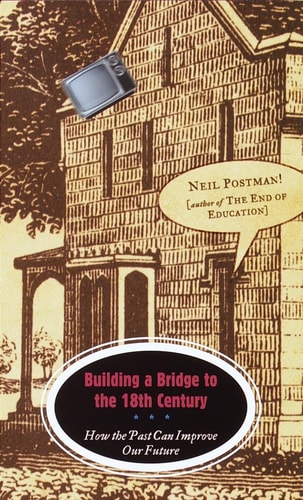
Building a bridge to the 18th century: how the past can improve our future

Postman, Neil
In Building a Bridge to the 18th Century , acclaimed cultural critic Neil Postman offers a cure for the hysteria and hazy values of the postmodern world. Postman shows us how to reclaim that balance between mind and machine in a dazzling celebration of the accomplishments of the Enlightenment-from Jefferson's representative democracy to Locke's deductive reasoning to Rousseau's demand that the care and edification of children be considered an investment in our collective future. Here, too, is the bold assertion that Truth is invulnerable to fashion or the passing of time. Provocative and brilliantly argued, Building a Bridge to the 18th Century illuminates a navigable path through the Information Age-a byway whose signposts, it turns out, were there all along.
Knopf 2000-10-10 213 pages

The Road to Rescue The Untold Story of Schindler's List

Mietek Pemper
“Don’t thank me for your survival, thank your valiant Stern and Pemper, who stared death in the face constantly.”—Oskar Schindler in a speech to his released Jewish workers in May 1945. Steven Spielberg’s Oscar-winning film Schindler’s List popularized the true story of a German businessman who manipulated his Nazi connections and spent his personal fortune to save some 1,200 Jewish prisoners from certain death during the Holocaust. But few know that those lists were made possible by a secret strategy designed by a young Polish Jew at the Płaszow concentration camp. Mietek Pemper’s compelling and moving memoir tells the true story of how Schindler’s list really came to pass. Pemper was born in 1920 into a lively and cultivated Jewish family for whom everything changed in 1939 when the Germans invaded Poland. Evicted from their home, they were forced into the Krakow ghetto and, later, into the nearby camp of Płaszow where Pemper’s knowledge of the German language was put to use by the sadistic camp commandant Amon Goth. Forced to work as Goth’s personal stenographer from March 1943 to September 1944—an exceptional job for a Jewish prisoner—Pemper soon realized that he could use his position as the commandant’s private secretary to familiarize himself with the inner workings of the Nazi bureaucracy and exploit the system to his fellow detainees’ advantage. Once he gained access to classified documents, Pemper was able to pass on secret information for Schindler to compile his famous lists. After the war, Pemper was the key witness of the prosecution in the 1946 trial against Goth and several other SS officers. The Road to Rescue stands as a historically authentic testimony of one man’s unparalleled courage, wit, defiance, and bittersweet victory over the Nazi regime.
Other Press, LLC 2011-03-15 272 pages