541 results for "Jewish History"

Gentile impurities and Jewish identities: intermarriage and conversion from the Bible to the Talmud

Hayes, Christine Elizabeth
In ancient Jewish culture the ideas of purity and impurity defined the socio-cultural boundaries between Jews and Gentiles. Hayes argues that different views of the possibility of conversion, based on varying ideas about Gentile impurity, were the key factor in the formation of Jewish sects in the second temple period, and in the separation of the early Christian Church from what later became rabbinic Judaism.
Oxford University Press 2002 309 pages

The Jews and the Bible

Attias, Jean-Christophe
Despite its deceptively simple title, this book ponders the thorny issue of the place of the Bible in Jewish religion and culture. By thoroughly examining the complex link that the Jews have formed with the Bible, Jewish scholar Jean-Christophe Attias raises the uncomfortable question of whether it is still relevant for them. The Jews and the Bible reveals how the Jews define themselves in various times and place with the Bible, without the Bible, and against the Bible. Is it divine revelation or national myth? Literature or legislative code? One book or a disparate literary? Text or object? For the Jews, over the past two thousand years or more, the Bible has been all that and much more, telling a fascinating story and raising provocative philosophical and ethical questions. The Bible is indeed an elusive book, so Attias explores the fundamental discrepancy between what we think the Bible tells us about Judaism and what Judaism actually tells us about the Bible. With passion and intellect, Attias informs and enlightens the reader, never shying from the difficult questions, ultimately asking: In our post-genocide and post-Zionist culture, can the Bible be saved?
Stanford University Press 2015 235 pages

A Time for Gathering The Second Migration, 1820-1880

Hasia R. Diner
Volume II: A Time for Gathering. Between 1820 and 1880, European Jews arrived in the United States in ever greater numbers. While later Jewish immigrants would criticize their "rush" to assimilation, the Jews of this period created the institutions that continue to shape Jewish life in America. In A Time for Gathering , Hasia Diner describes this "second wave" of Jewish migration.
JHU Press 1995-05 313 pages

Bound by the Bible: Jews, Christians, and the sacrifice of Isaac

Kessler, Edward
The Sacrifice of Isaac is one of the most well-known stories in the Bible. It is also a shocking account of how Abraham's faith in God was demonstrated by a willingness to sacrifice his long-awaited son at God's command. This story has been a source of fascination for Jews and Christians for many centuries and here, Edward Kessler offers an enthralling account of Jewish and Christian interpretations of this biblical story. For understandable reasons, it has been assumed that Judaism influenced Christian interpretation but relatively little attention has been given to the question of the influence of Christianity upon Judaism. Kessler provides an insight into this absorbing two-way encounter and argues that neither Jewish nor Christian interpretations can be understood properly without reference to the other. As Jews and Christians lived, and continue to live, in a biblically orientated culture, Kessler shows how both were 'bound by the bible'.
Cambridge University Press 2004-09-02 222 pages

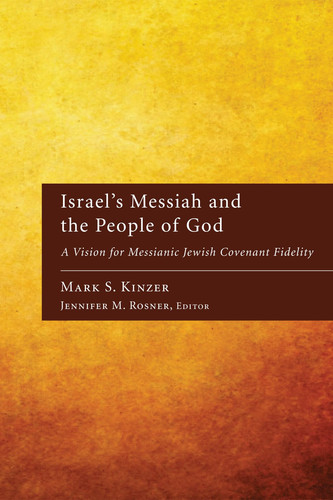
Israel's messiah and the people of God: a vision for Messianic Jewish covenant fidelity

Kinzer, Mark
Israel's Messiah and the People of God presents a rich and diverse selection of essays by theologian Mark Kinzer, whose work constitutes a pioneering step in Messianic Jewish theology. Including several pieces never before published, this collection illuminates Kinzer's thought on topics such as Oral Torah, Jewish prayer, eschatology, soteriology, and Messianic Jewish-Catholic dialogue. This volume offers the reader numerous portals into the vision of Messianic Judaism offered in Kinzer's Postmissionary Messianic Judaism (2005). An introductory essay by editor Jennifer M. Rosner sets Kinzer's thought and writings in context.
Cascade Books 2011-01-07 221 pages

Between Jewish tradition and modernity: rethinking an old opposition : essays in honor of David Ellenson

Michael A. Meyer,Meyer A. Michael,David N. Myers
Although the ideas of “tradition” and “modernity” may seem to be directly opposed, David Ellenson, a leading contemporary scholar of modern Jewish thought, understood that these concepts can also enjoy a more fluid relationship. In honor of Ellenson, editors Michael A. Meyer and David N. Myers have gathered contributors for Between Jewish Tradition and Modernity: Rethinking an Old Opposition to examine the permutations and adaptations of these intertwined forms of Jewish expression. Contributions draw from a range of disciplines and scholarly interests and vary in subject from the theological to the liturgical, sociological, and literary. The geographic and historical focus of the volume is on the United States and the State of Israel, both of which have been major sites of inquiry in Ellenson's work.
Wayne State University Press 2014 360 pages

Piety and power: the world of Jewish fundamentalism

Landau, David
With the rare gift of a storyteller, David Landau takes the reader inside the little-known world of the haredim - the bearded, black-clothed Jewish fundamentalists. Decimated by the Holocaust, this sect has enjoyed a dramatic revival that has caused tensions everywhere and a bitter battle for the soul of Israel. Piety and Power describes life in the self-contained haredi ghettos in London, New York, and Jerusalem, where Hasidic rabbis reign supreme and strict rules govern every aspect of life. Landau takes the reader into homes marked by warm family life and strict sexual codes, and into yeshivas, the intellectual core of the community, where young men spend decades as full-time students of the Torah. For many readers, Jews and Gentiles alike, this will be a disturbing book. It depicts an aggressive, assertive fundamentalism in an expansive and self-confident mood, certain of its divine right to win souls and influence the Jewish people and to dictate its views on who is a Jew.
Hill and Wang 1993 358 pages

Nahida Remy's The Jewish Woman

Nahida Ruth Lazarus,Nahida Remy
This work has been selected by scholars as being culturally important, and is part of the knowledge base of civilization as we know it. This work is in the "public domain in the United States of America, and possibly other nations. Within the United States, you may freely copy and distribute this work, as no entity (individual or corporate) has a copyright on the body of the work. Scholars believe, and we concur, that this work is important enough to be preserved, reproduced, and made generally available to the public. We appreciate your support of the preservation process, and thank you for being an important part of keeping this knowledge alive and relevant.
Creative Media Partners, LLC 2022-10-27 302 pages

Judaism and Hebrew prayer

Reif, Stefan C.
This study traces the origins of Hebrew prayer among the Jews and explains how the first volumes of formal Jewish liturgy emerged. It describes in a lively and thought-provoking manner the leading rites and personalities of medieval Jewish worship and explains how the various interpretations of Judaism in the modern world have responded in their own way to the challenge of dialogue with the divine. Existing theories are challenged and new theories offered, and the result will make liturgical research accessible to modern readers.
Cambridge University Press 1993-03-18 437 pages

Fatal Embrace Christians, Jews, and the Search for Peace in the Holy Land

Mark Braverman
Author Mark Braverman shows how the Jewish quest for safety and empowerment and the Christian endeavor to atone for centuries of anti-Semitism have combined to suppress the conversations needed to bring about a just and lasting peace in the Holy Land. Fatal Embrace charts Braverman's journey as an American Jew struggling with the difficult realities of modern Israel. The book vividly describes the spiritual and psychological forces driving the discourse and is a call to action to Americans of all faiths.
Beaufort Books, Incorporated 2012-04 400 pages

Josephus's interpretation of the Bible

Feldman, Louis H.
Josephus (A.D. 37-?100), a pro-Roman Jew closely associated with the emperor Titus, is the earliest systematic commentator on the Bible, as well as one of the foremost historians of the beginning of the Christian era. Politically, Josephus was pro-Roman, and although he had no sympathy for extreme Jewish nationalism, he was a zealous defender of Jewish religion and culture. Louis H. Feldman examines the principles that guided Josephus in his understanding of the Bible, investigating his creative contribution in the rewriting of biblical accounts. This comprehensive study evaluates Josephus as a historian and demonstrates the originality and consistency of his work as an author. The first part of Feldman's work attempts to understand Josephus's purposes and techniques in retelling the Bible. The second part reviews Josephus's treatment of twelve key biblical figures. In addition to its reevaluation of an important early historian, this unique compendium provides a mine of information on the reassessment of the most important biblical figures.
University of California Press 1998 837 pages

Jews and judaism in traditional China: a comprehensive bibliography

Leslie, Donald Daniel
This wide ranging bibliography comprises primary and secondary works on native Chinese Jews in traditional China, most notably the Jewish community of Kaifeng. It also includes the early knowledge and writings by Chinese about Jews and Judaism, as well as the early writings by Jews about China. The author concentrates on primary sources and original contributions, giving subheadings and short annotations for the main items and indicating his judgement of their value.
Steyler Verlag 1998 291 pages

Judaism on trial: Jewish-Christian disputations in the Middle Ages

Hyam Maccoby
Hyam Maccoby's now classic study focuses on the major Jewish—Christian disputations of medieval Europe: those of Paris (1240), Barcelona (1263), and Tortosa (1413–14). It examines the content of these theological confrontations with a sense of present-day relevance, while also discussing the use made of scriptural proof-texts. Part I provides a general thematic consideration of the three disputations and their social and historical background. Part II is a complete translation of the account of the Barcelona Disputation written by Nahmanides, one of the greatest figures in the history of Jewish learning, and was Jewish spokesman at the disputation. Part III contains Jewish and Christian accounts of the Paris and Tortosa disputations.
Vallentine Mitchell 1993 245 pages

The Talmud in dispute during the High Middle Ages

Fidora, Alexander,Hasselhoff, Görge K.,Ragacs, Ursula
"The Christian discovery of the Babylonian Talmud is a significant landmark in the long and complex history of anti-Jewish polemic. While the Talmudic corpus developed in the same period as early Christianity, this post-biblical text was largely unknown to the Christians. Full awareness of the Talmud among Christian authors did not arise until the late 1230s, when the Jewish convert Nicholas Donin presented a Latin translation of Talmudic fragments to Pope Gregory IX. Though the Talmud was subsequently put on trial (1240) and burnt (1241/2) in Paris, the controversy surrounding it continued over the following years, as Pope Innocent IV called for a revision of its condemnation. The textual basis for this revision is the Extractiones de Talmud, that is, a Latin translation of 1.922 Talmudic fragments. The articles in this volume shed new light on this monumental translation and its historical context. They also offer critical editions of related texts, such as DoninÕs anti-Talmudic polemic. Authors of the contributions are: Wout van Bekkum, Piero Capelli, Ulisse Cecini, Enric Cort s, îscar de la Cruz Palma, Federico Dal Bo, Alexander Fidora, Gšrge K. Hasselhoff, MoisŽs Orfali, Ursula Ragacs and Eulˆlia Vernet i Pons."
Universitat Autònoma de Barcelona, Servei de Publicaciones 2019-12-17 281 pages

Seconding Sinai: the development of Mosaic discourse in Second Temple Judaism

Najman, Hindy
What is meant by attributing texts to Moses in Hebrew Bible and Second Temple Judaism? The answer depends not only on the history of texts but also on the history of concepts of textuality. This book criticizes the terms "Pseudepigraphy" and "Rewritten Bible", which presuppose conceptions of authentic attribution and textual fidelity foreign to ancient Judaism. Instead, this book develops the concept of a discourse whose creativity and authority depend on repeated returns to the exemplary figure and experience of a founder. Attribution to Moses is a central example, whose function is to re-present the experience of revelation at Sinai. Distinctive features of Mosaic discourse are studied in Deuteronomy, Jubilees, the Temple Scroll, and the works of Philo of Alexandria.
Society of Biblical Literature 2009 176 pages