7908 results for "Science"

The Best American Science Fiction and Fantasy 2017

Leigh Bardugo,Dale Bailey,Helena Bell,Genevieve Valentine,E. Lily Yu,Debbie Urbanski,Nisi Shawl,Alexander Weinstein,Jeremiah Tolbert,Catherynne M. Valente,A. Merc Rustad,Greg Van Eekhout,Peter S. Beagle,Brian Evenson,N. K. Jemisin,Caroline M. Yoachim,Alice Sola Kim,Nick Wolven,Joseph Allen Hill
"This volume showcases the nuanced, playful, ever-expanding definitions of the genre and celebrates its current renaissance." --Washington Post Science fiction and fantasy can encompass so much, from far-future deep-space sagas to quiet contemporary tales to unreal kingdoms and beasts. But what the best of these stories do is the same across the genres--they illuminate the whole gamut of the human experience, interrogating our hopes and our fears. With a diverse selection of stories chosen by series editor John Joseph Adams and guest editor Charles Yu, The Best American Science Fiction and Fantasy 2017 continues to explore the ever-expanding and changing world of SFF today, with Yu bringing his unique view--literary, meta, and adventurous--to the series' third edition.
Houghton Mifflin Harcourt 2017 345 pages

Jerry Siegel's & Joe Shuster's Science Fiction

Joe Shuster,Jerry Siegel
High quality reprint of "the Reign of the Super-man," the very first "superman" story by Gerry Siegel and Joe Shuster. Not a comic book, but a short novel in the style of the pulps, it tells the story of Bill Dunn, a down-of-his-luck man who acquires superpowers through a radical experiment. The story has all the main elements of the superman myth: a bald super-villain, an unknown element coming from space that mutates human beings, telescopic-vision, aliens, and an indomitable quest for absolute power. It was originally published on Science Fiction - The Advance Guard of Future Civilization #3 (Jan. 1933), one of the very first fanzine to be created, which Siegel and Shuster developed with a typewriter and mimeographic machine for printing. Also collected for the first time: "Goober the Mighty", Siegel's Tarzan parody, Stiletto Vance the vain detective, and other raw gems the creators of Superman developed for the Torch, the High School newspaper they worked for.
Lulu.com 2016-03-21 56 pages

On fact and fraud: cautionary tales from the front lines of science

Goodstein, David L.
An in-depth look at scientific fraud Fraud in science is not as easy to identify as one might think. When accusations of scientific misconduct occur, truth can often be elusive, and the cause of a scientist's ethical misstep isn't always clear. On Fact and Fraud looks at actual cases in which fraud was committed or alleged, explaining what constitutes scientific misconduct and what doesn't, and providing readers with the ethical foundations needed to discern and avoid fraud wherever it may arise. In David Goodstein's varied experience—as a physicist and educator, and as vice provost at Caltech, a job in which he was responsible for investigating all allegations of scientific misconduct—a deceptively simple question has come up time and again: what constitutes fraud in science? Here, Goodstein takes us on a tour of real controversies from the front lines of science and helps readers determine for themselves whether or not fraud occurred. Cases include, among others, those of Robert A. Millikan, whose historic measurement of the electron's charge has been maligned by accusations of fraud; Martin Fleischmann and Stanley Pons and their "discovery" of cold fusion; Victor Ninov and the supposed discovery of element 118; Jan Hendrik Schön from Bell Labs and his work in semiconductors; and J. Georg Bednorz and Karl Müller's discovery of high-temperature superconductivity, a seemingly impossible accomplishment that turned out to be real. On Fact and Fraud provides a user's guide to identifying, avoiding, and preventing fraud in science, along the way offering valuable insights into how modern science is practiced.
Princeton University Press 2010-02-21 168 pages

Leadership and the sexes: using gender science to create success in business

Gurian, Michael
Michael Gurian's trademark use of brain science in gender studies together with real life examples of what is currently happening in business leadership make this an important resource for businesses and organizations. It provides new vision and useful practical applications, helping women and men in the workplace become more effective and fulfilled, and ultimately helping businesses and business leaders realize increased profits. Through examples and case studies from companies like Kodak, Nike, Nintendo, Home Depot, Proctor & Gamble, Avon, and Disney, the book shows readers how ignoring gender diversity actually impedes the true potential of any business.
Jossey-Bass 2008-08-25 233 pages

Quantum man: Richard Feynman's life in science

Krauss, Lawrence Maxwell
Perhaps the greatest physicist of the second half of the twentieth century, Richard Feynman changed the way we think about quantum mechanics, the most perplexing of all physical theories. Here the author, himself a theoretical physicist, offers a scientific biography: a narrative coupled with clear and novel expositions of science at the limits. An immensely colorful persona in and out of the office, Feynman revolutionized our understanding of nature amid a turbulent life. The author presents that life, from the death of Feynman's childhood sweetheart during the Manhattan Project to his reluctant rise as a scientific icon, seen through the science, providing a new understanding of the legacy of a man who has fascinated millions. A reflection on the issues that drive physics today, this work captures the story of a man who was willing to break all the rules to tame a theory that broke all the rules.
W.W. Norton 2011 350 pages

The Great Partnership Science, Religion, and the Search for Meaning

Jonathan Sacks
Impassioned, erudite, thoroughly researched, and beautifully reasoned, The Great Partnership argues not only that science and religion are compatible, but that they complement each other—and that the world needs both. “Atheism deserves better than the new atheists,” states Rabbi Jonathan Sacks, “whose methodology consists of criticizing religion without understanding it, quoting texts without contexts, taking exceptions as the rule, confusing folk belief with reflective theology, abusing, ridiculing, and demonizing religious faith and holding it responsible for the great crimes against humanity. Religion has done harm; I acknowledge that. But the cure for bad religion is good religion, not no religion, just as the cure for bad science is good science, not the abandonment of science.” Rabbi Sacks’s counterargument is that religion and science are the two essential perspectives that allow us to see the universe in its three-dimensional depth. Science teaches us where we come from. Religion explains to us why we are here. Science is the search for explanation. Religion is the search for meaning. There have been times when religion tried to dominate science. And there have been times, including our own, when it is believed that we can learn all we need to know about meaning and relationships through biochemistry, neuroscience, and evolutionary psychology. In this fascinating look at the interdependence of religion and science, Rabbi Sacks explains why both views are tragically wrong. ***National Jewish Book Awards 2012, Finalist*** Dorot Foundation Award for Modern Jewish Thought and Experience
Knopf Doubleday Publishing Group 2014-09-02 384 pages

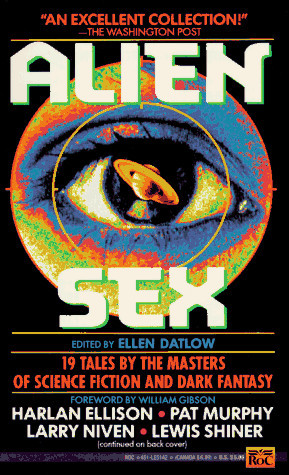
Alien Sex 19 Tales by the Masters of Science Fiction and Dark Fantasy

Harlan Ellison,Pat Murphy,Larry Niven
"In these 19 evocative pieces of short fiction, best-selling and award-winning writers tackle such intriguing issues as sex by telepathy, the pick-up scene on other planets, and making love with Superman. Thought-provoking, often shocking, always entertaining, 'Alien Sex' daringly explores those barriers between men and women that can make them seem so 'alien' to one another. probing the current and future state, shape, and complex problems of the human male/female relationship, this fantastic collection will make you think about sex in a whole new way."--Pg. [4] of cover.
Roc 1992 317 pages

WHEN EVERYONE KNOWS THAT EVERYONE KNOWS... : COMMON KNOWLEDGE AND THE SCIENCE OF HARMONY, HYPOCRISY

PINKER, STEVEN, 1954-
Common knowledge is necessary for coordination, for making arbitrary but complementary choices like driving on the right, using paper currency, and coalescing behind a political leader or movement. It's also necessary for social coordination: everything from rendezvousing at a time and place to speaking the same language to forming enduring relationships of friendship, romance, or authority. Humans have a sixth sense for common knowledge, and we create it with signals like laughter, tears, blushing, eye contact, and blunt speech. But people also go to great lengths to avoid common knowledge -- to ensure that even if everyone knows something, they can't know that everyone else knows they know it. And so we get rituals like benign hypocrisy, veiled bribes and threats, sexual innuendo, and pretending not to see the elephant in the room. Pinker shows how the hidden logic of common knowledge can make sense of many of life's enigmas: financial bubbles and crashes, revolutions that come out of nowhere, the posturing and pretense of diplomacy, the eruption of social media shaming mobs and academic cancel culture, the awkwardness of a first date. Artists and humorists have long mined the intrigues of common knowledge, and Pinker liberally uses their novels, jokes, cartoons, films, and sitcom dialogues to illuminate social life's tragedies and comedies. Along the way he answers questions like: Why do people hoard toilet paper at the first sign of an emergency? Why are Super Bowl ads filled with ads for crypto? Why, in American presidential primary voting, do citizens typically select the candidate they believe is preferred by others rather than their favorite? Why did Russian authorities arrest a protester who carried a blank sign? Why is it so hard for nervous lovers to say goodbye at the end of a phone call? Why does everyone agree that if we were completely honest all the time, life would be unbearable? Consistently riveting in explaining the paradoxes of human behavior, When Everyone Knows That Everyone Knows... invites us to understand the ways we try to get into each other's heads and the harmonies, hypocrisies, and outrages that result. -- Provided by publisher.
ALLEN LANE 2025-09-04 384 pages

The accidental theorist: and other dispatches from the dismal science

Krugman, Paul R.
Paul Krugman has made a reputation for himself by telling us the truth about economics however unlikely it may seem and however little we want to believe it. In this collection of sharp, witty essays, Krugman tackles bad economic ideas from across the political spectrum, giving us clear-eyed insights into unemployment, globalization, economic growth and financial speculation. The writing here brilliantly combines the acerbic style and clever analysis that has made Krugman famous.
Penguin 1999 204 pages

Descartes' baby: how the science of child development explains what makes us human

Bloom, Paul
"If you really want to understand human nature, you must observe people as they are before they are corrupted by language and culture, by MTV and Hebrew school. You must look at babies." So contends psychologist Paul Bloom-whom Steven Pinker calls "the wunderkind of cognitive science"-in this fascinating account of how we learn to make sense of reality. All humans see the world in two fundamentally different ways: Even babies have a rich understanding of both the physical and social worlds. They expect objects to obey principles of physics, and they're startled when things disappear or defy gravity. Yet they can also read emotions and respond with anger, sympathy, and joy.In Descartes' Baby, Bloom draws on a wealth of scientific discoveries to show how these two ways of knowing give rise to such uniquely human traits as humor, disgust, religion, art, and morality. The myriad ways that our dualist perspectives, born in infancy, undergo development throughout our lives and profoundly influence our thoughts, feelings, and actions is the subject of this richly rewarding book.
Basic Books 2004-04-13 271 pages

Changing minds: the art and science of changing our own and other people's minds

Gardner, Howard
Publisher's description: Minds are exceedingly hard to change. Ask any advertiser who has tried to convince consumers to switch brands, any CEO who has tried to change a company's culture, or any individual who has tried to heal a rift with a friend. So many aspects of life are oriented toward changing minds--yet this phenomenon is among the least understood of familiar human experiences. Now, eminent Harvard psychologist Howard Gardner, whose work has revolutionized our beliefs about intelligence, creativity, and leadership, offers an original framework for understanding exactly what happens during the course of changing a mind--and how to influence that process. Drawing on decades of cognitive research and compelling case studies--from famous business and political leaders to renowned intellectuals and artists to ordinary individuals--Gardner identifies seven powerful factors that impel or thwart significant shifts from one way of thinking to a dramatically new one. Whether we are attempting to change the mind of a nation or a corporation, our spouse's mind or our own, this book provides insights that can broaden our horizons and improve our lives. Howard Gardner is the John H. and Elisabeth A. Hobbs Professor of Cognition and Education at the Harvard Graduate School of Education and senior director of Harvard Project Zero. The recipient of a MacArthur Prize Fellowship and 20 honorary degrees, he is the author of more than 20 books.
Harvard Business School Press 2004 244 pages

A touch of infinity: thirteen new stories of fantasy and science fiction

Fast, Howard
Coronet British paperback, A collection of thirteen stunning stories by one of the most celebrated American writers of the twentieth century. Includes: The Hoop; The Price; A Matter of Size; The Hole in the Floor; General Hardy's Profession; Show Cause; Not with a Bang; The Talent of Harvey novelette; The Mind of God; UFO; Cephes 5; The Pragmatic Seed; The Egg.
Coronet 1976-09 182 pages

Tesseracts eleven: amazing Canadian speculative fiction

Cory Doctorow,Holly Phillips
Hand-picked authors and a literary legacy... You may want to read it in one quick bite... Or savor it slowly like fine Swiss chocolate... One delicious prose at a time! For 22 years, SF lovers from around the world have enjoyed the stories and poems of the Tesseracts series, ( Tesseracts One through Tesseracts Ten , and Tesseracts Q ). This unique collection of books has featured the work of some of Canada's finest speculative fiction writers, selected and edited by ever changing combinations of editors, hand-picked for each edition. For many science fiction writers, Tesseracts was a spring board to their fame. Tesseracts Eleven brings the series to a new height, with a tasty blend of past and present writers, with their own individual visions of the future. The literature of Tesseracts Eleven has been critically selected and shaped into the collection you see by this year's editors, two of Canada's finest writers - acclaimed authors Cory Doctorow and Holly Phillips. Together they have chosen a powerful combination of works by well-known writers, as well as newer authors whose futures you will want to follow. Some favorite Tesseracts ingredients are a featured part of this edition's literary blend: some very popular award winning names in Canada's SF scene, like Canada's grand dame of speculative fiction, Elisabeth Vonarburg, Claude Lalumiere, David Nickle and Candas Jane Dorsey, to name just a few. As well, readers will find some bright new stars in the science fiction world like Yukon's Jerome Stueart, or Calgary's Susan Forest - just 2 of the delicious authors featured in this fine offering. All told, Doctorow and Phillips have presented 22 pieces of literary delights to tantalize your imagination, and although you may want to consume the book in one sitting - take your time, and savor each exquisite morsel - delight in every bite. Grab your favorite beverage, settle down, and enjoy the latest in Canada's literary legacy - Tesseracts Eleven
Edge Science Fiction and Fantasy Pub 2007 325 pages

Combinators: a centennial view

Wolfram, Stephen
"Combinators have inspired ideas about computation ever since they were first invented in 1920, and in this innovative book, Stephen Wolfram provides a modern view of combinators and their significance. Informed by his work on the computational universe of possible programs and on computational language design, Wolfram explains new and existing ideas about combinators with unique clarity and stunning visualizations, as well as provides insights on their historical connections and the curious story of Moses Schönfinkel, inventor of combinators. Though invented well before Turing machines, combinators have often been viewed as an inaccessibly abstract approach to computation. This book brings them to life as never before in a thought-provoking and broadly accessible exposition of interest across mathematics and computer science, as well as to those concerned with the foundations of formal and computational thinking, and with the history of ideas"--
Wolfram Media, Inc 2021 362 pages

Clarkesworld Issue 129 (Clarkesworld Magazine)

Clarke, Neil,Miller, Sam J.,Allan, Nina,Dudak, Andy,Que, A,Patt, Julia K.,de Bodard, Aliette,Lake, Jay
Clarkesworld is a Hugo and World Fantasy Award-winning science fiction and fantasy magazine. Each month we bring you a mix of fiction (new and classic works), articles, interviews and art. Our June 2017 issue (#129) contains: Original stories by Andy Dudak ("Fool''s Cap"), Julia K. Patt ("My Dear, Like the Sky and Stars and Sun"), Nina Allan ("Neptune''s Trident"), Sam J. Miller ("The Ways Out"), and A Que ("An Account of the Sky Whales"). Reprints by Jay Lake ("Human Error") and Aliette de Bodard ("The Waiting Stars"). Non-fiction by S. E. Jones, an interview with Greg Benford, an Another Word column by Jason Heller, and an editorial by Neil Clarke.
Wyrm Publishing 2017 182 pages