58,196 results in 0.10 seconds

Who is man?

Heschel, Abraham Joshua
The following study comprises in expanded form the Raymond Fred West Memorial Lectures at Stanford University, delivered in May 1963. Many important aspects of the problem of man have not been discussed in this volume, while others have been dealt with too briefly. But the volume will serve as a prolegomena to a more comprehensive study in which I have been engaged for some time--from preface.
Stanford University Press 1965 119 pages

A tale of two continents: a physicist's life in a turbulent world

Pais, Abraham
"People like myself, who truly feel at home in several countries, are not strictly at home anywhere," writes Abraham Pais, one of the world's leading theoretical physicists, near the beginning of this engrossing chronicle of his life on two continents. The author of an immensely popular biography of Einstein, Subtle Is the Lord, Pais writes engagingly for a general audience. His "tale" describes his period of hiding in Nazi-occupied Holland (he ended the war in a Gestapo prison) and his life in America, particularly at the newly organized Institute for Advanced Study in Princeton, then directed by the brilliant and controversial physicist Robert Oppenheimer. Pais tells fascinating stories about Oppenheimer, Einstein, Bohr, Sakharov, Dirac, Heisenberg, and von Neumann, as well as about nonscientists like Chaim Weizmann, George Kennan, Erwin Panofsky, and Pablo Casals. His enthusiasm about science and life in general pervades a book that is partly a memoir, partly a travel commentary, and partly a history of science. Pais's charming recollections of his years as a university student become somber with the German invasion of the Netherlands in 1940. He was presented with an unusual deadline for his graduate work: a German decree that July 14, 1941, would be the final date on which Dutch Jews could be granted a doctoral degree. Pais received the degree, only to be forced into hiding from the Nazis in 1943, practically next door to Anne Frank. After the war, he went to the Institute of Theoretical Physics in Copenhagen to work with Niels Bohr. 1946 began his years at the Institute for Advanced Study, where he worked first as a Fellow and then as a Professor until his move to Rockefeller University in 1963. Combining his understanding of disparate social and political worlds, Pais comments just as insightfully on Oppenheimer's ordeals during the McCarthy era as he does on his own and his European colleagues' struggles during World War II. Originally published in 1997. The Princeton Legacy Library uses the latest print-on-demand technology to again make available previously out-of-print books from the distinguished backlist of Princeton University Press. These paperback editions preserve the original texts of these important books while presenting them in durable paperback editions. The goal of the Princeton Legacy Library is to vastly increase access to the rich scholarly heritage found in the thousands of books published by Princeton University Press since its founding in 1905.
Oxford University Press 1997 511 pages

China's great train: Beijing's drive west and the campaign to remake Tibet

Lustgarten, Abrahm
"A great yarn . . . [Lustgarten] also accomplishes something more valuable: He provides insight into the seat-of-the-pants nature of many of China's massive schemes."— The Washington Post Book World When the "sky train" to Tibet opened in 2006, the Chinese government fulfilled a fifty-year plan first envisioned by Mao Zedong. As China grew into an economic power, the railway had become an imperative, a critical component of China's breakneck expansion and the final maneuver in strengthening the country's grip over this last frontier. In China's Great Train , Abrahm Lustgarten, an investigative reporter with ProPublica, explores the lives of the Chinese and Tibetans swept up in the project. He follows Chinese engineer Zhang Luxin as he makes the train's route over the treacherous mountains and permafrost possible (for now), and struggling Tibetan shopkeeper Renzin, who is caught in a boomtown that favors the Han Chinese. As the railway—the highest and steepest in the world—extends to Lhasa, their lives and communities fundamentally change, sometimes for the better, sometimes not. Lustgarten offers an absorbing and provocative firsthand account of the promise and costs of the Chinese boom.
Times Books 2009-05-12 305 pages

The Warsaw diary of Adam Czerniakow: prelude to doom

Czerniaków, Adam
Adam Czerniakow was a Polish Jew who killed himself on July 23, 1942—on the face of it not an uncommon occurrence in those times. But there is more to the story than the tragic death of one man among so many millions. Czerniakow was for almost three years the chairman of the Warsaw Judenrat—a Jew, devoted to his people, who served as the Nazi-sponsored “mayor” of the Warsaw Ghetto. His personal dealings with the German authorities bring to this daily record of events a depth of knowledge, accuracy of detail, and panorama of view that was possible to no other participant in the epic prelude to the final doom of the largest captive Jewish community in Eastern Europe. This secret journal is not only the testimony of an unbearable personal burden but the documentary of the Ghetto’s terminal agony. It is the most important diary to emerge from the Holocaust.
Ivan R. Dee 1999-03-09 420 pages

The King in the Window

Adam Gopnik
Oliver Parker is a ten-year-old American boy miserably trapped in Paris, where his father is stationed as a journalist. Intimidated by his French school and its prickly teachers, oppressed by gray and wintry Paris, and feeling curiously remote from his father-who spends more and more time staring dully into his computer screen--Oliver longs to return to America. But if he has to stay in Paris, Oliver sure wouldn't mind if the elegant and very French little girl down the street, Neige, deigned to notice him. During dinner with his parents one cold January evening, Oliver feels silly wearing the paper crown of an Epiphany-festival French king. That night, looking in the mirror, he sees a boy in an ancient French doublet gazing back at him. The boy, Francois, tells Oliver that he himself is kingly, and that he has a special mission--rescuing souls. Only days later, on a trip to Versailles, Oliver is transported to the French spirit kingdom, ruled over by the fatuous King Louis the Nth. There, the famous playwright Moliere tells Oliver he must deliver France from the forces of the great Egg, who sucks up the spirits of men, women, and children when they look into a mirror of glass or of water. Oliver reluctantly rises to the challenge. Fortunately, he has help--from the can-do American Charlie, who arrives for a visit; from Neige, a Parisian diva in training; and from Mrs. Pearson, a British author and personage who leads a foray straight through Lewis Carroll's looking-glass. Ultimately, Oliver pursues Egg into the underworld-located directly underneath Paris--and realizes he must save not just the world, but all of its souls as well. In a marvelous denouement in which Oliver musttransform Eiffel Tower itself to fight the soulless wraiths, the boy proves himself a true king. The King in the Window is a beautifully written, suspenseful adventure tale in the tradition of C.S. Lewis and J.R.R. Tolkien--an instant classic.
Miramax Books for Kids 2006-10-15 416 pages

Lessons from a dark time: and other essays

Hochschild, Adam
"This book collects some two dozen pieces from bestselling author Adam Hochschild, written over the past 25 years. All have been published before, most in the New York Review of Books but also in the New Yorker, Harper's, Mother Jones, and elsewhere. They are a mixture of essays about books, authors, one film, and the writing of history and on-the-ground journalism based on reporting from India, Africa, and elsewhere"--Provided by publisher.
University of California Press 2018 277 pages

Why Trilling matters

Kirsch, Adam
The distinguished poet and critic argues for the abiding relevance of a great literary mind of the twentieth century Lionel Trilling, regarded at the time of his death in 1975 as America's preeminent literary critic, is today often seen as a relic of a vanished era. His was an age when literary criticism and ideas seemed to matter profoundly in the intellectual life of the country. In this eloquent book, Adam Kirsch shows that Trilling, far from being obsolete, is essential to understanding our current crisis of literary confidence--and to overcoming it. By reading Trilling primarily as a writer and thinker, Kirsch demonstrates how Trilling's original and moving work continues to provide an inspiring example of a mind creating itself through its encounters with texts. Why Trilling Matters introduces all of Trilling's major writings and situates him in the intellectual landscape of his century, from Communism in the 1930s to neoconservatism in the 1970s. But Kirsch goes deeper, addressing today's concerns about the decline of literature, reading, and even the book itself, and finds that Trilling has more to teach us now than ever before. As Kirsch writes, "Trilling's essays are not exactly literary criticism" but, like all literature, "ends in themselves."
Yale University Press 2011 185 pages

Political writing: a guide to the essentials

Garfinkle, Adam M.
Writing well, and persuasively, is not only a discipline that can be learned, it is one deeply rooted in the classical arts of rhetoric and polemic. This book introduces the essential skills, rules, and steps for producing effective political prose appropriate to many contexts, from the editorial, the op-ed, and the polemical essay to others both weighty and seemingly slight.
M.E. Sharpe 2012 186 pages

The dead run

Mansbach, Adam
Filled with creepy chills and crackling suspense, an unnerving supernatural thriller, set in the netherworld of the US/Mexican borderland, from the #1 New York Times bestselling author of Go the F**ck to Sleep and the acclaimed Rage Is Back On both sides of the Mexican-American border, girls are going missing and bodies are beginning to surface, a deadly epidemic of crime that plunges a small-town police chief into a monster of an investigation he's unequipped to handle. Sherry Nichols is one of those disappeared girls. Miraculously, she's managed to escape. As the young woman soon discovers, freeing herself was the easy part. Lost and alone, she's got to make it through the desert. Alive. In a Mexican jail, an unjustly-imprisoned man named Galvan is offered a devil's bargain. Freedom and the beloved daughter from whom he is estranged if he successfully carries a sinister package across the border in twenty-four hours. But there are more than coyotes (human and animal) roaming the desert in seach of prey. An ancient evil has returned, and now everyone must face their deepest terrors. With The Dead Run Adam Mansbach delivers an eerie high-concept thriller, mixing horror, the supernatural, and suspense in a chilling, high-octane read.
HarperCollins 2013 297 pages

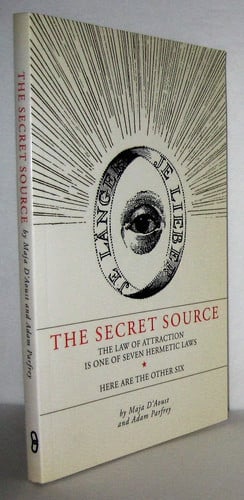
The secret source: the law of attraction is one of seven hermetic laws. Here are the other six

Maja DAoust,Adam Parfrey
Why did The Secret divulge only one of the seven Hermetic Laws when all are interdependent on the others for success? What are the others and what do they mean? The Secret Source provides the actual texts and fascinating stories behind the Emerald Tablet', the Kabbalistic treatise known as The Kybalion, and Manly P. Hall's essay on the occult movement that produced it.'
Process 2007 182 pages

Becoming Freud: the making of psychoanalysis

Phillips, Adam
"Becoming Freud is the story of the young Freud-Freud up until the age of fifty-that incorporates all of Freud's many misgivings about the art of biography. Freud invented a psychological treatment that involved the telling and revising of life stories, but he was himself skeptical of the writing of such stories. In this biography, Adam Phillips, whom the New Yorker calls "Britain's foremost psychoanalytical writer," emphasizes the largely and inevitably undocumented story of Freud's earliest years as the oldest-and favored-son of Jewish immigrants from Eastern Europe and suggests that the psychoanalysis Freud invented was, among many other things, a psychology of the immigrant-increasingly, of course, everybody's status in the modern world. Psychoanalysis was also Freud's way of coming to terms with the fate of the Jews in Europe in the late nineteenth and early twentieth centuries. So as well as incorporating the writings of Freud and his contemporaries, Becoming Freud also uses the work of historians of the Jews in Europe in this significant period in their lives, a period of unprecedented political freedom and mounting persecution. Phillips concludes by speculating what psychoanalysis might have become if Freud had died in 1906, before the emergence of a psychoanalytic movement over which he had to preside"--
Yale University Press 2016 178 pages

On getting better

Phillips, Adam
"From the UK's foremost literary psychoanalyst, a dazzling companion to On Wanting to Change that asks what it means to get better. To talk about getting better - about wanting to change in ways that we might choose and prefer - is to talk about pursuing the life we want; in the full knowledge that our pictures of the life we want, of our version of a good life, come from or come out of what we have already experienced. (We write the sentences we write because of the sentences we have read.) How can we talk differently about how we might want to change, knowing that all change precipitates us into an uncertain future? In this companion book to On Wanting to Change, Adam Phillips explores how we might get better at talking about what it is to get better"--Publisher's description
Penguin books 2021 176 pages

Family values: the ethics of parent-child relationships

Brighouse, Harry,Swift, Adam
The family is hotly contested ideological terrain. Some defend the traditional two-parent heterosexual family while others welcome its demise. Opinions vary about how much control parents should have over their children's upbringing. Family Values provides a major new theoretical account of the morality and politics of the family, telling us why the family is valuable, who has the right to parent, and what rights parents should--and should not--have over their children. Harry Brighouse and Adam Swift argue that parent-child relationships produce the "familial relationship goods" that people need to flourish. Children's healthy development depends on intimate relationships with authoritative adults, while the distinctive joys and challenges of parenting are part of a fulfilling life for adults. Yet the relationships that make these goods possible have little to do with biology, and do not require the extensive rights that parents currently enjoy. Challenging some of our most commonly held beliefs about the family, Brighouse and Swift explain why a child's interest in autonomy severely limits parents' right to shape their children's values, and why parents have no fundamental right to confer wealth or advantage on their children. Family Values reaffirms the vital importance of the family as a social institution while challenging its role in the reproduction of social inequality and carefully balancing the interests of parents and children.
Princeton University Press 2016-08-02 216 pages

The war of return: how Western indulgence of the Palestinian dream has obstructed the path to peace

Schwartz, Adi,Wilf, Einat
"Two prominent Israeli liberals argue that for the conflict between Israel and the Palestinians to end with peace, Palestinians must come to terms with the fact that there will be no "right of return." In 1948, seven hundred thousand Palestinians were forced out of their homes by the first Arab-Israeli War. More than seventy years later, most of their houses are long gone, but millions of their descendants are still registered as refugees, with many living in refugee camps. This group-unlike countless others that were displaced in the aftermath of World War II and other conflicts-has remained unsettled, demanding to settle in the state of Israel. Their belief in a "right of return" is one of the largest obstacles to successful diplomacy and lasting peace in the region. In The War of Return, Adi Schwartz and Einat Wilf-both liberal Israelis supportive of a two-state solution-reveal the origins of the idea of a right of return, and explain how UNRWA - the very agency charged with finding a solution for the refugees - gave in to Palestinian, Arab and international political pressure to create a permanent "refugee" problem. They argue that this Palestinian demand for a "right of return" has no legal or moral basis and make an impassioned plea for the US, the UN, and the EU to recognize this fact, for the good of Israelis and Palestinians alike. A runaway bestseller in Israel, the first English translation of The War of Return is certain to spark lively debate throughout America and abroad"--
All Points Books 2020-04-28 283 pages