

58,196 results in 0.08 seconds

Who Pushed Humpty Dumpty? Dilemmas in American Education Today.

Tourette's syndrome: tics, obsessions, compulsions : developmental psychopathology and clinical care
A revised and concise guide to the latest thoughts and findings on Tourette's Syndrome Edited by two of the leading international authorities on Tourette's Syndrome and tic-related, obsessive-compulsive disorders, Tourette's Syndrome is the most up-to-date edited reference covering this neuropsychiatric disorder and related disorders from a variety of perspectives. Featuring contributors from the world-renowned Yale Child Study Center, this volume introduces a groundbreaking developmental framework for understanding Tourette's-defined by persistent motor and vocal tics and frequently associated with obsessions, compulsions, and attentional difficulties-and maps out the diagnosis, genetics, manifestations, and treatment. Reflecting more than 25 years of research, this comprehensive resource describes the major categories of disorders (TS, obsessive-compulsive disorder, attention deficit hyperactivity disorder, learning disabilities) as well as the strengths and adaptation of individuals with Tourette's. A broad, detailed discussion of pathogenesis is provided, including epidemiological studies and environmental risk and protective factors. The book also highlights the necessary partnerships between children, families, and clinicians in the struggle to achieve wished-for outcomes. Enriched by the knowledge of specialists at the forefront of genetics, psychology, neuropsychology, pharmacology, neurochemistry, and epidemiology, among other fields, Tourette's Syndrome gives clinicians valuable insight into the minds of and proper care for individuals battling this and related disorders.

Men of bronze: hoplite warfare in ancient Greece
"Men of Bronze takes up one of the most important and fiercely debated subjects in ancient history and classics: how did archaic Greek hoplites fight, and what role, if any, did hoplite warfare play in shaping the Greek polis? In the nineteenth century, George Grote argued that the phalanx battle formation of the hoplite farmer citizen-soldier was the driving force behind a revolution in Greek social, political, and cultural institutions. Throughout the twentieth century scholars developed and refined this grand hoplite narrative with the help of archaeology. But over the past thirty years other scholars have criticized nearly every major tenet of this orthodoxy. Indeed, these revisionists have persuaded many specialists that the evidence demands a new interpretation of the hoplite narrative and a rewriting of early Greek history. Men of Bronze gathers leading scholars to advance the current debate and bring it to a broader audience of ancient historians, classicists, archaeologists, and general readers. After explaining the historical context and significance of the hoplite question, the book assesses and pushes forward the debate over the traditional hoplite narrative and demonstrates why it is at a crucial turning point. Instead of reaching a consensus, the contributors have sharpened their differences, providing new evidence, explanations, and theories about the origin, nature, strategy, and tactics of the hoplite phalanx and its effect on Greek culture and the rise of the polis."

The fall of the Athenian Empire
In the fourth and final volume of his magisterial history of the Peloponnesian War, Donald Kagan examines the period from the destruction of Athens' Sicilian expedition in September of 413 B.C. to the Athenian surrender to Sparta in the spring of 404 B.C. Through his study of this last decade of the war, Kagan evaluates the performance of the Athenian democracy as it faced its most serious challenge. At the same time, Kagan assesses Thucydides' interpretation of the reasons for Athens' defeat and the destruction of the Athenian Empire.

The outbreak of the Peloponnesian war
A new evaluation of the origins and causes of the Peloponnesian War, based on evidence produced by modern scholarship and on a careful reconsideration of the ancient texts.

On Familiar Terms A Journey Across Cultures
This is the intimate & inspiring story of the man who has brought the works of Japan s greatest writers to worldwide attention through his highly acclaimed writings, translations, & anthologies. It is the deeply personal story of his remarkable life -- from a Depression-era childhood through his wartime experiences as a naval intelligence officer in the Pacific, his early enchantment with the now-vanished world of old Kyoto, & the diverse & lasting friendships he made in New York, Japan, & England. Includes illuminating anecdotes about such writers as Yukio Mishima, Yasunari Kawabata, Kenzaburo Oe, & Kobo Abe.

The first modern Japanese: the life of Ishikawa Takuboku
Many books in Japanese have been devoted to the poet and critic Ishikawa Takuboku (1886-1912). Although he died at the age of twenty-six and wrote many of his best-known poems in the space of a few years, his name is familiar to every literate Japanese. Takuboku's early death added to the sad romance of the unhappy poet, but there has been no satisfactory biography of his life or career, even in Japanese, and only a small part of his writings have been translated. His mature poetry was based on the work of no predecessor, and he left no disciples. Takuboku stands unique. Takuboku's most popular poems, especially those with a humorous overlay, are often read and memorized, but his diaries and letters, though less familiar, contain rich and vivid glimpses of the poet's thoughts and experiences. They reflect the outlook of an unconstrained man who at times behaved in a startling or even shocking manner. Despite his misdemeanors, Takuboku is regarded as a national poet, all but a saint to his admirers, especially in the regions of Japan where he lived. His refusal to conform to the Japan of the time drove him in striking directions and ranked him as the first poet of the new Japan.

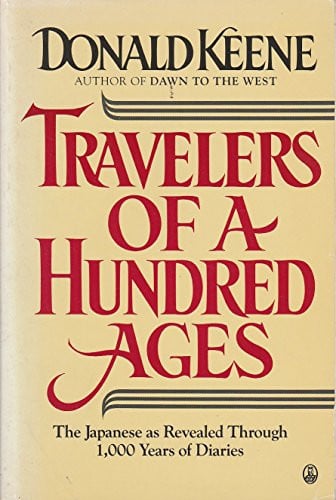
Travelers of a hundred ages
Cholesterol, children, and heart disease: an analysis of alternatives

What's Wrong with this Picture?
THE STORY: L.A. Weekly writes: Donald Margulies' very Jewish Blithe Spirit is full of surprises...Opening at the end of shiva, the play is the story of grief-stricken dry-cleaner Mort, whose wife, Shirley, died the week before after choking o

The claustrum: an investigation of claustrophobic phenomena
Using the Kleinian concept of projective-identification, with special reference to intrusive identification with internal objects, this work examines claustrophobic phenomena and its relations to the treatment of borderline and adolescent patients.

Interpreting Ethiopia Observations of Five Decades
About the Book: In this remarkable collection, internationally renowned Ethiopianist Donald Levine has assembled interpretive vignettes-some never before published-spanning more than half a century. Thanks to his unique experiences living among peasants of Northern Shoa, visiting historic monasteries, and enjoying personal connections with modernizing Ethiopians from all political viewpoints, these essays offer acute glimpses into everything from local life-worlds to historic perspectives spanning two millennia. Catching diverse ways in which Ethiopians construct their own narratives is one of the distinctive features of this work. This includes stunning interpretations of Ethiopia's national epic, Kibre Negest; different ways in which Oromos construct their own narratives; and the clash of perspectives among protagonists in the 2005 political crisis, between the ruling party and the main opposition party at that time. The book also includes important political documents such as Levine's first-hand account of the December 1960 coup; his 1976 testimony for the U.S. Senate Subcommittee on Africa concerning the Derg; and his thoughtful plea regarding the 1993 Eritrean referendum. The book climaxes with broad interpretive sketches, including the renowned essay on Ethiopia and Japan in comparative civilizational perspective, and Levine's revised interpretation of the evolution of Ethiopia as a historic multi-ethnic society. In addition to historic and cultural forays, Interpreting Ethiopia includes a number of chapters devoted to current domestic challenges, such as the problem of chronic hunger and overpopulation; the problems posed by the exponential growth of an Ethiopian Diaspora after 1974; and the obstacles and opportunities faced by Ethiopians in their effort to create a national public. Reviews: Professor Levine's essays savor like a fine cup of Ethiopian coffee. It is a blend of the earthy taste of ethnography, the subtle aroma of social theory, and the spices of history! -Eloi Ficquet, co-editor of Understanding Contemporary Ethiopia: Monarchy, Revolution and the Legacy of Meles Zenawi The breadth, depth and commitment of Levine's work on Ethiopia spanning fifty years has finally been woven together in this unique and inspiring collection that links profound insights across disciplines from anthropology and archaeology through sociology to history, political science and peace-making. Interpreting Ethiopia is required reading for anyone interested in Ethiopian studies. -Alula Pankhurst, co-editor of Moving People: Displacement, Development and the State in Ethiopia and Country Director of Young Lives Ethiopia This outstanding collection of work by Donald Levine from 1959 through 2014 demonstrates why he is unquestionably one of the world's leading scholars on Ethiopia. -David Shinn, Adjunct Professor of International Affairs at the George Washington University and the Former United States Ambassador to Ethiopia About the Author: DONALD N. LEVINE, is the Peter B. Ritzma Professor of Sociology and former dean of the College at the University of Chicago. For nearly half a century he has been devoted to Ethiopia-as a scholar, in university teaching, in providing expert assistance to various government bodies, and in community service on behalf of Ethiopians at home and abroad. Levine's publications on Ethiopia include dozens of articles, parts of The Flight from Ambiguity: Essays in Social and Cultural Theory (1985), and two books, Wax and Gold: Tradition and Innovation in Ethiopian Culture (1965), now reprinted by Tsehai Publishers and Greater Ethiopia: The Evolution of a Multiethnic Society (1974), a second edition of which, with a new preface was published, in 2001.

Marvin: the story of Lee Marvin
This biography presents a portrait of Lee Marvin warts and all. A very charismatic, seemingly outgoing and yet private man, Marvin was a decorated soldier, who enlisted at 18 in the United States Marine Corps Reserve, and served with the 4th Marine Division in the Pacific Theater during World War II. His service left its mark on him, but on film he was a man's man, playing hoods, bank robbers, assassins, and a long run of soldiers. But some of his greatest successes were when he played against type, as in Cat Ballou and Paint Your Wagon. Marvin entered the Hollywood food chain during a time of upheaval in both America and the film industry. Movie Star Marvin walked a sublime line between old-school masculinity and new-school subversive spirit. During this transitional period, armed with barely disguised and irresistible contempt, he does exactly what The Man tells him to, but still somehow does what he least expects or intends; as the box-office grosses indicated, there was something nearly every American could love about that. This book discusses his films, his life, and examines how unusual he was as both an actor, and a human being.

Heidegger and the Jews: the Black notebooks
Philosophers have long struggled to reconcile Martin Heidegger's involvement in Nazism with hist status as one of the greatest thinkers of the twentieth century. The recent publication of his "Black Notebooks" has reignited fierce debate on the subject. These thousand-odd pages of jotted observations profoundly challenge our image of the quiet philosopher's exile in the Black Forest, revealing the shocking extent of his anti-Semitism for the first time. For much of the philosophical community the "Black Notebooks" have been either used to discredit Heidegger or seen as a bibliographical detail irrelevant to his thought. yet, in this new book, the author agrees that Heidegger's "metaphysical anti-Semitism" was a central part of his philosophical project. Within the context of the Nuremberg race laws, Heidegger felt compelled to define Jewishness and its relationship to his concept of Being. The author shows that Heidegger saw the Jews as the agents of a modernity that had disfigured the spirit of the West. In a deeply disturbing extrapolation, he presented the Holocaust as both a means for the purification of Being and the Jews' own "self-destruction": a process of death on an industrialized scale that was the logical conclusion of the acceleration in technology they themselves had brought about.

The Queen of my self: stepping into sovereignty in midlife
Millions of women are now entering or in the midst of midlife. With unprecedented freedom, education, longevity, and wealth, they hold positions of unheard-of responsibility and stature. No longer Maidens, nor Mothers, and not yet old Crones, the question arises: Where do these dynamic, accomplished, middle-aged women fit into the traditional description of the three stages of womanhood? In The Queen of My Self, urban shaman and popular spiritual teacher Donna Henes proposes a completely original paradigm-the midlife Queen, a woman in her prime who has achieved wisdom, mastery, and self-esteem-that reflects more accurately the realities and needs of women today. Henes draws on history, mythology, and literature, her own life experience, as well as stories from women in many different societies, situations, and stations. She provides illustrations and upbeat, practical, and ceremonial inspiration for all women who want to enjoy the fruits of an influential, passionate, and powerful maturity, and celebrate a new mythic model for the middle years of a woman's life-the Queen.

Icons of talk: the media mouths that changed America
Americans love talk shows. In a typical week, more than 13 million Americans listen to Rush Limbaugh, whose syndicated radio show is carried by about 600 stations. On television, Oprah Winfrey's syndicated talk show is seen by an estimated 30 million viewers each week. Talk show hosts like Winfrey and Limbaugh have become iconic figures, frequently quoted and capable of inspiring intense opinions. What they say on the air is discussed around the water cooler at work, or commented about on blogs and fan web sites. Talk show hosts have helped to make or break political candidates, and their larger-than-life personalities have earned them millions of fans (as well as more than a few enemies). Icons of Talk highlights the most groundbreaking exemplars of the talk show genre, a genre that has had a profound influence on American life for over 70 years. Among the featured: • Joe Pyne • Jerry Williams • Herb Jepko • Randi Rhodes • Rush Limbaugh • Larry King • Dr. Laura Schlesinger • Steve Allen • Jerry Springer • Howard Stern. • Oprah Winfrey • Don Francisco • Cristina Saralegui • Tavis Smiley • James Dobson • Don Imus Going behind the scenes, this volume showcases the techniques hosts used to motivate (and sometimes aggravate) audiences, and examines the talk show in all of its various formats, including sports-talk, religious-talk, political-talk, and celebrity-talk. Each entry places the talk format and its hosts into historical context, addressing such questions as: What was going on in society when these talkers were on the air? How did each of them affect or change society? What were the issues they liked to talk about and what reaction did they get from listeners and from critics? How were talk hosts able to persuade people to vote for particular candidates or support certain policies? Which hosts were considered controversial and why? Complete with photographs, a timeline, and a resource guide of sources and organizations, this volume is ideal for students of journalism and media studies.

Sunrise at Campobello
The book is in excellent condition. Pages are clean, very light age-tanning hue, dust cover is in very good condition except the spine that shows some discoloration, binding is tight, spine is without creases. Published 1958. We carefully wrap and ship your book within 24 hours of order. (W-12)

Mystery Dance: on the Evolution of Human Sexuality

Dangerous diagnostics: the social power of biological information
Dangerous Diagnostics is a powerful study of the pervasiveness of diagnostic testing and the potential it offers institutions to classify, categorize, and ultimately control individuals. Nelkin and Tancredi explore the ethical, social, and legal implications of cutting-edge technologies that can lead to new forms of discrimination in the name of standardized, objective measurements. They caution against the creation of an underclass deemed unemployable, untrainable, or uninsurable by such diagnostic tests.
