993 results for "Biography"

Who's who in Nazi Germany

Wistrich, Robert S.
Who's Who in Nazi Germany looks at the individuals who influenced every aspect of life in Nazi Germany. It covers a representative cross-section of German society from 1933-1945, and includes: * Nazi Party leaders; SS, Wehrmacht and Gestapo personalities; civil service and diplomatic personnel * industrialists, churchmen, intellectuals, artists, entertainers and sports personalities * Resistance leaders, political dissidents, critics and victims of the regime * extensive biographical information on each figure extending into the post-war period * analysis of their role and significance in Nazi Germany * an accessible, easy to use A-Z layout * a glossary and comprehensive bibliography.
Routledge 1995 296 pages

Avid reader: a life

Gottlieb, Robert
After editing The Columbia Review, staging plays at Cambridge, and a stint in the greeting-card department of Macy's, Robert Gottlieb stumbled into a job at Simon and Schuster. By the time he left to run Alfred A. Knopf a dozen years later, he was the editor in chief, having discovered and edited Catch-22 and The American Way of Death, among other bestsellers. At Knopf, Gottlieb edited a long list of authors, including Toni Morrison, John Cheever, Doris Lessing, John le Carré, Michael Crichton, Lauren Bacall, Katharine Graham, Robert Caro, Nora Ephron, and Bill Clinton -- not to mention Bruno Bettelheim and Miss Piggy. In Avid Reader, Gottlieb writes about succeeding William Shawn as the editor of The New Yorker, and the challenges and satisfactions of running America's preeminent magazine. Sixty years after joining Simon and Schuster, Gottlieb is still at it -- editing, anthologizing, and, to his surprise, writing.
Farrar, Straus and Giroux 2016 337 pages

Soldiers of God: with Islamic warriors in Afghanistan and Pakistan

Kaplan, Robert D.
First time in paperback, with a new Introduction and final chapter World affairs expert and intrepid travel journalist Robert D. Kaplan braved the dangers of war-ravaged Afghanistan in the 1980s, living among the mujahidin—the “soldiers of god”—whose unwavering devotion to Islam fueled their mission to oust the formidable Soviet invaders. In Soldiers of God we follow Kaplan’s extraordinary journey and learn how the thwarted Soviet invasion gave rise to the ruthless Taliban and the defining international conflagration of the twenty-first century. Kaplan returns a decade later and brings to life a lawless frontier. What he reveals is astonishing: teeming refugee camps on the deeply contentious Pakistan-Afghanistan border; a war front that combines primitive fighters with the most technologically advanced weapons known to man; rigorous Islamic indoctrination academies; a land of minefields plagued by drought, fierce tribalism, insurmountable ethnic and religious divisions, an abysmal literacy rate, and legions of war orphans who seek stability in military brotherhood. Traveling alongside Islamic guerrilla fighters, sharing their food, observing their piety in the face of deprivation, and witnessing their determination, Kaplan offers a unique opportunity to increase our understanding of a people and a country that are at the center of world events.
Vintage Books 2001-11-27 278 pages

Stealing God's thunder: Benjamin Franklin's lightning rod and the invention of America

Dray, Philip
“Dray captures the genius and ingenuity of Franklin’s scientific thinking and then does something even more fascinating: He shows how science shaped his diplomacy, politics, and Enlightenment philosophy.” –Walter Isaacson, author of Benjamin Franklin: An American Life Today we think of Benjamin Franklin as a founder of American independence who also dabbled in science. But in Franklin’s day, the era of Enlightenment, long before he was an eminent statesman, he was famous for his revolutionary scientific work. Pulitzer Prize finalist Philip Dray uses the evolution of Franklin’s scientific curiosity and empirical thinking as a metaphor for America’s struggle to establish its fundamental values. He recounts how Franklin unlocked one of the greatest natural mysteries of his day, the seemingly unknowable powers of lightning and electricity. Rich in historical detail and based on numerous primary sources, Stealing God’s Thunder is a fascinating original look at one of our most beloved and complex founding fathers.
Random House 2005-12-27 279 pages

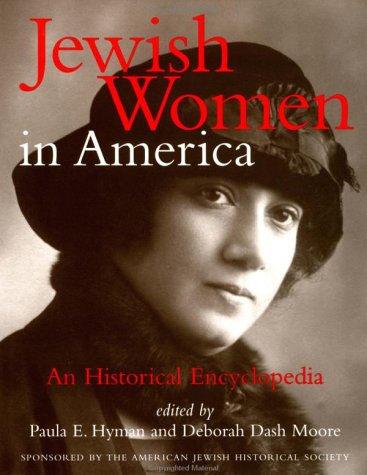
Jewish women in America: an historical encyclopedia

Paula Hyman,Deborah Dash Moore,Phyllis Holman Weisbard,American Jewish Historical Society
This encyclopedia provides the first standard reference work on the lives, history and activities of Jewish women in the United States. Covering a period which extends from the arrival of the first Jewish women in North America in 1654 to the present, this two-volume set presents the most comprehensive and detailed portrait of American Jewish women ever published, and brings together for the first time the wealth of recent scholarship on this subject. Includes: * Biographical entries on over 800 individual women. * 128 topical articles on organizations such as Hadassah, the National Council of Jewish Women, Mizrachi, and the Ladies' Garment Workers' Union. * Major essays on Jewish women's participation in the movement for women's suffrage, social reform, civil rights, and the recent women's movement. * The activities of Jewish women in politics, business, education, the arts, and religion. * A readable, inviting format with over 500 large photographs. * Bibliographies at the end of each entry which include overviews of major scholarship in the field, complete citations of more general works and citations of additional bibliographical and reference sources. * The comprehensive index includes citations to every substantive discussion in the entries as well as all proper names appearing in the text, such as organizations, book, song and film titles, schools, and individuals. The "Encyclopedia" provides information on American Jewish women in all fields of endeavor, and pays special attention to the work of women in the arts, academics, law, the labor movement, education, science, medicine, journalism and publishing, and on the lives of ordinary Jewish women during all time periods and in all regions of the United States.
Routledge 1997 1770 pages

Work in progress

Eisner, Michael
Scores of books have been published about business, but rarely has a CEO as prominent as Michael Eisner of The Walt Disney Company written so intimately about his life and work. In Work in Progress, Eisner describes the daily challenge of a rapidly changing marketplace, countless creative choices, painful setbacks, and dramatic triumphs. For more than thirty years, Michael Eisner has lived and worked at the center of American popular culture. At ABC, as a young executive, he helped bring to life shows such as Happy Days and the miniseries Roots. As president of Paramount Pictures, he was responsible for films ranging from Beverly Hills Cop and Raiders of the Lost Ark to Terms of Endearment and The Elephant Man. As chairman of The Walt Disney Company for the past fourteen years, he has orchestrated the transformation of a beloved but struggling company into a multimedia giant in movies, television, radio, theme parks, theater, and even cyberspace. Having spent his life helping other people to tell stories, Eisner now tells his own-with humor, insight, and unstinting honesty. He recounts such significant events as the extraordinary revival of Disney's animation business and the negotiations for one of the largest acquisitions in corporate history-Cap Cities/ABC-which began in an Idaho parking lot. He is just as forthcoming about the early struggles of Disneyland Paris and the fierce opposition that finally helped to derail Disney's America. Blending the personal and the professional, he tells the stories of the tragic death of his partner and closest confidant, Frank Wells; his own emergency quadruple bypass surgery; the high-level personnel changes that followed; and the emergence of a new generation of young leaders at Disney. Throughout Work in Progress, we watch Eisner grappling with the often paradoxical choices that he faces each day in managing a creative company. What is the proper balance between art and commerce, tradition and innovation, short-term profit and long-term growth, pragmatism and excellence -- the company's good and the greater good? Like no other business memoir, Work in Progress is a riveting tale of high-pressure life at the top--an ongoing drama about risking failure and surviving success. Michael Eisner... - On Disney - At a certain level, what we do at Disney is very simple. We set our goals, aim for perfection, inevitably fall short, try to learn from our mistakes, and hope that our successes will continue to outnumber our failures. Above all, we tell stories, in the hope that they will entertain, inform and engage. These are mine. - On a Gurney - I felt unsettled, close to panic. Moments later, I experienced intense pain, not just in my arms, but also in my neck and chest. My anxiety was making the pain worse. The next thing I knew, I was being wheeled into the emergency room. All I could think of was ER, the pilot I'd just watched. Suddenly, I was living it. - On Ideas - When an idea can't be articulated simply, crisply, and accessibly, there is usually something wrong with it. When I hear a good idea, it has an effect on my mind and body. Sometimes, I feel it in my stomach, other times in my throat, still others on my skin-a kind of instant truth detector test. - On Diet - I grew up thinking vegetarians were weird and that special diets were for old people, like my Aunt Mannie and Cousin Ida. I began my special, nonfat vegetarian diet at half their age. Now I wish my kids would follow suit-just say no to drugs, unsafe friends, and unprotected saturated fat. - On an Acquisition - There was something extraordinary about the whole scene. I had run into Tisch, Buffett, and now Tom Murphy literally as I was prepared to leave Herb Allen's Sun Valley gathering. Murphy was about to head off with Buffett and Gates, two of the wealthiest businessmen in America, to play golf. In the meantime, here we were, standing together in a parking lot in the middle of Idaho, talking about a $20 billion t
Random House 1998-09-24 450 pages

Frozen in time: Clarence Birdseye's outrageous idea about frozen food

Kurlansky, Mark
"This biography--perfect for middle-grade readers--tells the life story of Clarence Birdseye, the man who revolutionized the frozen food industry, and is adapted from Mark Kurlansky's adult work Birdseye: The Adventures of a Curious Man. Adventurer and inventor Clarence Birdseye had a fascination with food preservation that led him to develop and patent the Birdseye freezing process and start the company that still bears his name today. His limitless curiosity spurred his other inventions, including the electric sunlamp, an improved incandescent lightbulb, and a harpoon gun to tag finback whales. This true story of an early entrepreneur is as thrilling as the story of Steve Jobs or Mark Zuckerberg. Includes an 8-page black-and-white photo insert"--
Delacorte Press 2014 165 pages

The Ottomans: khans, caesars, and caliphs

Baer, Marc David
"Ever since an Ottoman army led by Mehmed II conquered Constantinople in 1453, it has been common to see the Ottoman Empire as the Islamic, Asian antithesis of the Christian, European West. But in reality the Ottoman dynasty ruled a multiethnic, multilingual, and multireligious empire that stretched across parts of Europe, Africa, and Asia. The Ottomans: Sultans, Khans, and Caesars offers a bold new history of this empire that straddled East and West for nearly five hundred years and negotiated the challenges of religious difference in ways that had a profound influence on the emergence of our modern world. As historian Marc David Baer shows, the Ottomans enjoyed a tripartite inheritance as they rose from a frontier principality to a world empire. The dynasty's origins can be traced to the tribes of Turks and Tatars pushed westward into Anatolia by Mongol expansion in the thirteenth and fourteenth centuries. But it was equally indebted to the Islamic scholars and Sufi sheikhs who proselytized Islam across this region and legitimated Ottoman rule. And from the Byzantine empire they supplanted, the Ottomans borrowed bureaucracy, culture, and claims to universal rule as the successors of Rome. Ottoman rulers did not only call themselves khans and sultans, but also caliphs, emperors, and caesars. The Ottomans managed their diverse empire by striking a delicate balance: amid a profoundly hierarchal society, they pioneered the principles and practices of toleration of religious minorities, even as they also freely used religious conversion to integrate conquered peoples into the imperial project. Indeed, the Ottomans were the only world empire to rely on converts to make up its ruling dynasty and to populate its military and administrative leadership. By receiving them as converts to Islam, they brought everyone from Byzantine and Serbian royalty to enslaved captives to common herdsmen into the elite fold as princesses, statesmen, and battlefield commanders. It was only in the final decades of the nineteenth century that the Ottomans began to turn away from this approach, trying to save the empire by making it into an exclusively Ottoman Muslim polity, and then into a Turkish one. The tragic consequence was ethnic cleansing and genocide, and the dynasty's demise in the wake of the First World War. For better and for worse, the Ottoman Empire was as magnificent and as horrible as any of its European contemporaries. The Ottomans reveals its history in full, showing how again and again it remade the world from the Renaissance and the Enlightenment to the dawn of a brutal century world war"--
Basic Books 2021 543 pages

True believer: Stalin's last American spy

Marton, Kati
“Relevant...fascinating...vividly reconstructed.” — The New York Times Book Review “Riveting reading...a mesmerizing look at Cold War espionage.” — USA TODAY This astonishing real-life spy thriller, filled with danger, misplaced loyalties, betrayal, treachery, and pure evil, with a plot twist worthy of John le Carré, is relevant today as a tale of fanaticism and the lengths it takes us to. True Believer reveals the life of Noel Field, an American who betrayed his country and crushed his family. Field, once a well-meaning and privileged American, spied for Stalin during the 1930s and '40s. Then, a pawn in Stalin’s sinister master strategy, Field was kidnapped and tortured by the KGB and forced to testify against his own Communist comrades. How does an Ivy League-educated, US State Department employee, deeply rooted in American culture and history, become a hardcore Stalinist? The 1930s, when Noel Field joined the secret underground of the International Communist Movement, were a time of national collapse: ten million Americans unemployed, rampant racism, retreat from the world just as fascism was gaining ground, and Washington—pre FDR—parched of fresh ideas. Communism promised the righting of social and political wrongs and many in Field’s generation were seduced by its siren song. Few, however, went as far as Noel Field in betraying their own country. With a reporter’s eye for detail, and a historian’s grasp of the cataclysmic events of the twentieth century, Kati Marton captures Field’s riveting quest for a life of meaning that went horribly wrong. True Believer is supported by unprecedented access to Field family correspondence, Soviet Secret Police records, and reporting on key players from Alger Hiss, CIA Director Allen Dulles, and World War II spy master, “Wild Bill” Donovan—to the most sinister of all: Josef Stalin. A story of another time, this is a tale relevant for all times.
Simon & Schuster 2016-09-06 289 pages

Elie Wiesel: confronting the silence

Berger, Joseph
"As an orphaned survivor and witness to the horrors of Auschwitz, Elie Wiesel (1928-2016) compelled the world to confront the Holocaust with his searing memoir Night. How did this soft-spoken man from a small Carpathian town become such an influential figure on the world stage. Drawing on Wiesel's prodigious literary output and interviews with his family, friends, scholars, and critics, Joseph Berger seeks to answer this question."--
Yale University Press 2023-01-01 342 pages

Revolutionary Jews from Spinoza to Marx: the fight for a secular world of universal and equal rights

Israel, Jonathan
"In the eighteenth and early nineteenth centuries a small but conspicuous fringe of the Jewish population became the world's most resolute, intellectually driven, and philosophical revolutionaries, among them the pre-Marxist Karl Marx. Yet the roots of their alienation from existing society and determination to change it extend back to the very heart of the Enlightenment, when Spinoza and other philosophers living in a rigid, hierarchical society colored by a deeply hostile theology first developed a modern revolutionary consciousness. Leading intellectual historian Jonathan Israel shows how the radical ideas in the early Marx's writings were influenced by this legacy, which, he argues, must be understood as part of the Radical Enlightenment. He traces the rise of a Jewish revolutionary tendency demanding social equality and universal human rights throughout the Western world. Israel considers how these writers understood Jewish marginalization and ghettoization and the edifice of superstition, prejudice, and ignorance that sustained them. He investigates how the quest for Jewish emancipation led these thinkers to formulate sweeping theories of social and legal reform that paved the way for revolutionary actions that helped change the world from 1789 onward-but hardly as they intended"--
University of Washington Press 2021 549 pages

Sea queens: women pirates around the world

Yolen, Jane
In 1963 Jane Yolen released a book called PIRATES IN PETTICOATS, because the idea of women as pirates fascinated her--but there wasn't much information about these women who made their livelihoods plundering on the high seas. Scholars have dug up a bounty of new information since then, and Jane, still fascinated, revisits the ladies who loot. Discover such great pirates as Artemisia, the Admiral Queen of Persia who sailed the seas from 500 to 480 BC. At one point there was a 10,000 drachma prize for anyone who could capture her. There was Rachel Wall, who ran away from her strict upbringing and became a murderous pirate terrorizing the waters of the Atlantic coastline of America. She was hanged for her deeds. Possibly the most famous woman pirate of all was Grania O'Malley, daughter of an Irish chieftain. She plagued the English and was arrested several times, always gaining her freedom to pirate some more. Meet ten other female pirates on their ships, in battle, and in disguise in this intriguing look at the wayward women of the waves. Christine Joy Pratt's pen-and-ink illustrations are alive with action and excitement. Here be a true and accurate account of the most low-down, scurviest--but the prettiest--black-hearted pirates you'll ever love to read about.
Charlesbridge 2010-07-01 103 pages

Artists in times of war

Zinn, Howard
"Political power," says Howard Zinn, "is controlled by the corporate elite, and the arts are the locale for a kind of guerilla warfare in the sense that guerillas look for apertures and opportunities where they can have an effect." In Artists in Times of War, Zinn looks at the possibilities to create such apertures through art, film, activism, publishing and through our everyday lives. In this collection of four essays, the author of A People's History of the United States writes about why "To criticize the government is the highest act of patriotism." Filled with quotes and examples from the likes of Bob Dylan, Mark Twain, e. e. cummings, Thomas Paine, Joseph Heller, and Emma Goldman, Zinn's essays discuss America's rich cultural counternarratives to war, so needed in these days of unchallenged U.S. militarism.
Seven Stories Press 2003 112 pages

In search of memory: the emergence of a new science of mind

Kandel, Eric R.
Nobelist Eric Kandel's account of how his personal quest to understand memory intersected with the emergence of a new science. In Search of Memory relates the astonishing story of how four different and distinct disciplinesbehaviorist psychology, cognitive psychology, neuroscience, and molecular biologyconverged into a powerful new science of mind. Through its profound insights into thought, perception, action, recollection, and mental illness, this new science is revolutionizing our understanding of learning and memory while simultaneously showing great promise for more effective healing. The narrative follows Eric R. Kandel through the last five decades, focusing on Vienna, where he became fascinated with memory. With intrepid scientific ardor, Kandel was captivated first by history and psychoanalysis, then by neurobiology, and finally by the biological processes of memory. His resulting, multifaceted perspective was the foundation for his path-breaking research that will continue to dominate modern thoughtnot only in science but in culture at large. 50 illustrations.
W. W. Norton & Company 2006 510 pages

Jelly Roll blues: censored songs & hidden histories

Wald, Elijah
"A bestselling music historian follows Jelly Roll Morton on a journey through the hidden worlds and forbidden songs of early blues and jazz. In Jelly Roll Blues: Censored Songs and Hidden Histories, Elijah Wald takes readers on a journey into the hidden and censored world of early blues and jazz, guided by the legendary New Orleans pianist Jelly Roll Morton. Morton became nationally famous as a composer and bandleader in the 1920s, but got his start twenty years earlier, entertaining customers in the city's famous bordellos and singing rough blues in Gulf Coast honky-tonks. He recorded an oral history of that time in 1938, but the most distinctive songs were hidden away for over fifty years, because the language and themes were as wild and raunchy as anything in gangsta rap. Those songs inspired Wald to explore how much other history had been locked away and censored, and this book is the result of that quest. Full of previously unpublished lyrics and stories, it paints a new and surprising picture of the dawn of American popular music, when jazz and blues were still the private, after-hours music of the Black 'sporting world.' It gives new insight into familiar figures like Buddy Bolden and Louis Armstrong, and introduces forgotten characters like Ready Money, the New Orleans sex worker and pickpocket who ended up owning one of the largest Black hotels on the West Coast. Revelatory and fascinating, these songs and stories provide an alternate view of Black culture at the turn of the twentieth century, when a new generation was shaping lives their parents could not have imagined and art that transformed popular culture around the world--the birth of a joyous, angry, desperate, loving, and ferociously funny tradition that resurfaced in hip-hop and continues to inspire young artists in a new millennium"--
Hachette Books 2024 336 pages

No modernism without lesbians

Souhami, Diana
A Sunday Times Book of the Year Winner of the Polari Prize 'A book about love, identity, acceptance and the freedom to write, paint, compose and wear corduroy breeches with gaiters. To swear, kiss, publish and be damned. It is vastly entertaining and often moving... There isn't a page without an entertaining vignette' The Times . The extraordinary story of how a singular group of women in a pivotal time and place – Paris, Between the Wars – fostered the birth of the Modernist movement. Sylvia Beach, Bryher, Natalie Barney, and Gertrude Stein. A trailblazing publisher; a patron of artists; a society hostess; a groundbreaking writer. They were all women who loved women. They rejected the patriarchy and made lives of their own – forming a community around them in Paris. Each of these four central women interacted with a myriad of others, some of the most influential, most entertaining, most shocking and most brilliant figures of the age. Diana Souhami weaves their stories into those of the four central women to create a vivid moving tapestry of life among the Modernists in pre-War Paris. 'One of the best books I've read this year.' James Bridle
Head of Zeus Ltd 2020 456 pages