

651 results for "Science"

Obama's four horsemen: the disasters unleashed by Obama's reelection
Conquest, Famine, War, Death – the four horsemen are coming, in the form of the national debt, widespread dependence on government, turmoil in the Middle East, and the expansion of the bureaucratic state. In Obama’s Four Horsemen, syndicated columnist David Harsanyi takes a provocative look at how the Obama Administration allowed four big problems to mushroom into looming disasters we can no longer avoid or postpone. In his famous conversational, fact-driven, and humorous tone, Harsanyi argues that President Obama’s handling of both domestic and foreign crises has set the stage for a disaster of Biblical proportions. Under Obama, America has become a land of more dependence, more hand-outs, more federal programs, and more government agencies. The great danger is that Americans have gotten used to it. Many people today expect, as a matter of fact, that the government will hand them health insurance, student loans, birth control, and anything else they might need or desire – while they are increasingly numb to the pernicious creep of the bureaucratic state and the alarming escalation of unsustainable spending and debt. Meanwhile, powerful forces abroad seek to destroy American and Western culture while Obama has sat on his thumbs and looked the other way, tossing out politically correct platitudes when asked about his response to their open threats and aggression. America is facing a time of great upheaval, domestic and global – Obama’s Four Horseman is a provocative expose on how we got here, and a chilling prediction of what’s to come.

America-Lite How Imperial Academia Dismantled Our Culture (and Ushered In the Obamacrats)
America-Lite (where we all live) is just like America, only turned into an amusement park or a video game or a supersized Pinkberry, where the past and future are blank and there is only a big NOW. How did we come to expect no virtue and so much cynicism from our culture, our leaders—and each other? In this refreshingly judgmental book, David Gelernter connects the historical dots to reveal a stealth revolution carried out by post-religious globalist intellectuals who, by and large, “can’t run their own universities or scholarly fields, but are very sure they can run you.” These imperial academics have deployed their students into the top echelon of professions once monopolized by staid and steady WASPs. In this simple way, they have installed themselves as the new designated drivers of American culture. Imperial academics live in a world of theory; they preach disdain for mere facts and for old-fashioned fact-based judgments like true or false. Schoolchildren are routinely taught theories about history instead of actual history—they learn, for example, that all nations are equally nice except for America, which is nearly always nasty. With academic experts to do our thinking for us, we’ve politely shut up and let second-raters take the wheel. In fact, we have handed the keys to the star pupil and teacher’s pet of the post-religious globalist intellectuals, whose election to the presidency of the United States constituted the ultimate global group hug. How do we finally face the truth and get back into the driver’s seat? America-Lite ends with a one-point plan.

Freedom's Detective The Secret Service, the Ku Klux Klan and the Man Who Masterminded America's First War on Terror
Chronicles the story of the Reconstruction-era Secret Service and its battle against the KKK's effort to suppress the emancipated African-American vote, sharing particular insights into the career of controversial Secret Service chief, Hiram C. Whitley. In the years following the Civil War, a new battle began. Newly freed African American men had gained their voting rights and would soon have a chance to transform Southern politics. Former Confederates and other white supremacists mobilized to stop them. Thus, the KKK was born. After the first political assassination carried out by the Klan, Washington power brokers looked for help in breaking the growing movement. They found it in Hiram C. Whitley. He became head of the Secret Service, which had previously focused on catching counterfeiters and was at the time the government's only intelligence organization. Whitley and his agents led the covert war against the nascent KKK and were the first to use undercover work in mass crime--what we now call terrorism--investigations. Like many spymasters before and since, Whitley also had a dark side. His penchant for skulduggery and dirty tricks ultimately led to his involvement in a conspiracy that would bring an end to his career and transform the Secret Service. Populated by intriguing historical characters--from President Grant to brave Southerners, both black and white, who stood up to the Klan--and told in a brisk narrative style, Freedom's Detective reveals the story of this complex hero and his central role in a long-lost chapter of American history.

This is not normal: the politics of everyday expectations
"This sharp and engaging collection of essays by leading governmental scholar Cass R. Sunstein examines shifting understandings of what's normal, and how those shifts account for the feminist movement, the civil rights movement, the rise of Adolf Hitler, the founding itself, the rise of gun rights, the response to COVID-19, and changing understandings of liberty. Prevailing norms include the principle of equal dignity, the idea of not treating the press as an enemy of the people, and the social unacceptability of open expressions of racial discrimination. But norms are very different from laws. They arise and change in response to individual and collective action. Exploring Nazism, #MeToo, the work of Alexander Hamilton and James Madison, constitutional amendments, pandemics, and the influence of Ayn Rand, Sunstein reveals how norms ultimately determine the shape of government in the United States, Europe, and elsewhere." --

Preventable: the inside story of how leadership failures, politics, and selfishness doomed the U.S. Coronavirus response
In the definitive inside account of the United States' failed response to the Coronavirus pandemic, Slavitt chronicles what he saw and how much could have been prevented. The result is an unflinching investigation of the cultural, political, and economic drivers that led to unnecessary loss of life. Readers will be in the room as fateful decisions are made, meeting people at the center of the political system, health care system, patients, and caregivers. The story that emerges is one of a country in which bad leadership, political and cultural fractures, and an unwillingness to sustain sacrifice light a fuse that is difficult to extinguish. -- adapted from jacket

The Politics of Petulance America in an Age of Immaturity
How did we get into this mess? Every morning, many Americans ask this as, with a cringe, they pick up their phones and look to see what terrible thing President Trump has just said or done. Regardless of what he’s complaining about or whom he’s attacking, a second question comes hard on the heels of the first: How on earth do we get out of this? Alan Wolfe has an answer. In The Politics of Petulance he argues that the core of our problem isn’t Trump himself—it’s that we are mired in an age of political immaturity. That immaturity is not grounded in any one ideology, nor is it a function of age or education. It’s in an abdication of valuing the character of would-be leaders; it’s in a failure to acknowledge, even welcome the complexity of government and society; and it’s in a loss of the ability to be skeptical without being suspicious. In 2016, many Americans were offered tantalizingly simple answers to complicated problems, and, like children being offered a lunch of Pop Rocks and Coke, they reflexively—and mindlessly—accepted. The good news, such as it is, is that we’ve been here before. Wolfe reminds us that we know how to grow up and face down Trump and other demagogues. Wolfe reinvigorates the tradition of public engagement exemplified by midcentury intellectuals such as Richard Hofstadter, Reinhold Niebuhr, and Lionel Trilling—and he draws lessons from their battles with McCarthyism and conspiratorial paranoia. Wolfe mounts a powerful case that we can learn from them to forge a new path for political intervention today. Wolfe has been thinking and writing about American life and politics for decades. He sees this moment as one of real risk. But he’s not throwing up his hands; he’s bracing us. We’ve faced demagogues before. We can find the intellectual maturity to fight back. Yes we can.

The people's choice: how the voter makes up his mind in a presidential campaign
"The People's Choice is a landmark psychological and statistical study of American voters during the 1940 and 1944 presidential elections, originally published in 1948. Amid a burgeoning interest in statistics and population sampling, it constituted the first systematic effort to trace voters' behavior across the duration of a presidential campaign and to follow up on this data years later. During the 1940 campaign, Paul F. Lazarsfeld, Bernard Berelson, and Hazel Gaudet followed a sample population of six hundred people from Erie County, Ohio, interviewing them monthly in the seven months leading up to Election Day. Their subsequent study in 1944 expanded the sample to include a nationwide cross-section of two thousand voters. Contrary to the fears of the time, Lazarsfeld, Berelson, and Gaudet found that media such as newspapers and radio and campaign advertising did not have a profound influence on individual voting habits. Instead, interpersonal interactions and word of mouth were more significant for most voters. They argued that mass media reached a small but crucial subset of people, who passed information on to less avid media consumers. The study paired the same interviewers and interviewees over time, leading to remarkable extended conversations featuring more casual and exploratory discussions than were typical of social-scientific research. Quoted verbatim, they offer additional insight into the American electorate. A groundbreaking work of empirical political science, The People's Choice remains of great importance in an era of anxiety about the influence of media on voting behavior"--

The optimum quantity of money
This classic set of essays by Nobel Laureate and leading monetary theorist Milton Friedman presents a coherent view of the role of money, focusing on specific topics related to the empirical analysis of monetary phenomena and policy. The early chapters cover factors determining the real quantity of money held in a community and the welfare implications of policies that affect the quantity held. The following chapters formally restate why quantity analysis has become central to the science of economics. Friedman's presidential address to the American Economic Association, included here, provides a general summary of his views on the role of monetary policy, with an emphasis on its limitations and its possibilities. This theoretical framework is used in examining a number of empirical problems: the demand for money, the explanation of price changes in wartime periods, and the role of money in business cycles. These essays summarize some of the most important results of Friedman's extensive research over the course of his lifetime. The chapters on policy that follow survey the positions of earlier economists and deal with the importance of lags and the implications of destabilizing speculation in foreign markets. Taken as a whole, The Optimum Quantity of Money provides a comprehensive view of the body of monetary theory developed in leading centers of monetary analysis. This work is essential reading for economists and graduate students in the field. The volume will be no less important for practicing business and banking personnel as well. The new statement by Michael Bordo, a student of Friedman's and an expert in the field, provides a sense of where the field now stands in the economy and academy. Milton Friedman is a senior fellow at the Hoover Institution of Stanford University. Before that, he was Distinguished Service Professor of Economics at the University of Chicago. He has also taught at Columbia University, the University of Wisconsin, the University of Minnesota, and Cambridge University. Among his many books are Essays in Positive Economics , A Program for Monetary Stability , Capitalism and Freedom , and A Monetary History of the United States . Michael D. Bordo is professor of economics at Rutgers, The State University of New Jersey, and author, with Lars Jonung, of, among other works, Demand for Money .

First American Into Space
Here is the spine-tingling, true story of that first American blast into the realm of the stars, of the men who underwent rigorous training for that epic mission, and of the one man who made the safe journey. This is the factual account of the history of rocketry, its triumphs and its failures, our shame in the neglect of it, and our pride in its later accomplishments. Here, too, is a glimpse into the future, as only science fiction writer Robert Silverberg could foresee: orbiting space stations, a man on the moon, and more!

Stealing God's thunder: Benjamin Franklin's lightning rod and the invention of America
“Dray captures the genius and ingenuity of Franklin’s scientific thinking and then does something even more fascinating: He shows how science shaped his diplomacy, politics, and Enlightenment philosophy.” –Walter Isaacson, author of Benjamin Franklin: An American Life Today we think of Benjamin Franklin as a founder of American independence who also dabbled in science. But in Franklin’s day, the era of Enlightenment, long before he was an eminent statesman, he was famous for his revolutionary scientific work. Pulitzer Prize finalist Philip Dray uses the evolution of Franklin’s scientific curiosity and empirical thinking as a metaphor for America’s struggle to establish its fundamental values. He recounts how Franklin unlocked one of the greatest natural mysteries of his day, the seemingly unknowable powers of lightning and electricity. Rich in historical detail and based on numerous primary sources, Stealing God’s Thunder is a fascinating original look at one of our most beloved and complex founding fathers.

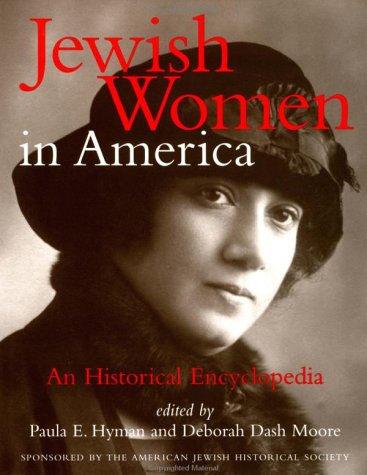
Jewish women in America: an historical encyclopedia
This encyclopedia provides the first standard reference work on the lives, history and activities of Jewish women in the United States. Covering a period which extends from the arrival of the first Jewish women in North America in 1654 to the present, this two-volume set presents the most comprehensive and detailed portrait of American Jewish women ever published, and brings together for the first time the wealth of recent scholarship on this subject. Includes: * Biographical entries on over 800 individual women. * 128 topical articles on organizations such as Hadassah, the National Council of Jewish Women, Mizrachi, and the Ladies' Garment Workers' Union. * Major essays on Jewish women's participation in the movement for women's suffrage, social reform, civil rights, and the recent women's movement. * The activities of Jewish women in politics, business, education, the arts, and religion. * A readable, inviting format with over 500 large photographs. * Bibliographies at the end of each entry which include overviews of major scholarship in the field, complete citations of more general works and citations of additional bibliographical and reference sources. * The comprehensive index includes citations to every substantive discussion in the entries as well as all proper names appearing in the text, such as organizations, book, song and film titles, schools, and individuals. The "Encyclopedia" provides information on American Jewish women in all fields of endeavor, and pays special attention to the work of women in the arts, academics, law, the labor movement, education, science, medicine, journalism and publishing, and on the lives of ordinary Jewish women during all time periods and in all regions of the United States.
The long emergency: surviving the converging catastrophes of the twenty-first century
With his classics of social commentary "The Geography of Nowhere and "Home from Nowhere, James Howard Kunstler has established himself as one of the great commentators on American space and place. Now, with "The Long Emergency, he offers a shocking vision of a post-oil future. The last two hundred years have seen the greatest explosion of progress and wealth in the history of mankind. But the oil age is at an end. The depletion of nonrenewable fossil fuels is about to radically change life as we know it, and much sooner than we think. As a result of artificially cheap fossil-fuel energy we have developed global models of industry, commerce, food production, and finance that will collapse. "The Long Emergency tells us just what to expect after we pass the tipping point of global peak oil production and the honeymoon of affordable energy is over, preparing us for economic, political, and social changes of an unimaginable scale. Are we laboring under a Jiminy Cricket syndrome when we tell ourselves that alternative means of energy are just a few years away? Even once they are developed, will they ever be able to sustain us in the way that fossil fuels once did? What will happen when our current plagues of global warming, epidemic disease, and overpopulation collide to exacerbate the end of the oil age? Will the new global economy be able to persevere, or will we be forced to revert to the more agrarian, localized economy we once knew? Could corporations like Wal-Mart and McDonald's, built on the premise of cheap transportation, become a thing of the past? Will the misguided experiment of suburbia--considered a birthright and a reality by millions of Americans--collapse when the car culturebecomes obsolete? Riveting and authoritative. "The Long Emergency is a devastating indictment that brings new urgency and accessibility to the critical issues that will shape our future, and that we can no longer afford to ignore. It is bound to become a classic of social science.

The making of the President, 1972
Explaining the modern process of running an election campaign. The question is whether it's still relevant in our post-modern era.

Lend me your ears: great speeches in history
"The book is arranged by theme and occasion: Memorials and Patriotic Speeches, War and Revolution Speeches, Tributes and Eulogies, Debates and Argumentation, Trial Speeches, Gallows and Farewell Speeches, Sermons, Inspirational Speeches, Lectures and Instructive Speeches, Speeches of Social Responsibility, Media Speeches, Political Speeches (in Safire's words, "the anthologist's mother's milk"), and Commencement Addresses. Each speech is expertly introduced by the editor, who places the speech's occasion in historical context and analyzes the particular techniques that give the speech its force and effect. William Safire enlivens many of these introductions with personal anecdotes of the circumstances of the speechmaker and the speech. His Introduction is a brisk, compact, effective short course in how to make a great speech - with a cornucopia of examples to follow." "No one faced with the need to go before an audience of any size to argue, persuade, uplift, introduce, memorialize, or amuse should be without Lend Me Your Ears. It serves equally as a work of permanent reference use and as a treasure-house for the browser in search of inspiration, instruction, and entertainment. In this anthology, editor and subject matter have met to result in a book that draws from the ages - and that will last for decades as the definitive word on human eloquence."--BOOK JACKET.

In an uncertain world: tough choices from Wall Street to Washington
Publisher's description: Robert Rubin was sworn in as the seventieth U.S. Secretary of the Treasury in January 1995 in a brisk ceremony attended only by his wife and a few colleagues. As soon as the ceremony was over, he began an emergency meeting with President Bill Clinton on the financial crisis in Mexico. This was not only a harbinger of things to come during what would prove to be a rocky period in the global economy; it also captured the essence of Rubin himself--short on formality, quick to get into the nitty-gritty. From his early years in the storied arbitrage department at Goldman Sachs to his current position as chairman of the executive committee of Citigroup, Robert Rubin has been a major figure at the center of the American financial system. He was a key player in the longest economic expansion in U.S. history.

Madoff The Final Word
Renowned investigative journalist Richard Behar delivers the definitive account of history’s largest—and longest-running—financial fraud, “the scale of the deception…beggars belief” ( New York Post ). Some $68 billion evaporated during Bernie Madoff’s epic confidence game. Two people were driven to suicide in the wake of the Ponzi Scheme’s exposure. Others went to prison. But there has never been a satisfying accounting for how Bernie got away with so much, for so long. Until now. Richard Behar’s relationship with Madoff began in 2011 with a simple email request from the conman. By the time Madoff died in 2021, he had sent Behar more than 300 emails and dozens of handwritten letters, participated in some fifty phone conversations, and sat for three in-person jailhouse interviews—a level of access provided to no other reporter. Behar also established relationships with hundreds of regulators, prosecutors, FBI agents, investors, Wall Street experts, ex-employees of Madoff’s, family members, school classmates, and others. The result is the final word on the criminal behind history’s most enduring fraud—and on those who believed him, covered for him, or locked him up. Behar illuminates not only the fraud’s origins—decades earlier than Madoff claimed in his confession—but also the complicity of investors, Wall Street insiders, family members, and some of the largest banks in the US and Europe. Shocking, infuriating, riveting (and at times absurdly funny), Madoff shows us how Bernie ensnared thousands of investors. As Behar’s dogged reporting over the last fifteen years makes clear, however, there aren’t many innocents left standing by the end of this tale. Just about everyone involved is guilty, at a minimum, of humanity’s most consistent weakness: greed.

American Jewish women's history: a reader
“It gives me a secret pleasure to observe the fair character our family has in the place by Jews & Christians,“Abigail Levy Franks wrote to her son from New York City in 1733. Abigail was part of a tiny community of Jews living in the new world. In the centuries that followed, as that community swelled to several millions, women came to occupy diverse and changing roles. American Jewish Women’s History , an anthology covering colonial times to the present, illuminates that historical diversity. It shows women shaping Judaism and their American Jewish communities as they engaged in volunteer activities and political crusades, battled stereotypes, and constructed relationships with their Christian neighbors. It ranges from Rebecca Gratz’s development of the Jewish Sunday School in Philadelphia in 1838 to protest the rising prices of kosher meat at the turn of the century, to the shaping of southern Jewish women's cultural identity through food. There is currently no other reader conveying the breadth of the historical experiences of American Jewish women available. The reader is divided into four sections complete with detailed introductions. The contributors include: Joyce Antler, Joan Jacobs Brumberg, Alice Kessler-Harris, Paula E. Hyman, Riv-Ellen Prell, and Jonathan D. Sarna.

The monarchy of fear: a philosopher looks at our political crisis
"From one of the world's most celebrated moral philosophers, an examination of the current political crisis. In The Monarchy of Fear Martha C. Nussbaum--an acclaimed scholar and humanist--analyzes the political standoff that has polarized American life since the 2016 presidential election and focuses on what so many pollsters and pundits have overlooked: the political is always emotional. Globalization, automation, and the rising costs of higher education have produced feelings of powerlessness in millions of American people. Related issues trouble European unity. That sense of powerlessness and a pervasive underlying fear of change bubble into resentment and blame: of immigrants, Muslims, those of other races, and cultural elites. While this politics of blame played a role in the election of Donald Trump and the vote for Brexit, Nussbaum argues it can be found on all sides of the political spectrum--confusingly intertwined, however, with reasonable arguments aiming at greater justice. She argues that retribution is always a bad response to fear and articulates a politics of constructive work and hope. Drawing on a mix of historical and contemporary examples, from classical Athens to the musical Hamilton, The Monarchy of Fear untangles our web of emotions and provides a road map of where to go next."--Dust jacket ; Globalization, automation, and the rising costs of higher education have produced feelings of powerlessness in millions of American people. That sense of powerlessness and a pervasive underlying fear of change bubble into resentment and blame: of immigrants, Muslims, those of other races, and cultural elites. While this politics of blame played a role in the election of Donald Trump and the vote for Brexit, Nussbaum argues it can be found on all sides of the political spectrum. She analyzes the political standoff that has polarized American life since the 2016 presidential election and focuses on what so many pollsters and pundits have overlooked: the political is always emotional. -- adapted from jacket

On power
"Following the footsteps of thinkers like Alexis de Tocqueville and Frederic Bastiat, eight-time New York Times bestselling author Mark R. Levin examines the role of power in our lives, society, and government--the philosophical and the practical. Levin takes the reader on a journey from the earliest civilizations to the modern republics of the West, where power has been used to liberate and oppress. To reward and to exploit. To build and to destroy"--
