4260 results for "World History"

Ajax, the Dutch, the war: football in Europe during the Second World War

Kuper, Simon
" ... explores the myths of Holland's "Good War" -- the brave nation that hid Anne Frank from the Nazis -- by using the story of soccer in Holland and the Amsterdam club Ajax to puncture the tales that post-war Holland lives by. Through interviews with Resistance fighters, survivors, wartime soccer players and more, Kuper uncovers a history that has been largely ignored. Ranging far beyond the Netherlands and examining the stories of soccer and war in England, German and France, Kuper writes an alternative history of Europe at its darkest hour. He helps change the way we understand ordinary people's experience of the war in Europe." -- Back cover.
Orion 2003 244 pages

The lost world of British communism

Samuel, Raphael
A fascinating account of life as a member of the Communist Party of Great Britain The Lost World of British Communism is a vivid account of the Communist Party of Great Britain. Raphael Samuel, one of post-war Britain’s most notable historians, draws on novels of the period and childhood recollections of London’s East End, as well as memoirs and Party archives, to evoke the world of British Communism in the 1940s. Samuel conjures up the era when the movement was at the height of its political and theoretical power, brilliantly bringing to life an age in which the Communist Party enjoyed huge prestige as a bulwark for the struggles against fascism and colonialism.
Verso 2017-01-31 244 pages

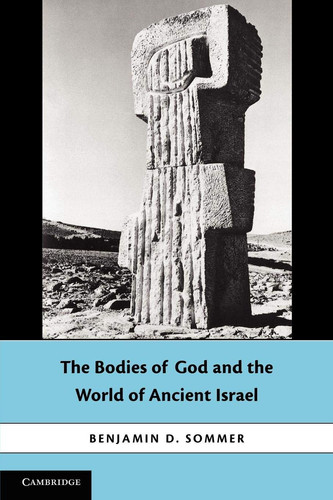
The bodies of God and the world of ancient Israel

Sommer, Benjamin D.
Sommer utilizes a lost ancient Near Eastern perception of divinity according to which a god has more than one body and fluid, unbounded selves. Though the dominant strains of biblical religion rejected it, a monotheistic version of this theological intuition is found in some biblical texts. Later Jewish and Christian thinkers inherited this ancient way of thinking; ideas such as the sefirot in Kabbalah and the trinity in Christianity represent a late version of this theology. This book forces us to rethink the distinction between monotheism and polytheism, as this notion of divine fluidity is found in both polytheistic cultures (Babylonia, Assyria, Canaan) and monotheistic ones (biblical religion, Jewish mysticism, Christianity), whereas it is absent in some polytheistic cultures (classical Greece). The Bodies of God and the World of Ancient Israel has important repercussions not only for biblical scholarship and comparative religion but for Jewish-Christian dialogue.
Cambridge University Press 2011-01-17 334 pages

Operation Crusader and the desert war in British history and memory: 'What is failure? What is loyalty?'

Joffe, Alexander H.
Shortlisted for the 2021 Society for Army Historical Research's Templer Medal Operation Crusader, launched in November 1941, was the third and final British attempt to relieve the siege of Tobruk and break the German and Italian forces in North Africa. After tough initial fighting, the British made important gains, only to be countered by a stunning breakthrough overseen personally by Lt. General Erwin Rommel. As the British situation teetered, the commander of the 8th Army, Lt. General Alan Cunningham, was relieved of duty by his superior, General Claude Auchinleck. This decision changed the direction of the battle and perhaps the war itself. Why and how Cunningham was relieved has been the subject of commentary and speculation since it occurred. Using newly discovered evidence, Alexander Joffe rethinks the events that brought about the sudden relief of the operation's commanding officer, including insubordination. The book then discusses how narratives regarding the operation were created, were incorporated into British and Commonwealth official and unofficial historical writing about the war, and contributed to British historical memory. Based on a decade of archival work, the book presents a new and detailed analysis of a consequential battle and, importantly, of how its history was written and received in the context of post-war Britain.
Bloomsbury Academic 2022-02-24 272 pages

Rebecca's children: Judaism and Christianity in the Roman world

Segal, Alan F.
Renowned scholar Alan F. Segal offers startlingly new insights into the origins of rabbinic Judaism and Christianity. These twin descendants of Hebrew heritage shared the same social, cultural, and ideological context, as well as the same minority status, in the first century of the common era. Through skillful application of social science theories to ancient Western thought, including Judaism, Hellenism, early Christianity, and a host of other sectarian beliefs, Segal reinterprets some of the most important events of Jewish and Christian life in the Roman world. For example, he finds: — That the concept of myth, as it related to covenant, was a central force of Jewish life. The Torah was the embodiment of covenant both for Jews living in exile and for the Jewish community in Israel. — That the Torah legitimated all native institutions at the time of Jesus, even though the Temple, Sanhedrin, and Synagogue, as well as the concepts of messiah and resurrection, were profoundly affected by Hellenism. Both rabbinic Judaism and Christianity necessarily relied on the Torah to authenticate their claim on Jewish life. — That the unique cohesion of early Christianity, assuring its phenomenal success in the Hellenistic world, was assisted by the Jewish practices of apocalypticism, conversion, and rejection of civic ritual. — That the concept of acculturation clarifies the Maccabean revolt, the rise of Christianity, and the emergence of rabbinic Judaism. — That contemporary models of revolution point to the place of Jesus as a radical. — That early rabbinism grew out of the attempts of middle-class Pharisees to reach a higher sacred status in Judea while at the same time maintaining their cohesion through ritual purity. — That the dispute between Judaism and Christianity reflects a class conflict over the meaning of covenant. The rising turmoil between Jews and Christians affected the development of both rabbinic Judaism and Christianity, as each tried to preserve the partly destroyed culture of Judea by becoming a religion. Both attempted to take the best of Judean and Hellenistic society without giving up the essential aspects of Israelite life. Both spiritualized old national symbols of the covenant and practices that consolidated power after the disastrous wars with Rome. The separation between Judaism and Christianity, sealed in magic, monotheism, law, and universalism, fractured what remained of the shared symbolic life of Judea, leaving Judaism and Christianity to fulfill the biblical demands of their god in entirely different ways.
Harvard University Press 1986 207 pages

Pathways of power: building an anthropology of the modern world

Wolf, Eric R.
"Eric Wolf has literally set the terms for anthropological thinking about peasantries, culture and power, complex societies, and interactions between noncapitalist societies and capitalism. Every item in this excellent collection has stimulated and influenced both my own thought and that of many others in our field, as well as beyond it. "—Katherine Verdery, University of Michigan "This powerful body of work begins ('Anthropology') and ends ('Concepts') in a rather speculative vein, taking us into the ideas of others and then back to Wolf. In these two sections we get a picture of the development of currents in anthropology (and the social sciences more broadly) from the early fifties to the present and the way in which Wolf's intellectual and political development was threaded through those debates and controversies. In the middle two sections ('Connections' and 'Peasants') we get the pathbreaking pieces that made Wolf the major figure he is. "—Gavin Smith, University of Toronto "There is a large audience, to be found in anthropology and in related fields like history, cultural studies, gender studies, etc., who will receive the writings of Eric Wolf with appreciation. . . . His work is fully in the comparative anthropological tradition . . . [and] demonstrates the power of comparative historical analysis. "—Abraham Rosman, Barnard College, Columbia University
University of California Press 2001-01-03 463 pages

Retrotopia

BAUMAN, ZYGMUNT, 1925-
"We have long since lost our faith in the idea that human beings could achieve human happiness in some future ideal state, a state that Thomas More, writing five centuries ago, tied to a topos, a fixed place, a land, an island, a sovereign state under a wise and benevolent ruler. But while we have lost our faith in utopias of all hues, the human aspiration that made this vision so compelling has not died. Instead it is re-emerging today as a vision focused not on the future but on the past, not on a future-to-be-created but on an abandoned and undead past that we could call retrotopia. The emergence of retrotopia is interwoven with the deepening gulf between power and politics that is a defining feature of our contemporary liquid modern world ? the gulf between the ability to get things done and the capability of deciding what things need to be done, a capability once vested with the territorially sovereign state. This deepening gulf has rendered nation-states unable to deliver on their promises, giving rise to a widespread disenchantment with the idea that the future will improve the human condition and a mistrust in the ability of nation-states to make this happen. True to the utopian spirit, retrotopia derives its stimulus from the urge to rectify the failings of the present human condition - though now by resurrecting the failed and forgotten potentials of the past. Imagined aspects of the past, genuine or putative, serve as the main landmarks today in drawing the road-map to a better world. Having lost all faith in the idea of building an alternative society of the future, many turn instead to the grand ideas of the past, buried but not yet dead. Such is retrotopia, the contours of which are examined by Zygmunt Bauman in this sharp dissection of our contemporary romance with the past"--
Polity 2017-02-06 179 pages

The theatre of visions: Robert Wilson

Brecht, Stefan
'Robert Wilson''s theatre is the stuff of legend. He has taught theatre-goers to see the world with different eyes. Stefan Brecht''s book provides detailed documentation and analysis of a number of Wilson''s earliest groundbreaking works including The Life of Sigmund Freud, Deafman Glance and Einstein on the Beach. ''Never since I was born have I seen anything more beautiful on this earth, never ever has there been another performance to equal this one, because it is simultaneously life at its most vivid and life with its eyes closed, reality mixed with dreaming, the inexplicability of everything in a deaf man''s glance.'' (Louis Aragon Open Letter to Andre Breton) ''His theatre is a world of its own'' (Heiner Muller)'
Methuen Drama 1994 441 pages

Operation Goodwood

Sheridan, Sara
1955. When Mirabelle Bevan is rescued from a fire at her home on the Brighton seafront she's lucky to escape unharmed - but the blaze takes the life of her neighbour, Dougie Beaumont, a dashing and successful racing driver living in the flat above. It soon becomes clear that this was arson, raising questions about the young man's death that Mirabelle can't resist investigating further. With her curiosity piqued and on the trail of a potential killer she finds herself taking on the mysterious world of Fleet Street with its long lunches and dodgy deals as well as the glamorous motor racing world at Goodwood. It gradually becomes clear to Mirabelle that Dougie Beaumont's life was not as above-board as it first seemed and that this talented man had many secrets, hidden when he was alive by his international lifestyle where he was constantly on the move. Then, when a second shocking murder takes place, Mirabelle's pursuit is frustrated first by Dougie's well-connected and suspicious family and then by the official investigation - led by her would-be lover Superintendent McGregor. With the help of her colleague at McGuigan & McGuigan Debt Recovery, Vesta, and some of her ex-intelligence service connections, Mirabelle discovers the dark secrets of the glamorous racing driver have ramifications far beyond the English coastline.
Constable 2016-04-07 288 pages

American consuls in the Holy Land, 1832-1914

Kark, Ruth
This volume provides new insights into the role of U.S. consuls in the Ottoman Middle East in the special context of the Holy Land. This volume provides new insights into the role of U.S. consuls in the Ottoman Middle East in the special context of the Holy Land. The motivations and functioning of the American consuls in Jerusalem, and of the consular agents in Jaffa and Haifa, are analyzed as part of the US diplomatic and consular activity throughout the world, and of Western involvement in the Ottoman Empire and in Palestine during the century preceding World War I. The processes of cultural, demographic, economic, environmental, and settlement change and the contribution of the US consuls and American settlers to development of and modernization of Palestine are discussed. Based on primary archival sources such facets as the role of consuls regarding the use of extraterritorial privileges, Western religious and cultural penetration, control of land and land purchase, non-Muslim settlement, judicial systems, and technological innovations are considered from American, Ottoman, and local viewpoints.
Magnes Press, Hebrew University 1994 388 pages

The danger of music: and other anti-utopian essays

Taruskin, Richard
The Danger of Music gathers some two decades of Richard Taruskin's writing on the arts and politics, ranging in approach from occasional pieces for major newspapers such as the New York Times to full-scale critical essays for leading intellectual journals. Hard-hitting, provocative, and incisive, these essays consider contemporary composition and performance, the role of critics and historians in the life of the arts, and the fraught terrain where ethics and aesthetics interact and at times conflict. Many of the works collected here have themselves excited wide debate, including the title essay, which considers the rights and obligations of artists in the aftermath of the 9/11 terrorist attacks. In a series of lively postscripts written especially for this volume, Taruskin, America's "public" musicologist, addresses the debates he has stirred up by insisting that art is not a utopian escape and that artists inhabit the same world as the rest of society. Among the book's forty-two essays are two public addresses—one about the prospects for classical music at the end of the second millennium C. E., the other a revisiting of the performance issues previously discussed in the author's Text and Act (1995)—that appear in print for the first time.
University of California Press 2010-11-11 488 pages

Saturn's Jews: on the witches' Sabbat and Sabbateanism

Idel, Moshe
This book explores the phenomenon of Saturnism, namely the belief that the planet Saturn, the seventh known planet in ancient astrology, was appointed upon the Jews, who celebrated the Sabbath, the seventh day of the Jewish week. Moshe Idel details how the anonymous, late 14th century Sefer Ha-Peliyah was to have disturbing consequences in the Jewish world three centuries later, interweaving luminaries with the cultural, historical, religious, and philosophical concepts of their day, and demonstrating how cultural agents were inadvertently instrumental in the mid-17th-century mass-movement Sabbateanism that led to the conviction that Sabbatai Tzevi was the Messiah.exploring how the tragic misperception of the Jewish Sabbath by the non-Jewish world led to a linkage of Jews with sorcery in 14th and 15th-century Europe, associating their holy day with the witches' 'Sabbat' gathering, Idel brings this wide-ranging study into the present day with an analysis of 20th-century scholarship and thought influenced by Saturnism, particularly lingering themes related to melancholy in the works of Gershom Scholem and Walter Benjamin.
Continuum 2011-09-29 198 pages

Jewish Literature From the Eighth to the Eighteenth Century

Moritz 1816-1907 Steinschneider,William 1825-1883 Spottiswoode
This work has been selected by scholars as being culturally important, and is part of the knowledge base of civilization as we know it. This work was reproduced from the original artifact, and remains as true to the original work as possible. Therefore, you will see the original copyright references, library stamps (as most of these works have been housed in our most important libraries around the world), and other notations in the work. This work is in the public domain in the United States of America, and possibly other nations. Within the United States, you may freely copy and distribute this work, as no entity (individual or corporate) has a copyright on the body of the work. As a reproduction of a historical artifact, this work may contain missing or blurred pages, poor pictures, errant marks, etc. Scholars believe, and we concur, that this work is important enough to be preserved, reproduced, and made generally available to the public. We appreciate your support of the preservation process, and thank you for being an important part of keeping this knowledge alive and relevant.
Creative Media Partners, LLC 2016-08-27 434 pages

Elizabethan architecture: its rise and fall, 1540-1640

Girouard, Mark
"Elizabethan and Jacobean architecture - not the friendly unassuming architecture of the vernacular but the uniquely strange and exciting buildings put up by the great and powerful, ranging from huge houses to gem-like pavilions and lodges designed for feasting and hunting - is a phenomenon as remarkable as the literature which accompanied it, the literature of Shakespeare, Spenser, Sidney, Marlow, Jonson, Campion and others. Forty years after adventuring into this world in his first book, 'Robert Smythson', in which he discussed one family of mason-architects and the great houses with which they were connected, Mark Girouard has returned to the subject to cover the whole rich field in detail. In this beautiful and fascinating book, Girouard discusses social structure and the way of life behind it, the evolution of the house plan, the ferment of excitement aroused in English patrons and craftsmen as they learnt about the classic Five Orders and the buildings of Ancient Rome from publications and engravings, the surprising wealth of architectural drawings which survive from the period, the inroads of foreign craftsmen who brought new fashions in ornament with them, but also the strength of the native tradition which was creatively integrated with the 'antique' style. Behind the book is a vivid consciousness of the European scene, and the different ways in which different countries reacted to new influences yet did not abandon their native traditions. Italy, France, central Europe and above all the Low Countries provide the background, and England was influenced by all of them. But the principal argument of the book is the individuality of the English achievement. Girouard's pioneering work on Elizabethan architecture, then an unfashionable period, has helped inspire an increasing number of architectural historians to venture into the field. His new book benefits from their researches and publications, but is essentially a product of new research and travel on his part. The results are displayed with his own unique sense of style, and are fired by the excitement which the architecture of the period still generates in him." -- from book jacket.
Yale University Press for The Paul Mellon Centre for Studies in British Art 2009 516 pages

Modern British Poetry

Louis Untermeyer
This work has been selected by scholars as being culturally important, and is part of the knowledge base of civilization as we know it. This work was reproduced from the original artifact, and remains as true to the original work as possible. Therefore, you will see the original copyright references, library stamps (as most of these works have been housed in our most important libraries around the world), and other notations in the work. This work is in the public domain in the United States of America, and possibly other nations. Within the United States, you may freely copy and distribute this work, as no entity (individual or corporate) has a copyright on the body of the work. As a reproduction of a historical artifact, this work may contain missing or blurred pages, poor pictures, errant marks, etc. Scholars believe, and we concur, that this work is important enough to be preserved, reproduced, and made generally available to the public. We appreciate your support of the preservation process, and thank you for being an important part of keeping this knowledge alive and relevant.
Creative Media Partners, LLC 2015-08-08 274 pages

Literature and revolution

Trotsky, Leon
"Roll over Derrida: Literature and Revolution is back in print. Nothing in the postmodern canon comes close to the intellectual grandeur of Trotsky's vision of art and literature in an age of revolution, or his extraordinary meditations on the popular ownership of culture."--Mike Davis "Re-reading Trotsky on literature 40 years later is a delight."--Tariq Ali Leon Trotsky penned this engaging book to elucidate the complex way in which art informs-- and can alter--our understanding of the world. Features new reader-friendly explanatory notes. Leon Trotsky was a leader of the Russian Revolution in 1917 and is the author of My Life . William Keach is a professor of English at Brown University. He is editor of Coleridge's Complete Poems .
Haymarket Books 2005 331 pages