

329 results for "Biology"

Ordinary Geniuses How Two Mavericks Shaped Modern Science
A fascinating tribute to the forefathers of two of today’s most exciting scientific fields Thanks to Max Delbruck and George Gamow, today we have mapped the human genome and understand the ramifications of the Big Bang. In his characteristically inviting and elegant style, Gino Segre brings to life the story of these two great scientists and their long friendship and offers an accessible inside look the people behind the scenes of science—the collaboration and competition, the quirks and failures, the role of intuition and luck, and the sense of wonder and curiosity that keeps these extraordinary minds going.

The possible and the actual
"François Jacob is one of the world's leading scientists, a professor of the Collège de France and the Institut Pasteur, and the winner of the Nobel Prize in Medicine (with André Lwoff and Jacques Monod). He has written an extraordinarily thought-provoking and far-ranging book on evolution which, as he states in his preface, "deals with genes and men, with sex, aging, and molecules. Above all, it deals with the theory of evolution, its status as well as its content. For if the theory of evolution provides a framework without which there is little hope to understand where we come from and why we are as we are, it is important to define the limits beyond which it is used no longer as a scientific theory, but as a myth.""--Back cover.

Beyond Reductionism
s/ New Perspectives in the Life Sciences-Proceedings of the Alpbach Symposium 1968

The accompaniment: assembling the contemporary
In this culmination of his search for anthropological concepts and practices appropriate to the twenty-first century, Paul Rabinow contends that to make sense of the contemporary anthropologists must invent new forms of inquiry. He begins with an extended rumination on what he gained from two of his formative mentors: Michel Foucault and Clifford Geertz. Reflecting on their lives as teachers and thinkers, as well as human beings, he poses questions about their critical limitations, unfulfilled hopes, and the lessons he learned from and with them. This spirit of collaboration animates The Accompaniment , as Rabinow assesses the last ten years of his career, largely spent engaging in a series of intensive experiments in collaborative research and often focused on cutting-edge work in synthetic biology. He candidly details the successes and failures of shifting his teaching practice away from individual projects, placing greater emphasis on participation over observation in research, and designing and using websites as a venue for collaboration. Analyzing these endeavors alongside his efforts to apply an anthropological lens to the natural sciences, Rabinow lays the foundation for an ethically grounded anthropology ready and able to face the challenges of our contemporary world.

Symbiosis as a Source of Evolutionary Innovation Speciation and Morphogenesis
These original contributions by symbiosis biologists and evolutionary theorists address the adequacy of the prevailing neo-Darwinian concept of evolution in the light of growing evidence that hereditary symbiosis, supplemented by the gradual accumulation of heritable mutation, results in the origin of new species and morphological novelty. A departure from mainstream biology, the idea of symbiosis—as in the genetic and metabolic interactions of the bacterial communities that became the earliest eukaryotes and eventually evolved into plants and animals—has attracted the attention of a growing number of scientists. These original contributions by symbiosis biologists and evolutionary theorists address the adequacy of the prevailing neo-Darwinian concept of evolution in the light of growing evidence that hereditary symbiosis, supplemented by the gradual accumulation of heritable mutation, results in the origin of new species and morphological novelty. They include reports of current research on the evolutionary consequences of symbiosis, the protracted physical association between organisms of different species. Among the issues considered are individuality and evolution, microbial symbioses, animalbacterial symbioses, and the importance of symbiosis in cell evolution, ecology, and morphogenesis. Lynn Margulis, Distinguished Professor of Botany at the University of Massachusetts at Amherst, is the modern originator of the symbiotic theory of cell evolution. Once considered heresy, her ideas are now part of the microbiological revolution. Contributors Peter Atsatt, Richard C. Back, David Bermudes, Paola Bonfante-Fasolo, René Fester, Lynda J. Goff, Anne-Marie Grenier, Ricardo Guerrero, Robert H. Haynes, Rosmarie Honegger, Gregory Hinkle, Kwang W. Jeon, Bryce Kendrick, Richard Law, David Lewis, Lynn Margulis, John Maynard Smith, Margaret J. McFall-Ngai, Paul Nardon, Kenneth H. Nealson, Kris Pirozynski, Peter W. Price, Mary Beth Saffo, Jan Sapp, Silvano Scannerini, Werner Schwemmler, Sorin Sonea, Toomas H. Tiivel, Robert K. Trench, Russell Vetter

Transosseous Osteosynthesis Theoretical and Clinical Aspects of the Regeneration and Growth of Tissue
This volume deals with the transosseous external fixation techniques that I have been developing over the course of the past 40 years. During this time, our research in medicine, biology and engineering has led to the evolution of more than 800 unique, highly effective methods of treatment that extend beyond the realm of traumatology and orthopedics. The book features a comprehensive theoretical and clinical description of the biologic laws governing the depen dence of the shape-forming processes of bones and joints upon the adequacy of blood supply, as well as a delineation of the effect of tension-stress upon the genesis and growth of tissues. I have in cluded our latest data on tissue growth and regeneration during transosseous osteosyntheses. The book summarizes the biomechanical principles of applica tion of my apparatus; clinical cases selected from more than 25000 patients illustrate the management of some of the most complex disorders of the locomotor system. New solutions to many therapeutic problems are described. In particular, severe limb trauma with large defects of bone, vessels, nerves and skin can be managed without resort to transplantation. Radical debridement surgery can be followed by a one-step restora tion of the missing tissue, thus decreasing the likelihood of a serious wound infection or an amputation.

Signs of life: bio art and beyond
"Bioart is a new art form that has emerged from the cultural impact and increasing accessibilty of contemporary biotechnology. Signs of Life is the first book to focus exclusively on art that uses biotechnology as its medium, defining and discussing the theoretical and historical implications of bio art and offering examples of work by prominent artists. Bio art manipulates the processes of life; in its most radical form, it invents or transforms living organisms. It is not representational; bio art is in vivo. (A celebrated example is Eduardo Kac's own GFP Bunny, centered on Alba, the transgenic green rabbit.) The creations of bio art become a part of evolution and, provided they are capable of reproduction, can last as long as life exists on earth. Thus, bio art raises unprecedented questions about the future of life, evolution, society, and art. The contibutions to Signs of Life articulate the critical theory of bio art and documents its fundamental works. The writers - who include such prominent scholars as Barbara Maria Stafford, Eugene Thacker, and Dorothy Nelkin - consider the culture and aesthetics of biotechnology, the ethical and philosophical aspects of bio art, and biology in art history. The section devoted to artworks and artists including George Gessert's "Why I Breed Plants," Oron Catts and Ionat Zurr's "Semi-Living Art," Marc Quinn's "Genomic Portrait," and Heather Ackroyd and Dan Harvey's "Chlorophyll Apparitions.". --

Decision Theory and Decision Behaviour
The book treats two approaches to decision theory: (1) the normative, purporting to determine how a 'perfectly rational' actor ought to choose among available alternatives; (2) the descriptive, based on observations of how people actually choose in real life and in laboratory experiments. The mathematical tools used in the normative approach range from elementary algebra to matrix and differential equations. Sections on different levels can be studied independently. Special emphasis is made on 'offshoots' of both theories to cognitive psychology, theoretical biology, and philosophy.

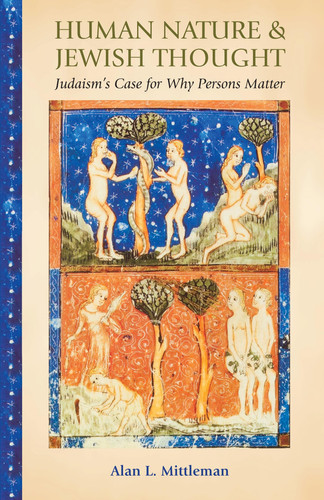
Human nature & Jewish thought: Judaism's case for why persons matter
This book explores one of the great questions of our time: How can we preserve our sense of what it means to be a person while at the same time accepting what science tells us to be true-namely, that human nature is continuous with the rest of nature? What, in other words, does it mean to be a person in a world of things? Alan Mittleman shows how the Jewish tradition provides rich ways of understanding human nature and personhood that preserve human dignity and distinction in a world of neuroscience, evolutionary biology, biotechnology, and pervasive scientism. These ancient resources can speak to Jewish, non-Jewish, and secular readers alike. Science may tell us what we are, Mittleman says, but it cannot tell us who we are, how we should live, or why we matter. Traditional Jewish thought, in open-minded dialogue with contemporary scientific perspectives, can help us answer these questions. Mittleman shows how, using sources ranging across the Jewish tradition, from the Hebrew Bible and the Talmud to more than a millennium of Jewish philosophy. Among the many subjects the book addresses are sexuality, birth and death, violence and evil, moral agency, and politics and economics. Throughout, Mittleman demonstrates how Jewish tradition brings new perspectives to-and challenges many current assumptions about-these central aspects of human nature. A study of human nature in Jewish thought and an original contribution to Jewish philosophy, this is a book for anyone interested in what it means to be human in a scientific age.
Qualitative Modeling of Complex Systems An Introduction to Loop Analysis and Time Averaging
In this modern era of mathematical modeling, applications have become increasingly complicated. As the complexity grows, it becomes more and more difficult to draw meaningful conclusions about the behavior of theoretical models and their relations to reality. Alongside methods that emphasize quantitative properties and the testing of scientific details, there is a need for approaches that are more qualitative. These techniques attempt to cover whole families of models in one bold stroke, in a manner that allows robust conclusions to be drawn about them. Loop analysis and time averaging provide a means of interpreting the properties of systems from the network of interactions within the system. The authors' methodology concentrates on graphical representation to guide experimental design, to identify sources of external variability from the statistical pattern of variables, and to make management decisions. Although most of the examples are drawn from ecology, the methods are relevant to all of the pure and applied sciences. This relevance is enhanced by case studies from such diverse areas as physiology, resource management, the behavioral sciences, and social epidemiology. The book will be useful to a broad readership from the biological and social sciences as well as the physical sciences and technology. It will interest undergraduate and graduate students along with researchers active in these disciplines. Here the reader will find a strong rationale for maintaining a holistic approach, revealing what insights and advantages are retained by the broader perspective and, more explicitly, by the synergistic effects that cannot be discerned by reducing systems to their smallest parts.

Myxobacteria

Molecular Biology of Stress
Partial table of contents: NEUROPEPTIDES AND THE STRESS RESPONSE. Brain Corticotropin Releasing Factor and Development (T. Insel, et al.). Opioids, Stress, and the Developing Brain (I. Zagon & P. McLaughlin). THE ADRENAL MEDULLA AND STRESS. Catecholamines and Stress in the Newborn (T. Slotkin & F. Seidler). Endogeneous Neuropeptides Maintain Adrenal Catecholamine Output during Stress (B. Livett, et al.). IMMUNOBIOLOGY OF STRESS. Shock Induced Immunosuppression: Naltrexone Sensitive and Insensitive Parameters (J. Cunnick, et al.). Regulation of Interleukin-2 Expression by Dexamethasone in a Mouse T Cell Line (B. Sorg, et al.). PHYSICAL CONSEQUENCES OF STRESS. Enzymatic and Morphological Adaptation to Physical Exercise in Young Middle Aged, and Old Mice: A Model for Physical Stress (A. Reznick, et al.). Gastric Erosion Formation by Stress: Brain Stem Mechanisms (H. Weiner, et al.). STRESS AND BEHAVIOR. Information-Induced Stress in Humans (S. Breznitz). Affect Specific Retrieval from Archival Memory (H. Weingartner, et al.). Index.

Greek Biology & Greek Medicine
This book has been considered important throughout the human history, and so that this work is never forgotten we have made efforts in its preservation by republishing this book in a modern format for present and future generations. This whole book has been reformatted, retyped and designed. These books are not made of scanned copies and hence the text is clear and readable.

Radioactive Tracers in Biology: Second Edition, An Introduction to Tracer Methodology

The Growing Plant Cell Wall Chemical and Metabolic Analysis
First published in 1988 and now known as a classic. In this book Stephen Fry describes, in bench-top detail, techniques for the study of primary cell walls in higher plants. Deepening interest in the chelistry and metabolism of cell walls reflects the breadth of their significance in biology. Walls play crutial roles in morphogenesis, growth, disease-resistance, recognition, signalling, digestibility, nutrition and decay. Scientists interested in questions concerning these processes need to know about methods of cell wall analysis. This book was written with these people in mind. There are 11 chapters as follows: 1. Introduction to the growing plant cell wall 2. Radioactive labelling of cell walls 3. Wall polymers: extraction and fractionation 4. Wall polymers: chemical characterisation 5. Wall biosyntesis 6. Wall enzymes 7. Wall architecture 8. Wall turnover and sloughing 9. Biologically-active wall oligosaccharides 10. Wall tightening and loosening: growth 11. Wall degradation "Stephen Fry has written an invaluable book on the analytical techniques available in this important research field. This is an excellent book for the typical modern biologist." J. Experimental Biology "This book will be of considerable value to anyone engaged in the analysis of plant cell walls." Ann. Botany "For those who intend to do any practical cell wall analysis this book will be an invaluable laboratory manual." Plant Pathology "As a practical guide to wall analysis this book will be a most valuable tool." Times Higher Education Supplement

The year of the genome: a diary of the biological revolution
For twelve months beginning in January 2000, celebrated essayist and research physician Gerald Weissmann carefully documented the modern age of enlightenment, charting its scientific marvels and new plagues. Now, this illuminating diary takes us on a literary exploration of laboratories and beyond to see the impact on human life and culture of headliners such as RU 486, AIDS drugs, and other current developments, including the controversial use of stem cells. Whether calling on Ralph Waldo Emerson to explain Craig Venter's drive to unravel the genome or tracing the effect of Rachel Carson's legacy on the spread of malaria around the world, Weissmann's lively chronicle captures the greatest genetic revolution of all time.

Laser experiments for beginners
Developed by renowned Stanford researcher Richard Zare in collaboration with Bertrand Spencer, Dwight Springer, and Matthew Jacobson, Laser Experiments for Beginners will introduce the student to state-of-the-art laser research techniques. It is designed to enhance existing courses in chemistry, physics, and biology.

The inheritance and innateness of grammars
Is language somehow innate in the structure of the human brain, or is it completely learned? This debate is still at the heart of linguistics, especially as it intersects with psychology and cognitive science. In collecting papers which discuss the evidence and arguments regarding this difficult question, The Inheritance and Innateness of Grammars considers cases ranging from infants who are just beginning to learn the properties of a native language to language-impaired adults who will never learn one. These studies show that, while precursors of language exist in other creatures, the abilities necessary for constructing full-fledged grammars are part of the biological endowment of human beings. The essays that comprise this volume test the range and specificity of that endowment, while also contributing to our understanding of the intricate and complex relationship between language and biology.

Man's Future Birthright
Hermann Joseph Muller (1890-1967) was a member of the early genetics group at Columbia University that developed the chromosome theory of inheritance. T. H. Morgan received the Nobel Prize in Medicine and Physiology for this work in 1934, and Muller, his student, received the Nobel Prize in 1946 for his discovery of radiation-induced mutation. Muller's writings extended beyond contributions to technical journals. He was an active critic of social abuse of science; he advocated eugenic programs based on free choice; and he played a major role in the reform of high school biology. Muller's social views were published in magazines and journals which are accessible to scholars more than to the lay reader or student. They have been collected here to show how extensively he thought our lives are affected by radiation, evolution, modern medicine, and gene theory. He attempted to alert humanity to the dangers of neglect and abuse of their genetic heritage. He also used humanistic values to urge mankind to improve itself, to foster cooperativeness, to increase health and intelligence, and to adopt and evolutionary outlook. A companion collection of essays, The Modern Concept of Nature: Essays on Theoretical Biology by H. J. Muller, also published by State University of New York Press, deals with Muller's scientific contributions to genetics and evolution. It was Muller who developed the relation between genes and mutation; his views on the primacy of the gene in biology are reflected today in the similar primacy of nucleic acids as the basis of life. For students of the history of ideas, a collection of these essays would illustrate how genetic thinking prepared the world view for molecular biologists. The relation of science to values is often neglected because of the inaccessibility of the written contributions of famous scientists. To read Muller's major essays in these two areas is an important way to evaluate a scientist's career, his maturation of ideas, and his developing application of science to society.
