911 results for "History"

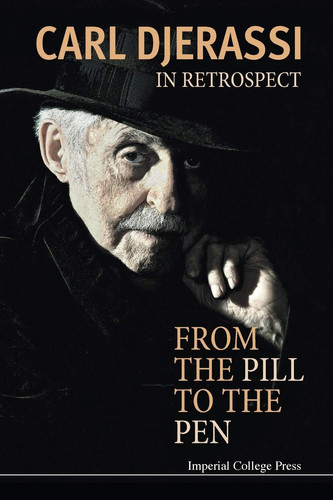
In retrospect: from the pill to the pen

Djerassi, Carl
These are the reflections of a nonagenarian polymath describing the shift from a fifty-year-long career as a world-famous chemist to a subsequent twenty-five-year immersion in "science-in-fiction" and "science-in-theater," a change virtually unique among contemporary scientists. Sharply self-critical yet full of humor, this autobiographical account covers themes such as the future of sex in an age of technological reproduction, the history of the Pill seen through the eyes of one of its inventors, innovative--even unique--pedagogic experiments, the insoluble homelessness of a refugee, suicide, and art collecting.--Adapted from publisher description
Imperial College Press 2015 388 pages

Idea makers: personal perspectives on the lives & ideas of some notable people

Wolfram, Stephen
This book of thoroughly engaging essays from one of today's most prodigious innovators provides a uniquely personal perspective on the lives and achievements of a selection of intriguing figures from the history of science and technology. Weaving together his immersive interest in people and history with insights gathered from his own experiences, Stephen Wolfram gives an ennobling look at some of the individuals whose ideas and creations have helped shape our world today. Contents includes biographical sketches of: Richard Feynman Kurt Godel Alan Turing John von Neumann George Boole Ada Lovelace Gottfried Leibniz Benoit Mandelbrot Steve Jobs Marvin Minsky Russell Towle Bertrand Russell Alfred Whitehead Richard Crandall Srinivasa Ramanujan Solomon Golomb
Wolfram Media, Inc 2016 239 pages

Mohawk baronet: a biography of Sir William Johnson

Flexner, James Thomas
William Johnson was among the most powerful and romantic figures in early American history. Beginning as an impoverished eighteenth century Irish immigrant, he became the wealthiest and most influential Indian leader on the North American continent. Married to Molly Brant, sister of the celebrated Mohawk Joseph Brant, Johnson served as a mediator in the evolving clash of the European and Native American cultures. This new edition brings back into print a classic work that will be welcomed reading for all those interested in early American history and American-Indian relations.
Syracuse University Press 1989 400 pages

Ramesses III: the life and times of Egypt's last hero

Eric H. Cline,David B. OConnor
In the tumultuous and vivid history of New Kingdom Egypt, Ramesses III's reign was prosperous and culturally rich. He fended off attacks by the "Sea Peoples" and others who threatened the state, he built the great temple of Medinet Habu, and he left wonderfully complete documents describing contemporary social structure and the economy. Amazingly, we even have an account from a contemporary judicial document that describes events leading to Ramesses III's assassination. This edited collection presents a detailed and informative look at the life, career, and world of one of Egypt's most important pharaohs, providing insight both on his reign and its aftermath and on the study of the political and cultural history of ancient Egypt.
University of Michigan Press 2012 542 pages

A matter of opinion

Navasky, Victor S.
Victor S. Navasky is the renowned editor, writer, and teacher who has been at the helm of "The Nation" for almost thirty years. "A Matter of Opinion," a scintillating reflection on his journalistic experiences, is also an extraordinary political document-a spirited, provocative argument for independent journals of opinion as vital to the health of democracy. Whether at the satirical magazine "Monocle" (which he founded when he was in law school), or at "The New York Times," or finally at "The Nation," Navasky's commitment to political engagement and to the social and intellectual values of independent cultural activity has always been front and center. In a wonderfully entertaining narrative, he tells of his innovative efforts to find money to keep "The Nation" afloat and to keep its pages lively, honest, and relevant, and he embellishes it with unforgettable stories-about his colleagues and opponents, from E. L. Doctorow to Bill Buckley; his heroes, from I. F. Stone to Jurgen Habermas; and his precedessors, from Daniel Defoe to Carey McWilliams. Navasky's accomplishments have been legion, despite the threats of revenue-driven multinational media corporations, and despite the sometimes ugly, sometimes hilarious problems that fearless muckrakers face in any culture. "A Matter of Opinion" is a passionately written, irresistibly charming account of a great journalistic tradition.
Farrar, Straus, and Giroux 2005 458 pages

The great escape: nine Jews who fled Hitler and changed the world

Marton, Kati
The journey of nine extraordinary men from Budapest to the New World, wht they experienced along their dangerous route and how they changed America and the world. They are the scientists Leo Szilard, Edward Teller, Eugene Wigner, and John von Neuman; Arthur Koestler author of Darkness at Noon; Robert Capa, the first photographer ashore on D-Day; Andre Kertesz, pioneer of modern photojournalism and iconic filmmakers Alexander Korda and Michael Curtiz.
Simon & Schuster 2008 271 pages

The great escape: nine Jews who fled Hitler and changed the world

Marton, Kati
The journey of nine extraordinary men from Budapest to the New World, wht they experienced along their dangerous route and how they changed America and the world. They are the scientists Leo Szilard, Edward Teller, Eugene Wigner, and John von Neuman; Arthur Koestler author of Darkness at Noon; Robert Capa, the first photographer ashore on D-Day; Andre Kertesz, pioneer of modern photojournalism and iconic filmmakers Alexander Korda and Michael Curtiz.
Simon & Schuster 2006 271 pages

Freedom's lawmakers: a directory of Black officeholders during Reconstruction

Foner, Eric
With Freedom's Lawmakers, Eric Foner has assembled the first comprehensive directory of the over 1,500 African Americans who held political office in the South during the Reconstruction era. He has compiled an impressive amount of information about the antebellum status, occupations, property ownership, and military service of these officials -- who range from U.S. congressmen to local justices of the peace and constables. This revised paperback edition also contains new material on forty-five officials who were not included in the first edition.In his Introduction, Foner ably analyzes and interprets the roles of the black American officeholders. Concise biographies, in alphabetical order, trace the life histories of individuals -- many previously unknown -- who played important parts in the politics of the period. This useful and informative volume also includes an index by state, by occupation, by office during Reconstruction, by birth status, and by topic.
Louisiana State University Press 1996-08-01 298 pages

The trial of Henry Kissinger

Hitchens, Christopher
With the detention of Augusto Pinochet, and intense international pressure for the arrest of Slobodan Milosovic, the possibility of international law acting against tyrants around the world is emerging as a reality. In this incendiary book, Hitchens takes the floor as prosecuting counsel and mounts a devastating indictment of a man whose ambitions and ruthlessness have directly resulted in both individual murders and widespread, indiscriminate slaughter. He investigates and reveals Kissingers' involvement in: the deliberate mass killings of civilian populations in Indochina; the deliberate collusion in mass murder and assassination in Bangladesh; the personal suborning and planning of a murder, of a senior constitutional officer in a democratic nation that the USA was not war with - Chile; the incitement and enabling of a mass genocide in East Timor; and the personal involvement in the kidnap and murder of a journalist living in Washinton DC.
Verso 2001 159 pages

Typhoid Mary: an urban historical

Bourdain, Anthony
In 1906, at a prosperous Long Island summer home, a family falls ill and typhold is diagnosed. When Dr George Soper is called in to find the source of the contagion, he notices that the household cook has gone missing. She is Mary Mallon, the woman who would become known as Typhoid Mary. Soper, sanitary engineer turned sleuth, sees Mary as his Moriarty. He finds there has been an outbreak of typhoid fever in every household she has worked in over the past decade. Mary is a 'carrier', a seemingly healthy individual who passes on her dangerous germs, sometimes with fatal consequences. Now Soper must hunt the cook down before she can infect more unsuspecting victims. A poor Irish immigrant, Mary refuses to believe that she can harbour typhoid in her strong and healthy body, and she doesn't intend to go quietly. In this fascinating true story Bourdain, in an homage from one cook to another, follows Mary through the kitchens of New York, putting a human face to a desperate and unintentional murderer, and examines a time, and a life, with his inimitable style.
Bloomsbury 2005 160 pages

President Carter: the White House years

Eizenstat, Stuart
"The definitive history of the Carter Administration from the man who participated in its surprising number of accomplishments--drawing on his extensive and never-before-seen notes. Stuart Eizenstat was at Jimmy Carter's side from his political rise in Georgia through four years in the White House, where he served as Chief Domestic Policy Adviser. He was directly involved in all domestic and economic decisions as well as in many foreign policy ones. Famous for the legal pads he took to every meeting, he draws on more than 5000 pages of contemporaneous notes as well as declassified documents and more than 350 interviews of all the major figures of the time, to write this comprehensive history of an underappreciated president--and to give an intimate view on how the presidency works. Eizenstat reveals the grueling negotiations behind Carter's peace between Israel and Egypt, what led to the return of the Panama Canal, and how Carter made human rights a presidential imperative. He follows Carter's passing of America's first comprehensive energy policy, and his deregulation of the oil, gas, transportation, and communications industries. And he details the creation of the modern vice-presidency. Eizenstat also details Carter's many missteps, including the Iranian Hostage Crisis, because Carter's desire to do the right thing, not the political thing, often hurt him and alienated Congress. His willingness to tackle intractable problems, however, led to major, long-lasting accomplishments. This major work of history shows first-hand where Carter succeeded, where he failed, and how he set up many successes of later presidents"--
Thomas Dunne Books, St. Martin's Press 2018-04-24 999 pages

Ties that bind: stories of love and gratitude from the first ten years of StoryCorps

David Isay
A celebration of the relationships that bring us strength, purpose, and joy Ties That Bind honors the people who nourish and strengthen us. StoryCorps founder Dave Isay draws from ten years of the revolutionary oral history project’s rich archives, collecting conversations that celebrate the power of the human bond and capture the moment at which individuals become family. Between blood relations, friends, coworkers, and neighbors, in the most trying circumstances and in the unlikeliest of places, enduring connections are formed and lives are forever changed. The stories shared in Ties That Bind reveal our need to reach out, to support, and to share life’s burdens and joys. We meet two brothers, separately cast out by their parents, who reconnect and rebuild a new family around each other. We encounter unexpected joy: A gay woman reveals to her beloved granddaughter that she grew up believing that family was a happiness she would never be able to experience. We witness lifechanging friendship: An Iraq war veteran recalls his wartime bond with two local children and how his relationship with his wife helped him overcome the trauma of losing them. Against unspeakable odds, at their most desperate moments, the individuals we meet in Ties That Bind find their way to one another, discovering hope and healing. Commemorating ten years of StoryCorps, the conversations collected in Ties That Bind are testament to the transformational power of listening.
The Penguin Press 2013 202 pages

But enough about me: why we read other people's lives

Miller, Nancy K.
In her latest work of personal criticism, Nancy K. Miller tells the story of how a girl who grew up in the 1950s and got lost in the 1960s became a feminist critic in the 1970s. As in her previous books, Miller interweaves pieces of her autobiography with the memoirs of contemporaries in order to explore the unexpected ways that the stories of other people's lives give meaning to our own. The evolution she chronicles was lived by a generation of literary girls who came of age in the midst of profound social change and, buoyed by the energy of second-wave feminism, became writers, academics, and activists. Miller's recollections form one woman's installment in a collective memoir that is still unfolding, an intimate page of a group portrait in process.
Columbia University Press 2002 145 pages

The general's son: journey of an Israeli in Palestine

Peled, Miko
"A powerful account, by Israeli peace activist Miko Peled, of his transformation from a young man who'd grown up in the heart of Israel's elite and served proudly in its military into a fearless advocate of nonviolent struggle and equal rights for all Palestinians and Israelis. His journey is mirrored in many ways the transformation his father, a much-decorated Israeli general, had undergone three decades earlier. Alice Walker contributed a foreword to the first edition in which she wrote, "There are few books on the Israel/Palestine issue that seem as hopeful to me as this one." In the new Epilogue he takes readers to South Africa, East Asia, several European countries, and the West Bank, Gaza, and Israel itself."--Amazon.com.
Just World Books 2016 271 pages