692 results for "History"

Piety and power: the world of Jewish fundamentalism

Landau, David
With the rare gift of a storyteller, David Landau takes the reader inside the little-known world of the haredim - the bearded, black-clothed Jewish fundamentalists. Decimated by the Holocaust, this sect has enjoyed a dramatic revival that has caused tensions everywhere and a bitter battle for the soul of Israel. Piety and Power describes life in the self-contained haredi ghettos in London, New York, and Jerusalem, where Hasidic rabbis reign supreme and strict rules govern every aspect of life. Landau takes the reader into homes marked by warm family life and strict sexual codes, and into yeshivas, the intellectual core of the community, where young men spend decades as full-time students of the Torah. For many readers, Jews and Gentiles alike, this will be a disturbing book. It depicts an aggressive, assertive fundamentalism in an expansive and self-confident mood, certain of its divine right to win souls and influence the Jewish people and to dictate its views on who is a Jew.
Hill and Wang 1993 358 pages

Gentile impurities and Jewish identities: intermarriage and conversion from the Bible to the Talmud

Hayes, Christine Elizabeth
In ancient Jewish culture the ideas of purity and impurity defined the socio-cultural boundaries between Jews and Gentiles. Hayes argues that different views of the possibility of conversion, based on varying ideas about Gentile impurity, were the key factor in the formation of Jewish sects in the second temple period, and in the separation of the early Christian Church from what later became rabbinic Judaism.
Oxford University Press 2002 309 pages

Past imperatives: studies in the history and theory of Jewish ethics

Newman, Louis E.
Explores central questions in the history and theory of Jewish ethics, namely, the relationship between ethics and law, the relationship between ethics and theology, and the problems and prospects for constructing a contemporary Jewish ethic. 'Past Imperatives' explores the nature and development of Jewish ethics by analyzing three important sets of issues: the relationship between Jewish law and ethics, the relationship between Jewish ethics and theology, and the problems and prospects for constructing a contemporary Jewish ethic. The penetrating and provocative essays are drawn from a number of fields, including legal theory, literary theory, and theory of religion. These studies illuminate many previously uninvestigated aspects of Jewish biomedical ethics, covenant theology, and textual interpretation in Judaism. By exploring these issues within the larger context of historical and theoretical work in religious studies, 'Past Imperatives' moves beyond previous work in Jewish ethics, which has largely sought to offer moral guidance from a Jewish perspective. This volume boldly confronts the fact that Judaism encompasses many, sometimes contradictory, ethical perspectives and investigates their theological underpinnings, how they have developed, and how they differ from other moral and/or religious perspectives.
State University of New York Press 1998 283 pages

Two models of Jewish philosophy: justifying one's practices

Rynhold, Daniel
In a work that illustrates how Jewish philosophy can make a genuine contribution to general philosophical debate, Daniel Rynhold attempts to formulate a model for the justification of practices by applying the methods of modern analytic philosophy to approaches to the rationalization of the commandments from the history of Jewish philosophy. Through critical analysis of the methods of Moses Maimonides and Joseph Soloveitchik, Rynhold argues against propositional approaches tojustifying practices that he terms Priority of Theory approaches and offers instead his own method, termed the Priority of Practice, which emphasizes the need for a more pragmatic take on this whole issue.
Oxford University Press 2005-03-17 262 pages

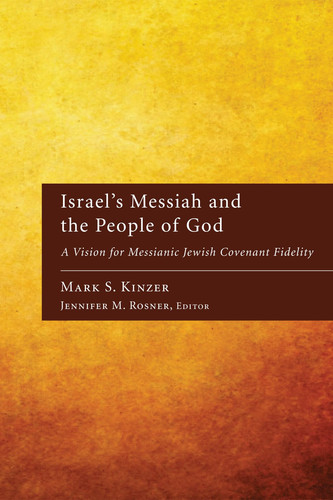
Israel's messiah and the people of God: a vision for Messianic Jewish covenant fidelity

Kinzer, Mark
Israel's Messiah and the People of God presents a rich and diverse selection of essays by theologian Mark Kinzer, whose work constitutes a pioneering step in Messianic Jewish theology. Including several pieces never before published, this collection illuminates Kinzer's thought on topics such as Oral Torah, Jewish prayer, eschatology, soteriology, and Messianic Jewish-Catholic dialogue. This volume offers the reader numerous portals into the vision of Messianic Judaism offered in Kinzer's Postmissionary Messianic Judaism (2005). An introductory essay by editor Jennifer M. Rosner sets Kinzer's thought and writings in context.
Cascade Books 2011-01-07 221 pages

Midrashic women: formations of the feminine in rabbinic literature

Baskin, Judith Reesa
While most gender-based analyses of rabbinic Judaism concentrate on the status of women in the halakhah (the rabbinic legal tradition), Judith R. Baskin turns her attention to the construction of women in the aggadic midrash, a collection of expansions of the biblical text, rabbinic ruminations, and homiletical discourses that constitutes the non-legal component of rabbinic literature. Examining rabbinic convictions of female alterity, competing narratives of creation, and justifications of female disadvantages, as well as aggadic understandings of the ideal wife, the dilemma of infertility, and women among women and as individuals, she shows that rabbinic Judaism, a tradition formed by men for a male community, deeply valued the essential contributions of wives and mothers while also consciously constructing women as other and lesser than men. Recent feminist scholarship has illuminated many aspects of the significance of gender in biblical and halakhic texts but there has been little previous study of how aggadic literature portrays females and the feminine. Such representations, Baskin argues, often offer a more nuanced and complex view of women and their actual lives than the rigorous proscriptions of legal discourse.
published by University Press of New England for Brandeis university press 2002-06-01 232 pages

The Penguin dictionary of Judaism

De Lange, N. R. M.
The definitive resource on Judaism This is a remarkable feat of reference scholarship by renowned Cambridge professor and translator, Nicholas de Lange. With an approachable A to Z format, the book covers everything from Jewish traditions and biographical entries on key historical figures to theology, religious law and practice, and the history of Jewish thought. Each entry is presented with clarity, precision, and authority. With extensive cross-referencing and invaluable additional material such as a chronology of Judaism and the Jewish calendar, this is an essential companion for students of Jewish studies, Hebrew, religion, and theology, or anyone with a general interest in this rich religion.
Penguin Books 2008 367 pages

A few words in the mother tongue: poems selected and new (1971-1990)

Klepfisz, Irena
"This book asks fundamental questions about the uses of history. That it does so from a rootedness in Jewish history, an unassimilated location, is one part of its strength. But history alone doesn't confer this strength; the poet's continuing labor with Jewish meaning does. The other part, of course, is the integrity of its poetics. A Klepfisz poem lives amid complex tensions, even when its texture may appear transparent. There is a voice, sometimes voices, in these poems which can often best be heard by reading aloud. Her sense of phrase, of line, of the shift of tone, is almost flawless. But perfection is not what Irena Klepfisz is after. It is the tension between so many forces: Language, speechlessness, memory, politics, irony, compassion, hunger for what is lost, hunger for a justice still to be made, that makes this poetry crucial to the new unfoldings of history that we begin, in 1990, to imagine." -- from the introduction by Adrienne Rich
Eighth Mountain Press 1990 251 pages

Religion of reason out of the sources of Judaism

Cohen, Hermann
Hermann Cohen's Religion of Reason, Out of the Sources of Judaism (first pub. 1919) is widely taken to be the greatest work in Jewish philosophy and religious thought since Maimonides' Guide to the Perplexed. It is at once a Jewish book and a philosophical one: Jewish because it takes its material from the literary tradition that extends from the Bible to the rabbis to the great medieval philosophers; philosophical, because it studies that material in order to construct a worldview that is rational in the broadest sense of the term. This edition is designed for classroom use. It reprints a 1972 introduction by Leo Strauss and includes an essay on the work by Steven Schwarzschild. A new introduction by Kenneth R. Seeskin situates Cohen's masterwork in the history of modern philosophical and religious thought.
Scholars Press 1995 489 pages

Arabic Chrestomathy In Hebrew Characters: With A Glossary (1892)

Hirschfeld, Hartwig
Arabic Chrestomathy In Hebrew Characters: With A Glossary (1892) is a book written by Hartwig Hirschfeld. The book contains a collection of Arabic texts written in Hebrew characters, along with a glossary of Arabic words used in the texts. The purpose of the book is to provide a resource for students of Arabic who are familiar with Hebrew characters. The texts included in the book cover a range of topics, including religion, history, and literature. The glossary provides translations and explanations of the Arabic words used in the texts, making it easier for readers to understand the meaning of the texts. Overall, Arabic Chrestomathy In Hebrew Characters: With A Glossary (1892) is a valuable resource for students of Arabic who are interested in learning about the language and its cultural context.This scarce antiquarian book is a facsimile reprint of the old original and may contain some imperfections such as library marks and notations. Because we believe this work is culturally important, we have made it available as part of our commitment for protecting, preserving, and promoting the world's literature in affordable, high quality, modern editions, that are true to their original work.
Kessinger Publishing, LLC 2010-09-10 242 pages

Jewish feminism: framed and reframed

Fuchs, Esther
In the last three decades, hundreds of books and essays have been published on women, gender, and Jewish Studies. This burgeoning scholarship has not been adequately theorized, contextualized, or historicized. This book argues that Jewish feminist studies is currently constrained by multiple frames of reference that require re-examination, a self-critical awareness, and a serious reflective inquiry into the models, paradigms, and assumptions that inform, shape, and define this area of academic interest. This book is the first critical analysis of Jewish feminist scholarship, tracing it from its tentative beginnings in the late 1970s to contemporary academic articulations of its disciplinary projects. It focuses on the assumptions, evasions, omissions, inconsistencies, and gaps in this scholarship, and notably the absence of debate, contestation, and interrogation of authoritative articulations of its presumed goals, investments, and priorities. The book teases out implicit thinking about mapping, direction, and orientation from introductions to leading anthologies and engages critically with the few explicitly theoretical works on Jewish feminist studies, contesting ideas that have become hegemonic in some areas, and interrogating the limitations these theories impose on future trajectories in Jewish feminist studies. Each chapter outlines the theoretical assumptions that inform salient publications in the field, providing a close reading of scholarly texts that justify certain practices. The book is divided into four chapters, each of which focuses on a different frame of reference. It outlines the way in which the various frames that have so far been imposed on Jewish feminism, the ethnocentric, liberal, personal, masculinist, and essentialist, have arrested its theoretical elaboration and articulation. The book includes both interdisciplinary anthologies on gender and Jewish identity and disciplinary publications in history, literature, philosophy, cultural studies, and Holocaust studies.
Lexington Books 2020-02-07 211 pages

Suffering as identity: the Jewish paradigm

Benbassa, Esther
Reaching from biblical times to the present day, Esther Benbassa’s prize-winning exploration of Jewish identity is both epic and comprehensive. She shows how in the Jewish world, the representation and ritualization of suffering have shaped the history of both the people and the religion. Benbassa argues that the nineteenth century gave rise to a Jewish ‘lachrymose’ historiography, and that Jewish history was increasingly seen to be a ‘vale of tears’—a development that has become even more pronounced since the Holocaust. The treatment of the Holocaust in the State of Israel now has the form of a civil religion. In principle within reach of everyone, the ‘duty of memory’ and the uniqueness of the genocide have mitigated for many Jews the loss of other traditions. The Israeli government invokes the memory of the Holocaust to neutralize threats to its interests—ensuring that suffering continues to be a central part of Jewish identity and positioning the State of Israeli as a redemptive force.
Verso 2010-03-02 207 pages

The image of the non-Jew in Judaism: the idea of Noahide law

Novak, David
Throughout history the image of the non-Jew in Judaism has profoundly influenced the way in which Jews interact with non-Jews. It has also shaped the understanding that Jews have of their own identity, as it determines just what distinguishes them from the non-Jews around them. A crucial element in this is the concept of Noahide law, understood by the ancient rabbis and subsequent Jewish thinkers as incumbent upon all humankind, unlike the full 613 divine commandments of the Torah, which are incumbent on Jews alone. The approach adopted in this now classic study is to consider the history of the idea of Noahide law, and to show how the concept is relevant to practical discussions of the halakhah pertaining to non-Jews and to relations between Jews and non-Jews. The seven chapters that make up the first part of the study examine each of the Noahide laws in turn, with a view to showing their halakhic development in the rabbinic sources, in the codes, and in the responsa literature. The discussion draws primarily on classical texts by traditional commentators as they attempt to deal with living issues from the rabbinic world as equally vital concerns in their own time.The second part deals with the theory of Noahide law, concluding with a consideration of why it is an appropriate starting point for Jewish philosophy today.
The Littman Library of Jewish Civilization 2011 325 pages

Growing your olive tree marriage: a guide for couples from two traditions

Rudolph, David J.
One partner is Jewish, the other is a Christian. Do they celebrate Hanukkah, Christmas, or both? Do they worship in a church or a synagogue? How will the children be raised? This essential resource addresses the concerns of interfaith couples, and includes interviews with intermarried couples, a discussion of intermarriage in history, and more.
Lederer Books 2003 210 pages

The dictionary of kabbalah and kabbalists

Cohn-Sherbok, Dan
Designed as a reference work for the student and general reader, this Kabbalistic dictionary is a concise and handy guide to the history and treasures of the Jewish mystical tradition. It is the first dictionary of Kabbalah to provide an overview of the major themes of Jewish Kabbalistic thought as it developed over the centuries and also contains brief introductions to its major practitioners. In addition to the dictionary itself, the book contains a chronology of Kabbalah, a history of Kabbalah from ancient times to the present, maps, illustrations and an insight into the emergence of the Kabbalah Centre in California, where many celebrities, including Madonna, worship.
Impress Books Ltd 2009 216 pages

Living Jewish: values, practices and traditions

Wein, Berel
Rabbi Berel Wein once again exhibits his admirable talent for clear, lucid explanation in this highly informative work. Though each chapter is brief, the sweep of the book is broad - exploring life-cycle events from birth through death, the Jewish view of family life and values, character refinement, Sabbath, holidays and specific religious practices. An enriching reading experience, Living Jewish enables every reader to find deeper meaning in Jewish traditions and reconnect with the ancient values that have found new expression in the modern era. Rabbi Wein is well known as a historian, raconteur, lecturer and author of numerous works on Jewish history and Jewish thought. His enlightening and entertaining style will captivate your interest, and his inspiring insights will add meaning to your life.
Mesorah 2002 304 pages

Maimonides, Spinoza and Us Toward an Intellectually Vibrant Judaism

Marc D. Angel
A challenging look at two great Jewish philosophers, and what their thinking means to our understanding of God, truth, revelation and reason. Moses Maimonides (1138-1204) is Jewish history's greatest exponent of a rational, philosophically sound Judaism. He strove to reconcile the teachings of the Bible and rabbinic tradition with the principles of Aristotelian philosophy, arguing that religion and philosophy ultimately must arrive at the same truth. Baruch Spinoza (1632-77) is Jewish history's most illustrious "heretic." He believed that truth could be attained through reason alone, and that philosophy and religion were separate domains that could not be reconciled. His critique of the Bible and its teachings caused an intellectual and spiritual upheaval whose effects are still felt today. Rabbi Marc D. Angel discusses major themes in the writings of Maimonides and Spinoza to show us how modern people can deal with religion in an intellectually honest and meaningful way. From Maimonides, we gain insight on how to harmonize traditional religious belief with the dictates of reason. From Spinoza, we gain insight into the intellectual challenges which must be met by modern believers.
LongHill Partners, Incorporated 2009-10 224 pages