2220 results for "History"

Great Society A New History

Amity Shlaes
The New York Times bestselling author of The Forgotten Man and Coolidge offers a stunning revision of our last great period of idealism, the 1960s, with burning relevance for our contemporary challenges. "Great Society is accurate history that reads like a novel, covering the high hopes and catastrophic missteps of our well-meaning leaders." --Alan Greenspan Today, a battle rages in our country. Many Americans are attracted to socialism and economic redistribution while opponents of those ideas argue for purer capitalism. In the 1960s, Americans sought the same goals many seek now: an end to poverty, higher standards of living for the middle class, a better environment and more access to health care and education. Then, too, we debated socialism and capitalism, public sector reform versus private sector advancement. Time and again, whether under John F. Kennedy, Lyndon Johnson, or Richard Nixon, the country chose the public sector. Yet the targets of our idealism proved elusive. What's more, Johnson's and Nixon's programs shackled millions of families in permanent government dependence. Ironically, Shlaes argues, the costs of entitlement commitments made a half century ago preclude the very reforms that Americans will need in coming decades. In Great Society, Shlaes offers a powerful companion to her legendary history of the 1930s, The Forgotten Man, and shows that in fact there was scant difference between two presidents we consider opposites: Johnson and Nixon. Just as technocratic military planning by "the Best and the Brightest" made failure in Vietnam inevitable, so planning by a team of the domestic best and brightest guaranteed fiasco at home. At once history and biography, Great Society sketches moving portraits of the characters in this transformative period, from U.S. Presidents to the visionary UAW leader Walter Reuther, the founders of Intel, and Federal Reserve chairmen William McChesney Martin and Arthur Burns. Great Society casts new light on other figures too, from Ronald Reagan, then governor of California, to the socialist Michael Harrington and the protest movement leader Tom Hayden. Drawing on her classic economic expertise and deep historical knowledge, Shlaes upends the traditional narrative of the era, providing a damning indictment of the consequences of thoughtless idealism with striking relevance for today. Great Society captures a dramatic contest with lessons both dark and bright for our own time.
HarperCollins Publishers 2020-11-24 528 pages

What It Took to Win A History of the Democratic Party

Michael Kazin
A New York Times Book Review Editors’ Choice A most anticipated book of 2022 at Vulture and Kirkus Reviews A leading historian tells the story of the United States’ most enduring political party and its long, imperfect, and newly invigorated quest for “moral capitalism,” from Andrew Jackson to Joseph Biden. The Democratic Party is the world’s oldest mass political organization. But what has the party stood for through the centuries, and how has it managed to succeed in elections and govern? In What It Took to Win , the eminent historian Michael Kazin tells the story of the party’s longtime commitment to promoting “moral capitalism,” a system that mixes entrepreneurial freedom with the welfare of workers. Yet the party that championed the rights of the white working man also vigorously protected or furthered the causes of slavery, segregation, and Native American removal. With its evolution toward a more inclusive, egalitarian vision, the party won durable victories for Americans of all backgrounds. But it has also struggled to hold together a majority coalition and advance a persuasive agenda. Kazin traces the party’s fortunes through vivid character sketches of its key thinkers and doers, from William Jennings Bryan to Eleanor Roosevelt to Barack Obama. Throughout, Kazin reveals the rich interplay of personality, belief, strategy, and policy that defines the life of the Democratic Party and outlines the core components of a political legacy that President Joe Biden and his co-partisans rely on today as they seek to revitalize the American political experiment.
Picador 2023-02-28 432 pages

Confederates in the attic: dispatches from the unfinished Civil War

Horwitz, Tony
Propelled by his boyhood passion for the Civil War, Horwitz embarks on a search for places and people still held in thrall by America's greatest conflict. The result is an adventure into the soul of the unvanquished South, where the ghosts of the Lost Cause are resurrected through ritual and remembrance. He joins "hardcore" reenactors; witnesses Klan rallies and calls for race war; finds that Andersonville Prison's commander, executed as a war criminal, is now exalted as a martyr and hero; and takes a marathon trek from Antietam to Gettysburg to Appomattox in the company of an eccentric pilgrim. Written with Horwitz's signature blend of humor, history, and hard-nosed journalism, this book brings alive old battlefields and new ones--classrooms, courts, country bars--where the past and the present collide, often in explosive ways.--From publisher description
Pantheon Books 1998-03-03 406 pages

The Civil War: Red River to Appomattox

Shelby Foote
Selected by the Modern Library as one of the 100 best nonfiction books of all time On the occasion of the 150th anniversary of the Civil War, the Modern Library publishes Shelby Foote's three-volume masterpiece in a new boxed set including three hardcovers and a new trade paperback, American Homer: Reflections on Shelby Foote and His Classic Civil War: A Narrative, edited by and with an introduction from Pulitzer Prize winner Jon Meacham and including essays by Michael Beschloss, Ken Burns, Annette Gordon-Reed, and others. Random House publisher Bennett Cerf commissioned southern novelist Shelby Foote to write a short, one-volume history of the American Civil War. Thirty years and a million and a half words later--every word having been written out longhand with nib pens dipped into ink--Foote published the third and final volume of what has become the classic narrative of that epic war. As he approached the end of the final volume, Foote recounted this scene in a letter to his friend, the novelist Walker Percy: "I killed Lincoln last week--Saturday, at noon. While I was doing it (he had his chest arched up, holding his last breath to let it out) some halfassed doctor came to the door with vols I and II under his arm, wanting me to autograph them for his son for Xmas. I was in such a state of shock, I not only let him in; I even signed the goddam books, a thing I seldom do. Then I turned back and killed him and had Stanton say, 'Now he belongs to the ages.' A strange feeling, though. I have another 70-odd pages to go, and I have a fear they'll be like Hamlet with Hamlet left out. Christ, what a man. It's been a great thing getting to know him as he was, rather than as he has come to be--a sort of TV image of himself, with a ghost alongside." When Percy read the final book, he wrote to Foote: "It's a noble work. I'm still staggered by the size of the achievement. . . . It is The Iliad ." A selection of these letters, along with essays by Jon Meacham, Michael Beschloss, Ken Burns, Annette Gordon-Reed, Michael Eric Dyson, Julia Reed, Robert Loomis, Donald Graham, John M. McCardell, Jr., and Jay Tolson, are included in American Homer, the bonus paperback book available only in the Modern Library boxed set of The Civil War. Shelby Foote's tremendous, sweeping narrative of the most fascinating conflict in our history--a war that lasted four long, bitter years, an experience more profound and meaningful than any other the American people have ever lived through--begins with Jefferson Davis's resignation from the United States Senate and Abraham Lincoln's departure from Springfield for the national capital. It is these two leaders, whose lives continually touch on the great chain of events throughout the story, who are only the first of scores of exciting personalities that in effect make The Civil War a multiple biography set against the crisis of an age. Four years later, Lincoln's second inaugural sets the seal, invoking "charity for all" on the Eve of Five Forks and the Grant-Lee race for Appomattox. Here is the dust and stench of war, a sort of Twilight of the Gods. The epilogue is Lincoln in his grave, and Davis in his postwar existence--"Lucifer in Starlight." So ends a unique achievement--already recognized as one of the finest histories ever fashioned by an American--a narrative that re-creates on a vast and brilliant canvas the events and personalities of an American epic: the Civil War.
Random House 2011 2984 pages

Fight house: rivalries in the White House from Truman to Trump

Troy, Tevi
"President Trump's White House is famously tumultuous. But as presidential historian and former White House staffer Tevi Troy reminds us, bitter rivalries inside the White House are nothing new. From the presidencies of Harry S. Truman, when the modern White House staff took shape, to Donald Trump, the White House has been filled with ambitious people playing for the highest stakes and bearing bitter grudges" -- Goodreads.com.
Regnery History, an imprint of Regnery Publishing 2020-02-11 316 pages

King George: What Was His Problem? Everything Your Schoolbooks Didn't Tell You About the American Revolution

Steve Sheinkin
New York Times bestselling author and Newbery Honor recipient Steve Sheinkin gives young readers an American history lesson they'll never forget in the fun and funny King George: What Was His Problem?: Everything Your Schoolbooks Didn't Tell You About the American Revolution , featuring illustrations by Tim Robinson. A Bank Street Best Children’s Book of the Year A New York Public Library 100 Titles for Reading and Sharing What do the most famous traitor in history, hundreds of naked soldiers, and a salmon lunch have in common? They’re all part of the amazing story of the American Revolution. Entire books have been written about the causes of the American Revolution. This isn't one of them. What it is, instead, is utterly interesting, ancedotes (John Hancock fixates on salmon), from the inside out (at the Battle of Eutaw Springs, hundreds of soldiers plunged into battle "naked as they were born") close-up narratives filled with little-known details, lots of quotes that capture the spirit and voices of the principals ("If need be, I will raise one thousand men, subsist them at my own expense, and march myself at their head for the relief of Boston" --George Washington), and action. It's the story of the birth of our nation, complete with soldiers, spies, salmon sandwiches, and real facts you can't help but want to tell to everyone you know. “For middle-graders who find Joy Hakim’s 11-volume A History of US just too daunting, historian Sheinkin offers a more digestible version of our country’s story...The author expertly combines individual stories with sweeping looks at the larger picture—tucking in extracts from letters, memorable anecdotes, pithy characterizations and famous lines with a liberal hand.”— Kirkus Reviews Also by Steve Sheinkin: Bomb: The Race to Build—and Steal—the World's Most Dangerous Weapon The Notorious Benedict Arnold: A True Story of Adventure, Heroism & Treachery The Port Chicago 50: Disaster, Mutiny, and the Fight for Civil Rights Undefeated: Jim Thorpe and the Carlisle Indian School Football Team Most Dangerous: Daniel Ellsberg and the Secret History of the Vietnam War Which Way to the Wild West?: Everything Your Schoolbooks Didn't Tell You About Westward Expansion Two Miserable Presidents: Everything Your Schoolbooks Didn't Tell You About the Civil War Born to Fly: The First Women's Air Race Across America
Square Fish 2015-09-22 224 pages

Chickamauga, and other Civil War stories

Shelby Foote
Shelby Foote's monumental historical trilogy, " The Civil War: A Narrative ," is our window into the day-by-day unfolding of our nation's defining event. Now Foote reveals the deeper human truth behind the battles and speeches through the fiction he has chosen for this vivid, moving collection. These ten stories of the Civil War give us the experience of joining a coachload of whores left on a siding during a battle in Virginia . . .marching into an old man's house to tell him it's about to be burned down . . .or seeing a childhood friend shot down at Chickamauga. The result is history that lives again in our imagination, as the creative vision of these great writers touches our emotions and makes us witness to the human tragedy of this war, fought so bravely by those in blue and gray.
Delta 1993-10-01 241 pages

The last American vampire

Grahame-Smith, Seth
"New York Times bestselling author Seth Grahame-Smith returns with the follow-up to Abraham Lincoln: Vampire Hunter--a sweeping, alternate history of 20th Century America as seen through the eyes of vampire Henry Sturges. THE LAST AMERICAN VAMPIRE In Reconstruction-era America, vampire Henry Sturges is searching for renewed purpose in the wake of his friend Abraham Lincoln's shocking death. It will be an expansive journey that will first send him to England for an unexpected encounter with Jack the Ripper, then to New York City for the birth of a new American century, the dawn of the electric era of Tesla and Edison, and the blazing disaster of the 1937 Hindenburg crash. Along the way, Henry goes on the road in a Kerouac-influenced trip as Seth Grahame-Smith ingeniously weaves vampire history through Russia's October Revolution, the First and Second World Wars, and the JFK assassination. Expansive in scope and serious in execution, THE LAST AMERICAN VAMPIRE is sure to appeal to the passionate readers who made Abraham Lincoln: Vampire Hunter a runaway success"--
Grand Central Publishing 2015-01-13 398 pages

All roads lead to October: Boss Steinbrenner's 25-year reign over the New York Yankees

Allen, Maury
George Herman Ruth was the Babe. Lou Gehrig was the Iron Horse. Joe DiMaggio was the Yankee Clipper. George Steinbrenner is the Boss. On a rainy January morning, 1973, a press conference is called that will change the face of the Yankees forever. A young Cleveland Industrialist by the name of Steinbrenner stands at New York's famed 21 Club and announces his new ownership of the Yankees. And so begins the Steinbrenner era, the era of the Boss. Now with five World Championships to his name, Steinbrenner is not only the owner of one of the past century's winningest baseball teams, but a legendary figure in his own right. Both eccentric and egocentric, Steinbrenner's unique approach to the game turned a not-so-good 1973 Yankees squad into World Champions just five years later. As integral to the history of the Yankees as DiMaggio or Ruth, All Road Lead to October examines the team under Steinbrenner's reign. Having covered the Yankees since Steinbrenner came aboard, acclaimed sports journalist and noted author Maury Allen examines the complex and often fiery relationships the owner had with the likes of Billy Martin, Reggie Jackson, Yogi Berra, Joe Torre, Darryl Strawberry and many others. Here are the first hand, insider's accounts of the pivotal events in the Yankees rise to power. Covering both off the field and on the field controversies like Yankees pitchers Fritz Peterson and Mike Kekich's wife swapping, the angry tirades, fights and often brilliant coaching moves of the misunderstood Billy Martin, the inside story of the signing of Reggie Jackson whose ego was as big as his bat, and the Yankees rise to baseball dominance with the likes of Jeter, Williams, El Duque, Clemens, Rivera and Torre, Maury Allen give an exclusive look at all the action. Allen was there through it all, from Steinbrenner's first press conference, through the death of Catfish Hunter, the World Series wins, the controversial trades and firings, and even when a drunk Billy Martin banged on his hotel room door one night madder than hell. This is the definitive look at not only the Boss, the but the New York Yankees, the most celebrated team of the twentieth century.
St. Martin's Press 2000-07-14 298 pages

Antisemitism in America

Dinnerstein, Leonard
Traces the history of antisemitism in the USA from the colonial period to the present, emphasizing the role of the conception that "America is a Christian nation." Discusses the Jewish stereotypes embedded in the American public consciousness, social discrimination in the late 19th-early 20th centuries, the advent of racial antisemitism in the early 20th century, and the scapegoating of Jews in the interwar period. Shows that antisemitism in the USA reached its climax in 1933-45, and that while it declined drastically after the war, it did not disappear. Special attention is devoted to the American South and to Black antisemitism.
Oxford University Press 1994-05-19 369 pages

The jazzmen: how Duke Ellington, Louis Armstrong, and Count Basie transformed America

Tye, Larry
"This is the story of three revolutionary American musicians, the maestro jazzmen who orchestrated the chords that throb at the soul of twentieth-century America. Duke Ellington [...], Louis Daniel Armstrong [...], William James Basie [...]. What is far less known about these groundbreakers is that they were bound not just by their music or even the discrimination that they, like nearly all Black performers of their day, routinely encountered. Each defied and ultimately overcame racial boundaries by opening America's eyes and souls to the magnificence of their music. In the process they wrote the soundtrack for the civil rights movement. Based on more than 250 interviews, this exhaustively researched book brings alive the history of Black America in the early- to mid-1900s through the singular lens of the country's most gifted, engaging, and enduring African American musicians." -Från bokens baksida.
Mariner Books 2025-05-13 393 pages

Rising from the rails: Pullman porters and the making of the Black middle class

Tye, Larry
An engaging social history that reveals the critical role Pullman porters played in the struggle for African American civil rights When George Pullman began recruiting Southern blacks as porters in his luxurious new sleeping cars, the former slaves suffering under Jim Crow laws found his offer of a steady job and worldly experience irresistible. They quickly signed up to serve as maid, waiter, concierge, nanny, and occasionally doctor and undertaker to cars full of white passengers, making the Pullman Company the largest employer of African American men in the country by the 1920s. In the world of the Pullman sleeping car, where whites and blacks lived in close proximity, porters developed a unique culture marked by idiosyncratic language, railroad lore, and shared experience. They called difficult passengers "Mister Charlie"; exchanged stories about Daddy Jim, the legendary first Pullman porter; and learned to distinguish generous tippers such as Humphrey Bogart from skinflints like Babe Ruth. At the same time, they played important social, political, and economic roles, carrying jazz and blues to outlying areas, forming America's first black trade union, and acting as forerunners of the modern black middle class by virtue of their social position and income. Drawing on extensive interviews with dozens of porters and their descendants, Larry Tye reconstructs the complicated world of the Pullman porter, and provides a lively and enlightening look at this important social phenomenon.
Henry Holt 2004-07-06 314 pages

Reefer madness

Sloman, Larry
Reefer Madness , a classic in the annals of hemp literature, is the popular social history of marijuana use in America. Beginning with the hemp farming if George Washington, author Larry "Ratso" Sloman traces the fascinating story of our nation's love-hate relationship with the resilient weed we know as marijuana. Herein we find antiheroes such as Allen Ginsberg, Robert Mitchum (the first Hollywood actor busted for pot), Louis Armstrong (who smoked pot every day), the Beatles, and more rapscallions standing up for, supporting, smoking, and politicizing the bounties of marijuana. With a new afterword by Michael Simmons, who has written for Rolling Stone , LA Weekly , and High Times , on the progress of the hemp movement and the importance of medical marijuana, Reefer Madness is a classic that goes on.
St. Martin's 1998-11-15 447 pages

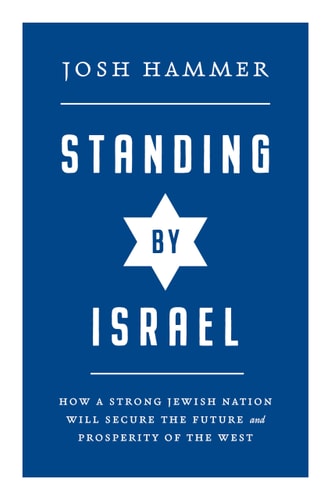
Israel and civilization: the fate of the Jewish nation and the destiny of the West

Hammer, Josh
"In Israel and Civilization, acclaimed journalist, legal expert, and pundit Josh Hammer makes a righteous case that the key to the prosperity of the West is the flourishing of the Jewish people and the Jewish State of Israel. Hammer's uplifting offense is our best defense against the enemies of the Jewish people's right to self-determination in their ancestral homeland. And as Hammer makes clear, manifesting the promise of Israel requires action by the United States and its allies. There can be no overstating the impact of the trauma of October 7, 2023, on the Jewish people. Yet the anti-Israel reactions the world over have been equally devastating. Rallies of hundreds of thousands explicitly or implicitly promoting Hamas violence; demonstrations of Ivy League professors celebrating the pogrom as awesome and exhilarating; so-called human rights organizations that refuse to unequivocally condemn the use of rape as a weapon of war; and a hydra of multiculturalism, postmodern relativism, and tolerance--it all threatens the physical and metaphysical survival of the West and our essential Jewish heritage. Preserving the best of what's been thought and said throughout history and ensuring that there will be centuries more requires a West that is proud of its Jewish heritage. In other words, the continued existence of the Jewish people is inextricably tied to the endurance of Western civilization. Israel is the center of the battle, and Israel and Civilization explains why and how the Jewish state must win."--
Radius Book Group 2025-03-18 293 pages

The Expanding Blaze How the American Revolution Ignited the World, 1775-1848

Jonathan Israel
"A major intellectual history of the American Revolution and its influence on later revolutions in Europe and the Americas, the Expanding Blaze is a sweeping history of how the American Revolution inspired revolutions throughout Europe and the Atlantic world in the eighteenth and nineteenth centuries. Jonathan Israel, one of the world's leading historians of the Enlightenment, shows how the radical ideas of American founders such as Paine, Jefferson, Franklin, Madison, and Monroe set the pattern for democratic revolutions, movements, and constitutions in France, Britain, Ireland, the Netherlands, Belgium, Poland, Greece, Canada, Haiti, Brazil, and Spanish America. The Expanding Blaze reminds us that the American Revolution was an astonishingly radical event--and that it didn't end with the transformation and independence of America. Rather, the revolution continued to reverberate in Europe and the Americas for the next three-quarters of a century. This comprehensive history of the revolution's international influence traces how American efforts to implement Radical Enlightenment ideas--including the destruction of the old regime and the promotion of democratic republicanism, self-government, and liberty--helped drive revolutions abroad, as foreign leaders explicitly followed the American example and espoused American democratic values. The first major new intellectual history of the age of democratic revolution in decades, The Expanding Blaze returns the American Revolution to its global context."--
Princeton University Press 2019-11-26 768 pages