691 results for "Literature"

The night watch

Modiano, Patrick
When Patrick Modiano was awarded the 2014 Nobel Prize for LIterature he was praised for using the 'art of memory' to bring to life the Occupation of Paris during the Second World War. The Night Watch is his second novel and tells the story of a young man of limited means, caught between his work for the French Gestapo informing on the Resistance, and his work for a Resistance cell informing on the police and the black market dealers whose seedy milieu of nightclubs, prostitutes and spivs he shares. Under pressure from both sides to inform and bring things to a crisis, he finds himself driven towards an act of self-sacrifice as the only way to escape an impossible situation and the question that haunts him - how to be a traitor without being a traitor. In this astonishing, cruel and tender book, Modiano attempts to exorcise the past by leading his characters out on a fantasmagoric patrol during one fatal night of the Occupation.
Bloomsbury 2015 130 pages

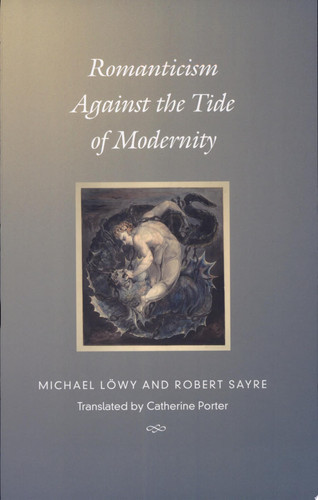
Romanticism against the tide of modernity

Löwy, Michael
Romanticism is a worldview that finds expression over a whole range of cultural fields—not only in literature and art but in philosophy, theology, political theory, and social movements. In Romanticism Against the Tide of Modernity Michael Löwy and Robert Sayre formulate a theory that defines romanticism as a cultural protest against modern bourgeois industrial civilization and work to reveal the unity that underlies the extraordinary diversity of romanticism from the eighteenth to the twenty-first century. After critiquing previous conceptions of romanticism and discussing its first European manifestations, Löwy and Sayre propose a typology of the sociopolitical positions held by romantic writers-from “restitutionist” to various revolutionary/utopian forms. In subsequent chapters, they give extended treatment to writers as diverse as Coleridge and Ruskin, Charles Peguy, Ernst Bloch and Christa Wolf. Among other topics, they discuss the complex relationship between Marxism and romanticism before closing with a reflection on more contemporary manifestations of romanticism (for example, surrealism, the events of May 1968, and the ecological movement) as well as its future. Students and scholars of literature, humanities, social sciences, and cultural studies will be interested in this elegant and thoroughly original book.
Duke University Press 2001 317 pages

The Medical Man And The Witch During The Renaissance

Gregory Zilboorg
""The Medical Man and the Witch During the Renaissance"" by Gregory Zilboorg is a historical account of the relationship between medicine and witchcraft during the Renaissance period. The book explores how medical professionals, such as physicians and surgeons, interacted with individuals accused of practicing witchcraft and the role they played in the persecution of witches. Zilboorg delves into the cultural and social context of the time, examining the beliefs and superstitions that shaped the attitudes towards witches and the methods used to diagnose and treat supposed witchcraft. The book also examines the impact of the witch trials on the medical profession and the development of medical knowledge during this period. Overall, ""The Medical Man and the Witch During the Renaissance"" provides a fascinating insight into the intersection of medicine and witchcraft during a tumultuous period in European history.Publications Of Institute Of The History Of Medicine, The Johns Hopkins University, Third Series, V2.This scarce antiquarian book is a facsimile reprint of the old original and may contain some imperfections such as library marks and notations. Because we believe this work is culturally important, we have made it available as part of our commitment for protecting, preserving, and promoting the world's literature in affordable, high quality, modern editions, that are true to their original work.
Literary Licensing, LLC 2011-07 234 pages

The book rescuer: how a mensch from Massachusetts saved Yiddish literature for generations to come

Macy, Sue
Over the last forty years, Aaron Lansky has jumped into dumpsters, rummaged around musty basements, and crawled through cramped attics. He did all of this in pursuit of a particular kind of treasure, and he's found plenty. Lansky's treasure was any book written in Yiddish, the language of generations of European Jews. When he started looking for Yiddish books, experts estimated there might be about 70,000 still in existence. Since then, the MacArthur Genius Grant recipient has collected close to 1.5 million books, and he's finding more every day.
Simon & Schuster 2019-10-01 48 pages

Verse with prose from Petronius to Dante: the art and scope of the mixed form

Dronke, Peter
Peter Dronke illuminates a unique literary tradition: the narrative that mixes prose with verse. Highlighting a wide range of texts, he defines and explores the creative ways in which mixed forms were used in Europe from antiquity through the thirteenth century. Verse with Prose distinguishes for the first time some of the most significant uses of mixed forms. Dronke looks at the way prose and verse elements function in satirical works, beginning in the third century B.C. with Menippus. He examines allegorical techniques in the mixed form, giving especially rewarding attention to Boethius' Consolation of Philosophy. His lucid analysis encompasses a feast of medieval sagas and romances, ranging from Iceland to Italy, including vernacular works by Marguerite Porete in France and Mechthild in Germany. A number of the medieval Latin texts presented have remained virtually unknown, but emerge here as narratives with unusual and at times brilliant literary qualities. To enable not only specialists but all who love literature to respond to the works discussed, they are quoted in fresh translations, as well as in the originals.
Harvard University Press 1994 148 pages

Minor prophecies: the literary essay in the culture wars

Hartman, Geoffrey H.
For most people literary criticism is a mystery that often seems inaccessible, written for an in-group. Even worse, a Battle of the Books has broken out between neoconservatives and neoradicals-all the more reason to steer clear of the fray. Geoffrey Hartman argues that ignoring the culture wars would be unwise, for what is at stake is the nature of the arts we prize and our obligation to remain civil and avoid the apocalyptic tone of most political prophecy. Hartman's book is both a survey of the history of modern literary criticism and a strategic intervention. First he presents an account of the culture of criticism in the last one hundred years. He then widens the focus to provide a picture of the critical essay from 1700 to the present in order to show that a major change in style took place after 1950. Two chapters focus on F. R. Leavis and Paul de Man, central-and controversial-figures in academic criticism. Hartman attends to major developments on the continent and in Anglo-American circles that have disrupted the calm of what he calls the friendship or conversational style. On the one hand, critics and thinkers have pursued strange gods in order to enrich and sharpen their critical style. This change Hartman welcomes. On the other hand, along with a renewed interest in politics and historical speculation, a didactic and moralistic tone has again entered the scene. Hartman rejects this new moralism. The author is an eloquent defender of reading the text of criticism as carefully as the text of literature. He argues for a broader conception of critical style, one that would support the open and conversational voice of the public critic as well as the inventive and innovative practice of the technical critic. Hartman sets before us an ideal of literary criticism that can acknowledge theory yet does not shrink from a sustained, text-centered response. Minor Prophecies is a major book by one of our finest critics.
Harvard University Press 1991 252 pages

The capture of Black Bart: gentleman bandit of the Old West

Finkelstein, Norman H.
"Black Bart was not the Old West's only stagecoach robber, but he was the most famous. To many people, he was a folk hero: a robber who didn't threaten or harm passengers. He was a bandit with a sense of humor who wrote poetry. In robbing at least 28 Wells Fargo stagecoaches across northern California between 1875 and 1883, he never fired a shot or injured anyone. His gun, it turned out, was never loaded. Newspaper stories about the poet robber's exploits and about Jim Hume, the unyielding chief detective of Wells Fargo, became popular reading throughout the West. Black Bart seemed to enjoy the chase. During one robbery the driver told him "They'll catch you one of these days." Bart answered, "Perhaps, but in the meantime give my regards to J. B. Hume, will you?" For eight years, each new robbery--and each new story--made Hume even more determined to track him down. Resources include a list of all Bart's robberies, notes, and bibliography, making this a rich resource for all Wild West readers."--Provided by publisher.
Chicago Review Press 2019 150 pages

Lee and Grant at Appomattox

Kantor, MacKinlay
MacKinlay Kantor's book for young readers captures all the emotions and drama of those few days in April 1865: Lee's mingled sorrow and relief, Grant's generosity toward his late opponent and the nearly starving Confederate soldiers; and the two commanders' negotiation of surrender terms intended to help heal the wounds of more than four years of the most violent conflict in American history.
Voyageur Press, an imprint of Quarto Publishing Group USA Inc 2016-10-15 149 pages

Irving Babbitt and the Teaching of Literature

Harry Levin
This work has been selected by scholars as being culturally important and is part of the knowledge base of civilization as we know it. This work is in the public domain in the United States of America, and possibly other nations. Within the United States, you may freely copy and distribute this work, as no entity (individual or corporate) has a copyright on the body of the work. Scholars believe, and we concur, that this work is important enough to be preserved, reproduced, and made generally available to the public. To ensure a quality reading experience, this work has been proofread and republished using a format that seamlessly blends the original graphical elements with text in an easy-to-read typeface. We appreciate your support of the preservation process, and thank you for being an important part of keeping this knowledge alive and relevant.
HASSELL STREET Press 2021-09-09 36 pages

The rise and fall of the man of letters: aspects of English literary life since 1800

Gross, John
In this new edition of his landmark book, John Gross traces the shifting fortunes of the men who shaped literary opinion in England during the Victorian, Edwardian, and contemporary eras. He brings together famous or forgotten critics and editors-prophets, aesthetes, statesmen, dons, radicals, social climbers, idealists, gossipmongers, and literary lions-and explores not only their critical ideas but also their personalities, careers, social backgrounds, and politics. He looks at "the higher journalism;" the expansion of the reading public, the byways of British liberalism, and the rise of literature as an academic subject, and the impact of modernism. In all a remarkable survey, to which Mr. Gross has now added updates on several literary careers, the new style of critics who have evolved from the universities, and the dominant role of the media. "A brilliant account of English literary culture which is as engaging as it is illuminating"-Lionel Trilling. "Extremely readable.... The book is strewn with marvelous bits: deft aperçus, biographical portraits of great subtlety and force, wit, commonsensical intelligence everywhere. It is a book that no one who cares about the state of literature can afford to neglect."-Joseph Epstein.
Elephant Paperbacks 1992-08-01 361 pages

Rabbinic texts and the history of late-Roman Palestine

Martin Goodman,Philip Alexander
This volume brings together studies by experts in the rabbinic literature of late antiquity and by specialists in the history of the Jews in that period, in order to reveal the value of rabbinic material as historical evidence and the problems and issues which arise in its exploitation for this purpose.
Published for the British Academy by University Press 2010 419 pages

The city in Roman Palestine

Sperber, Daniel
This book is a study of the city and urban life in Roman Palestine during the Talmudic period, 100-400 B.C. Rather than focus on a specific city, Daniel Sperber synthesizes what is known about city life in Talmudic Palestine to create a paradigmatic hypothetical Palestinian city. Drawing on numerous literary records for his information, he describes the structure and use of many physical aspects of the city, such as its markets, pubs, streets, bathhouses, roads, walls, toilets, and water supply. Rounding out the study is a chapter describing the archeological evidence, written by Sperber's colleague, Professor Joshua Schwartz. With the recent upsurge of interest in urbanization in the Greco-Roman world, The City in Roman Palestine will attract not only scholars of Judaic literature and history, but also classicists and ancient historians.
Oxford University Press 1998-01 200 pages

Michel De Montaigne

Edith Helen Sichel
This work has been selected by scholars as being culturally important, and is part of the knowledge base of civilization as we know it. This work is in the "public domain in the United States of America, and possibly other nations. Within the United States, you may freely copy and distribute this work, as no entity (individual or corporate) has a copyright on the body of the work. Scholars believe, and we concur, that this work is important enough to be preserved, reproduced, and made generally available to the public. We appreciate your support of the preservation process, and thank you for being an important part of keeping this knowledge alive and relevant.
Creative Media Partners, LLC 2022-10-27 306 pages

Bad kids: the naughtiest children in history

Robinson, Tony
From a 13-year old ninja to young Salem "witches"--a guided tour through the lives of outlaw children from history, their dastardly crimes, and awful punishments So you've broken a classroom window and you're standing outside the principal's office with sweaty palms and a serious sinking feeling in your stomach. Do you think no one's ever had a life as bad as you? Well, you're wrong--this book reveals how kids in the past have had to suffer much worse punishments than a lecture about how they've let the whole school down. For instance, however angry your principal gets, it's fairly certain that she's not going to put you in a pillory and nail your ears to it. All through history, children have been getting into some serious scrapes, and they didn't often get off lightly. This is a guided tour to children for whom laughing, dancing on a Sunday, killing a rabbit that wasn't on your land, or just being in the wrong place at the wrong time could mean a beating, beheading, or ordeal by hot water (no, it's not a nice warm bath with bubbles and a little plastic duck).
Macmillan Children's 2011 133 pages

Pardes rimonim: orchard of pomegranates

Cordovero, Moses ben Jacob
Pardes Rimonim is a classic work of authentic Kabbalah penned by the preeminent scholar, Rabbi Moshe Cordevero (Ramak). A powerful intellect, fertile writer, and gigantic figure in Kabbalah, Ramak (circa 1520-1570) distinguished himself first in Talmudic studies while under the tutelage of Rabbi Yosef Caro. However, he began his Kabbalah studies at age 20 with Rabbi Shlomo Alkabetz, who was both his brother-in-law and composer of Lecha Dodi. In the Pardes, Ramak also displays a marked philosophical influence by the Rambam (Rabbi Moshe Ben Maimon, i.e. Maimonides). Indeed, Ramak's encyclopedic work in Kabbalah heralded the renaissance of kabbalistic genius that emerged after him in Safed. A comprehensive work collecting the kabbalistic learning of that time, the original Hebrew version of the Pardes was a single volume composed of 32 parts and was written in both Hebrew and Aramaic.
Providence University 2007 226 pages

The fragility of goodness: luck and ethics in Greek tragedy and philosophy

Nussbaum, Martha C.
"This book is a study of ancient views about "moral luck." It examines the fundamental ethical problem that many of the valued constituents of a well-lived life are vulnerable to factors outside a person's control and asks how this affects our appraisal of persons and their lives. The Greeks made a profound contribution to these questions, yet neither the problems nor the Greek views of the them have received the attention they deserve. This book thus recovers a central dimension of Greek thought and addresses major issues in contemporary ethical theory. One of its most original aspects is its interrelated treatment of both literary and philosophical texts." "The Fragility of Goodness has proven to be important reading for philosophers and classicists, and its nontechnical style makes it accessible to any educated person interested in the difficult problems it tackles."--Jacket.
Cambridge University Press 2001-01-15 544 pages

Fight for the right to read: Samuel Wilbert Tucker and the 1939 Sit-Down Strike for library reading equality

Gottesfeld, Jeff,Green, Michelle Y.
"Banning people from libraries is even worse than banning books! Decades before the Civil Rights Movement, Samuel Wilbert Tucker, a Black lawyer in Virginia, organized a peaceful read-in at the local public library, which was segregated. He wanted to affirm the right of everyone to use the library. Thanks to efforts like his, we can all sit at a table, any table, pick up a book, any book, and read."--Back cover.
Creston Books 2025-09-09 36 pages