

58,196 results in 0.07 seconds

Why are faggots so afraid of faggots? flaming challenges to masculinity, objectification, and the desire to conform
Gay culture has become a nightmare of consumerism, whether it's an endless quest for Absolut vodka, Diesel jeans, rainbow Hummers, pec implants, or Pottery Barn. Whatever happened to sexual flamboyance and gender liberation, an end to marriage, the military, and the nuclear family? As backrooms are shut down to make way for wedding vows, and gay sexual culture morphs into "straight-acting dudes hangin' out," what are the possibilities for a defiant faggotry that challenges the assimilationist norms of a corporate-cozy lifestyle? Why Are Faggots So Afraid of Faggots? challenges not just the violence of straight homophobia but the hypocrisy of mainstream gay norms that say the only way to stay safe is to act straight: get married, join the military, adopt kids! Mattilda Bernstein Sycamore reinvokes the anger, flamboyance, and subversion once thriving in gay subcultures in order to create something dangerous and lovely: an exploration of the perils of assimilation; a call for accountability; a vision for change. A sassy and splintering emergency intervention! Called "startlingly bold and provocative" by Howard Zinn, and described as "a cross between Tinkerbell and a honky Malcolm X with a queer agenda" by The Austin Chronicle , Mattilda Bernstein Sycamore is undoubtedly one of America's most outspoken queer critics. She is the author of two novels, including, most recently, So Many Ways to Sleep Badly , and is the editor of four nonfiction anthologies, including Nobody Passes: Rejecting the Rules of Gender and Conformity and That's Revolting! Queer Strategies for Resisting Assimilation . In Oakland, California on March 24, 2015 a fire destroyed the AK Press warehouse along with several other businesses. Please consider visiting the AK Press website to learn more about the fundraiser to help them and their neighbors.

Race stories: essays on the power of images
"The first title in Aperture's Vision & Justice Series-featuring a collection of award-winning short essays by Maurice Berger that explore the intersections of photography, race, and visual culture. Created and coedited by Drs. Sarah Lewis, Leigh Raiford, and Deborah Willis, the series reexamines and redresses historical narratives of photography, race, and justice"--

The She Wolf Of France
This work has been selected by scholars as being culturally important, and is part of the knowledge base of civilization as we know it. This work is in the "public domain in the United States of America, and possibly other nations. Within the United States, you may freely copy and distribute this work, as no entity (individual or corporate) has a copyright on the body of the work. Scholars believe, and we concur, that this work is important enough to be preserved, reproduced, and made generally available to the public. We appreciate your support of the preservation process, and thank you for being an important part of keeping this knowledge alive and relevant.

My friendship with Martin Buber
"Martin Buber’s philosophy of dialogue sought to express the human experience through the ways in which we encounter and interact with others. His "I—Thou" theory of dialogue and "I—It" theory of monologue expressed ways of understanding one’s place in the world in relation to others, objects, and especially God. Buber died in 1965, leaving behind a vast library of writings and ardent students and scholars eager to engage with his ideas. One of the most prominent scholars was Maurice Friedman. Friedman and Buber shared a professional as well as a personal relationship, based on translating, interpreting, and intellectual curiosity. Beginning in the summer of 1950 and ending with Buber’s death, this volume takes the reader through Buber’s three visits to America, his wife’s death, the author’s stay in Jerusalem, and the articulation of Buber’s culminating philosophy of the interhuman. In tracing this chronology, Friedman draws extensively on his personal collection of letters exchanged with Buber. Intimate and meditative, this book provides an exploration of a deeply intellectual friendship shared between two extraordinary thinkers."--

Einstein and religion: physics and theology
The philosophy of religion and the quest for spiritual truth preoccupied Albert Einstein--so much that it has been said "one might suspect he was a disguised theologian." Nevertheless, the literature on the life and work of Einstein, extensive as it is, does not provide an adequate account of his religious conception and sentiments. Only fragmentarily known, Einstein's ideas about religion have been often distorted both by atheists and by religious groups eager to claim him as one of their own. But what exactly was Einstein's religious credo? In this fascinating book, the distinguished physicist and philosopher Max Jammer offers an unbiased and well-documented answer to this question. The book begins with a discussion of Einstein's childhood religious education and the religious atmosphere--or its absence--among his family and friends. It then reconstructs, step by step, the intellectual development that led Einstein to the conceptions of a cosmic religion and an impersonal God, akin to "the God of Spinoza." Jammer explores Einstein's writings and lectures on religion and its role in society, and how far they have been accepted by the general public and by professional theologians like Paul Tillich or Frederick Ferré. He also analyzes the precise meaning of Einstein's famous dictum "Science without religion is lame, religion without science is blind," and why this statement can serve as an epitome of Einstein's philosophy of religion. The last chapter deals with the controversial question of whether Einstein's scientific work, and in particular his theory of relativity, has theologically significant implications, a problem important for those who are interested in the relation between science and religion. Both thought-provoking and engaging, this book aims to introduce readers, without proselytizing, to Einstein's religion.

A history of modern Tibet. Volume 3. The storm clouds descend, 1955-1957
"It is not possible to fully understand contemporary politics between China and the Dalai Lama without understanding what happened in the 1950's. The third volume in Melvyn Goldstein's History of Modern Tibet series, The Calm before the Storm, examines the critical years of 1955 through 1957. During this period, the Preparatory Committee for a Tibet Autonomous Region was inaugurated in Lhasa, and a major Tibetan uprising occurred in Sichuan Province. Jenkhentsisum, a Tibetan anti-communist emigree group, emerged as an important player with secret links to Indian Intelligence, the Dalai Lama's Lord Chamberlain, the United States, and Taiwan. And in Tibet, Fan Ming, the acting head of the CCP's office in Lhasa, launched the "Great Expansion," which recruited many thousands of Han Cadres to Lhasa in preparation for beginning democratic reforms, only to be stopped decisively by Mao Zedong's "Great Contraction" which sent them back to China and ended talk of reforms in Tibet for the foreseeable future. In Volume III, Goldstein draws on never-before seen Chinese government documents, published and unpublished memoirs and diaries, and invaluable in-depth interviews with important Chinese and Tibetan participants (including the Dalai Lama) to offer a new level of insight into the events and principal players of the time. Goldstein corrects factual errors and misleading stereotypes in the history, and uncovers heretofore unknown information on the period to reveal in depth a nuanced portrait of Sino-Tibetan relations that goes far beyond anything previously imagined"--

The struggle for modern Tibet: the autobiography of Tashi Tsering
This captivating autobiography by a Tibetan educator and former political prisoner is full of twists and turns. Born in 1929 in a Tibetan village, Tsering developed a strong dislike of his country's theocratic ruling elite. As a 13-year-old member of the Dalai Lama's personal dance troupe, he was frequently whipped or beaten by teachers for minor infractions. A heterosexual, he escaped by becoming a drombo, or homosexual passive partner and sex-toy, for a well-connected monk. After studying at the University of Washington, he returned to Chinese-occupied Tibet in 1964, convinced that Tibet could become a modernized society based on socialist, egalitarian principles only through cooperation with the Chinese. Denounced as a 'counterrevolutionary' during Mao's Cultural Revolution, he was arrested in 1967 and spent six years in prison or doing forced labor in China. Officially exonerated in 1978, Tsering became a professor of English at Tibet University in Lhasa. He now raises funds to build schools in Tibet's villages, emphasizing Tibetan language and culture.

Union Square
Union Square opens in 1920 in the aftermath of World War I and ends two decades later with the shadows of World War II looming. Four strong women are swept up in the worlds of fashion and art amidst a background of Communism, Naziism, and Zionism.

The problem with human rights law: Is it out of control? Who is responsible? What is the solution?

Laughter and ridicule: towards a social critique of laughter
`From Thomas Hobbes' fear of the power of laughter to the compulsory, packaged "fun" of the contemporary mass media, Billig takes the reader on a stimulating tour of the strange world of humour. Both a significant work of scholarship and a novel contribution to the understanding of the humourous, this is a seriously engaging book' - David Inglis, University of Aberdeen. This delightful book tackles the prevailing assumption that laughter and humour are inherently good. In developing a critique of humour the author proposes a social theory that places humour - in the form of ridicule

Emancipation How Liberating Europe's Jews from the Ghetto Led to Revolution and Renaissance
ÔThis one of those marvelous books that not only illuminates an important chain of historical events, but provides timeless Ñ and especially timely Ñ lessons for our own age É [an] impassioned, thoughtfully argued, well-expressed book.Õ Martin Rubin, The Washington Times For almost 500 years, the Jews of Europe were kept apart, confined to ghettos or tiny villages in the countryside. Then, in one extraordinary moment in the French Revolution, the Jews of France were emancipated. Soon the ghetto gates were opened all over Europe. The era of Emancipation had begun. What happened next would change the course of history. Emancipation tells the story of how this isolated minority emerged from the ghetto and against terrible odds very quickly established themselves as shapers of history, as writers, revolutionaries, social thinkers, and artists. Their struggle to create a place for themselves in Western European life led to revolutions and nothing less than a second renaissance in Western culture. The book spans the era from the French Revolution to the beginning of the twentieth century. The story is told through the lives of the people who lived through this momentous change. Some are well-known: Marx, Freud, Mahler, Proust, and Einstein; many more have been forgotten. Michael Goldfarb brings them all to life. This is an epic story, and Goldfarb tells it with the skill and eye for detail of a novelist. He brings the empathy and understanding that has marked his two decades as a reporter in public radio to making the characters come alive. It is a tale full of hope, struggle, triumph, and, waiting at the end, a great tragedy. This is a book that will have meaning for anyone interested in the struggle of immigrants and minorities to succeed. We live in a world where vast numbers are on the move, where religions and races are grinding against each other in new combinations; Emancipation is a book of history for our time.

Whatever Happened to the Power of God?/It's Time to Rock the Boat
Together for the first time in a single volume, two of Dr. Michael L. Brown's groundbreaking works are ready to challenge a new generation of Christians to combat the status quo of a compromised church and a godless society. Have you ever wondered why you rarely--if ever--see the kinds of miracles today that were so common in the Bible? Whatever Happened to the Power of God? explores why so few of the seriously ill are healed, why apparent encounters with God's supernatural power so rarely change lives, and why spiritual warfare seems to have little effect on society. This book asks the questions you have always wanted to ask and confronts you with answers that will change your life. Find out what's holding back the power of God! In It's Time to Rock the Boat, Dr. Brown reveals the biblical pattern for changing society through preaching a confrontational gospel. The Old Testament prophets, New Testament apostles, John the Baptist, and Jesus the Messiah Himself were not content to let society be dragged down by its sinful and destructive elements--they took a stand against an onslaught of degradation and made waves that rocked the world! God is calling each of us to be part of that world-shaking movement. It's time!

The paternity test
"Pat Faunce yearns for more than his carefree New York life as a writer and his open relationship with Stu, an airline pilot. Above all, he wants to be a father-- despite Stu's reluctance. They enlist Debora, a charismatic Brazilian immigrant, as a surrogate mother. But the men's attempt to have a child creates new emotional complications"--

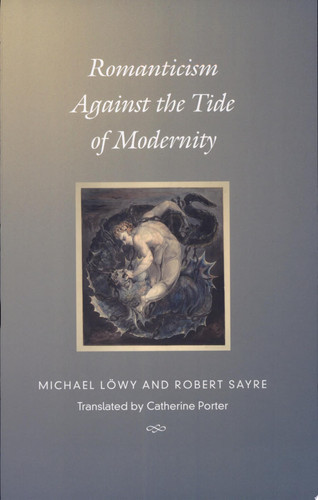
Romanticism against the tide of modernity
Romanticism is a worldview that finds expression over a whole range of cultural fields—not only in literature and art but in philosophy, theology, political theory, and social movements. In Romanticism Against the Tide of Modernity Michael Löwy and Robert Sayre formulate a theory that defines romanticism as a cultural protest against modern bourgeois industrial civilization and work to reveal the unity that underlies the extraordinary diversity of romanticism from the eighteenth to the twenty-first century. After critiquing previous conceptions of romanticism and discussing its first European manifestations, Löwy and Sayre propose a typology of the sociopolitical positions held by romantic writers-from “restitutionist” to various revolutionary/utopian forms. In subsequent chapters, they give extended treatment to writers as diverse as Coleridge and Ruskin, Charles Peguy, Ernst Bloch and Christa Wolf. Among other topics, they discuss the complex relationship between Marxism and romanticism before closing with a reflection on more contemporary manifestations of romanticism (for example, surrealism, the events of May 1968, and the ecological movement) as well as its future. Students and scholars of literature, humanities, social sciences, and cultural studies will be interested in this elegant and thoroughly original book.
Political action: a practical guide to movement politics
Political theorist Michael Walzer's classic guide is a perfect introduction to social activism, including what-to-do advice for deciding which issues to take on, organizing, fundraising, and providing effective leadership Political Action is a how-to book for activists that was written at one of the darkest moments of the Nixon administration and remains no less timely and intelligent and useful today. Michael Walzer draws on his extensive engagement in the civil rights and antiwar movements of the 1960s to lay out the practical steps necessary to keep movement politics alive both in victory and in defeat. What do people need to do when out of outrage or fear of looming disaster they come together to demand change? Should they focus on one or several issues? Should they form coalitions? What can and can’t be accomplished through electoral politics? How can movements operate democratically? What is effective leadership? Walzer addresses such questions with clarity, concision, wisdom, and wit in a book that everywhere insists not only on the centrality of movement politics to the health of democratic societies but on the deep satisfaction that is to be found there. Political Action is both an indispensable resource for activists and a lasting and inspiring summons to arms.

What it means to be an American

Manhole Covers
They lie underfoot, embellished and gleaming. They seal off and provide entry to an underground world of conduits, water mains, power lines, and sewers. They appear by the thousands in our cities, but very few people ever look at them or think about them as art. At once completely ordinary and totally unexpected, manhole covers present an infinite variety of design in the commonplace as well as a record of defunct utility companies, forgotten business firms, and obsolete foundries. Manhole Covers documents this singular form of urban industrial art and its place in American culture. Mimi and Robert Melnick first revealed their obsession with street hardware twenty years ago in a remarkable little book called Manhole Covers of Los Angeles (1974). Printed in a small format and a limited edition, it quickly went out of print and is now a scarce collector's item. But that was just an introduction to their larger project, which has come to fruition in this book of 200 photographs and an extended narrative documenting manhole covers throughout the United States and discussing the history of their use, manufacture, and function. A subject that at first seems straightforward and commonplace becomes redolent and poetic in the Melnicks' hands, for their hieroglyphic reading of manhole covers reveals a chapter of urban history that can only be recovered from the logos and markings of these early disks. There are square lids, convex lids, perforated lids. And the older ones wear an astonishingly diverse range of anything-but-blank faces expressed in raised crosses, waffle grids, cut-out diamonds, radial stars, floral patterns, and honeycomb treads. The diversity of design corresponds to an equally diverse typology of form and function, as indicated by their evocative labels: handholes, vents, coalholes, grates, lampholes, storm drains, steam covers, meter lids, traffic buttons.

The righteous among the nations
In alphabetical order, presents brief biographies or personal accounts of one hundred and fifty non-Jews who helped to rescue Jews during the Holocaust, all of whom were awarded the title of "Righteous Among the Nations."

The shadow of a flying bird: a legend of the Kurdistani Jews
Moses, at the end of his life, refuses to give up his soul to God, who is forced to take it himself with a single kiss.
