58,196 results in 0.14 seconds

Erving Goffman: exploring the interaction order

Goffman, Erving
Erving Goffman was one of the most pre-eminent authors of the post-war period in social science. His ideas have had an extraordinary influence and have become well known to a wide audience. This is the first systematic appraisal of the legacy of his work. The book brings together a group of eminent scholars from sociology, linguistics and social psychology, all of whom are internationally known for their own work. Contributors include Adam Kendon, Randall Collins, Robin Williams, Emanuel A. Schegloff, Christian Heath, Stephen C. Levinson, P.M. Strong and Anthony Giddens. The contributors analyse and seek to build on Goffman′s work in a sympathetic yet critical way. Some chapters describe the main parameters of the "interaction order", as Goffman portrays it, serving as a useful introduction to his approach. Others show how future investigations of the interaction order may be developed. This book will become a standard source for undergraduates and postgraduates in linguistics, social psychology and sociology, and for anyone interested in the development of modern social theory in general.
Polity 1988 298 pages

Strategic interaction

Goffman, Erving
The two essays in this classic work by sociologist Erving Goffman deal with the calculative, gamelike aspects of human interaction. Goffman examines the strategy of words and deeds; he uses the term "strategic interaction" to describe gamelike events in which an individual's situation is fully dependent on the move of one's opponent and in which both players know this and have the wit to use this awareness for advantage. Goffman aims to show that strategic interaction can be isolated analytically from the general study of communication and face-to-face interaction. The first essay addresses expression games, in which a participant spars to discover the value of information given openly or unwittingly by another. The author uses vivid examples from espionage literature and high-level political intrigue to show how people mislead one another in the information game. Both observer and observed create evidence that is false and uncover evidence that is real. In "Strategic Interaction," the book's second essay, action is the central concern, and expression games are secondary. Goffman makes clear that often, when it seems that an opponent sets off a course of action through verbal communication, he really has a finger on your trigger, your chips on the table, or your check in his bank. Communication may reinforce conduct, but in the end, action speaks louder. Those who gamble with their wits, and those who study those who do, will find this analysis important and stimulating.
University of Pennsylvania Press 2015 145 pages

Paul Robeson, Negro

Eslanda Goode Robeson
PAUL, ROBESON Photo White. Si nil in, New York THE WIDE GRIN Paul Robeson, By ESLAJNDA GOODE ROBESON ilew aork ana HARPER BROTHERS mcmxxx PAUL ROBESON, NEGRO COPYRIGHT, 193O, BY ESLANDA GOODE ROBESON PRINTED IN T3BCE U. S. A. FIRST EDITION F-E FOR OUR SON KANSAS CRY ttou. PUBLIC LIBRARY 6G1416O C OIVTEIVTS I. The Negro Preacher 1 H. The Rev. William Robeson and ffis Boy ID III. Paul at College 27 IV. Harlem and the Negro 39 V. G-roping Law, Theatre, Music 8 VI. London 1O5 VII. Voice-help 122 VIII. Two Pauls 135 IX, London Again 138 X. Finding Himself 142 Appendix 172
Read Books 2008-11 216 pages

Suffering as identity: the Jewish paradigm

Benbassa, Esther
Reaching from biblical times to the present day, Esther Benbassa’s prize-winning exploration of Jewish identity is both epic and comprehensive. She shows how in the Jewish world, the representation and ritualization of suffering have shaped the history of both the people and the religion. Benbassa argues that the nineteenth century gave rise to a Jewish ‘lachrymose’ historiography, and that Jewish history was increasingly seen to be a ‘vale of tears’—a development that has become even more pronounced since the Holocaust. The treatment of the Holocaust in the State of Israel now has the form of a civil religion. In principle within reach of everyone, the ‘duty of memory’ and the uniqueness of the genocide have mitigated for many Jews the loss of other traditions. The Israeli government invokes the memory of the Holocaust to neutralize threats to its interests—ensuring that suffering continues to be a central part of Jewish identity and positioning the State of Israeli as a redemptive force.
Verso 2010-03-02 207 pages

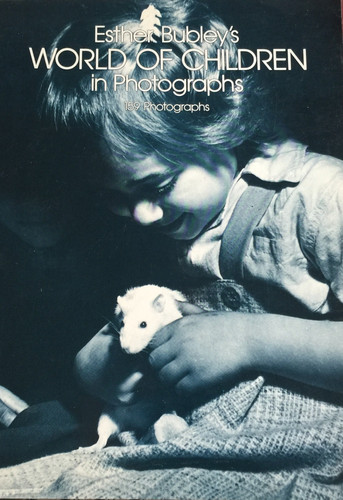
Esther Bubley's world of children in photographs

Bubley, Esther
In this collection, you will see children from Ms. Bubley's viewpoint and perspective. This is a beautiful collection from an award-wining photojournalist. Award-winning photojournalist Esther Bubley is recognized for both her artistic composition and her superb story telling ability. Bubley's career in documentary photography and photojournalism was launched in 1942 when Roy Stryker hired her to work in his dark room at the Office of War Information (OWI), where his famed Farm Security Administration (FSA) photographic project had recently been transferred. In 1944, Bubley followed Stryker to Standard Oil (New Jersey)(SONJ) where he was charged with compiling a photographic library. Bubley was a freelancer for Standard Oil for the rest of the 1940s and 1950s. She simultaneously developed a thriving career separate from Stryker, working for a variety of clients -- including Life, the Ladies' Home Journal, the Children's Bureau, Pepsi-Cola International, Pan American World Airways, and UNICEF -- who sent her on assignments throughout the continental United States and around the world.
Dover 1981 105 pages

Israeli women's studies: a reader / Esther Fuchs, editor

Esther Fuchs
Israeli women do not enjoy the equality, status, and power often attributed to them by the media and popular culture. Despite significant achievements and progress, as a whole they continue to earn less than their male counterparts, are less visible and influential in the political arena, do not share equal responsibilities or privileges in the military, have unequal rights and freedoms in family life and law, and are less influential in shaping the nation's self image and cultural orientation. Bringing together classic essays by leading scholars of Israeli culture, this reader exposes the hidden causes of ongoing discrimination and links the restrictions that Israeli women experience to deeply entrenched structures, including colonial legacies, religious traditions, capitalism, nationalism, and ongoing political conflict. In contrast, the essays also explore how women act creatively to affect social change and shape public discourse in less ostensible ways. Providing balanced perspectives from the social sciences and the humanities, this comprehensive reader reflects both an emerging consensus and exciting diversity in the field. It is the definitive text for courses in Israeli women's studies.
Rutgers University Press 2005 342 pages

Jewish feminism: framed and reframed

Fuchs, Esther
In the last three decades, hundreds of books and essays have been published on women, gender, and Jewish Studies. This burgeoning scholarship has not been adequately theorized, contextualized, or historicized. This book argues that Jewish feminist studies is currently constrained by multiple frames of reference that require re-examination, a self-critical awareness, and a serious reflective inquiry into the models, paradigms, and assumptions that inform, shape, and define this area of academic interest. This book is the first critical analysis of Jewish feminist scholarship, tracing it from its tentative beginnings in the late 1970s to contemporary academic articulations of its disciplinary projects. It focuses on the assumptions, evasions, omissions, inconsistencies, and gaps in this scholarship, and notably the absence of debate, contestation, and interrogation of authoritative articulations of its presumed goals, investments, and priorities. The book teases out implicit thinking about mapping, direction, and orientation from introductions to leading anthologies and engages critically with the few explicitly theoretical works on Jewish feminist studies, contesting ideas that have become hegemonic in some areas, and interrogating the limitations these theories impose on future trajectories in Jewish feminist studies. Each chapter outlines the theoretical assumptions that inform salient publications in the field, providing a close reading of scholarly texts that justify certain practices. The book is divided into four chapters, each of which focuses on a different frame of reference. It outlines the way in which the various frames that have so far been imposed on Jewish feminism, the ethnocentric, liberal, personal, masculinist, and essentialist, have arrested its theoretical elaboration and articulation. The book includes both interdisciplinary anthologies on gender and Jewish identity and disciplinary publications in history, literature, philosophy, cultural studies, and Holocaust studies.
Lexington Books 2020-02-07 211 pages

Fundamental Principles of the Sociology of Law

Eugene Ehrlich,Klaus A. Ziegert
The innovative and revolutionary scholarship of the eminent Austrian legal theorist and professor of Roman law, Eugen Ehrlich (1862-1922), is of a very high caliber. His work has not only held its place well in view of what legal theory, especially sociological legal theory, has to offer, but is also still a powerful challenge to positions in legal theory that are no longer defensible. The sociology of law has followed in a direct line of succession from Ehrlich's observations and ideas as a new and special discipline linking jurisprudence with sociology.
Taylor & Francis Group 2017-10-12 608 pages

Strength And How To Obtain It Health, Vitality, and Physical Well-Being

Eugen Sandow
In writing this book I have taken it as a commonplace that everyone- man, woman, and child-wants to be strong. Without strength-and by strength I mean health, vitality, and a general sense of physical well-being -life is but a gloomy business. Wealth, talent, ambition, the love and affection of friends, the pleasure derived from doing good to those about one, all these things may afford some consolation for being deprived of life's chief blessing, but they can never make up for it. "But," I am constantly being asked, "it is all very well for you to say this, and everyone of sense agrees with you; the point is, can we obtain this much-prized blessing?" In the vast majority of cases I can say unhesitatingly "Yes." You can all be strong, all enjoy the heritage which was intended for you. Not all to the same extent, perhaps. Those who are afflicted with some hereditary disease, who may have unsound organs handed down to them, cannot reasonably expect to get such results as their more fortunate brethren. Still, even they need not despair; even if their condition be such as to put out of the question any such thing as athletics, they can, at all events, attain to such a condition as will permit of their enjoying life, and render them fit to carry on their work without difficulty. And after all, those who wish to be strong for this reason are innumerable. It is only the young and vigorous who desire to excel in athletic pastimes, but the middle-aged and elderly, the delicate women and young children, who yearn for health are countless. I claim that by carefully following out my system, as set out in the following pages, and fully illustrated in the Anatomical Chart at the end of the volume, these results may be attained
Exotic Publisher 2023-05-02 104 pages

Strength and How to Obtain It

Eugen Sandow
"In bringing the body to its highest pitch of perfection, various moral qualities, the value of which it would be difficult to over-estimate, must necessarily be brought into play. The first essential to success is the power of concentrating the will upon the work. Muscles are not developed by muscular action alone. Physical exertion, however arduous and long continued, will not make a man strong, or the day labourer and the blacksmith would be the strongest of men. Mechanical and desultory exertion will never materially increase a man's strength. He must first learn the great secret, which ought to be no secret at all. He must use his mind. He may not be able to add a cubit to his stature, but by taking thought a man can most assuredly increase the size of his muscles, strengthen all his organs, and add to his general vitality. But he must put his mind, as well as his muscles, into the work. And by exercise and practice the will-power is greatly increased, until, in course of time, the whole organism is so absolutely under its control that the muscles can be kept in perfect condition even without what, in ordinary language, is called " exercise." That is to say, that without violent exertion, but merely by the exertion of the will, the muscles can be exercised almost to any extent. Can it for a moment be supposed that this cultivation of the will-power is not of great value to an individual, no matter what sort of task or work he may be engaged in?" - Eugen Sandow This 1897 classic is a must have book for your physical culture library. Visit our website and see our many books at PhysicalCultureBooks.com
CreateSpace Independent Publishing Platform 2012-03-30 146 pages

FROM THE HELL OF THE HOLOCAUST : A SURVIVOR'S STORY

Hollander, Eugene
From The Hell of the Holocaust is an extraordinary autobiographical narrative of survival during the Holocaust. The tale is made even more compelling by the highly unusual circumstance that the author and his wife, though separated during the war, both managed to survive and, once reunited, were able to take up their lives together, raising a family and finding success and security in a new country. Eugene Hollander was born and raised in a family that was both prosperous and religiously observant. Soon after Hungary entered the war as an ally of Germany, Hollander, like most other young Jewish men, was drafted into an army labor battalion. Although he was able to escape to Budapest and rejoin his wife for a time, worse awaited the Hollanders when the Hungarian fascists began deporting Jews to Auschwitz and other extermination camps. Hollander vividly describes the psychic and physical suffering, pervasive terror, and irrational brutality of life in Nazi work camps. He regained his freedom after the war and was reunited again with his wife in Budapest, where he began a career as a businessman. Eventually they came to the United States. Eugene Hollander's story is a powerful human document and a testimonial to the courage and vision of the human spirit. Both scholars and ordinary readers will find it fascinating and valuable.
KTAV 2000 149 pages