58,196 results in 0.07 seconds

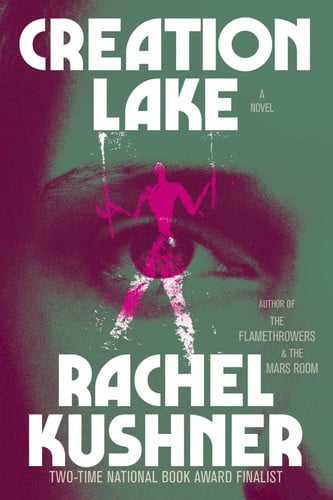
Creation Lake A Novel

Rachel Kushner
« Creation Lake is a novel about a secret agent, a thirty-four-year-old American woman of ruthless tactics, bold opinions, and clean beauty, who is sent to do dirty work in France. 'Sadie Smith' is how the narrator introduces herself to her lover, to the rural commune of French subversives on whom she is keeping tabs, and to the reader. Sadie has met her love, Lucien, a young and well-born Parisian, by “cold bump”—making him believe the encounter was accidental. Like everyone Sadie targets, Lucien is useful to her and used by her. Sadie operates by strategy and dissimulation, based on what her “contacts”—shadowy figures in business and government—instruct. First, these contacts want her to incite provocation. Then they want more. In this region of centuries-old farms and ancient caves, Sadie becomes entranced by a mysterious figure named Bruno Lacombe, a mentor to the young activists who communicates only by email. Bruno believes that the path to emancipation from what ails modern life is not revolt, but a return to the ancient past. Just as Sadie is certain she’s the seductress and puppet master of those she surveils, Bruno Lacombe is seducing her with his ingenious counter-histories, his artful laments, his own tragic story. »-- Page 4 de la couverture
Scribner 2024 407 pages

Age of Spiritual Machines

Ray Kurzweil
How We Will Live, Work, and Think in the New Age of Intelligent Machines; 1999...Computers able to perform a trillion calculations per second...Most routine business transactions take place between a human and virtual personality...Translating telephones are commonly used for most language pairs...Bioengineered treatments for cancer and heart disease greatly reduce the mortality from these diseases...Human musicians jam with cybernetic musicians. 2019...Computers equal the memory capacity and computational ability of the human brain...Interaction with computers is through gestures and two-way spoken communication...Most learning conducted through software-based teachers instead of paper books and documents...Automated driving systems installed in most roads...People have relationships with automated personalities. 2029...Computers have the computing capacity of 1 000 human brains...Majority of communication does not involve a human...There is no human employment in production, agriculture or transportation...Computers have read all available human- and machine-generated literature and are now learning on their own...Machines claim to be conscious. 2049...The common use of nanoproduced food means that the availability of food is no longer affected by limited resources and bad crop weather. 2072...Picoengineering (developing technology at the scale of picometers or trillionths of a meter) becomes practical. 2099...There is no longer any clear distinction between humans and computers...Most conscious entities do not have a permanent physical presence...The goal of education, and of intelligent beings, is discovering new knowledge to learn...Life expectancy is no longer a viable term in relation to intelligent beings.
New York: Viking 1999

Recollections of My Nonexistence A Memoir

Rebecca Solnit
Shortlisted for the James Tait Black Prize for Biography Longlisted for The Orwell Prize for Political Writing An electric portrait of the artist as a young woman that asks how a writer finds her voice in a society that prefers women to be silent, from the author of Orwell's Roses In Recollections of My Nonexistence , Rebecca Solnit describes her formation as a writer and as a feminist in 1980s San Francisco, in an atmosphere of gender violence on the street and throughout society and the exclusion of women from cultural arenas. She tells of being poor, hopeful, and adrift in the city that became her great teacher, and of the small apartment that, when she was nineteen, became the home in which she transformed herself. She explores the forces that liberated her as a person and as a writer--books themselves; the gay community that presented a new model of what else gender, family, and joy could mean; and her eventual arrival in the spacious landscapes and overlooked conflicts of the American West. Beyond being a memoir, Solnit's book is also a passionate argument: that women are not just impacted by personal experience, but by membership in a society where violence against women pervades. Looking back, she describes how she came to recognize that her own experiences of harassment and menace were inseparable from the systemic problem of who has a voice, or rather who is heard and respected and who is silenced--and how she was galvanized to use her own voice for change.
Penguin 2021-03-09 256 pages

The encyclopedia of trouble and spaciousness

Solnit, Rebecca
The incomparable Rebecca Solnit, author of more than a dozen acclaimed, prizewinning books of nonfiction including Men Explain Things To Me , brings the same dazzling writing to the essays in The Encyclopedia of Trouble and Spaciousness ; hailed by the Los Angeles Times as "globally wide-ranging and topically urgent and the Boston Globe as "luminous and precise.". As the title suggests, the territory of Solnit's concerns is vast, and in her signature alchemical style she combines commentary on history, justice, war and peace, and explorations of place, art, and community, all while writing with the lyricism of a poet to achieve incandescence and wisdom. Gathered here are celebrated iconic essays along with little-known pieces that create a powerful survey of the world we live in, from the jungles of the Zapatistas in Mexico to the splendors of the Arctic. This rich collection tours places as diverse as Haiti and Iceland; movements like Occupy Wall Street and the Arab Spring; an original take on the question of who did Henry David Thoreau's laundry; and a searching look at what the hatred of country music really means. Solnit moves nimbly from Orwell to Elvis, to contemporary urban gardening to 1970s California macramé and punk rock, and on to searing questions about the environment, freedom, family, class, work, and friendship. It's no wonder she's been compared in Bookforum to Susan Sontag and Annie Dillard and in the San Francisco Chronicle to Joan Didion. The Encyclopedia of Trouble and Spaciousness proves Rebecca Solnit worthy of the accolades and honors she's received. Rarely can a reader find such penetrating critiques of our time and its failures leavened with such generous heapings of hope. Solnit looks back to history and the progress of political movements to find an antidote to despair in what many feel as lost causes. In its encyclopedic reach and its generous compassion, Solnit's collection charts a way through the thickets of our complex social and political worlds. Her essays are a beacon for readers looking for alternative ideas in these imperiled times.
Trinity University Press 2015 334 pages

Capitalism hits the fan: the global economic meltdown and what to do about it

Wolff, Richard D.
"Capitalism Hits the Fan differs sharply from most other explanations offered by politicians, media commentators, and academics. Step by step, Professor Wolff shows that deep economic structures - the relationship of wages to profits, of workers to boards of directors, and of debts to income - account for the crisis. Government bailout interventions have thrown too little money too late at a problem that requires more than money to solve. As this book shows, we must now ask basic questions about capitalism as a system that has now convulsed the world economy into two great depressions in 75 years (and countless lesser crises, recessions, and cycles in between). The book's essays engage the long-overdue public discussion about basic structural changes and systemic alternatives needed not only to fix today's broken economy but to prevent future crises." --Book Jacket.
Olive Branch Press 2010 262 pages

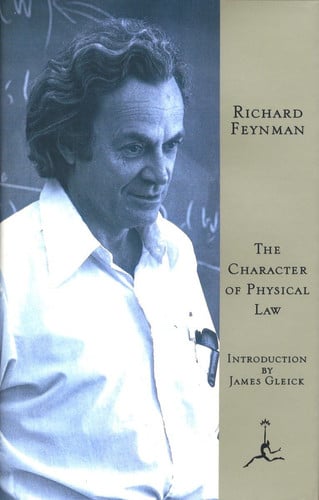
The character of physical law

Feynman, Richard P.
Like any set of oral reflections, The Character of Physical Law has special value as a demonstration of the mind in action. The reader is particularly lucky in Richard Feynman - one of the most eminent and imaginative modern physicists. In these Messenger Lectures, originally delivered at Cornell University and recorded for television by the BBC, Richard Feynman offers an overview of selected physical laws and gathers their common features into one broad principle of invariance. He maintains at the outset that the importance of a physical law is not ''how clever we are to have found it out - but . . . how clever nature is to pay attention to it'' and steers his discussions toward a final exposition of the elegance and simplicity of all scientific laws. Rather than an essay on the most significant achievements in modern science, The Character of Physical Law is a statement of what is most remarkable in nature. Feynman's enlightened approach, his wit, and his enthusiasm make this a memorable exposition of the scientist's craft. The law of gravitation is the author's principal example. Relating the details of its discovery and stressing its mathematical character, he uses it to demonstrate the essential interaction of mathematics and physics. He views mathematics as the key to any system of scientific laws, suggesting that if it were possible to fill out the structure of scientific theory completely, the result would be an integrated set of mathematical axioms. The principles of conservation, symmetry, and time irreversibility are then considered in relation to developments in classical and modern physics, and in his final lecture, Feynman develops his own analysis of the process and future of scientific discovery.
Modern Library 1994-11-08 167 pages

Before the Storm Barry Goldwater and the Unmaking of the American Consensus

Rick Perlstein
Acclaimed historian Rick Perlstein chronicles the rise of the conservative movement in the liberal 1960s. At the heart of the story is Barry Goldwater, the renegade Repulican from Arizona who loathed federal government, despised liberals and mocked peaceful coexistence with the USSR. Perlstein's narrative shines a light on a whole world of conservatives and their antagonists, including William F. Buckley, Nelson Rockefeller and Bill Moyers. Vividly written, Before the Storm is an essential book about the 1960s. When Before the Storm was originally published, it caused a critical outburst and went on to win the 2001 Los Angeles Times Book Prize for History. Telling the tale of the Goldwater campaign and the rise of the conservative movement in the liberal 1060s, it was a tale that - until this book - had never been told. Before the Storm is smart and lively, and the description is delightfully thick, writes Louis Menand of the New Yorker. The point of Rick Perlstein's animated re-creation of the Goldwater campaign is that Barry Goldwater is as much a man of the 1960s as Abbie Hoffman or Malcolm X, and, what's more, his shadow looms a good deal larger than theirs.
ReadHowYouWant.com, Limited 2011-04-25 1208 pages

The coming anarchy: shattering the dreams of the post Cold War

Kaplan, Robert D.
Robert Kaplan, bestselling author of Balkan Ghosts , offers up scrupulous, far-ranging insights on the world to come in a spirited, rousing, and provocative book that has earned a place at the top of the reading lists of the world's policy makers. The end of the Cold War has not ushered in the global peace and prosperity that many had anticipated. Volatile new democracies in Eastern Europe, fierce tribalism in Africa, civil war and ethnic violence in the Near East, and widespread famine and disease—not to mention the brutal rift developing as wealthy nations reap the benefits of seemingly boundless technology while other parts of the world slide into chaos—are among the issues Kaplan identifies as the most important for charting the future of geopolitics. Historical antecedents in Gibbon's Decline and Fall and in the legacies of statesmen such as Henry Kissinger contribute to this bracingly prophetic framework for addressing the new global reality. Bold, erudite, and profoundly important, The Coming Anarchy is a compelling must-read by one of today's most penetrating writers and provocative minds.
Vintage Books 2000 198 pages

Better together: restoring the American community

Putnam, Robert D.
In his acclaimed bestselling book, Bowling Alone: The Collapse and Revival of American Community , Robert Putnam described a thirty-year decline in America's social institutions. The book ended with the hope that new forms of social connection might be invented in order to revive our communities. In Better Together , Putnam and longtime civic activist Lewis Feldstein describe some of the diverse locations and most compelling ways in which civic renewal is taking place today. In response to civic crises and local problems, they say, hardworking, committed people are reweaving the social fabric all across America, often in innovative ways that may turn out to be appropriate for the twenty-first century. Better Together is a book of stories about people who are building communities to solve specific problems. The examples Putnam and Feldstein describe span the country from big cities such as Philadelphia, San Francisco, and Chicago to the Los Angeles suburbs, small Mississippi and Wisconsin towns, and quiet rural areas. The projects range from the strictly local to that of the men and women of UPS, who cover the nation. Bowling Alone looked at America from a broad and general perspective. Better Together takes us into Catherine Flannery's Roxbury, Massachusetts, living room, a UPS loading dock in Greensboro, North Carolina, a Philadelphia classroom, the Portsmouth, New Hampshire, naval shipyard, and a Bay Area Web site. We meet activists driven by their visions, each of whom has chosen to succeed by building community: Mexican Americans in the Rio Grande Valley who want paved roads, running water, and decent schools; Harvard University clerical workers searching for respect and improved working conditions; Waupun, Wisconsin, schoolchildren organizing to improve safety at a local railroad crossing; and merchants in Tupelo, Mississippi, joining with farmers to improve their economic status. As the stories in Better Together demonstrate, bringing people together by building on personal relationships remains one of the most effective strategies to enhance America's social health.
Simon & Schuster 2003 318 pages

Lone Star Rising Lyndon Johnson and His Times, 1908-1960

Robert Dallek
Like other great figures of 20th-century American politics, Lyndon Johnson defies easy understanding. An unrivaled master of vote swapping, back room deals, and election-day skulduggery, he was nevertheless an outspoken New Dealer with a genuine commitment to the poor and the underprivileged. And he was also a representative figure. Johnson's career speaks volumes about American politics, foreign policy, and business in the forty years after 1930. As Charles de Gaulle said when he came to JFK's funeral: Kennedy was America's mask, but this man Johnson is the country's real face.In Lone Star Rising, Robert Dallek, winner of the prestigious Bancroft Prize for his study of Franklin D. Roosevelt, turns to this fascinating "sinner and saint" to offer a brilliant, definitive portrait of a great American politician. Based on seven years of research in over 450 manuscript collections and oral histories, as well as numerous personal interviews, this first book in a two-volume biography follows Johnson's life from his childhood to his election as vice-president under Kennedy. We see Johnson, the twenty-three-year-old aide to a pampered millionaire Representative, become a de facto Congressman, and at age twenty-eight the country's best state director of the National Youth Administration. We see Johnson, the "human dynamo," first in the House and then in the Senate, whirl his way through sixteen- and eighteen-hour days, talking, urging, demanding, reaching for influence and power, in an uncommonly successful congressional career.Dallek pays full due to Johnson's failings--his obsession with being top dog, his willingness to cut corners, and worse, to get there--but he also illuminates Johnson's sheer brilliance as a politician, the high regard in which key members of the New Deal, including FDR, held him, and his genuine concern for minorities and the downtrodden.No president in American history is currently less admired than Lyndon Johnson. Bitter memories of Vietnam have sent Johnson's reputation into free fall, and recent biographies have painted him as a scoundrel who did more harm than good. Lone Star Rising attempts to strike a balance. It does not neglect the tawdry side of Johnson's political career, including much that is revealed for the first time. But it also reminds us that Lyndon Johnson was a man of exceptional vision, who from early in his career worked to bring the South into the mainstream of American economic and political life, to give the disadvantaged a decent chance, and to end racial segregation for the well-being of the nation.
Oxford University Press, USA 1991 721 pages

All-Night Party

R.L. Stine
Fear Street -- Where Your Worst Nightmares Live ... It's Cindy's birthday, and her friends are throwing her a surprise party on Fire Island. It's a private party -- no parents, no cops ... in fact, no one around for miles. Except there's a madman loose on the island. A murderer who quietly crashes the party. And he wants to dance with the birthday girl ... Annotation. Fear Street -- Where Your Worst Nightmares Live ... It's Cindy's birthday, and her friends are throwing her a surprise party on Fire Island. It's a private party -- no parents, no cops ... in fact, no one around for miles. Except there's a madman loose on the island. A murderer who quietly crashes the party. And he wants to dance with the birthday girl.
Simon and Schuster 2005-06 160 pages

Escape from HorrorLand

Stine, R. L.
Not long ago, Luke and Lizzy Morris dared to spend one scary day at HorrorLand. They thought that NOTHING could lure them back, but their travel plans are about to change... Who - or WHAT - is summoning ordinary kids to HorrorLand and trapping them there? Luke and Lizzy are determined to find out. They've gathered every clue, and even launched their own secret website at EscapeHorrorLand.com. This time, Luke and Lizzy are prepared to face any danger - and any villain. Or so they thought...
Scholastic 2009 160 pages

Slappy, beware!

Stine, R. L.
"The untold, true story of the world's most villainous dummy! In the Goosebumps universe, there is no villain more feared than Slappy. Endowed by his magician creator with devious powers, Slappy has only one mission in his tiny, deranged mind: Do evil every day, all day. But he may have met his match in the Carlton family. Each of Slappy's attempts to ruin their lives ends in disaster, and the dummy starts to panic. Will Slappy's scariest day yet bring an end to his reign of terror?"--
Scholastic, Inc 2022 165 pages