5744 results for "Literature"

Time on Fire My Comedy of Terrors

Evan Handler
From the moment a doctor who looks like Richard Nixon informs him he has leukemia, Evan Handler sweeps us into the experience of his illnessand recoveryspinning a delicate balance of humor and wisdom, anger and hope, that redefines the literature on facing adversity. Evan Handler has played leading roles in seven broadway productions. This book is based on his hit off-Broadway play, which THE NEW YORK TIMES called laceratingly funny and self-revealing.
Henry Holt and Company 1997-03-15 288 pages

How to be bored

Hoffman, Eva
Lethargic inactivity can be debilitating and depressing; but for those living in the modern world, the pendulum has swung far in the other direction. We live in a hectic, hyperactive, over-stimulated age. Excessive busyness and overfilled schedules are the norm, as are their effects on our mental and emotional lives. How might we address and counter such problems, for the sake of experiencing our lives more fully? In How to Be Bored , Eva Hoffman explores the importance we place on success, high level function, effectiveness and alertness in today's competitive society. In a world where it is almost impossible to be idle, she draws upon lessons from history, literature and psychotherapy to help us embrace boredom and find meaning in doing nothing - to appreciate real reflection and enjoy the richness of our inner and external lives.
Macmillan 2016 144 pages

Leadership in the wilderness: authority and anarchy in the book of Numbers

Brown, Erica
Confidently navigating the ancient wilderness, master educator Erica Brown guides readers through the tumultuous events of the book of Numbers in search of the key to successful leadership. How might a leader overcome unrest? How to contend with external challenges and internal doubts? And how to rekindle the faith of a people who have all but given up? Bringing together Bible and commentary, literature and philosophy, travelogues and corporate manuals, Leadership in the Wilderness presents a guide to good government, as relevant today as it was three thousand years ago.
Maggid Books 2013 241 pages

The New Testament and Rabbinic Judaism

David Daube
Among the many in the last century who explored the relationship between the New Testament and rabbinic Judaism, David Daube must certainly be designated as among the pioneers. And in the literature of that exploration, along with works such as Paul and Rabbinic Judaism by W. D. Davies and Joachim Jeremias' Jerusalem in the Time of Jesus, Daube's The New Testament and Rabbinic Judaism must be awarded "classic" status. Whether one is examining the social and religious history behind the New Testament text or analyzing the text itself, The New Testament and Rabbinic Judaism will illumine the interpreter. Daube's work stands on the shoulders of no one, and has itself become a cornerstone for future study in this field. This volume is a must for every library.
Wipf and Stock Publishers 2011-07-01 478 pages

Law and wisdom in the Bible

Daube, David
David Daube (1909-1999) was known for his unique and sophisticated research on Roman law, biblical law, Jewish law, and medical ethics. In his second set of Gifford Lectures presented in April and May 1964, Daube derives from his complex understanding of biblical texts both ancient and contemporary notions of wisdom, justice, and education. His thinking bridges the gap between humanism and religion, especially with regard to Christianity and Judaism. With his sophisticated understanding of Talmudic law and literature, his thinking revolutionized prevailing perceptions about the New Testament
Templeton Press 2010 209 pages

Robert Burns

David Daiches
'In the later twentieth century Robert Burns was sorely in need of commentators to provide fuller analysis of a figure whose cultural reputation too often overshadowed his literary achievement. The brilliance of David Daiches as a literary critic filled much of the gap. His readings are a cornerstone of modern Burns studies.' Gerry Carruthers, Director, Centre for Robert Burns Studies, University of Glasgow An Edinburgh graduate in the 1930s, the early part of David Daiches' long and distinguished academic career was spent in the United States. However, after spells at Chicago and Cornell Universities, in 1951 he returned to Cambridge as a Lecturer in English. Ten years later he chose to leave Cambridge for the new University of Sussex where he was the first Professor and Dean in the School of English Studies. Retiring in 1977, he returned to Edinburgh where he continued to play an exceptionally active role in Scotland's intellectual and cultural life until his death in 2005. A polymath of English letters, Daiches' scholarly interests ranged extremely widely, but in no field is his influence more creative and enduring than in that of Scottish Literature. Our understanding of Scotland's literary culture in the eighteenth century, of Burns, of Scott, of Stevenson and McDiarmid, was transformed by his work. Originally published in 1951, his Robert Burns is a brilliant example of his ground-breaking scholarship and criticism at its most illuminating.
Humming Earth 2009 336 pages

Blood and belief: the circulation of a symbol between Jews and Christians

Biale, David
Ancient biblical Judaism ascribed magical and supernatural properties to blood. Both Rabbinic Judaism and Christianity inherited this attitude toward blood, and adopted, each in its own way, symbolic and spiritualized rituals connected with blood. Throughout the centuries, Judaism and Christianity borrowed beliefs and rituals from one another. Argues that the blood libel emerged as a negative by-product of an increase in popular eucharistic piety. Encouragement for this accusation was provided by the Fourth Lateran Council of 1215, which approved the doctrine of transubstantiation and heightened popular interest in blood, especially Christian blood. The alleged Jewish consumption of Christian blood seemed to prove the dogma of transubstantiation in popular consciousness. In the 19th century the blood libel emerged again in Europe, devoid of its theological underpinning but supplemented with a belief in blood as the bearer of heredity, and hence of the ethnic and racial traits of the person. Academic authorities, from August Rohling to the Nazi Erich Bischof, tried to prove the truth of the blood libel and created the theory of blood - i.e. racial pollution. It was in such a form that blood mysticism was picked up by the Nazis. The revival of the blood libel in the 19th century provoked a wave of literature refuting the accusation. Paradoxically, while Jews were vigorously rejecting the claim that human blood played a role in their rituals, some of them adopted the blood language of modern nationalism, a belief in the nation-making "Jewish blood".
University of California Press 2007-10-23 299 pages

Judgment A Novel

David Bergelson
Never before available in English, Judgment is a work of startling power by David Bergelson, the most celebrated Yiddish prose writer of his era. Originally published in 1929 and set in 1920 during the Russian civil war, Judgment traces the death of the shtetl and the birth of the “new, harsher world” created by the 1917 revolution. Jews and non-Jews smuggle people, goods, and anti-Bolshevik literature back and forth across the new political border. Filipov acts as the arbiter of "judgment" to prisoners in a Bolshevik outpost, who include Spivak, a counterrevolutionary; Lemberger, a pious and wealthy Jew; a seductive woman referred to as "the blonde"; and a memorable cast of smugglers and criminals. Ordinary people, depicted in a grotesque and modernist style—comparable to Isaac Babel’s Red Cavalry —confront the overwhelming forces of history, whose ultimate outcome remains unknown.
Northwestern University Press 2017-09-15 272 pages

Out of the Blue Depression and Human Nature

David B. Cohen
Almost everyone has been touched by at least a mild form of depression, and thus has some sense of what severe depressive illness must be like. In addition to the most serious clinical cases which can lead to institutionalization or even suicide, this book explores the "normal" depression we all experience--the inevitable blues that accompany troubled personal relationships, career setbacks, or the death of a loved one. It provides a compelling treatment of questions about the nature of depression, where it comes from, who's at risk, and what it indicates about human experience. Depression is a highly prevalent health problem, affecting about 11 million Americans every year. Its costs are staggering - $43.7 billion annually in lost productivity, lost income, and increased health care costs. These numbers put depression on a par with heart disease as one of the most expensive diseases in the United States today. But, unlike heart disease, depression is widely misunderstood. About two-thirds of the cases of depression go undiagnosed and untreated. With a compelling mix of information, illustration, and interpretation, David B. Cohen explores the current state of knowledge about depression, including the powerful influence of genetics. In addition to depressive illness, the book deals with related ideas and topics such as mourning, mania, the rhythms of sleep, self concepts, and suicide. Insights from psychology and psychiatry are blended with history, literature, current events, and personal observation, and topped off with a dose of common sense.
W. W. Norton & Company 1995 368 pages

The selected poetry of Dan Pagis

Pagis, Dan
Dan Pagis (1930-1986) spent three of his adolescent years in a Nazi camp before arriving in Palestine in 1946. He became one of the most vibrant voices in modern Israeli poetry and is considered a major world poet of his generation. A master scholar of Hebrew literature, Pagis drew fully on classical texts and infused his poetry with a centuries-old mysticism. Yet he also brought an immediacy and colloquialism to Hebrew poetry. In these superbly translated poems, Dan Pagis's voice can be heard celebrating the human spirit.
University of California Press 1996-10-22 153 pages

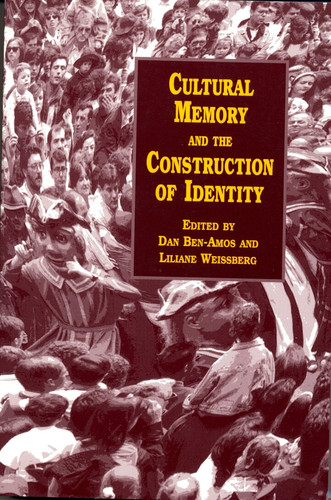
Cultural memory and the construction of identity

Dan Ben-Amos,Liliane Weissberg
This volume explores the dynamics of cultural memory in a variety of contexts. How do we remember persons, objects, events? Memory seems so personal, but, at the same time, it is shaped by collective experience and public representations. Newspapers, television, and even celebrations and festivities mark for us not only who we are, but also who we were and how we lived. Cultural Memory and the Construction of Identity brings together scholars of folklore, literature, history, and communication to explore the dynamics of cultural memory in a variety of contexts. The authors show how memory is shaped and how it operates in uniting society and creating images that attain the value of truth even if they deviate from fact. They point to the relationship between this memory and our notion of "culture." They also discuss this cultural memory on the level of everyday life. Building on research in the field, their contributions clearly show that cultural memory has become the creative invention of the past in service of both the present and an imagined future.
Wayne State University Press 1999 333 pages

The Hebrew Impact On Western Civilization

Runes, Dagobert D.
This scarce antiquarian book is a facsimile reprint of the original. Due to its age, it may contain imperfections such as marks, notations, marginalia and flawed pages. Because we believe this work is culturally important, we have made it available as part of our commitment for protecting, preserving, and promoting the world's literature in affordable, high quality, modern editions that are true to the original work.
Kessinger Publishing, LLC 2010-09-10 354 pages

Jesus the Jewish Theologian

Brad H. Young
Jesus the Jewish Theologian establishes Jesus firmly within the context of first-century Judaism and shows how understanding Jesus' Jewishness is crucial for interpreting the New Testament and for understanding the nature of Christian faith. Insights from Jewish literature, archeology, and tradition help modern readers place Jesus within his original context. Particular attention is given to the Jewish roots of Jesus' teaching concerning the kingdom of God.
Baker Publishing Group 1993-11-01 344 pages

Safe conduct: An autobiography and other writings

Pasternak, Boris Leonidovich
The awarding of the 1958 Nobel Prize for Literature to Boris Pasternak and the subsequent calumny of his fellow citizens in Soviet Russia focused unusual attention on Pasternak's great novel, Dr. Zhivago, and the small body of his other work. At the time, the latter was only available (in any language, as far as is known) in New Directions' Selected Writings of Pasternak, first published in 1949. The 1958 edition was issued with a new introduction by Babette Deutsch under the title of the book's main component, Pasternak's autobiography. Written when he was forty, Safe Conduct puzzled many readers in Russia and when it appeared in English, because its isolated sharp impressions and juxtapositions seem to deny chronology, but at least one critic recognized it as "the most original of autobiographies, employing a new technique of great important." Also included is a group of remarkable short stories, translated by Robert Payne, dealing with the mysteries of life and art, and a selection of the poems that have made Pasternak known, to the few at last, as the "outstanding Russian poet of the century." these are translated by the British Critic and poet C. M. Bowra, and by Miss Deutsch.
New Directions Pub. Corp 1958 254 pages

The ancient rain: poems, 1956-1978

Kaufman, Bob
The Ancient Rain: Poems 1956-1978 is San Francisco poet Bob Kaufman's third collection and his first to be published since the late 1960s. One of the original Beat poets (the coinage "beatnik" is his), Kaufman's work has always been essentially improvisational, often done to jazz accompaniment. And he became something of a legendary figure at the poetry readings in the early days of the San Francisco renaissance of the 1950s. With his extemporaneous technique, akin in many ways to Surrealist automatic writing, he has produced a body of work ranging from a visionary lyricism infused with satirical, almost Dadaistic elements to a prophetic poetry of political and social protest. Born in New Orleans of mixed Black and Jewish parentage, Kaufman was one of fourteen children. During twenty years in the Merchant Marine, he cultivated an intense taste for literature on his long sea voyages. Settling in California, in the '50s, he became active in the burgeoning West Coast literary scene. Disappointment, drugs, and imprisonment led him to take a ten-year vow of complete silence that lasted until 1973. The present volume includes previously uncollected poems written prior to his pledge and newer work composed in the years 1973-1978, before the poet once again lapsed into silence.
New Directions 1981 85 pages

The Century Dictionary And Cyclopedia The Century Dictionary ... Prepared Under The Superintendence Of William Dwight Whitney ... Rev. & Enl. Under The Superintendence Of Benjamin E. Smith

William Dwight Whitney,Benjamin Eli Smith
This extensive dictionary and encyclopedia was overseen by two highly respected scholars of the late 19th century. Its entries cover a wide range of topics, from English language usage and etymology to science, literature, and history. A valuable resource for anyone seeking a comprehensive understanding of the era. This work has been selected by scholars as being culturally important, and is part of the knowledge base of civilization as we know it. This work is in the "public domain in the United States of America, and possibly other nations. Within the United States, you may freely copy and distribute this work, as no entity (individual or corporate) has a copyright on the body of the work. Scholars believe, and we concur, that this work is important enough to be preserved, reproduced, and made generally available to the public. We appreciate your support of the preservation process, and thank you for being an important part of keeping this knowledge alive and relevant.
Creative Media Partners, LLC 2023-07-18 834 pages

The Sacred Fire The Story of Sex in Religion

Ben Zion Goldberg
"There is a huge amount of academic 19th century literature relating to sacred sexuality. However, there are not many books which cover this subject matter for the general reader: this book is one of the few. Goldberg approaches the culturally sensitive issue of the intersection of religion and sex frankly and in some depth. That said, this work has a few problems which need to be kept in mind while reading it. There is not much in the way of apparatus aside from a bibliography: not even the Bible quotes are attributed. Goldberg also invents a number of descriptive passages, particularly in the second section. While these go a long way towards dimensionalizing this material, they include a number of purely speculative details which are not identified as such. Perhaps the best part of this book is the discussion of the evolution of the attitude towards sexuality in Christianity. Goldberg also describes a number of little-known curious cults such as the Russian Skopzi, the mediaeval flagellants, and others. Long out of print, but available used, this book serves as a useful introduction to the subject and sheds light on some little known corners of the subject of sacred sexuality." (Quote from sacred-texts.com) Table of Contents Publisher's Preface; The Erotic Motive In Primitive Religion; Far Away And Long Ago; Primitive Man In Love And Faith; In The Foundry Of The Gods; The Spirit Of Love In God And Man; Love's Hidden Ways; In The Temple Of The Gods; A Day With Baal; A Night With Aphrodite; At A Dionysian Mystery; Twilight With Moloch; The Dance Of The Saktas; In The House Of The Lord; Prologue; Love In The Synagogue; Romance In The Church; Marriage In The Mosque; Longing In The Dark; The Spirit Of Revolt In Religion; Rebels In The Faith; Love The Force Of Rebellion; The Revolt Against Religion; The Revolt Against God; The Revolt A
Forgotten Books 1930 288 pages

Finitude's score: essays for the end of the millennium

Ronell, Avital
"These lit-crit essays are at once spoofable and brilliant".-Esquire. "'Trauma TV' is . . . the most illuminating essay on TV and video ever written".-Artforum. "Ronell is one of the few critical theorists of talent who can write her way out of the hermeticism typically associated with the deconstructionism of Derrida, Blanchot, Nancy, or Lacoue-Labarthe. She jumps between the vulgate of television talk shows and the high theoretical jargon of the academy with the adroitness of a speed-fiend switchboard operator . . . [She is] the reigning queen of termino-millenarianism".-Poetics Today. Suspending the distinction between headline news and high theory, Ronell examines diverse figures of finitude in our modern world: war, guerrilla video, trauma TV, AIDS, music, rumor. Her essays address such questions as: How do rumors kill? How has video become the call of conscience of TV? How have the police come to be everywhere, even when they are not? Is peace possible? Ronell writes to "the community of those who have no community-to those who have known the infiniteness of abandonment". Avital Ronell is also the author of The Telephone Book: Technology, Schizophrenia, Electric Speech (1989) and Crack Wars: Literature, Addiction, Mania (1992), both published by the University of Nebraska Press. She is a professor in and chair of the Department of German and a professor of comparative literature at New York University.
University of Nebraska Press 1994-01-01 368 pages

Failing the future: a dean looks at higher education in the twenty-first century

Kolodny, Annette
Both revealing and compelling, Annette Kolodny’s Failing the Future: A Dean Looks at Higher Education in the Twenty-first Century is drawn from the author’s experience as a distinguished teacher, a prize-winning scholar of American literature, a feminist thinker, and an innovative administrator at a major public university. In chapters that range from the changing structure of the American family and its impact on both curriculum and university benefits policies to recommendations for overhauling the culture of decision making on campus, this former Dean of the College of Humanities at the University of Arizona explores the present state of higher education and offers a sobering view of what lies ahead. In this volume Kolodny explains the reasons for the financial crisis in higher education today and boldly addresses the challenges that remain ignored, including rising birthrates, changing demographics both on campus and across the country, the accelerating globalization of higher education and advanced research, and the necessity for greater interdisciplinarity in undergraduate education. Moreover, while sensitive to the complex burdens placed on faculty today, Kolodny nonetheless reveals how the professoriate has allowed itself to become vulnerable to public misperceptions and to lampooning by the media. Not simply a book about current problems and future challenges, Failing the Future is rich with practical solutions and workable programs for change. Among her many insights, Kolodny offers a thorough defense of the role of tenure and outlines a new set of procedures to ensure its effective implementation; she proposes a structure for an “Antifeminist Intellectual Harassment Policy”; and she provides a checklist of family-sensitive policies universities can offer their staff, faculty, and administrators. Kolodny calls on union leaders, campus communities, policymakers, and the general public to work together in unprecedented partnerships. Her goal, as she states in a closing coda, is to initiate a revitalized conversation about public education. This book should be required reading for all those concerned with the future of higher education in this country—from college trustees to graduate students entering the professoriate, from faculty to university administrators, from officers of campus-based unions to education policymakers.
Duke University Press 1998-03-18 298 pages

Blogistan: the internet and politics in Iran

Sreberny, Annabelle
The protests unleashed by Iran's disputed presidential election in June 2010 brought the Islamic Republic's vigorous cyber culture to the world's attention. Iran has an estimated 700,000 bloggers, and new i media such as Facebook, Twitter and YouTube were thought to have played a key role in spreading news of the protests. The internet is often celebrated as an agent of social change in countries like Iran, but most literature on the subject has struggled to grasp what this new phenomenon actually means. In this work, the authors give a flavour of contemporary Internet culture in Iran and analyse how this new form of communication is affecting the social and political life of the country. Although they warn against stereotyping bloggers as dissidents, they argue that the internet is changing things in ways which neither the government nor the democracy movement could have anticipated. Blogistan offers both a new reading of Iranian politics and a new conceptual framework for understanding the politics of the internet, with implications for the wider Middle East, China and beyond. -- Book cover.
I. B. Tauris, Distributed in the United States and Canada exclusively by Palgrave Macmillan 2010-10-30 211 pages