

676 results for "Biography"

Metropolis: New York as myth, marketplace, and magical land
Using himself as the persona, the author interviews the police commissioner concerning racism and a SoHo dealer on art, invades Brooklyn Mafia dens and a Times Square sex palace, and explores a shelter for the homeless

The art of fiction
James Salter's exalted place in American letters is based largely on the intense admiration of other writers, but his work resonates far beyond the realm of fellow craftsmen, addressing themes--youth, war, erotic love, marriage, life abroad, friendship--that speak to us all. Following the publication of his first novel, Salter left behind a military career of great promise to write full-time and--through decades of searching, exacting work--became one of American literature's master stylists. Only months before he died, at the age of eighty-nine, he agreed to serve as the first Kapnick Writer-in-Residence at the University of Virginia, where he composed and delivered the three lectures presented in this book and introduced by his friend and fellow novelist, National Book Award-winning author John Casey. Salter speaks to us here with an easy intimacy, sharing his unceasing enchantment with the books that made up his reading life, including works by Balzac, Flaubert, Babel (whose prose is "like a handful of radium"), Dreiser, Celine, Faulkner. These talks provide an invaluable opportunity to see the way in which a great writer reads. They also offer a candid look at the writing life--the rejection letters, not one but two negative reviews in the New York Times for the same book, writing in the morning or at night and worrying about money during the long afternoons. Salter raises the question, Why does one write? For wealth? For admiration, or a sense of "importance"? Confronting a blank sheet that always offers too many choices, practicing a vocation that often demands one write instead of live, the answer for Salter was creating a style that captured experience, in a world where anything not written down fades away. -- Amazon.com.

How I became Hettie Jones
Greenwich Village in the 1950s was a haven to which young poets, painters, and jazz musicians flocked. Among them was Hettie Cohen, who'd been born into a middle-class Jewish family in Queens and who'd chosen to cross racial barriers to marry the controversial black poet LeRoi Jones. Theirs was a bohemian life in the awakening East Village of underground publishing and jazz lofts, through which drifted such icons of the generation as Allen Ginsberg, Thelonious Monk, Jack Kerouac, Frank O'Hara, Billie Holiday, James Baldwin, and Franz Kline.

The invisible wall
Rare Book

Paris portraits: stories of Picasso, Matisse, Gertrude Stein, and their circle
In 1906, Harriet Levy was talked into moving to Paris by her friend Alice B. Toklas and suddenly found herself immersed in a strange world peopled by artists who spoke a language she could not understand--a colorful world that she could only remotely observe in black and white. Paris Portraits is a short masterpiece. This sparkling manuscript, long hidden in the archives of the University of California's Bancroft Library, brings to life a vibrant and mythic time and place. Through Harriet's eyes, we circulate among the artists and patrons in the salons of Gertrude and Sarah Stein, overhear conversations between the up-and-coming Matisse and his students, and see Gertrude Stein's reaction when she learns of Picasso putting his hand on Toklas's knee. We're present when, while reading the poetry of Tagore, Harriet looks up and for the first time, sees--really sees and understands with the heart--what Matisse is doing.

The presence
A distinguished poet’s moving memoir of his wife, who died in a car accident in 2005. It is both a record of present grief and a portrait of a marriage that lasted more than fifty years.

Hitler, Stalin, mum and dad: a family memoir of miraculous survival
THE INSTANT SUNDAY TIMES BESTSELLER A TIMES BOOK OF THE YEAR 'Epic, moving and important' ROBERT HARRIS 'A modern classic' OBSERVER 'An unforgettable epic of a book' DAILY MAIL From longstanding political columnist and co[Bokinfo]

Apricots on the Nile: a memoir with recipes
In 1937, five-year-old Colette Rossant arrived in Cairo from Paris with her Egyptian Jewish father and beautiful French mother. When her father dies Colette's flighty mother abandons the little girl to her wealthy grandparents. She soon settles into their luxuriant, food centred lifestyle - spending afternoons in the spice filled kitchen; accompanying her grandmother to the bazaar; and feasting on the delicious Egyptian food. At fifteen Colette is brought back to Paris with her mother, never to see her grandparents again, and only to return to Egypt thirty years later. In this charming, funny, and moving memoir, accompanied by mouth watering recipes, she evokes an Egypt lost, to her and to us, forever. --

A disgraceful affair: Simone de Beauvoir, Jean-Paul Sartre, & Bianca Lamblin
Bianca Bienenfeld was a seventeen-year-old lycee student when she was seduced both intellectually and sexually by her philosophy professor, Simone de Beauvoir, in 1938. The following year de Beauvoir passed Bianca on to her "essential partner", Jean-Paul Sartre. The three formed a menage a trois until 1940, when Bianca was suddenly abandoned by her dual mentors and lovers. Their lack of concern for Bianca's fate as a Jew in occupied France made the abrupt break even more shattering for her. She began to suffer periodic bouts of severe depression linked not only to the Nazi horrors, but to the betrayal by de Beauvoir and Sartre. After World War II, Bianca Bienenfeld (now married to Bernard Lamblin) resumed a platonic friendship with de Beauvoir that lasted more than forty years, but the pain of the old, perturbing affair flooded back when, in 1990, she read de Beauvoir's posthumously published Letters to Sartre and War Journal. The intimate content of these books referred directly to Bianca in a tone of ridicule and contempt, and she finally discovered the full extent of de Beauvoir's deception. Now Bianca explodes with the true story behind her earlier relationship with the high priests of existentialism. Published here in English for the first time, her memoir reveals what it was like to be a third party in the "contingent" affairs of de Beauvoir and Sartre. Bianca's compelling narrative is not written out of revenge or retaliation. Rather, it is an eloquent, candid account of how de Beauvoir and Sartre influenced the shape of her life and how she survived a disgraceful affair that, when broken, almost broke her. Bianca's unique perspective on de Beauvoir and Sartre is the centralfocus of the book, but not the sole one. She writes about her love for her husband Bernard, who helped her recover. She also describes life during the dark times of German occupation, and recounts witnessing the battle of Vercors during the French Resistance. Her well-crafted and poignant memoir will appeal to scholars and general readers alike.

Three worlds: memoirs of an Arab-Jew
"In July 1950, Avi Shlaim, only five, and his family were forced into exile, fleeing from their beloved Iraq into the new state of Israel. Now the rump of a once flourishing community of over 150,000, dating back 2,600 years, has dwindled to single figures. For many, this tells the story of the timeless clash of the Arab and Jewish civilisations, the heroic mission of Zionism to rescue Eastern Jews from their backwards nations, and unceasing persecution as the fate and history of Jewish people. Avi Shlaim tears up this script. His mother had many Muslim friends in Baghdad, but no Zionist ones. The Iraqi Jewish community, once celebrated for its ancient heritage and rich culture, was sprayed with DDT upon arrival in Israel. As anti-Semitism gathered pace in Iraq, the Zionist underground may have inflamed it - deliberately. This memoir celebrates the disappearing heritage of Arab-Jews - caught in the crossfire of secular ideologies."--Amazon.

David Hicks scrapbooks
British designer David Hicks wowed the English decorating world with his bold geometric prints, electrifying color combinations, and quirky mix of antique and contemporary furniture. Thanks to his prodigious talents, his gift for publicity, and his connection to the royal family through his wife, Lady Pamela Mountbatten (cousin of Prince Philip), Hicks attracted an A-list clientele. For decades, Hicks documented every salient moment of his life in scrapbooks, amassing 24 volumes filled with press clippings, invitations, swatches of his signature textiles, sketches of interiors, magazine articles on his projects, and hundreds of photographs, mainly family snapshots but also his own photos of people like Jackie Kennedy, Grace Kelly, and Andy Warhol. Many of the pages, now thumbed and foxed, are laid out in a collage style, and several are embellished with drawings and notes, revealing Hicks's thoughts and sense of whimsy.

The rest of the story: a life completed
"Laurents passed away early in 2011, but not before writing The Rest of the Story, in which he revealed all that had happened in his life since Original Story By, filled with the wisdom he gained in growing older and a new perspective brought on by Laurents' experience of deep personal loss, including the death of his longtime companion, Tom Hatcher"--

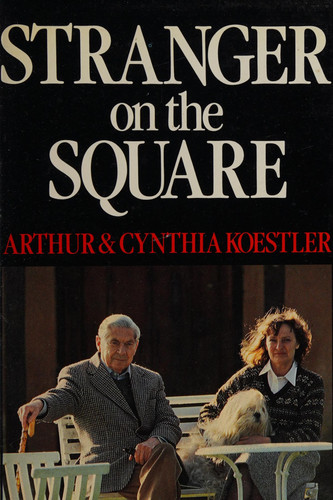
Stranger on the square
The third volume of Arthur Koestler's autobiography covering the years 1940-1956.
The boyhood memoirs of A.E. Hotchner
"Bound together for the first time, these two boyhood memoirs relate A. E. Hotchner's coming of age in the Midwest during the Depression"--Provided by publisher.

Simon Wiesenthal
This first fully documented biography of Simon Wiesenthal, the legendary Nazi hunter, is also a brilliant character study of a man whose life was part invention but wholly dedicated to ensuring both that the Nazis be held responsible for their crimes and that the destruction of European Jewry never be forgotten. Like most Jews in Eastern Europe on the eve of Hitler's invasion of Poland, twenty-four-year-old Simon Wiesenthal did not grasp the nature of the Nazi threat. But six years later, when a skeletal Wiesenthal was liberated from the concentration camp at Mauthausen, he fully fathomed the crimes of the Nazis. Within days he had assembled a list of nearly 150 Nazi war criminals, the first of dozens of such lists he would make over a lifetime as a Nazi hunter. A hero in the eyes of many, Wiesenthal was also attacked for his unrelenting pursuit of the past, when others preferred to forget. For this new biography, rich in newsworthy revelations, historian and journalist Tom Segev has obtained access to Wiesenthal's private papers and to sixteen archives, including records of the U.S., Israeli, Polish, and East German secret services. Segev is able to reveal the intriguing secrets of Wiesenthal's life, including his stunning role in the capture of Adolf Eichmann, his relationship with Israel's Mossad, his controversial investigative techniques, his unlikely friendships with Kurt Waldheim and Albert Speer, and the nature of his rivalry with Elie Wiesel. Segev's challenge in writing this biography was Wiesenthal's own complicated relationship to truth. Wiesenthal told many versions of his life, his suffering in the camps, and his involvement with the arrest of individual Nazis. Segev shows that in order to gain the information he sought and twist the arms of reluctant government figures, Wiesenthal needed to seem more influential than he really was. For two generations of Americans, Simon Wiesenthal was a Jewish superhero--depicted on film by Ben Kingsley and Laurence Olivier--and the muse for a Frederick Forsyth thriller. Now Segev demonstrates that the truth of Wiesenthal's existence is as compelling as the fiction. "Simon Wiesenthal" is an unforgettable life of one of the great men of the twentieth century.

All those mornings . . . at the Post The 20th Century in Sports from Famed Washington Post Columnist Shirley Povich
Shirley Povich was the Dean of American sportswriters. As a columnist for The Washington Post for more than seventyfive years, he was an eyewitness to the most thrilling moments in American sports, including: the legendary 1927 Dempsy-Tunney "long count"; the celebrated 1938 race between Seabiscuit and War Admiral; the 1946 signing of Jackie Robinson by the Brooklyn Dodgers; Don Larsen's perfect game in the 1956 World Series; the Ali-Frazier fight of 1971; and the murder of eleven Israeli athletes at the 1972 Munich Olympics. But Povich's columns were about more than sports; they reflected the dramatic changes in American society over the course of the 20th Century. Driven by a strong sense of social justice, Povich called for the integration of major league baseball in 1939, and twenty years later he was still at it, attacking Washington Redskins owner George Preston Marshall for having an all-white team. For the 100th anniversary of his birth, Povich's children— David, Maury, and Lynn — and his colleague at the Post, former sports editor George Solomon, have pulled together this panoramic collection of Povich's most beloved columns. The result is a front-row seat to the most awe-inspiring sports moments of our American Century.

State of Grace
From the author of the critically acclaimed book The Nightingale Song comes an evocative and personal portrait of America during the time between the Good War and Vietnam. Reviving the powerful themes of courage, manhood, and loss, Robert Timberg returns for his second book with a strikingly personal exploration of the generation that split along the fault line known as Vietnam. Using as a backdrop the New York City sandlot football team he played for after high school, Timberg is able to evoke a devasting period in fine detail and vivid color as he tells the story of a troubled young boy that played running back growing into a strong man that attended the Naval Academy and set out to become a Marine officer.

From that Place and Time A Memoir, 1938-1947
On August 10, 1938, Lucy S. Dawidowicz set sail from New York to Vilna, Poland, to study at the Yiddish Scientific Institute (YIVO). For a year, while she studied the Jewish past, she immersed herself in Vilna's present, getting to know the Jewish rich and poor, witnessing Poland's brutal anti-Semitism. Then she was forced to flee Vilna, just a week before German tanks and troops rumbled into Poland and eventually destroyed this citadel of East European Jewish culture forever. After the war Lucy Dawidowicz again sailed to Europe -- this time to work with Jewish survivors and to identify the remnants of the precious YIVO library of Vilna.

The Progressive Presidents Roosevelt, Wilson, Roosevelt, Johnson
Advocates of a strong versus a weak presidency have struggled throughout American history, but never so fiercely as in the twentieth century, which saw the rise of progressivism. This is the story of four progressive presidents, from the first Roosevelt, who himself brought plenty of backbone to the office, to Woodrow Wilson , who articulated the theory of a progressive presidency, to FDR, who brought it unique power, and, finally, to Lyndon Johnson, who provided perhaps its last great surge in our century. In a time of progressive malaise, it is important to know the history, to see the benefits as well as the liabilities, in the progressive presidential tradition. That is the aim and achievement of this book.
