601 results for "History"

The Hero in History

Sidney Hook
Considered by some the most controversial American philosopher of contemporary times, SIDNEY HOOK (1902-1989) was infamous for the wild swing in his political thought over the course of his career, starting out as a young Marxist before the Great Depression and ending up a vehement anti-Communist in his later years. Hook's conception of history and the individual's impact upon it is the subject of this intriguing work, first published in 1943. Subtitled A Study in Limitation and Possibility, it examines the concept of the "hero" as it relates to leadership in the modern world, the hero as a child of crisis, how the character of rulers affects society, how history swings on the contingent and the unforeseen, and much more. With sections on the Russian revolution and the influence of the hero on democracy, this unexpectedly entertaining book is an enthralling look at the theories that shaped Hook's thought and guided his changes in political alliance.
Cosimo, Inc. 2008-12-01 292 pages

Three Hundred Years of Psychiatry, 1535-1860 A History Presented in Selected English Texts

Richard Hunter,Ida MacAlpine
""Three Hundred Years of Psychiatry, 1535-1860: A History Presented in Selected English Texts"" is a comprehensive book written by Richard Hunter. The book traces the history of psychiatry from the 16th century to the mid-19th century, focusing on the development of psychiatric theories and practices during this period. The author presents a collection of selected English texts that offer a glimpse into the evolution of psychiatric understanding, including the works of prominent figures such as John Locke, William Cullen, and Philippe Pinel. The book is divided into four parts, each representing a distinct period in the history of psychiatry. Part one covers the period from 1535 to 1700, during which time the concept of madness was still closely tied to religious beliefs. Part two covers the period from 1700 to 1800, during which time the focus shifted towards the medicalization of mental illness. Part three covers the period from 1800 to 1850, during which time the first psychiatric institutions were established and the study of mental illness became more scientific in nature. Part four covers the period from 1850 to 1860, during which time new theories of mental illness emerged, including the idea of moral treatment.Throughout the book, the author provides insightful commentary on the texts and their relevance to the broader history of psychiatry. The book is an essential resource for anyone interested in the history of mental health and the evolution of psychiatric theory and practice.This scarce antiquarian book is a facsimile reprint of the old original and may contain some imperfections such as library marks and notations. Because we believe this work is culturally important, we have made it available as part of our commitment for protecting, preserving, and promoting the world's literature in affordable, high quality, modern editions, that are true to their original work.
Literary Licensing, LLC 2013-07 1134 pages

History from loss: a global introduction to histories written from defeat, colonization, exile and imprisonment

Marnie Hughes-Warrington,Daniel Woolf
"History from Loss challenges the common thought that 'history is written by the winners' and explores how history makers in different times and places across the globe have written histories from loss, even when this has come at the threat to their own safety. A distinguished group of historians from around the globe offer an introduction to different history-makers' lives and ideas, and important extracts from their works which highlight various meanings of loss: from physical ailments to social ostracism, exile to imprisonment, and from dispossession to potential execution. Throughout the volume consideration of the information 'bubbles' of different times and places helps to show how information has been weaponised to cause harm. In this way, the text helps to put current debates about the biases and weaponization of platforms such as social media into global and historical perspective. In combination, the chapters build a picture of history from loss which is global, sustained, and anything but a simple mirror of history made by victors. The volume also includes an Introduction and Afterword which draw out the key meanings of history from loss, and which offer ideas for further exploration. History from Loss provides an invaluable resource for students, teachers, and general readers who wish to put current debates on bias, the politicization of history, and threats to history makers into global and historical perspective"--
Routledge 2023 250 pages

The Jewish past revisited: reflections on modern Jewish historians

David G. Myers,David N. Myers,Sady and Ludwig Kahn Professor of Jewish History David N Myers,David B. Ruderman,Rabbi David B Ruderman, PhD
In this new collection of essays, contemporary historians examine the ways earlier historians have framed, written, and "made" the Jewish past. Probing the ideology and methodology of their professional predecessors, American and Israeli historians offer new perspectives on some of the central figures of twentieth-century Jewish historiography, including Gershom Scholem, S. D. Goitein, Yitzhak Baer, Elias Bickerman, and Cecil Roth, as well as the Israeli "New Historians." Through their critical examinations of the construction of the Jewish past, the contributors to this volume develop important insights into current attitudes toward the dominant canons and ideals of historical scholarship and the future of historiography. They shine new light on the formation of a historical worldview and the "making" of history.
Yale University Press 1998 244 pages

Sharing the burden: Rabbi Simhah Zissel Ziv and the path of musar

Claussen, Geoffrey D.
"Sharing the Burden analyzes the rich moral traditions of the nineteenth-century Musar movement, an Eastern European Jewish movement focused on the development of moral character. Geoffrey D. Claussen focuses on that movement's leading moral theorist, Rabbi Simḥah Zissel Ziv (1824-1898), the founder of the first Musar movement yeshiva and the first traditionalist institution in Eastern Europe that included general studies in its curriculum. Simḥah Zissel offered a unique and compelling voice within the Musar movement, joining traditionalism with a program for contemplative practice and an interest in non-Jewish philosophy. His thought was also distinguished by its demanding moral vision, oriented around an ideal of compassionately loving one's fellow as oneself and an acknowledgment of the difficulties of moral change. Drawing on Simḥah Zissel's writings and bringing his approach into dialogue with other models of ethics, Claussen explores Simḥah Zissel's Jewish virtue ethics and evaluates its strengths and weaknesses. The result is a volume that will expose readers to a fascinating and important voice in the history of modern Jewish ethics and spirituality"--Back cover.
State University of New York Press 2015-09-11 245 pages

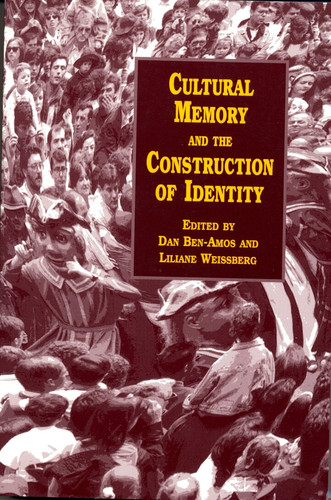
Cultural memory and the construction of identity

Dan Ben-Amos,Liliane Weissberg
This volume explores the dynamics of cultural memory in a variety of contexts. How do we remember persons, objects, events? Memory seems so personal, but, at the same time, it is shaped by collective experience and public representations. Newspapers, television, and even celebrations and festivities mark for us not only who we are, but also who we were and how we lived. Cultural Memory and the Construction of Identity brings together scholars of folklore, literature, history, and communication to explore the dynamics of cultural memory in a variety of contexts. The authors show how memory is shaped and how it operates in uniting society and creating images that attain the value of truth even if they deviate from fact. They point to the relationship between this memory and our notion of "culture." They also discuss this cultural memory on the level of everyday life. Building on research in the field, their contributions clearly show that cultural memory has become the creative invention of the past in service of both the present and an imagined future.
Wayne State University Press 1999 333 pages

Spinoza's Short Treatise on God, Man, and His Well-Being Translated and Edited, with an Introduction and Commentary and a Life of Spinoza (Classic Reprint)

Benedictus de Spinoza
Excerpt from Spinoza's Short Treatise on God, Man, and His Well-Being: Translated and Edited, With an Introduction and Commentary and a Life of Spinoza Jewish history and jewish life, and have devoted more attention to Manasseh ben Israel than he has so far received in this connection. It has not been thought necessary to give detailed references to authorities, because the earliest biographies and all the available documents relating to Spinoza have been edited by Prof. Freudenthal in a single volume under the title of Die Lebensgeschichte Spinozas, and the evidence can easily be found there. For the general history of the period I consulted Motley, Blok, and the Cambridge Modern History and Graetz, for the history of the Jews. About the Publisher Forgotten Books publishes hundreds of thousands of rare and classic books. Find more at www.forgottenbooks.com This book is a reproduction of an important historical work. Forgotten Books uses state-of-the-art technology to digitally reconstruct the work, preserving the original format whilst repairing imperfections present in the aged copy. In rare cases, an imperfection in the original, such as a blemish or missing page, may be replicated in our edition. We do, however, repair the vast majority of imperfections successfully; any imperfections that remain are intentionally left to preserve the state of such historical works.
FB&C Limited 2016-10-12 392 pages

Counterfactual thought experiments in world politics: logical, methodological, and psychological perspectives

Philip Eyrikson Tetlock,Aaron Belkin
Political scientists often ask themselves what might have been if history had unfolded differently: if Stalin had been ousted as General Party Secretary or if the United States had not dropped the bomb on Japan. Although scholars sometimes scoff at applying hypothetical reasoning to world politics, the contributors to this volume--including James Fearon, Richard Lebow, Margaret Levi, Bruce Russett, and Barry Weingast--find such counterfactual conjectures not only useful, but necessary for drawing causal inferences from historical data. Given the importance of counterfactuals, it is perhaps surprising that we lack standards for evaluating them. To fill this gap, Philip Tetlock and Aaron Belkin propose a set of criteria for distinguishing plausible from implausible counterfactual conjectures across a wide range of applications. The contributors to this volume make use of these and other criteria to evaluate counterfactuals that emerge in diverse methodological contexts including comparative case studies, game theory, and statistical analysis. Taken together, these essays go a long way toward establishing a more nuanced and rigorous framework for assessing counterfactual arguments about world politics in particular and about the social sciences more broadly.
Princeton University Press 1996 344 pages

The Growth of Philosophic Radicalism

Elie Halevy
2013 Reprint of 1928 Edition. Full facsimile of the original edition, not reproduced with Optical Recognition Software. This is still one of the best discussions of the 19th century Utilitarian movement in England-the rise of the Benthamites and the conflict between the growing economic philosophy and older philosophies that emphasized human and social values. Halevy discusses Locke, Newton, Gay, Hartley, Hume, Bentham, Adam Smith, Burke, Godwin, Malthus, James Mill, Ricardo, Grote and others. Remains a standard work to this day.
Martino Fine Books 2013 576 pages

Ars erotica: sex and somaesthetics in the classical arts of love

Shusterman, Richard
"The term ars erotica refers to the styles and techniques of lovemaking with the honorific title of art. But in what sense are these practices artistic and how do they contribute to the aesthetics and ethics of self-cultivation in the art of living? In this book, Richard Shusterman offers a critical, comparative analysis of the erotic theories proposed by the most influential premodern cultural traditions that shaped our contemporary world. Beginning with ancient Greece, whose god of desiring love gave eroticism its name, Shusterman examines the Judaeo-Christian biblical tradition and the classical erotic theories of Chinese, Indian, Islamic, and Japanese cultures, before concluding with medieval and Renaissance Europe. His exploration of their errors and insights shows how we could improve the quality of life and love today. By using the engine of eros to cultivate qualities of sensitivity, grace, skill, and self-mastery, we can reimagine a richer, more positive vision of sex education"--
Cambridge University Press 2021-03-25 420 pages

Ars erotica: sex and somaesthetics in the classical arts of love

Shusterman, Richard
"The term ars erotica refers to the styles and techniques of lovemaking with the honorific title of art. But in what sense are these practices artistic and how do they contribute to the aesthetics and ethics of self-cultivation in the art of living? In this book, Richard Shusterman offers a critical, comparative analysis of the erotic theories proposed by the most influential premodern cultural traditions that shaped our contemporary world. Beginning with ancient Greece, whose god of desiring love gave eroticism its name, Shusterman examines the Judaeo-Christian biblical tradition and the classical erotic theories of Chinese, Indian, Islamic, and Japanese cultures, before concluding with medieval and Renaissance Europe. His exploration of their errors and insights shows how we could improve the quality of life and love today. By using the engine of eros to cultivate qualities of sensitivity, grace, skill, and self-mastery, we can reimagine a richer, more positive vision of sex education"--
Cambridge University Press 2021 420 pages

On the process of civilisation: sociogenetic and psychogenetic investigations

Elias, Norbert
This is Volume 3 in the "Collected Works of Norbert Elias", translated by Edmund Jephcott. Recognised as one of the most important works of sociology in the last century, "On the Process of Civilisation" has been influential and widely discussed across the whole range of the humanities and social sciences. This sumptuous new edition, completely revised with many corrections and clarifications, includes colour plates of all the 13 drawings from "Das Mittelaterliche Hausbuch" to which Elias refers in his famous discussion of 'Scenes from the life of a knight'. Beginning with his celebrated study of the changing standards of behaviour of the secular upper classes in Western Europe since the Middle Ages, Elias demonstrates how 'psychological' changes in habitus and emotion management were linked to wider transformations in power relations, especially the monopolisation of violence and taxation by more increasingly effective state apparatuses.
University College Dublin Press 2012 654 pages

Alfred Tarski and the Vienna Circle: Austro-Polish Connections in Logical Empiricism

Jan Wolenski,Eckehart Köhler
The larger part of Yearbook 6 of the Institute Vienna Circle constitutes the proceedings of a symposium on Alfred Tarski and his influence on and interchanges with the Vienna Circle, especially those on and with Rudolf Carnap and Kurt Gödel. It is the first time that this topic has been treated on such a scale and in such depth. Attention is mainly paid to the origins, development and subsequent role of Tarski's definition of truth. Some contributions are primarily historical, others analyze logical aspects of the concept of truth. Contributors include Anita and Saul Feferman, Jan Wolenski, Jan Tarski and Hans Sluga. Several Polish logicians contributed: Gzegorczyk, Wójcicki, Murawski and Rojszczak. The volume presents entirely new biographical material on Tarski, both from his Polish period and on his influential career in the United States: at Harvard, in Princeton, at Hunter, and at the University of California at Berkeley. The high point of the analysis involves Tarski's influence on Carnap's evolution from a narrow syntactical view of language, to the ontologically more sophisticated but more controversial semantical view. Another highlight involves the interchange between Tarski and Gödel on the connection between truth and proof and on the nature of metalanguages. The concluding part of Yearbook 6 includes documentation, book reviews and a summary of current activities of the Institute Vienna Circle. Jan Tarski introduces letters written by his father to Gödel; Paolo Parrini reports on the Vienna Circle's influence in Italy; several reviews cover recent books on logical empiricism, on Gödel, on cosmology, on holistic approaches in Germany, and on Mauthner.
Springer 2013-01-12 360 pages

Scriptural vitality: rethinking philology and hermeneutics

Najman, Hindy
"Scriptural Vitality challenges the view that the Persian and Hellenistic periods constitute a time of decay, a period of 'late Judaism', languishing between an original, vibrant Judaism and the birth of Christianity. Instead, Hindy Najman argues that the Second Temple period was one of untethered creativity and poetic imagination, of dynamism exemplified through philosophical translation, poetic composition, and a convergence of ancient Mediterranean cultures that gave birth to hermeneutic innovation. Building on Nietzsche's critique of classical philology and drawing on new ways of reading the Dead Sea Scrolls, the author carries out a radical rethinking of biblical studies. Instead of seeking to reconstruct the original text and to find its original author or at least the original context of its production, Najman celebrates textual pluriformity and transformation, tracing ways in which texts and meanings proliferated within interpretive communities through new performances and fresh articulations of the past. Engaging with thinkers such as Friedrich Schlegel and Peter Szondi, whom biblicists have rarely considered, biblical philology is reimagined as the forward-moving study of the poetic processes by which Jewish communities re-created their past and revitalized their present. The Second Temple period emerges as a golden age of creativity, whose traces may still be discerned in Judaism and Christianity today." --
Oxford University Press 2025 193 pages