339 results for "Innovation"

Cognitive complications: epistemology in pragmatic perspective

Rescher, Nicholas
The prime intent of this work is one of innovation. Nicholas Rescher addresses issues that are under-examined in the present state of discussion, their inherent interest notwithstanding. The linking thread of these investigations is their pragmatic dimension, inherent in the idea that rational inquiry is itself a practice - albeit one that functions in the ideationally cognitive rather than physically manipulative realm. As a practice, it has its aims and functions that in their turn provide for the standards of adequacy and efficacy that establish the criteriological norms of our cognitive proceedings. Written for students and scholars of philosophy and of information theory
Lexington Books 2015-10-08 213 pages

Jane's Career A Story of Jamaica

H. G. De Lisser
Jane's Career: A Story of Jamaica (1913) is a novel by H. G. de Lisser. Born and raised in Jamaica, H. G. de Lisser was one of the leading Caribbean writers of the early twentieth century. Concerned with issues of race, urban life, and modernization, de Lisser dedicated his career to representing the lives and concerns of poor and middle-class Jamaicans. In Jane's Career: A Story of Jamaica , the first West Indian novel to feature a Black protagonist, de Lisser captures the hope and struggle of a young woman leaving home for the first time. "'Jane,' he continued impressively after a pause, 'Kingston is a very big an' wicked city, an' a young girl like you, who de Lord has blessed wid a good figure an' a face, must be careful not to keep bad company.'" Preparing to send young Jane off to the Jamaican capital, village elder Daddy Buckram attempts to offer her advice on how to keep herself safe from Satan and sinners alike. Despite his serious tone and gloomy portrait of urban life, all Jane can think of is the wonder and excitement waiting for her in Kingston. Raised in the countryside, brought up in a conservative Christian family, Jane sees her new job as a means of achieving independence and establishing her own identity as a proud black woman, of forging her own path in a new, modern Jamaica. In spite of her dreams, however, Jane finds herself subjected to the cruelties of her employer Mrs. Mason, who threatens to send a letter to her parents alleging all sorts of imagined misdeeds. Through it all, she tries to maintain a sense of pride, hopeful that hard work--and even romance--will set her free. This edition of H. G. de Lisser's Jane's Career: A Story of Jamaica is a classic of Jamaican literature reimagined for modern readers. Since our inception in 2020, Mint Editions has kept sustainability and innovation at the forefront of our mission. Each and every Mint Edition title gets a fresh, professionally typeset manuscript and a dazzling new cover, all while maintaining the integrity of the original book. With thousands of titles in our collection, we aim to spotlight diverse public domain works to help them find modern audiences. Mint Editions celebrates a breadth of literary works, curated from both canonical and overlooked classics from writers around the globe.
West Margin Press 2021-05 152 pages

Tacitus Agricolae and Germania (Classic Reprint)

Alfred Gudeman
Excerpt from Tacitus Agricolae and Germania The innovation of superimposing the modern upon the ancient map, designed to obviate the frequent necessity or expediency of consulting two maps, will, I hope, commend itself to teachers and students alike. About the Publisher Forgotten Books publishes hundreds of thousands of rare and classic books. Find more at www.forgottenbooks.com This book is a reproduction of an important historical work. Forgotten Books uses state-of-the-art technology to digitally reconstruct the work, preserving the original format whilst repairing imperfections present in the aged copy. In rare cases, an imperfection in the original, such as a blemish or missing page, may be replicated in our edition. We do, however, repair the vast majority of imperfections successfully; any imperfections that remain are intentionally left to preserve the state of such historical works.
Fb&c Limited 2018-03-19 386 pages

The Twelfth Hour

Ada Leverson
The Twelfth Hour (1907) is a novel by Ada Leverson. Having established herself as a journalist and short story writer, Leverson published her debut novel to moderate acclaim. Entertaining and effortlessly witty, Leverson's prose paints a stunning portrait of the Edwardian era, a time when hope and relative peace proved prosperous for many. Often compared to her close friend Oscar Wilde, Leverson, a pioneering Jewish woman, remains a unique and refreshing voice in English literature. Felicity, Sylvia, and Savile Crofton all feel the pressure placed on upper-class youths to marry wisely. At 25, Felicity appears to have found herself a good husband, a man of wealth and social standing who on closer appearance seems more interested in leisure than love. Determined not to fall into a similarly unhappy marriage, her 20-year-old sister Sylvia hopes to thwart her father's wish that she marry millionaire Mr. Ridokanski. Although he is only 16, Eton student Savile is deeply in love with a famous opera singer--from a distance--but also feels obliged to entertain the affections of Dolly Clive, a girl his own age. Finding company in their own unique miseries of the heart, the Crofton siblings hatch a plan to achieve happiness for themselves, satisfaction for their father, and whatever it is young people are meant to owe to society. The Twelfth Hour is a humorous tale of romance and desire from Ada Leverson, an underappreciated novelist of the Edwardian era. This edition of Ada Leverson's The Twelfth Hour is a classic work of British literature reimagined for modern readers. Since our inception in 2020, Mint Editions has kept sustainability and innovation at the forefront of our mission. Each and every Mint Edition title gets a fresh, professionally typeset manuscript and a dazzling new cover, all while maintaining the integrity of the original book. With thousands of titles in our collection, we aim to spotlight diverse public domain works to help them find modern audiences. Mint Editions celebrates a breadth of literary works, curated from both canonical and overlooked classics from writers around the globe.
West Margin Press 2021-05 170 pages

Western Culture in Eastern Lands A Comparison of the Methods Adopted by England and Russia in the Middle East

Ármin Vámbéry
Excerpt from Western Culture in Eastern Lands: A Comparison of the Methods Adopted by England and Russia in the Middle East During the many years that I have been engaged in studying the political and cultural questions of Inner Asia, it has often been laid to my charge that, in my criticism and appreciation of the two chief factors of our civilising influence in the East, I have not taken up a purely objective standpoint, and that, because of my partiality to the one, I have not been quite fair to the other. In Europe the prevailing idea is that the Russians, who in many respects are themselves still semi-Asiatic, are better fitted to undertake the civilisation of Asia, and will be more likely to bring about the transition from one sphere of action to another, than the English, the accomplished representatives of Western culture, who lack the necessary pliability, and whose stiff, proud bearing is supposed to be detrimental to the work of transformation. To prove the erroneousness of this view, and also to defend myself against the accusation of an unjustifiable partiality, these pages have been written. The comparative survey of the various innovations and reforms introduced by Russia and by England respectively, which I have endeavoured to give, will convince the reader that, in forming my conclusions, I have not been guided by personal motives, but that they are the outcome of a close investigation of what has actually been done by our two Culture-bearers. About the Publisher Forgotten Books publishes hundreds of thousands of rare and classic books. Find more at www.forgottenbooks.com This book is a reproduction of an important historical work. Forgotten Books uses state-of-the-art technology to digitally reconstruct the work, preserving the original format whilst repairing imperfections present in the aged copy. In rare cases, an imperfection in the original, such as a blemish or missing page, may be replicated in our edition. We do, however, repair the vast majority of imperfections successfully; any imperfections that remain are intentionally left to preserve the state of such historical works.
Fb&c Limited 2015-06-25 424 pages

Conflict and consensus: a general theory of collective decisions

Moscovici, Serge
This book presents a bold new theory of the processes of collective decision-making that draws on theoretical influences ranging from group decision theory through to the authors' own social representations theory. Moscovici and Doise offer a novel analysis of group conflict and the construction of consensus to produce a general theory of collective decisions. Going beyond the traditional view that compromise is a negative process where group members merely comply in order to sustain cohesion, the authors argue that the conflict at the root of group decisions can be a positive force leading to changes in opinion and to innovation. Their theoretical framework is illustrated in depth with numerous empirical investigations fro
Sage Publications 1994-09-23 214 pages

Jews and their Roman rivals: pagan Rome's challenge to Israel

Berthelot, Katell
"Across almost the entire expanse of Jewish history, Jews have had to adjust to being ruled by empires. In antiquity alone Jews lived under a succession of imperial powers - Assyrian, Babylonian, Persian, and Seleucid - before having to deal with the Romans. Judaism (of course) was shaped by each successive encounter with an imperial power. But as Katell Berthelot argues in this book, Rome and Roman imperialism presented Jews with unique ideological challenges, and compelled Jews to rethink key aspects of their own self-definition. Long before Rome became Christian, Jews recognized pagan Romans as unprecedented rivals because of some striking similarities between the two peoples. Previously Jews were ruled by empires associated with kingdoms and kings. By contrast, "Rome" was first and foremost a city and a people - and Romans thought of their city and themselves as a people in ways uncomfortably close to the ways Jews defined themselves: as an Israelite people tied to a capital city, Jerusalem. Moreover both Romans and Jews conceived of themselves as a pious people with a divine calling; both thought they possessed the most perfect laws ever written; and both believed themselves to be entrusted with a universal mission that implied bringing peace to the world. This was too close for comfort. The disturbingly close parallels led some Jews to feel that Rome was in fact trying to take Israel's place in God's plan for the world. Revealingly, the ancient rabbis depicted this rivalry by turning to the famous biblical story of the sibling rivals Jacob and Esau, associating the Jews with the former and the Romans with the latter. The perceived rivalry led to a series of innovations in Jewish self-perceptions in late antiquity in several areas that Berthelot will discuss in a series of book chapters: innovations in Jewish understandings of power, citizenship (or membership in a people), and law. Berthelot argues that in some cases the Jewish sources imitate or mimic Roman representations (of, e.g. legal thinking and practice), and in other cases propose a countermodel"--
Princeton University Press 2021 519 pages

The genesis of the naval profession

Elias, Norbert
Drawn largely from unpublished manuscripts, this compilation illustrates Norbert Elias' theory that the emergence of the professional naval officer in Great Britain was related both to the necessities of naval warfare and to the structure of society on land. Specifically, the innovation of the rank of midshipman meant that the British were able to mitigate the impact of social barriers between officers and ratings and gradually merge the two hierarchies.
University College Dublin Press 2007 172 pages

The tradition of Western music

Abraham, Gerald
In The Tradition of Western Music, Gerald Abraham distills his Ernest Bloch Lectures at Berkeley into a sweeping meditation on how music both embodies and transforms cultural life. Rather than treating tradition as “the dead hand of the past,” Abraham frames it as a dynamic process: a living, evolving dialogue between communal memory, individual creativity, and shifting historical circumstances. Across essays on musical language, social forces, and the balance of continuity and innovation, he asks why certain traditions persist while others wither, and how composers from Luther to Bach, Berlioz, and Mussorgsky stand within—and sometimes against—their inherited legacies. The book insists that the history of Western music is never just a chronicle of works but a record of responses, reinterpretations, and constant change. Abraham interweaves studies of plainsong, chorales, folk traditions, and modern performance practices with broader reflections on nationalism, cross-cultural exchange, and the effects of religion, politics, and technology on musical form. Written in an accessible yet scholarly style, The Tradition of Western Music offers students, performers, and general readers alike an interpretive guide to understanding how music has functioned as both a shared cultural inheritance and a site of perpetual renewal. This title is part of UC Press's Voices Revived program, which commemorates University of California Press’s mission to seek out and cultivate the brightest minds and give them voice, reach, and impact. Drawing on a backlist dating to 1893, Voices Revived makes high-quality, peer-reviewed scholarship accessible once again using print-on-demand technology. This title was originally published in 1974.
University of California Press 2022-05-13 138 pages

Rabbi Esriel Hildesheimer and the Creation of a Modern Jewish Orthodoxy

David Ellenson
The story of modern Orthodox Judaism is usually told only from the perspective of Rabbi Samson Raphael Hirsch. Ellenson’s work, a thorough examination of the life and work of one of Hirsch’s contemporaries, Rabbi Esriel Hildesheimer, reveals another important contributor to the creation of a modern Jewish Orthodoxy during the late 1800s. like Hirsch, Hildesheirmer felt the need to continue certain traditions while at the same time introducing certain innovations to meet the demands of a modern society. This original study of an Orthodox rabbinic leader shows how Hildesheirmer’s flexible and pragmatic approach to these problems continues to be relevant to modern Judaism. The way in which this book draws upon response literature for its comprehension of Hildesheimer makes it a distinctive work in modern Jewish historiography and sociology.
University of Alabama Press 2003-05-05 232 pages

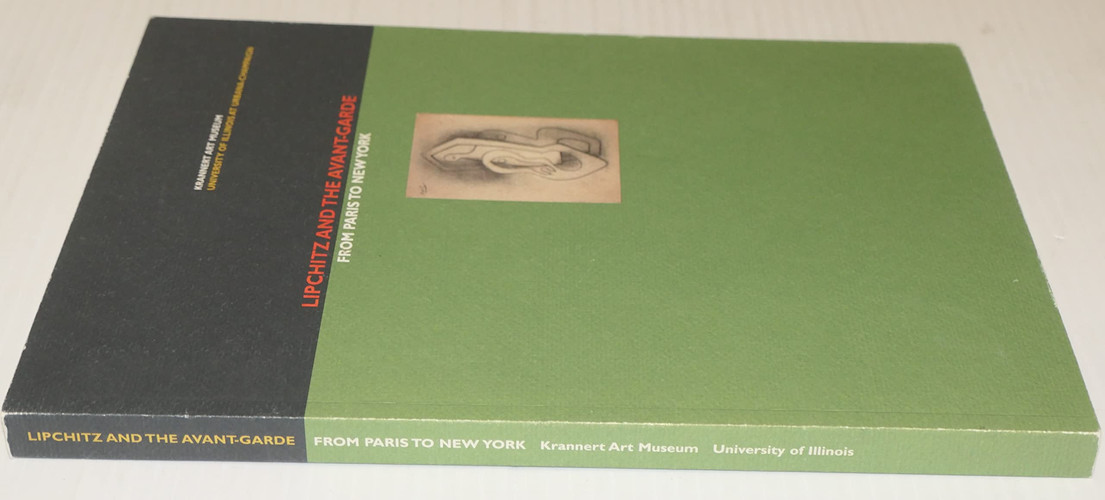
Lipchitz and the avant-garde: from Paris to New York

Lipchitz, Jacques
Utilizing works from museums across North America, Lipchitz and the Avant-Garde traces the path of the pioneering sculptor Jacques Lipchitz from his birthplace in Lithuania to his early work in Paris before World War I, where he was associated with the Parisian avant-garde and applied cubist principles to three-dimensional artwork. By breaking the volume and using different planes, Lipchitz created works that were a new force in the history of sculpture. His innovation of the transparents style in sculpture during the late 1920s was groundbreaking and was copied by many, including Picasso. At the outbreak of World War II the Jewish artist fled to New York, where he worked on increasingly monumental sculptures until his death in 1973. This substantive catalog contains new essays by internationally renowned scholars and translated articles by contemporaries Ramón Gómez de la Serna and Joaquin Torres-García that have not appeared in English before.
Krannert Art Museum and Kinkead Pavilion, University of Illinois at Urbana-Champaign 2001 152 pages

Tales of Trail and Town

Bret Harte
It must be admitted that the civilizing processes of Rough and Ready were not marked by any of the ameliorating conditions of other improved camps. After the discovery of the famous "Eureka" lead, there was the usual influx of gamblers and saloon-keepers; but that was accepted as a matter of course. But it was thought hard that, after a church was built and a new school erected, it should suddenly be found necessary to have doors that locked, instead of standing shamelessly open to the criticism and temptation of wayfarers, or that portable property could no longer be left out at night in the old fond reliance on universal brotherhood. The habit of borrowing was stopped with the introduction of more money into the camp, and the establishment of rates of interest; the poorer people either took what they wanted, or as indiscreetly bought on credit. There were better clothes to be seen in its one long straggling street, but those who wore them generally lacked the grim virtue of the old pioneers, and the fairer faces that were to be seen were generally rouged. There was a year or two of this kind of mutation, in which the youthful barbarism of Rough and Ready might have been said to struggle with adult civilized wickedness, and then the name itself disappeared. By an Act of the Legislature the growing town was called "Atherly," after the owner of the Eureka mine, -Peter Atherly, -who had given largess to the town in its "Waterworks" and a "Gin Mill," as the new Atherly Hotel and its gilded bar-rooms were now called. Even at the last moment, however, the new title of "Atherly" hung in the balance. The romantic daughter of the pastor had said that Mr. Atherly should be called "Atherly of Atherly," an aristocratic title so strongly suggestive of an innovation upon democratic principles that it was not until it was discreetly suggested that everybody was still free to call him "Atherly, late of Rough and Ready," that opposition cease
CreateSpace Independent Publishing Platform 2014-07-07 118 pages

Innovations and turning points: toward a history of kāvya literature

Yigal Bronner,David Dean Shulman,Gary Alan Tubb
This volume is the first attempt to offer a panoramic historical overview of South Asian classical poetry, especially in Sanskrit. Many of the essays in this volume are the first serious studies of the great masterpieces of South Asian literature. Moreover, the book as a whole captures the millennium-long developmental logic of kavya literature by identifying a series of critical moments of breakthrough and innovation-that is, moments when the basic rules of composition and the aesthetic and poetic goals underwent dramatic change, allowing the tradition to reinvent itself. Individual sections thus focus on the beginnings of kavya literature and Kalidasa's creation of what came to be its classical form; the new poetic model that emerged from the intense competition and conversation of Bharavi and Magha in the middle of the first millennium; the extended revolutionary period in Kanauj, where Bana and his successors reconceived the meaning and practice of Sanskrit poetry; and the no less transformative period at the beginning of the second millennium, when poets of genius such as Sriharsa were active in the context of India's nascent vernacularization. The scope of the volume extends beyond Sanskrit to early modern Hindi, and beyond the subcontinent and the Himalayas to Java and Tibet, where kavya found a new home and continued to evolve. A general introduction proposes a theoretical framework for the study of this immense literary tradition in terms of its continuous self-reinvention. --
Oxford University Press 2014 805 pages

Menahem Max Schiffer: selected papers

Schiffer, Menahem
M. M. Schiffer, the dominant figure in geometric function theory in the second half of the twentieth century, was a mathematician of exceptional breadth, whose work ranged over such areas as univalent functions, conformal mapping, Riemann surfaces, partial differential equations, potential theory, fluid dynamics, and the theory of relativity. He is best remembered for the powerful variational methods he developed and applied to extremal problems in a wide variety of scientific fields Spanning seven decades, the papers collected in these two volumes represent some of Schiffer's most enduring innovations. Expert commentaries provide valuable background and survey subsequent developments. Also included are a complete bibliography and several appreciations of Schiffer's influence by collaborators and other admirers.
Birkhauser 2013-10-18 564 pages

Woman in art: Helen Rosenau's 'little book' of 1944

Pollock, Griselda
"Griselda Pollock reintroduces an important feminist forerunner in this new, full-colour setting of Helen Rosenau's 1944 book Woman in Art. Helen Rosenau (1900-1984) was part of the influential migration of European Jewish intellectuals who fled to Britain and the United States during the 1930s, bringing with them exciting innovations in art history's methods. Only Rosenau, however, centred gender in her analysis. The result--her book Woman in Art: From Type to Personality--is a feminist art-historical project, as relevant today as when it was first published in 1944, in which Rosenau drew on contemporary discussions of gender in anthropology, philosophy, sociology, law, theology, history, and literature. In this new volume, ahead of the eightieth anniversary of its original publication, Rosenau's erudite and accessible text is prefaced with a personal memoir by Adrian Rifkin, who was once her student, new research into the refugee experience by Rachel Dickson, and a portrait of Rosenau as feminist intellectual by Griselda Pollock. In conversation with this new setting of the original text, richly illustrated with colour images, Pollock offers eye-opening new readings of key aspects of Rosenau's methods, concepts, arguments, and interpretations of famous artworks, establishing the place of Rosenau's "little book of 1944" in the historiographies of both feminist thought and cutting-edge art history across two centuries."-- Source other than Library of Congress.
Paul Mellon Centre for Studies in British Art 2023 388 pages

The other harmony: the collected poetry of Eli Mandel

Mandel, Eli
As a poet, critic, anthologist and teacher, Saskatchewan native Eli Mandel was a major figure in Canadian literature, particularly prairie literature. Mandel fashioned his identity as a post-Holocaust Jewish writer positioned dramatically between extremes of tradition and innovation, nation and region, East and West, producing work which can be read in a variety of contexts and which reflects patterns and changes within Canadian writing from the 1950s to the 1980s. This two-volume edition of Mandel's collected poetry includes the complete texts of ten previously published volumes of poetry, as well as 82 "new" poems never before presented in a collection.
Canadian Plains Research Center 2000 751 pages

Gustav Mahler, Julius Korngold and the Neue Freie Presse

Korngold, Julius, 1860-1945
Zusammenfassung: "Gustav Mahler and Julius Korngold, critic at the highly influential newspaper Neue Freie Presse, had much in common. He, along with his fellow journalists, were close to and supportive of Mahler. For the first time, their essays on the man and his music are made available in English. The essays on Mahler and his time at Vienna's Imperial Opera were extensive and well informed. Julius Korngold had replaced Eduard Hanslick as principal music critic. Both Korngold and Mahler shared a common Moravian Jewish background, born in 1860 and both students of Anton Bruckner. Mahler also took an early interest in Korngold's son, the child prodigy Erich Wolfgang Korngold. The paper was Jewish owned, and Theodor Herzl, the founder of the Zionist Movement, was its cultural editor and Julius Korngold's employer. Claims that Mahler was driven out of a Vienna by an antisemitic press are wrong given Mahler's support by the most powerful critic of the day writing in the Empire's most influential newspaper. Importantly, the essays also reveal a world of Modernism that includes Mahler's innovations at the opera, and Modernism in music before departures from tonality. This book will interest Mahler enthusiasts, musicians and cultural historians. Mahler was claimed by Arnold Schoenberg as his musical hero, firmly placing him in the Modernist camp. Yet Korngold was universally seen as an archconservative and his relationship with Mahler was personal and his understanding profound. The book addresses the question of "Mahler, the first Modernist or the last Romantic?""--
Routledge 2025 209 pages

Late Geometric and Protoattic Pottery, Mid 8th to Late 7th Century B.C.

Eva T. H. Brann
This volume reports on Athenian pottery found in the Athenian Agora up to 1960 that can be dated from about the middle of the 8th century B.C., when the appearance of a painter of sufficient personal distinction to enliven the whole craft marks a real break from the earlier Geometric style, through the third quarter of the 7th century B.C. when Protoattic gives way to black-figure and black wares. A sampling of contemporary imported ware is included. The material is treated first by shape and then, more extensively, by painting styles. Some 650 characteristic pieces are selected for cataloguing. The introduction discusses the development of the various shapes and styles, characterizing the special techniques and innovations of the period. The topographical features of the Agora that are indicated by the places of discovery of deposits of late Geometric and Protoattic pottery are summarized under wells, houses, workshops, sanctuaries, cemeteries, and roads.
ASCSA 1962 134 pages

Engines of Social Progress

Walter Lionel George
In this thought-provoking work, Walter Lionel George explores the historical and philosophical roots of social progress, arguing that technological innovation and economic growth have been the driving forces behind human advancement. While acknowledging the challenges and dangers posed by modernity, George makes a compelling case for the continued pursuit of progress as a means of improving human well-being. This work has been selected by scholars as being culturally important, and is part of the knowledge base of civilization as we know it. This work is in the "public domain in the United States of America, and possibly other nations. Within the United States, you may freely copy and distribute this work, as no entity (individual or corporate) has a copyright on the body of the work. Scholars believe, and we concur, that this work is important enough to be preserved, reproduced, and made generally available to the public. We appreciate your support of the preservation process, and thank you for being an important part of keeping this knowledge alive and relevant.
Creative Media Partners, LLC 2023-07-18 326 pages