470 results for "Literature"

From the outer world

Oscar Handlin,Lilian Handlin
Oscar and Lilian Handlin show us how the new voyagers in the twentieth century--from Asia, Africa, Australia, and Latin America--record their experiences in the United States. The narratives of the non-Europeans, they find, clearly reflect the circumstances of their composition, as well as the political prejudices of their authors. These literary products have earned far less attention than those of the English, French, Germans, and Russians, and this volume proposes to redress the balance. The earliest of the thirty-one travel accounts was written by Rabindranath Tagore in 1924, and the most recent by V. S. Naipaul in 1989. Many accounts are newly translated from Arabic, Persian, Hebrew, and Spanish. Some authors are well known, but the less famous are equally insightful. Some insights are weighty, many are amusing. Octavio Paz, a sympathetic observer who admired his country's neighbor, was uneasy that the most powerful country in the world sustained "a global ideology as outdated as the doctrine of free enterprise, the steam boat, and other relics of the nineteenth century." The Israeli journalist Hanoch Bartov observed that "God conceived the car first, with man an afterthought, created for the car's use (a Southern California legend)." In coming to a truer understanding of the United States, these writers noted the frightening repercussions of unsettled lives, perceived class differentiation, contentions regarding the status of women, the sense of national unity amid diversity, and countless other issues of concern to those who try to find meaning in the contemporary world.
Harvard University Press 1997 491 pages

Bull's-eye: a photobiography of Annie Oakley

Macy, Sue
"At last, National Geographic's award-winning photobiography of Annie Oakley bursts into paperback. This stirring story of an enduring American heroine has won widespread acclaim and was named a School Library Journal Best Book of the Year. Annie's amazing life comes sharply into focus in a compelling narrative, period photography, and in her own words. Two historical maps and a chronology ground the legend in time and place. Readers ride through a life filled with adventure. Annie grows up in the backwoods of Ohio, hunting game to feed her family. Discovered by Buffalo Bill Cody's Wild West Show, she wows crowds with target shooting and daring horse riding. Annie's hardships are examined too, as is her inspirational status as a role model for women. Awards include:"American Library Association Notable BookBest Book of the Year―School Library JournalTexas Bluebonnet Award Master List
National Geographic Society 2001-10-01 64 pages

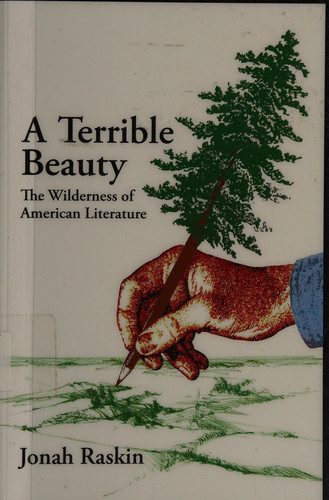
A terrible beauty: the wilderness of American literature

Raskin, Jonah
ABOUT THE BOOK Shortly before he published Walden; or Life in the Woods, Henry David Thoreau called ¿The library a wilderness of books.¿ He also noted that while Americans were ¿clearing the forest in our westward progress, we are accumulating a forest of books in our rear, as wild and unexplored as any of nature¿s primitive wildernesses.¿ In "A Terrible Beauty: the Wilderness of American Literature," Jonah Raskin takes a long close look at the forest of books that poets, novelists and essayists mapped and explored before and after Thoreau. The first work of cultural criticism to look back at writing in the United States from the perspective of the contemporary environmental crisis, Raskin offers insights for students, teachers and lovers of literature as well as for backpackers and hikers who have trekked across untrammeled forests, deserts and mountains. ABOUT THE AUTHOR Jonah Raskin, Phd, has taught American literature at Sonoma State University, the State University of New York at Stony Brook and as a Fulbright professor at the University of Antwerp and the University of Ghent in Belgium. The author of fifteen books, he earned his B.A. at Columbia College in New York, his M.A. at Columbia University and his Ph.D. at the University of Manchester, Manchester, England. He lives in northern California and has written for The San Francisco Chronicle, The L.A. Times, The Nation, The Redwood Coast Review and Catamaran.
Regent Press 2014 366 pages

Facing Black and Jew: literature as public space in twentieth-century America

Newton, Adam Zachary
A reading of African American and Jewish American writers from Henry Roth and Ralph Ellison to Philip Roth and David Bradley. Reading the work of such writers alongside and through one another, Newton's book offers an original way of juxtaposing two major traditions in modern American literature, and rethinking the sometimes vexed relationship between two constituencies ordinarily confined to sociopolitical or media commentary alone. Newton combines Emmanuel Levinas's ethical philosophy and Walter Benjamin's theory of allegory in shaping an innovative kind of ethical-political criticism. Through artful, dialogical readings of Saul Bellow and Chester Himes, David Mamet and Anna Deavere Smith, and others, Newton seeks to represent American Blacks and Jews outside the distorting mirror of 'Black-Jewish Relations', and restrictive literary histories alike. A final chapter addresses the Black/Jewish dimension of the O. J. Simpson trial.
Cambridge University Press 1999-07-15 218 pages

Critical Approaches to Literature

David 1912-2005 Daiches
This work has been selected by scholars as being culturally important and is part of the knowledge base of civilization as we know it. This work is in the public domain in the United States of America, and possibly other nations. Within the United States, you may freely copy and distribute this work, as no entity (individual or corporate) has a copyright on the body of the work. Scholars believe, and we concur, that this work is important enough to be preserved, reproduced, and made generally available to the public. To ensure a quality reading experience, this work has been proofread and republished using a format that seamlessly blends the original graphical elements with text in an easy-to-read typeface. We appreciate your support of the preservation process, and thank you for being an important part of keeping this knowledge alive and relevant.
Creative Media Partners, LLC 2021-09-10 416 pages

Howard Fast: life and literature in the left lane

Sorin, Gerald
Howard Fast's life, from a rough-and-tumble Jewish New York street kid to the rich and famous author of close to 100 books, rivals the Horatio Alger myth. Author of bestsellers such as Citizen Tom Paine, Freedom Road, My Glorious Brothers, and Spartacus, Fast joined the American Communist Party in 1943 and remained a loyal member until 1957, despite being imprisoned for contempt of Congress. Gerald Sorin illuminates the connections among Fast's Jewishness, his writings, and his left-wing politics and explains Fast?s attraction to the Party and the reasons he stayed in it as long as he did. Recounting the story of his private and public life with its adventure and risk, love and pain, struggle, failure, and success, Sorin also addresses questions such as the relationship between modern Jewish identity and radical movements, the consequences of political myopia, and the complex interaction of art, popular culture, and politics in 20th-century America.
Indiana University Press 2012-11-05 512 pages

Thousands of Broadways: dreams and nightmares of the American small town

Pinsky, Robert
Broadway, the main street that runs through Robert Pinsky’s home town of Long Branch, New Jersey, was once like thousands of other main streets in small towns across the country. But for Pinsky, one of America’s most admired poets and its former Poet Laureate, this Broadway is the point of departure for a lively journey through the small towns of the American imagination. Thousands of Broadways explores the dreams and nightmares of such small towns—their welcoming yet suffocating, warm yet prejudicial character during their heyday, from the early nineteenth century through World War II. The citizens of quintessential small towns know one another extensively and even intimately, but fail to recognize the geniuses and criminal minds in their midst. Bringing the works of such figures as Mark Twain, William Faulkner, Alfred Hitchcock, Thornton Wilder, Willa Cather, and Preston Sturges to bear on this paradox, as well as reflections on his own time growing up in a small town, Pinsky explores how such imperfect knowledge shields communities from the anonymity and alienation of modern life. Along the way, he also considers how small towns can be small minded—in some cases viciously judgmental and oppressively provincial. Ultimately, Pinsky examines the uneasy regard that creative talents like him often have toward the small towns that either nurtured or thwarted their artistic impulses. Of living in a small town, Sherwood Anderson once wrote that "the sensation is one never to be forgotten. On all sides are ghosts, not of the dead, but of living people." Passionate, lyrical, and intensely moving, Thousands of Broadways is a rich exploration of this crucial theme in American literature by one of its most distinguished figures.
University of Chicago Press 2009-05-15 98 pages

Barry Hannah

Charney, Mark J.
Born in Clinton, Mississippi, Barry Hannah has been a major force in southern literature since the 1970 publication of his first novel, Geronimo Rex, which won the Bellman Foundation Award in fiction. It was followed by his first collection of stories, Airships (1978), winner of the prestigious Arnold Gringrich Short Fiction Award, and the acclaimed novel Ray (1980). The honesty of Hannah's vision and his varied narrative voices have won him comparison to Walker Percy, William Faulkner, Eudora Welty, and Flannery O'Connor. One of the South's most original writers, Hannah explores the human psyche; he may write primarily about his experiences in the South, but his experiments with prose are not restricted to region. In this first full-length critical study of Hannah's works--six novels and two volumes of short stories--Mark Jay Charney deftly explores Hannah's connections with southern writers like Faulkner and Welty by examining both his progression as a fiction writer and his experiments with language, voice, and form. Expertly combining biographical information with critical analysis, Charney correlates Hannah's literary themes and techniques with the influences shaping his life. The book is organized chronologically to illustrate Hannah's growing preoccupation with unconventional narrative form and to delineate the thematic shift from violence and isolation to peaceful alternatives and community acceptance. This book is a most welcome introduction to the works of a writer who promises to remain one of South's most startling and iconoclastic voices.
Twayne Publishers 1992 115 pages

Beyond the pale: new essays for a new era

Aronson, Marc
For nearly a decade Marc Aronson ran an imprint dedicated to international and multicultural literature for teens. He was known in the industry for publishing "edgy" books, and for his commitment to bringing the experiences of non-dominant authors and illustrators to the world. Yet in the summer of 2001 he wrote an essay that argued against awards, such as the Pure Belpre and Coretta Scott King prizes, for which you must be a member of a given ethnic group to win. Not surprisingly, his article was very controversial; and the author and publisher Andrea Davis Pinkney who had created an imprint specifically designed to be of, by, and for African Americans, published a thoughtful reply. Here, in Beyond the Pale , Aronson explains the passionate convictions that led him to write his essay, and outlines objections made by others; then reprints the original alongside Pinkney's response. As Aronson prepared a formal response to his critics, the attacks of September 11th took place. This tragedy simultaneously made a squabble among authors seem petty, and the issues around art, society, and cultural diversity all the more important. Throughout 2001 and 2002, Aronson wrote essays in which he weighed out how art, history, and books for younger readers could respond to the altered world. As in his previous collection, Exploding the Myths, the Truth About Teenagers and Reading , he exposes the mythologies and false beliefs that distort our understanding of books and their readers. Provocative and informative, this collection of essays will challenge those who know children's literature well to think in new ways, while linking the debates within that industry to the wider intellectual currents of our time.
Scarecrow Press 2003-02-25 145 pages

Out of Brownsville: encounters with Nobel laureates and other Jewish writers : a cultural memoir

Chametzky, Jules
In this volume, Jules Chametzky has gathered his very personable stories and reminiscences of some of the many writers he has met or known as he writes, some fleetingly, a few more intensely over the course of his more than half a century in the business of reading, writing, and talking about literature, of teaching and editing. Not only do those writers emerge as the complicated and fascinating human beings they are, but we also come to know Jules himself, a warm and gracious storyteller. Praise for Out of Brownsville: NO STUDENT of American Jewish writing needs to be reminded that Jules Chametzky is one of its pioneers. A founding editor of the influential Massachusetts Review, he is perhaps especially noted for his study of the fiction of Abraham Cahan. He now caps a distinguished career as critic, editor, and teacher with this delightful volume of memoirs. It is astonishing to know how many of the shapers of literature in America Chametzky knew not merely as subjects met in passing but understood as artists. Readers and scholars will, of course, find their own favorites among the individual memoirs, but beyond the perceptiveness of the recollections and the shrewd assessments in them, there emerges Jules himself, warm, gracious, accepting, modest about his own achievements, which he scarcely mentions. One closes the book with a sense of regret that it has ended and with a feeling how good it was for those who met Jules and enjoyed, however briefly, his friendship. Joseph C. Landis, Editor, Yiddish-Modern Jewish Studies, Professor Emeritus of English, Queens College, CUNY WOVEN INTO these lively portraits and reminiscences of others are not only sudden illuminations of the characters portrayed and of the fleeting moments captured here, but also insights into the fragility of life, the power to create, and the strange magic of human encounters that make Jules Chametzky s memoir so touchingly social and pleasurable to read. Werner Sollors, Henry B. and Anne M. Cabot Professor of English Literature and Professor of African and African American Studies, Harvard University LEGENDARY EDITOR Jules Chametzky s book is autobiography at its cleanest: one s life through the eyes of others. His astute, personable dispatches are a map of Jewish intellectual trends in the United States in the second half of the twentieth century. Ilan Stavans, Lewis-Sebring Professor in Latin American and Latino Culture (Spanish), Amherst College ACCORDING TO the Jewish Midrash, the Book and the Sword came wrapped together, with a message: Regard what is written in the book, or be delivered to the sword. Jules Chametzky s love of books and their very human creators is expressed in this cultural memoir with affection and marvelous charm, yet there is also a tone of urgency, from a man who has dedicated his life to keeping the book open and the sword sheathed. Lawrence Bush, Editor, Jewish Currents About the Author: Jules Chametzky is Professor of English, emeritus, at the University of Massachusetts Amherst, where he taught from 1958 until 2004. He was a founder of The Massachusetts Review, of which he is Editor, emeritus, after 27 years as senior co-Editor. Chametzky has published numerous articles and reviews on Jewish American and American literature in popular and academic journals. His major publications include From the Ghetto: The Fiction of Abraham Cahan; Our Decentralized Literature: Cultural Mediations in Selected Jewish and Southern Writers; the Penguin edition of Abraham Cahan s The Rise of David Levinsky. He co-edited Black and White in American Culture: Ten Years of The Massachusetts Review; and Jewish American Literature: A Norton Anthology. Chametzky is the father of three sons and was married for 52 years to the late poet Anne Halley.
Meredith Winter Press 2012 155 pages

In respect to egotism: studies in American Romantic writing

Porte, Joel
Joel Porte offers a timely reassessment of nineteenth century literature, focusing on the general question of the American Romantic ego and its varying modalities of self-creation, self-display, self-projection, and self-concealment. The book begins by exploring the status of the "text" in nineteenth-century American writing, the relationship of "rhetorical" reading to historical context, and the nature of "Romanticism" in an American setting. Porte then concentrates on the great authors of the period through a series of thematically linked but critically discrete essays on Brown, Irving, Parkman, Cooper, Poe, Emerson, Hawthorne, Thoreau, Melville, Frederick Douglass, Stowe, Whitman, and Dickinson. Throughout his important new study, Porte offers provocative reassessments of familiar texts while at the same time casting an illuminating critical eye on less well-known territory. Readers of this book will come away with increased respect for the achievement of American Romantic writers.
Cambridge University Press 1991-07-26 316 pages

Identity papers: contemporary narratives of American Jewishness

Meyers, Helene
Identity Papers argues that contemporary Jewish American literature revises our understanding of Jewishness and Jewish difference. Moving beyond the reductive labeling of texts and authors as “too Jewish” or “not Jewish enough,” and focusing instead on narratives that portray Jewish regeneration through feminist Orthodoxy, queerness, off-whiteness, and intermarriage, Helene Meyers resists a lachrymose view of contemporary Jewish American life. She argues that such gendered, sexed, and raced debates about Jewish identity become opportunities rather than crises, signs of creative potential rather than symptoms of assimilation and deracination. Thus, feminist debates within Orthodoxy are allied to Jewish continuity by Rebecca Goldstein, Allegra Goodman, and Tova Mirvis; the geography of Jewish identity is racialized by Alfred Uhry, Tony Kushner, and Philip Roth; and the works of Jyl Lynn Felman, Judith Katz, Lev Raphael, and Michael Lowenthal queer the Jewish family as they reveal homophobia to be an abomination. Even as Identity Papers expands Jewish literary horizons and offers much-needed alternatives to the culture wars between liberal and traditional Jews, it argues that Jewish difference productively troubles dominant narratives of feminist, queer, and whiteness studies. Meyers demonstrates that the evolving Jewish American literary renaissance is anything but provincial; rather, it is engaged with categories of difference central to contemporary academic discourses and our national life.
SUNY Press 2012-07-02 239 pages

The Americanist

Aaron, Daniel
“I have read all of Daniel Aaron’s books, and admired them, but in The Americanist I believe he has composed an intellectual and social memoir for which he will be remembered. His self-portrait is marked by personal tact and admirable restraint: he is and is not its subject. The Americanist is a vision of otherness: literary and academic friends and acquaintances, here and abroad. Eloquently phrased and free of nostalgia, it catches a lost world that yet engendered much of our own.” —Harold Bloom “ The Americanist is the absorbing intellectual autobiography of Daniel Aaron, who is the leading proponent and practitioner of American Studies. Written with grace and wit, it skillfully blends Daniel Aaron’s personal story with the history of the field he has done so much to create. This is a first-rate book by a first-rate scholar.” —David Herbert Donald, Professor Emeritus, Harvard University The Americanist is author and critic Daniel Aaron’s anthem to nearly a century of public and private life in America and abroad. Aaron, who is widely regarded as one of the founders of American Studies, graduated from the University of Michigan, received his Ph.D. from Harvard, and taught for over three decades each at Smith College and Harvard. Aaron writes with unsentimental nostalgia about his childhood in Los Angeles and Chicago and his later academic career, which took him around the globe, often in the role of America’s accidental yet impartial critic. When Walt Whitman, whom Aaron frequently cites as a touchstone, wrote, “I am large, I contain multitudes,” he could have been describing Daniel Aaron—the consummate erudite and Renaissance individual whose allegiance to the truth always outweighs mere partisan loyalty. Not only should Aaron’s book stand as a resplendent and summative work from one of the finest thinkers of the last hundred years, it also succeeds on its own as a first-rate piece of literature, on a par with the writings of any of its subjects. The Americanist is a veritable Who’s Who of twentieth-century writers Aaron interviewed, interacted with, or otherwise encountered throughout his life: Ralph Ellison, Robert Frost, Lillian Hellman, Richard Hofstadter, Alfred Kazin, Sinclair Lewis, Malcolm Muggeridge, John Crowe Ransom, Upton Sinclair, Edmund Wilson, Leonard Woolf, and W. B. Yeats, to name only a few. Aaron’s frank and personal observations of these literary lights make for lively reading. As well, scattered throughout The Americanist are illuminating portraits of American presidents living and passed—miniature masterworks of astute political observation that offer dazzlingly fresh approaches to well-trod subjects.
University of Michigan Press 2007-02-26 199 pages

Jumping the line: the adventures and misadventures of an American radical

Herrick, William
An eye-opening account of time served in the great battles of our century - for workers' rights, against Fascism, Communism, and racism - Jumping the Line is the life story of an American original. William Herrick relates his adventures and misadventures on the front lines of the Spanish Civil War, in (and very much out of) the Communist Party, driving a tractor on a communal farm in Michigan, jumping the line as a hobo, organizing African American sharecroppers in Georgia, at work with Orson Welles, and immersed in his own writing. When Paul Berman interviewed Herrick in the Village Voice in 1986, for the fiftieth anniversary of the Spanish Civil War, Herrick's remarks so incensed other veterans of the Abraham Lincoln battalion that they picketed the paper. What William Herrick has to say doesn't always go down easily. But for those who like the truth, with a dash of wit and a healthy dose of history, it can be exhilarating.
University of Wisconsin Press 1998 283 pages

The Rise Of Herbert Hoover

Walter W. Liggett
This work has been selected by scholars as being culturally important, and is part of the knowledge base of civilization as we know it. This work is in the "public domain in the United States of America, and possibly other nations. Within the United States, you may freely copy and distribute this work, as no entity (individual or corporate) has a copyright on the body of the work. Scholars believe, and we concur, that this work is important enough to be preserved, reproduced, and made generally available to the public. We appreciate your support of the preservation process, and thank you for being an important part of keeping this knowledge alive and relevant.
Creative Media Partners, LLC 2022-10-26 424 pages

Ghalen: a romance in black

Mosley, Walter
"The titular character, Ghalen, is a brilliant young Black man who is the son of an endearing neurodivergent man and a gifted, astute, and empathic woman. His parents' grand love story takes up the first third of the book and sets you up to know Ghalen so fully and invest in this family (and their extended friend/family) so deeply, that each new twist and turn feels personal. The journey through Ghalen's coming-of-age tale, as he ventures out into the world is marked with peaks and valleys and such a drive that you can't help but strap in for it all, while not wanting it to end"-- Provided by publisher.
Amistad 2026-05-26 360 pages