398 results for "Love"

Saving Lincoln A Screenplay

Salvador Litvak,Nina Davidovich
Saving Lincoln is a visually unique film, set within actual photographs of the American Civil War. This special edition of the Saving Lincoln screenplay features authentic images from the period, many of which were used in the film. The book also includes the filmmakers' notes on the story, its characters, and the Civil War, plus storyboards and rare images of Ward Hill Lamon. "An important film that must be seen. Saving Lincoln is moving, ingenious, original and impressive." - Michael Medved, syndicated radio host "A film with personality... shows the human side of the President." - Louis Saenz, NPR Saving Lincoln is the unforgettable true story of President Abraham Lincoln and his closest friend, U.S. Marshal Ward Hill Lamon. When the first assassination attempt occurs on the way to Washington in 1861, banjo-playing, pistol-wielding Lamon appoints himself Lincoln's bodyguard. From this unique perspective, Lamon witnesses every aspect of Lincoln's fiery trial as Commander-in-Chief, soothes his friend's tormented soul, and saves him from repeated attempts on his life. Lamon is away on a mission when Lincoln is killed, yet it is Lamon who redefines that tragic event in a surprising and uplifting way. ..".it is not the least accomplishment of this film that in its own way it saves Lincoln by bringing him back to life as a man who loved, laughed, and enjoyed the company of one Ward Hill Lamon. Lincoln loved a good story, and what follows is one of the best in American history." - From the foreword by noted Civil Ward Historian, Brooks D. Simpson "Brilliant and entirely factual... a brave, tough, and incisive film." - Harold Holzer, Lincoln authority and author "An indie flick with heart and brains. Through Lamon, we savor Lincoln's homespun wit, sly self-possession, periodic rages, bouts of moodiness, depression, and self-deprecation, restless drive, nagging uncertainties, and deep love for his family. It is a thoughtful and moving portrait." - Gene Santoro, American History Magazine
Saving Lincoln, LLC 2013 91 pages

American Taboo A Murder in the Peace Corps

Philip Weiss
In 1975, a new group of Peace Corps volunteers landed on the island nation of Tonga. Among them was Deborah Gardner -- a beautiful twenty-three-year-old who, in the following year, would be stabbed twenty-two times and left for dead inside her hut. Another volunteer turned himself in to the Tongan police, and many of the other Americans were sure he had committed the crime. But with the aid of the State Department, he returned home a free man. Although the story was kept quiet in the United States, Deb Gardner's death and the outlandish aftermath took on legendary proportions in Tonga. Now journalist Philip Weiss "shines daylight on the facts of this ugly case with the fervor of an avenging angel" (Chicago Tribune), exposing a gripping tale of love, violence, and clashing ideals. With bravura reporting and vivid, novelistic prose, Weiss transforms a Polynesian legend into a singular artifact of American history and a profoundly moving human story.
HarperCollins 2005-06-28 416 pages

Yom Kippur a go-go

Roth, Matthue
Yom Kippur A Go-Go is a mind-blowing meeting of pop culture, Orthodox faith, and hipster poetics. Matthue Roth is an American original: an Orthodox Jew who cites Outkast and Michelle Tea among his influences, who won’t touch a light switch on Shabbos but mimics a screaming orgasm onstage while reading his paean to Orthodox girls. From the World Bank riots (what can you do when the revolution starts on Shabbos?) to Thursday night tranny basketball in San Francisco’s Dolores Park, Matthue takes readers on a journey among the queer and hip streets of urban America in his exuberant memoir, Yom Kippur a Go-Go. With humor and insight, Roth describes the tension between contemporary life and the demands of faith. He falls in love and in lust with a panoply of girls, both strictly kosher and determinedly secular, to the accompaniment of MP3 rabbinical lectures on modesty ("Boys are nothing but perverts and filthy animals!”).
Cleis Press 2005 268 pages

There are Jews in my house

Vapnyar, Lara
Innocence rounds the bend to experience in these beautifully shaped stories of Moscow and Brooklyn, which take up the worldview of the young and overlooked. The stunning Second World War story that opens the book is a masterpiece of ambivalence—about the simultaneous generosity and hypocrisy of Galina, a gentile Russian woman who offers safe harbor to a Jewish friend and her daughter during the German occupation. In “Love Lessons—Mondays, 9 A.M.,” a young math teacher is assigned to teach a girls’ sex education class, even though she herself is still awaiting her first kiss. And in “Mistress,” a boy newly arrived in this country bears witness to the intimate details of his grandparents’ new and diverging lives: his grandmother’s doctors’ appointments, where he is charged with translating her myriad complaints into English, and his grandfather’s clandestine courtship of another woman. Adept at both snapshots and long exposures, Lara Vapnyar, herself a recent immigrant, writes of life’s adventures and possibilities, its disappointments and unexpected turns, with delicate humor, brilliant timing, and striking emotional honesty. She is a writer to relish and to watch.
Pantheon Books 2003-12-02 149 pages

Out of Brownsville: encounters with Nobel laureates and other Jewish writers : a cultural memoir

Chametzky, Jules
In this volume, Jules Chametzky has gathered his very personable stories and reminiscences of some of the many writers he has met or known as he writes, some fleetingly, a few more intensely over the course of his more than half a century in the business of reading, writing, and talking about literature, of teaching and editing. Not only do those writers emerge as the complicated and fascinating human beings they are, but we also come to know Jules himself, a warm and gracious storyteller. Praise for Out of Brownsville: NO STUDENT of American Jewish writing needs to be reminded that Jules Chametzky is one of its pioneers. A founding editor of the influential Massachusetts Review, he is perhaps especially noted for his study of the fiction of Abraham Cahan. He now caps a distinguished career as critic, editor, and teacher with this delightful volume of memoirs. It is astonishing to know how many of the shapers of literature in America Chametzky knew not merely as subjects met in passing but understood as artists. Readers and scholars will, of course, find their own favorites among the individual memoirs, but beyond the perceptiveness of the recollections and the shrewd assessments in them, there emerges Jules himself, warm, gracious, accepting, modest about his own achievements, which he scarcely mentions. One closes the book with a sense of regret that it has ended and with a feeling how good it was for those who met Jules and enjoyed, however briefly, his friendship. Joseph C. Landis, Editor, Yiddish-Modern Jewish Studies, Professor Emeritus of English, Queens College, CUNY WOVEN INTO these lively portraits and reminiscences of others are not only sudden illuminations of the characters portrayed and of the fleeting moments captured here, but also insights into the fragility of life, the power to create, and the strange magic of human encounters that make Jules Chametzky s memoir so touchingly social and pleasurable to read. Werner Sollors, Henry B. and Anne M. Cabot Professor of English Literature and Professor of African and African American Studies, Harvard University LEGENDARY EDITOR Jules Chametzky s book is autobiography at its cleanest: one s life through the eyes of others. His astute, personable dispatches are a map of Jewish intellectual trends in the United States in the second half of the twentieth century. Ilan Stavans, Lewis-Sebring Professor in Latin American and Latino Culture (Spanish), Amherst College ACCORDING TO the Jewish Midrash, the Book and the Sword came wrapped together, with a message: Regard what is written in the book, or be delivered to the sword. Jules Chametzky s love of books and their very human creators is expressed in this cultural memoir with affection and marvelous charm, yet there is also a tone of urgency, from a man who has dedicated his life to keeping the book open and the sword sheathed. Lawrence Bush, Editor, Jewish Currents About the Author: Jules Chametzky is Professor of English, emeritus, at the University of Massachusetts Amherst, where he taught from 1958 until 2004. He was a founder of The Massachusetts Review, of which he is Editor, emeritus, after 27 years as senior co-Editor. Chametzky has published numerous articles and reviews on Jewish American and American literature in popular and academic journals. His major publications include From the Ghetto: The Fiction of Abraham Cahan; Our Decentralized Literature: Cultural Mediations in Selected Jewish and Southern Writers; the Penguin edition of Abraham Cahan s The Rise of David Levinsky. He co-edited Black and White in American Culture: Ten Years of The Massachusetts Review; and Jewish American Literature: A Norton Anthology. Chametzky is the father of three sons and was married for 52 years to the late poet Anne Halley.
Meredith Winter Press 2012 155 pages

The sea of light

Levin, Jenifer
The Sea of Light is a wise, beautiful, and very American story of three women and their desire to excel and win - and heal one another - in the highly charged world of athletic competition. Angelita is the hurricane that brings down a plane carrying a team of star-quality swimmers, groomed from childhood to compete at the international level. Babe Delgado is a young Cuban-American woman, presumed dead, who is rescued from the crash. Fifty-one hours in the Atlantic have left her scarred in body and spirit, afraid to compete again. Brenna Allen is a tough, driven swim coach at a small university, grieving for a lover lost to cancer. She finds solace in building her own winning team, driving her overworked captain, Ellie Marks, ever harder. Ellie is a child of holocaust survivors, struggling to own herself and her sexuality as hard as she's working to win. Brenna recruits Babe, promising to help her rebuild her damaged body, strength, and will. The Sea of Light is a story of wins, losses, and passions in a world where destiny and magic interfere with victory, where families are forced to reconcile with private hurts and false dreams, and where a redemptive, healing love between women - erotic and overwhelmingly intimate - stands in stark contrast to the expectations of the world. A sensitive, powerful tale of self-discovery, sexual identity, and violent emotions unleashed by sudden disaster, this novel is sure to command attention and acclaim.
Plume 1994-06-01 391 pages

Howard Fast: life and literature in the left lane

Sorin, Gerald
Howard Fast's life, from a rough-and-tumble Jewish New York street kid to the rich and famous author of close to 100 books, rivals the Horatio Alger myth. Author of bestsellers such as Citizen Tom Paine, Freedom Road, My Glorious Brothers, and Spartacus, Fast joined the American Communist Party in 1943 and remained a loyal member until 1957, despite being imprisoned for contempt of Congress. Gerald Sorin illuminates the connections among Fast's Jewishness, his writings, and his left-wing politics and explains Fast?s attraction to the Party and the reasons he stayed in it as long as he did. Recounting the story of his private and public life with its adventure and risk, love and pain, struggle, failure, and success, Sorin also addresses questions such as the relationship between modern Jewish identity and radical movements, the consequences of political myopia, and the complex interaction of art, popular culture, and politics in 20th-century America.
Indiana University Press 2012-11-05 512 pages

The Devil

Ferenc Molnar
The Devil begins his work by planting doubts in János’s mind, making him question his fiancée’s loyalty and commitment. Meanwhile, he tempts Hilda with the allure of personal freedom and excitement, suggesting that true happiness can only be achieved by casting aside societal and moral constraints. The Devil’s words resonate with both characters, each facing a growing internal conflict between their moral beliefs and burgeoning desires. His relentless probing begins to strain the couple’s relationship, pushing them closer to betrayal. Through wit, irony, and suspense, Molnár crafts a story that serves as both a moral fable and a psychological drama, exploring how easily people can be swayed by temptation. In the end, while the couple grapples with their newfound insights and the Devil’s impact, they must confront their own choices and decide if love or self-interest will ultimately prevail. Molnár’s play remains a classic in examining the struggle between good and evil, personal agency, and the enduring allure of forbidden desires.
Zinc Read 2024-12-10 90 pages

My Avant-Garde Education: a memoir

Cooper, Bernard
A wry and beautifully observed memoir about coming of age in the era of conceptual art. Growing up in the suburbs—confused about his sexuality, about his consumer-oriented world, about the death of his older brother—Bernard Cooper falls in love with Pop art and sets off for the California Institute of the Arts, the center of the burgeoning field of conceptual art, in this beguiling memoir. The most famous, and infamous, artists of the time drift through the place, including Allan Kaprow and John Baldessari, not to mention the student who phones the Identi-Kit division of the Los Angeles Police Department and has them make a composite drawing of the Mona Lisa . My Avant-Garde Education is at once an artist's coming-of-age story and a personal chronicle of the era of conceptual art, from a writer "of uncommon subtlety and nuance" (David Ulin, Los Angeles Times ). It is a record of the wonders and follies of a certain era in art history, always aware that awakening to art is, for a young person, inseparable from awakening to the ever-shifting nature of the self.
W.W. Norton & Company 2015-02-24 251 pages

Nothing like sunshine: a story in the aftermath of the MLK assassination

Kamin, Ben
Rabbi Ben Kamin has written a definitive personal expression about race, coming of age in the 1960s, a forbidden friendship, and his personal love for Dr. Martin Luther King Jr. This is a story that spans a four-decade search for a lost high school chum, a deep misunderstanding, and a coming to terms with an America painfully evolving from the blood of MLK to the promise of Barack Obama. The book is a remembrance of Kamin's life at Cincinnati's notorious Woodward High School, a microcosm of the 1960s and of America itself.
Michigan State University Press 2010 138 pages

Sorcerer's apprentice: my life with Carlos Castaneda

Wallace, Amy
Amy Wallace's memoir of her complex relationship with Carlos Castaneda plunges readers deep into the reality of the Castaneda cult and the psychological terrors it perpetrated. With the skill of a master storyteller, Wallace recounts early meetings with Castaneda, shares previously unpublished material straight from the Nagual, and explores the aftermath of Castaneda's death and the long term effects of his legacy. Insightful and unwaveringly honest, Sorcerer's Apprentice is simultaneously a love story, a cautionary tale about the dangers of giving one's power to another, and a joyous account of healing and self-affirmation.
Frog 2003 421 pages

Designing movies: portrait of a Hollywood artist

Sylbert, Richard
This retrospective on the career of Academy Award-winning production designer Richard Sylbert takes readers behind the scenes of some of the most influential films of the past fifty years. The Manchurian Candidate, Who's Afraid of Virginia Woolf, The Graduate, Rosemary's Baby, Chinatown, Dick Tracy . The common factor behind these diverse, visually ground-breaking cinematic masterpieces is the work of legendary production designer Richard Sylbert. Basing the book in part on the late designer's Hollywood memoirs, writer Sylvia Townsend, with the participation of Sylbert's widow, screenwriter Sharmagne Sylbert, has enhanced the production designer's original manuscript with candid interviews from some of his most famous collaborators, including Warren Beatty, Roman Polanski, and Francis Ford Coppola. The result is a book that takes readers behind the scenes of some of the most influential and highly acclaimed films of the past fifty years. This is a portrait of a highly driven, sometimes tempestuous visionary who wasn't afraid to fight for the artistic integrity of the worlds he created on screen. Movie lovers will find in-depth discussions of the making of such modern classics as Reds, Carnal Knowledge, Shampoo , and The Cotton Club . More than thirty illustrations capture Sylbert's creative process from early sketches to completed sets and locations.
Praeger 2006-09-30 229 pages

The last of all possible worlds: and, The temptation to do good

Drucker, Peter F.
"Rich and intriguing."— Kirkus Reviews on The Last of All Possible Worlds "Convincing and haunting."— Publishers Weekly on The Temptation to Do Good Best-selling author Peter F. Drucker wrote just two novels. Here for the first time in paperback are both. In The Last of All Possible Worlds , royalty, bankers, lovers, and wives intertwine to create a vivid portrait of Europe in the early 1900s. We meet wise and worldly Prince Sobieski, Vienna’s ambassador in London, his enchanting wife, her English lover, and her enigmatic lifelong companion, Josefa. When Sobieski’s illegitimate daughter makes a demand of her influential father, the unspoken rules of the family are challenged. Sobieski’s world is further upset when two powerful merchant bankers, the tragic McGregor Hinton and the ambitious Julius von Mosenthal, arrive in London—both with their own requirements of the prince. The Temptation to Do Good tells the story of Father Heinz Zimmerman, the well-regarded president of an American Catholic university. When he attempts to help a chemistry teacher who has been denied tenure he accidentally opens the door to the underlying tensions in the university.
Paul Dry Books 2016 348 pages

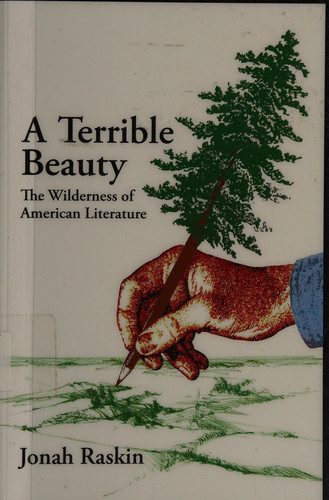
A terrible beauty: the wilderness of American literature

Raskin, Jonah
ABOUT THE BOOK Shortly before he published Walden; or Life in the Woods, Henry David Thoreau called ¿The library a wilderness of books.¿ He also noted that while Americans were ¿clearing the forest in our westward progress, we are accumulating a forest of books in our rear, as wild and unexplored as any of nature¿s primitive wildernesses.¿ In "A Terrible Beauty: the Wilderness of American Literature," Jonah Raskin takes a long close look at the forest of books that poets, novelists and essayists mapped and explored before and after Thoreau. The first work of cultural criticism to look back at writing in the United States from the perspective of the contemporary environmental crisis, Raskin offers insights for students, teachers and lovers of literature as well as for backpackers and hikers who have trekked across untrammeled forests, deserts and mountains. ABOUT THE AUTHOR Jonah Raskin, Phd, has taught American literature at Sonoma State University, the State University of New York at Stony Brook and as a Fulbright professor at the University of Antwerp and the University of Ghent in Belgium. The author of fifteen books, he earned his B.A. at Columbia College in New York, his M.A. at Columbia University and his Ph.D. at the University of Manchester, Manchester, England. He lives in northern California and has written for The San Francisco Chronicle, The L.A. Times, The Nation, The Redwood Coast Review and Catamaran.
Regent Press 2014 366 pages

The man who would marry Susan Sontag and other intimate literary portraits of the Bohemian era

Field, Edward
Long before Stonewall, young Air Force veteran Edward Field, fresh from combat in WWII, threw himself into New York’s literary bohemia, searching for fulfillment as a gay man and poet. In this vivid account of his avant-garde years in Greenwich Village and the bohemian outposts of Paris’s Left Bank and Tangier—where you could write poetry, be radical, and be openly gay—Field opens the closet door to reveal, as never been seen before, some of the most important writers of his time. Here are young, beautiful Susan Sontag sitting at the feet of her idol Alfred Chester, who shrewdly plotted to marry her; May Swenson and her two loves; Paul and Jane Bowles in their ambiguous marriage; Frank O’Hara in and out of bed; Fritz Peters, the anointed son of Gurdjieff; and James Baldwin, Isabel Miller (Patience and Sarah), Tobias Schneebaum, Robert Friend, and many others. With its intimate portraits, Field’s memoir brings back a forgotten era—postwar bohemia—bawdy, comical, romantic, sad, and heroic.
University of Wisconsin Press 2005-12-09 284 pages

Mine's bigger: Tom Perkins and the making of the greatest sailing machine ever built

Kaplan, David A.
Tom Perkins had a dream. It wasn't to get rich, acquire power, or marry into fame. As the man most responsible for creating Silicon Valley, he had done all that. His venture-capital firm, Kleiner Perkins Caufield & Byers, remains the most celebrated money machine since the Medicis. He'd helped found Genentech and fund Google. And in 2006 his resignation from the Hewlett-Packard board triggered the revelation of a spying scandal that dominated the front pages. Along the way, he also managed to get himself convicted of manslaughter in France and become Danielle Steel's Husband No. 5. No, as he hit his seventies, Perkins wanted to create the biggest, fastest, riskiest, highest-tech, most self-indulgent sailboat ever—the "perfect yacht." His fantasy would be a modern clipper ship—as long as a football field, forty-two feet wide, with three masts each rising twenty stories toward the heavens. This $130 million square-rigger—The Maltese Falcon—would evoke the era of magnificent vessels that raced across the oceans in the nineteenth century. But the Falcon is more than a tribute to the past. Gone are all the deckhands to climb the yardarms. Gone is the intricate rigging that helped give the square-riggers of yore their impressive look. Instead, the Falcon's giant carbon-fiber masts are entirely freestanding and rotate by computer. The bridge looks like something out of Star Trek. And the fifteen huge sails unfurl at the touch of a screen. In short, this is a revolutionary machine—the most significant advance in sailing in 150 years. With keen storytelling and biting wit, Newsweek's David A. Kaplan takes us behind the scenes of an extraordinary project and inside the mind of a larger-than-life character. We discover why any sane man would gamble a sizeable chunk of his net worth on a boat; we meet the cast of engineers who conspired with him; and we learn about the other two monumental yachts just built by gazillionaires that Perkins is ever eyeing. In a battle of egos on the high seas, Perkins loves to preen, "Mine's better! Mine's Bigger!" On the Falcon's climactic maiden voyage across the Mediterranean—sixteen hundred nautical miles from Istanbul to Malta to the Riviera—we revel with Perkins as his creation surges along at record-breaking speeds. This is the biography of a remarkable boat and the man who built it. More than a tale of technology, Mine's Bigger is a profile of ambition, hubris, and the imagination of a legendary entrepreneur.
HarperCollins 2007-07-03 267 pages

Extravagant expectations: new ways to find romantic love in America

Hollander, Paul
The proliferation of dating websites, printed personals, and self-help relationship books reflects the new ways Americans seek close, personal relationships. Exposed to changing and often conflicting values, trends, and fashions--disseminated by popular culture, advertising, and assorted "experts"--Americans face uncertainties about the best ways to meet important emotional and social needs. How do we establish lasting and intimate personal relationships, including marriage? In Extravagant Expectations Paul Hollander investigates how Americans today pursue romantic relationships, with special reference to the advantages and drawbacks of Internet dating compared to connections made in school, college, and the workplace. By analyzing printed personals, dating websites, and advice offered by pop psychology books, he examines the qualities that people seek in a partner and also assesses the influence of the remaining conventional ideas of romantic love. Hollander suggests that notions of romantic love have changed due to conflicting values and expectations and the impact of pragmatic considerations. Individualism, high expectations, social and geographic mobility, changing sex roles, and the American national character all play a part in this fascinating and finally sobering exploration of the efforts of men and women to find love and meaning in life. --Book Jacket.
Ivan R. Dee 2011 251 pages