791 results for "Economic History"

America's Great Depression

Murray N. Rothbard,Murray Rothbard
Rothbard opens with a theoretical treatment of business cycle theory, showing how an expansive monetary policy generates imbalances between investment and consumption. He proceeds to examine the Fed's policies of the 1920s, demonstrating that it was quite inflationary even if the effects did not show up in the price of goods and services. He showed that the stock market correction was merely one symptom of the investment boom that led inevitably to a bust. The Great Depression was not a crisis for capitalism but merely an example of the downturn part of the business cycle, which in turn was generated by government intervention in the economy. Had the book appeared in the 1940s, it might have spared the world much grief. Even so, its appearance in 1963 meant that free-market advocates had their first full-scale treatment of this crucial subject. The damage to the intellectual world inflicted by Keynesian- and socialist-style treatments would be limited from that day forward.--Amazon.com
Martino Fine Books 2019-02-06 372 pages

The economic history of the Jewish people

Attali, Jacques
The story many have told can lead one to believe in the existence of a united Jewish people: rich, powerful, placed under centralized command and responsible for establishing a worldwide power strategy through money. Such a belief would merge with the fantasies that have spread across every century from Trajan to Constantine, from Matthew to Luther, from Marlow to Voltaire, from the Protocol of the Elders of Zion to Mein Kampf, to all that which is propagated today via the anonymity of the Internet. This is the story ripe to be challenged and retold. Herein lies the history of the relationship between the Jewish people, money and the world at large. The author is well aware of the subversive nature of this subject. It is a topic that has unleashed so many controversies and brought about so many massacres as to have become a veritable taboo, a topic that must not be evoked under any circumstance for fear of provoking some age-old catastrophe. Today, no one dares write on this topic, as if centuries of study have served no purpose other than to fuel book burning. It remains nevertheless in the best interest of modern mankind to understand how those who discovered monotheism also founded the ethics of capitalism, how some became its primary brokers and leading bankers, while others its most unrelenting enemy. In this book the author tackles the facts and the lies of the history of the relationship between the Jewish people, money and the world at large. "It seems essential that our world, and Jewish people themselves, face a part of their history that they may not care for but of which they have every reason to be proud." REVIEWS "The Economic History of the Jewish People by Jacques Attali is set to be as controversial as it is well documented and thoroughly researched by one of the foremost financial authorities of Europe, the Head of the Commission to Promote Economic Growth in France. Attali has written numerous books and knows this subject thoroughly. He has tackled it from the standpoint of history, myth, and dirty stories, proving some and dispelling others with facts. He has traced the economic experiences, leadership, and fall of the Jewish people from 2,000 years BC until present upheavals of economy worldwide. The book is fascinating for anyone interested in history, finance, or the Jewish people. It is an eye-opener in some instances and shows the influence, admitted or behind-the-scenes, which the Jewish people have had on the entire history of our world through the ages and how they have been rewarded or persecuted along the way for their use of any kind of tender (legal or illegal) around the world for 4,000 years. Really interesting and so very well written." Bonnie Neely, Amazon Top 1000 Reviewer, 2010/05/24
Eska Pub 2010 572 pages

Studies in Roman property

Moses I. Finley
The actual practice of the Romans with regard to property and investment must be distinguished from the formal rules of the emperors and the moralistic generalizations of the ancient writers. With this in mind the Cambridge Research Seminar in Ancient History spent two years examining various aspects of Roman property, investigating individual topics in greater detail than has been attempted before. The studies which make up this volume deal with Roman investment in property - scale and concentration of holdings, rural and urban property, methods of exploitation and how this was organized, and the extent of marginal lands. The editor has formed the volume into a coherent unit by eliminating excessive duplication and overlapping between chapters. The book is of particular value to specialists in ancient history, economic and social history and in Roman law, but also contains materials of interest to medieval and agrarian historians.
Cambridge University Press 2007-06-21 224 pages

Barbarism and civilization: a history of Europe in our time

Wasserstein, Bernard
"Here is the definitive history of contemporary Europe, a controversial but authoritative and lively narrative that is destined to become the standard account of the period from 1914 to the present. In this important new book, University of Chicago historian Bernard Wasserstein offers the first serious, full-length history of a century of convulsive change. It is a history of barbarism and civilization, of cruelty and tenderness, of technological achievement and environmental blight, of imperial expansion and withdrawal, of authoritarian repression and of individualism resurgent. Wasserstein provides both a narrative of the main contours of the political, diplomatic, and military history and an analysis of the underpinnings of demographic, economic, and social developments. Most notably, the book explores the evolution of values and sensibilities in a period when, for the first time, God disappeared as a living presence in the minds of most Europeans. Wasserstein argues that barbarism and civilization were not polar opposites: rather they marched hand in hand. Twentieth-century Europe saw incontestable improvements in living conditions for most inhabitants of the continent: average life span was extended by more than half; real incomes increased dramatically; illiteracy was all but eliminated; women, ethnic minorities, and homosexuals advanced closer to equality of respect and opportunity. Yet the century also witnessed some of the most brutish episodes in the recorded history of our species. Hence Wasserstein's conclusion that "greed, selfishness, lies, and cruelty are the stuff of the history of Europe in our time." Drawing on the latest scholarly findings,including recent disclosures of intelligence materials and archival revelations that followed the fall of Communism in Eastern Europe, Wasserstein captures the essence of contemporary European history in an engaging narrative that is by turns grim, humorous, surprising, and enlightening." -- Publisher.
Oxford University Press 2007 901 pages

Free enterprise: an American history

Glickman, Lawrence B.
"Throughout the twentieth century, 'free enterprise' has been a contested keyword in American politics, and the cornerstone of a conservative philosophy that seeks to limit government involvement into economic matters. Lawrence B. Glickman shows how the idea first gained traction in American discourse and was championed by opponents of the New Deal. Those politicians, believing free enterprise to be a fundamental American value, held it up as an antidote to a liberalism that they maintained would lead toward totalitarian statism. Tracing the use of the concept of free enterprise, Glickman shows how it has both constrained and transformed political dialogue. He presents a fascinating look into the complex history, and marketing, of an idea that forms the linchpin of the contemporary opposition to government regulation, taxation, and programs such as Medicare."--Publisher's web-site
Yale University Press 2019-08-20 340 pages

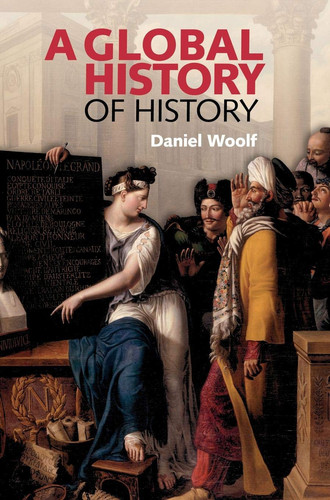
A global history of history

Woolf, D. R.
A global history of historical writing, thought and the development of the historical discipline from the ancient world to the present. This is a definitive guide to human efforts to recover, understand and represent the past, bringing together different historical traditions and their social, economic, political and cultural contexts. Daniel Woolf offers clear definitions of different genres and forms of history and addresses key themes such as the interactions between West and East, the conflict of oral, pictographic, and written accounts of the past and the place of history in society and in politics. Numerous textual extracts and illustrations in every chapter capture the historical cultures of past civilizations and demonstrate the different forms that historical consciousness has taken around the world. The book offers unique insights into the interconnections between different historical cultures over 3000 years and relates the rise of history to key themes in world history. --
Cambridge University Press 2011-02-17 568 pages

The populist temptation: economic grievance and political reaction in the modern era

Eichengreen, Barry J.
" In the last few years, populism--of the right, left, and center varieties--has spread like wildfire throughout the world. The impulse reached its apogee in the United States with the election of Trump, but it was a force in Europe ever since the Great Recession sent the European economy into a prolonged tailspin. In the simplest terms, populism is a political ideology that vilifies economic and political elites and instead lionizes 'the people.' The people, populists of all stripes contend, need to retake power from the unaccountable elites who have left them powerless. And typically, populists' distrust of elites shades into a catchall distrust of trained experts because of their perceived distance from and contempt for 'the people.' Another signature element of populist movements is faith in a savior who can not only speak directly to the people, but also serve as a vessel for the plain people's hopes and dreams. Going back to the 1890s, a series of such saviors have come and gone in the US alone, from William Jennings Bryan to Huey Long to--finally--Donald Trump. In The Populist Temptation, the eminent economic historian Barry Eichengreen focuses on the global resurgence of populism today and places it in a deep context. Alternating between the present and earlier populist waves from modern history, he argues that populists tend to thrive most in the wake of economic downturns, when it is easy to convince the masses of elite malfeasance. Yet while there is more than a grain of truth that bankers, financiers, and 'bought' politicians are responsible for the mess, populists' own solutions tend to be simplistic and economically counterproductive. Moreover, by arguing that the ordinary people are at the mercy of extra-national forces beyond their control--international capital, immigrants, cosmopolitan globalists--populists often degenerate into demagoguery and xenophobia. There is no one solution to addressing the concerns that populists raise, but Eichengreen argues that there is an obvious place to start: shoring up and improving the welfare state so that it is better able to act as a buffer for those who suffer most during economic slumps. For example, America's patchwork welfare state was not well equipped to deal with the economic fallout that attended globalization and the decline of manufacturing in America, and that played no small part in Trump's victory. Lucidly explaining both the appeals and dangers of populism across history, this book is essential reading for anyone seeking to understand not just the populist phenomenon, but more generally the lasting political fallout that follows in the wake of major economic crises. "--
Oxford University Press 2018 244 pages

Maos China After History Peopl

Maurice J. Meisner
In this much-anticipated revision, Maurice Meisner again provides piercing insight and comprehensive coverage of China's fascinating and turbulent modern history. In addition to new information provided throughout this classic study, the new Part Six, "Deng Xiaoping and the Origins of Chinese Capitalism: 1976-1998," analyzes the country's uneasy relationships with democracy, socialism, and capitalism. Meisner incisively displays the contrasts between China's speech and actions regarding these subjects. Retaining the elegance, lucidity, fairness, insightfulness, and comprehensiveness he is known for, Meisner moves far beyond his previous work to paint a never-before-seen portrait of the political and social realities of China on the brink of the millennium, and the global implications of its rise to economic and political power.
The Free Press 1994-10-02

1967: Israel, the War, and the Year that Transformed the Middle East

Tom Segev
Product Description From Israel's leading historian, a sweeping history of 1967--the war, what led up to it, what came after, and how it changed everything Tom Segev's acclaimed works One Palestine, Complete and The Seventh Million overturned accepted views of the history of Israel. Now, in 1967--a number-one bestseller in Hebrew--he brings his masterful skills to the watershed year when six days of war reshaped the country and the entire region. Going far beyond a military account, Segev re-creates the crisis in Israel before 1967, showing how economic recession, a full grasp of the Holocaust's horrors, and the dire threats made by neighbor states combined to produce a climate of apocalypse. He depicts the country's bravado after its victory, the mood revealed in a popular joke in which one soldier says to his friend, "Let's take over Cairo"; the friend replies, "Then what shall we do in the afternoon?" Drawing on unpublished letters and diaries, as well as government memos and military records, Segev reconstructs an era of new possibilities and tragic missteps. He introduces the legendary figures--Moshe Dayan, Golda Meir, Gamal Abdul Nasser, and Lyndon Johnson--and an epic cast of soldiers, lobbyists, refugees, and settlers. He reveals as never before Israel's intimacy with the White House as well as the political rivalries that sabotaged any chance of peace. Above all, he challenges the view that the war was inevitable, showing that a series of disastrous miscalculations lie behind the bloodshed. A vibrant and original history, 1967 is sure to stand as the definitive account of that pivotal year. From Booklist It is now 40 years since the Six Days' War, in which Israel routed the armies of Egypt, Syria, and Jordan and transformed the geography and political landscape of the Middle East. Segev is a columnist for Ha'aretz, Israel's leading left-of-center daily newspaper, and he clearly views the events leading to the war as well as the aftermath of the conflict with a predictable bias. Still, many of his revelations are both startling and credible. A substantial portion of the book is devoted to an analysis of Israeli society on the eve of the war. Segev portrays a nation plagued by disillusionment, communal tensions, and anxiety about national survival. The idealism that inspired the early Zionist pioneers had waned, and the Ashkenazi and Sephardic communities seemed increasingly resentful of each other. An increased awareness of the Holocaust by the younger generation combined with the extreme rhetoric of Arab leaders contributed to a sense of impending doom. Segev asserts that the outbreak of war was hardly inevitable and was precipitated by gross miscalculations by both sides. Freeman, Jay Copyright © American Library Association. All rights reserved Review "Today we know that Israel's triumph in 1967 was a Pyrrhic victory. Tom Segev's 1967 makes that more clear than anything written on the subject . . . Segev documents this historic tragedy brilliantly, authoritatively, as no one has before."--Amos Elon, Ha'aretz "Tom Segev's 1967 offers a brilliant description of the Six Day War in its widest context: the international scene, the Middle Eastern confrontations, the political and social situation of Israel, as well as fascinating snippets of everyday life. The crucial role of individual actors is deftly woven into the general picture, the description of the military events is enthralling. This is probably the best book on those most fateful days in the history of Israel and the Middle East."--Saul Friedlander, author of The Years Of Extermination: Nazi Germany And The Jews, 1939-1945 "The year 1967 divides the history of Israel in two: what came before and what came after. Tom Segev's book makes this abundantly clear, and demonstrates the difference between a military victory and a political one."--Daniel Barenboim About the Author Tom Segev is a columnist for H
Metropolitan Books 2007-05-29 688 pages

The Golden Bees: The story of the Bonapartes

Aronson, Theo
Napoleon III, being accused on one occasion of having nothing of the Great Napoleon about him, replied with as much exasperation as wit, that he did, on the contrary, have his relations. This book is a domestic chronicle of the incredible Bonaparte family, a greedy, amorous, quarrelsome and hot-blooded Corsican clan who provided nineteenth-century Europe — and America — not only with two French emperors but also with a dazzling assortment of pretenders and parvenus, statesmen and eccentrics, great ladies and adventurers. Plumped onto the thrones of Europe by the career of Napoleon I, who probably took better care of his family than any other conqueror in history, the Bonapartes survived the wreck of the two empires they ruled, buzzing around the honeypots of the continent with all the persistence of the imperial bees of Napoleon's crest. This is a personal history, not a political one. It is the family, with its eccentricities, vulgarities and fascinations manifesting themselves in generation after generation, which holds the centre of the stage. The great political, economic and military events of the time are heard dimly as 'noises off'. Napoleon I himself appears as a son, brother, husband, father and above all as the founder of a dynasty, rather than as a great public figure. Theo Aronson paints this family portrait with a wealth of detail based on many years of research with historical documents and original records, letters, memoirs and family diaries. Praise for The Golden Bees: ‘A very considerable feat… a long, comfortable, easy-going sort of narrative full of tit-bits of information, stuffed with anecdotes’ - Observer ‘This is a hugely entertaining book. Neither biography nor history; but a mixture of both.… All lovers of royal gossip, of sprightly anecdotes and of the scandal and personal drama of history should delight in it’ - New York Times Theo Aronson is the author of over twenty works of royal historical biography, published in eleven languages. Among the widely read are Grandmama of Europe, The King in Love, Napoleon and Josephine and a biography of Princess Margaret. In the course of researching and writing these books he has interviewed major and minor members of Britain’s royal family and members of the royal households, as well as various officials, servants, friends and others whose lives are in some way connected with the monarchy.
Independently published 2021-05-28 494 pages

The Peasants' Revolt of 1381

Richard Barrie Dobson
"This lengthy and detailed collection of original documents provides a basic handbook to the story, significance and problems of the English Peasants' Revolt of 1381. Although one of the most famous and dramatic episodes in English history, the great revolt of 1381 is still a largely unsolved mystery. Hitherto the original authorities for the history of the rebellion have been allowed to rest in unnecessary obscurity: and it seems due time to restore the Peasants' Revolt to the comments of its participants and observers. These extracts therefore exploit all the available types of evidence for the history of the 1381 Revolt, ranging from the trial records of captured rebels to contemporary poems. Fortunately the great majority of the primary chronicles for the rebellion, as well as a representative selection from surviving governmental and legal archives, can be presented within the covers of one book. With few exceptions these documents have been especially translated from the original Latin or Norman-French texts - almost all of which are difficult of access or out of print. In several cases translations have been made directly from unpublished records in the Public Record Office, London. The Peasants' Revolt has been examined primarily for its own sake; and at the heart of this book lie the various and often contradictory accounts of the outbreak of the rising in Kent and Essex, the rebels entry into London and the final great confrontation between the young Richard I| and Wat Tyler at Smithfield. But considerable attention is paid to the risings in East Anglia and elsewhere in England as well as to the political and social background of the revolt. The suppression and aftermath of the rebellion are also illustrated in detail. Indirectly this collection of documents therefore provides an insight into the economic status and social aspirations of the late mediaeval English peasantry. The work includes detailed chronological tables (the most ambitious yet attempted), a select guide to sources, three maps and a detailed bibliography. The author's introduction discusses the implications of the revolt in general terms and its significance as an early example of a pre-industrial popular movement. A warning is sounded against any too crude a sociology of rebellion; and the book ends with a series of very different and often hilariously misconceived interpretations of the Peasants' Revolt - from Gower and Froissart, Thomas Paine and Robert Southey to Engels and William Morris."-Publisher.
Macmillan 1970 427 pages

Barons of Labor The San Francisco Building Trades and Union Power in the Progressive Era

Michael Kazin
From the depression of the 1890s through World War I, construction tradesman held an important place in San Francisco's economic, political, and social life. Michael Kazin's award-winning study delves into how the city’s Building Trades Council (BTC) created, accumulated, used, and lost their power. He traces the rise of the BTC into a force that helped govern San Francisco, controlled its potential progress, and articulated an ideology that made sense of the changes sweeping the West and the country. Believing themselves the equals of officeholders and corporate managers, these working and retired craftsmen pursued and protected their own power while challenging conservatives and urban elites for the right to govern. What emerges is a long-overdue look at building trades as a force in labor history within the dramatic story of how the city's 25,000 building workers exercised power on the job site and within the halls of government, until the forces of reaction all but destroyed the BTC.
University of Illinois Press 1988-12 338 pages

The invention of enterprise: entrepreneurship from ancient Mesopotamia to modern times

David S. Landes,Joel Mokyr,William J. Baumol
Whether hailed as heroes or cast as threats to social order, entrepreneurs - and their innovations - have had an enormous influence on the growth and prosperity of nations. "The Invention of Enterprise" gathers together, for the first time, leading economic historians to explore the entrepreneur's role in society from antiquity to the present. Addressing social and institutional influences from a historical context, each chapter examines entrepreneurship during a particular period and in an important geographic location. The book chronicles the sweeping history of enterprise in Mesopotamia and Neo-Babylon; carries the reader through the Islamic Middle East; offers insights into the entrepreneurial history of China, Japan, and Colonial India; and, describes the crucial role of the entrepreneur in innovative activity in Europe and the United States, from the medieval period to today. In considering the critical contributions of entrepreneurship, the authors discuss why entrepreneurial activities are not always productive and may even sabotage prosperity. They examine the institutions and restrictions that have enabled or impeded innovation, and the incentives for the adoption and dissemination of inventions. They also describe the wide variations in global entrepreneurial activity during different historical periods and the similarities in development, as well as entrepreneurship's role in economic growth. The book is filled with past examples and events that provide lessons for promoting and successfully pursuing contemporary entrepreneurship as a means of contributing to the welfare of society.
Princeton University Press 2010-01-31 566 pages

Better, Stronger, Faster The Myth of American Decline . . . and the Rise of a New Economy

Daniel Gross
Daniel Gross, Yahoo! financial columnist and author of Dumb Money , offers a refreshingly optimistic take on our nation’s economic prospects, examining the positive trends that point to a better, stronger future. Financial meltdown, a deep recession, and political polarization—combined with strong growth outside the U.S.—have led to a global bubble of pessimism surrounding the U.S. and its economic prospects. Bloated with debt, outpaced by China, India, and other emerging markets, the U.S. has been left for dead as an economic force. But, Daniel Gross, widely respected for his Newsweek and Slate coverage of the crash and the recovery, shows that much of the talk about decline is misplaced. In the wake of the crash, rather than accept the inevitability of a Japan-style lost decade, America’s businesses and institutions tapped into the very strengths that built the nation’s economy into the global powerhouse in the first place: speed, ingenuity, adaptability, pragmatism, entrepreneurship, and, most significantly, an ability to engage with the world. As the U.S. wallowed in self-pity, the world continued to see promise in what America has to offer—buying exports, investing in the U.S., and adapting American companies and business models as their own. Global growth, it turns out, is not a zero-sum game. These same attributes can propel the world’s largest economy forward through the significant headwinds it faces. Better, Stronger, Faster is a narrative of the remarkable reconstruction and reorientation that started in March 2009, a period that Gross compares to March 1933. Both marked the start of unexpected recoveries and monumental shifts in our nation’s history. As Gross explains, through stories of innovative solutions devised by policymakers, businesses, investors, and consumers, America has the potential to emerge from this period, not as the unrivaled ruler of the global economy, but as a leader and enabler of growth.
Free Press 2014-10-18 272 pages

Fresh blood: the new American immigrants

Ungar, Sanford J.
Drawing on hundreds of richly textured interviews conducted from one end of the country to the other, veteran journalist Sanford J. Ungar documents the real-life struggles and triumphs of America's newest immigrants. He finds that the self-chosen who arrive every day, most of them legally, still enrich our national character and experience and make invaluable political, economic, social, cultural, and even gastronomic contributions. "First-class journalism, a book scholars will use decades from now to find out what it 'felt like' to be an immigrant in the 90s. I do not know of a better description and analysis of contemporary immigration." -- Roger Daniels, author of Coming to America: A History of Immigration and Ethnicity in American Life "An excellent overview of contemporary immigration issues set within the context of developments in the past fifty years. Ungar makes a strong case for the contributions of recent immigrants and for maintaining a relatively open door in the face of sometimes shrill opposition." -- Thomas Dublin, editor of Immigrant Voices: New Lives in America "Exactly the right book at the right time. [Ungar] looks at the national controversy over immigration policy with a clear eye, producing a history and a convincing argument why this is no time to reverse a liberal welcome to newcomers that has always--in good times and bad--made this a better and more prosperous democracy." -- Ben H. Bagdikian, author of Double Vision
University of Illinois Press 1998 411 pages

Once we all had gills: growing up evolutionist in an evolving world

Raff, Rudolf A.
In this book, Rudolf A. Raff reaches out to the scientifically queasy, using his life story and his growth as a scientist to illustrate why science matters, especially at a time when many Americans are both suspicious of science and hostile to scientific ways of thinking. Noting that science has too often been the object of controversy in school curriculums and debates on public policy issues ranging from energy and conservation to stem-cell research and climate change, Raff argues that when the public is confused or ill-informed, these issues tend to be decided on religious, economic, and political grounds that disregard the realities of the natural world. Speaking up for science and scientific literacy, Raff tells how and why he became an evolutionary biologist and describes some of the vibrant and living science of evolution. Once We All Had Gills is also the story of evolution writ large: its history, how it is studied, what it means, and why it has become a useful target in a cultural war against rational thought and the idea of a secular, religiously tolerant nation.
Indiana University Press 2012-07-16 329 pages

The Hungarians: a thousand years of victory in defeat

Lendvai, Paul
This is a comprehensive history of a legendarily proud and passionate but lonely people. Much of Europe once knew them as 'child-devouring cannibals' and 'bloodthirsty Huns', but it was not long before the Hungarians became steadfast defenders of Christendom and fought heroic freedom struggles against the Tartars, the Turks and, among others, the Russians.Paul Lendvai tells how, despite a string of catastrophes and their linguistic and cultural isolation, the Hungarians have survived as a nation-state for more than 1,000 years. He traces Hungarian politics, culture, economics and emotions, from the Magyars' dramatic entry into the Carpathian Basin in 896 to the brink of the post-Cold War era. Lendvai brings to life the short-lived revolutionary triumphs of 1848-9 and 1918-19; the traumatic Treaty of Trianon (1920) which deprived Hungary of Transylvania and other historic Magyar lands; and the successive Nazi and Communist tyrannies. These are among the episodes that have formed the consciousness of the Hungarian people.Through anecdotes of heroes and traitors, victors and victims, geniuses and impostors, Lendvai conveys the multifaceted interplay of progressivism and economic modernisation, versus intolerance and narrow-minded nationalism, on the grand stage of Hungarian history. This work is a blend of narrative, irony and humour; of occasional anger without taboos or prejudices. It also offers an authoritative key to understanding how and why this corner of Europe has produced such a galaxy of great scientists, artists and entrepreneurs.
C. Hurst & Co 2021 549 pages

Jack Kemp: the bleeding-heart conservative who changed America

Kondracke, Morton,Barnes, Fred
"THE PURPOSE OF POLITICS IS NOT TO DEFEAT YOUR OPPONENT AS MUCH AS IT IS TO PROVIDE SUPERIOR LEADERSHIP AND BETTER IDEAS THAN THE OPPOSITION." --JACK KEMP The late 1970s were miserable for America. It was the post-Vietnam, post-Watergate era, a time of high unemployment, ruinous inflation, gasoline lines, Communist advances, and bottomed-out U.S. morale. In the 1980s, it all turned around: "stagflation" ended and nearly two decades of prosperity ensued. The Soviet Union retreated, then collapsed. America again believed in itself. And around the world, democratic capitalism was deemed "the end of history." Ronald Reagan's policies sparked the American renaissance, but the Gipper's leadership is only part of the story. The economic theory that underpinned America's success was pioneered by a star professional quarterback turned self-taught intellectual and "bleeding-heart conservative": Jack Kemp. Kemp's role in a pivotal period in American history is at last illuminated in this first-ever biography, which also has lessons for the politics of today. Kemp was the congressional champion of supply-side economics--the idea that lowering taxes would foster growth. Even today, almost no one advocates a return to a top income tax rate of 70 percent. Kemp didn't just challenge the Democratic establishment. He also encouraged his fellow Republicans to be growth (not austerity) minded, open their tent to minorities and blue-collar workers, battle poverty and discrimination, and once again become "the party of Lincoln." Kemp approached politics the same way he played quarterback for the Buffalo Bills: with a refusal to accept defeat. Yet he also was incapable of personal attack, arguing always on the level of ideas. He regarded opponents as adversaries, not enemies, and often cooperated with them to get things done. Despite many ups and downs, including failed presidential and vice-presidential bids, he represented a positive, idealistic, compassionate Republicanism. Drawing on never-published papers and more than one hundred Kemp Oral History Project interviews, noted journalists Morton Kondracke and Fred Barnes trace Kemp's life, from his childhood through his pro football career to his influential years as a congressman and cabinet secretary. As the American Dream seems to be waning and polarized politics stifles Washington, Kemp is a model for what politics ought to be. The Republican party and the nation are in desperate need of another Kemp.
Sentinel 2015 390 pages