833 results for "Environment"

French modern: norms and forms of the social environment

Rabinow, Paul
In this study of space and power and knowledge in France from the 1830s through the 1930s, Rabinow uses the tools of anthropology, philosophy, and cultural criticism to examine how social environment was perceived and described. Ranging from epidemiology to the layout of colonial cities, he shows how modernity was revealed in urban planning, architecture, health and welfare administration, and social legislation.
University of Chicago Press 1995-12-01 454 pages

The dominant animal: human evolution and the environment

Ehrlich, Paul R.
In humanity’s more than 100,000 year history, we have evolved from vulnerable creatures clawing sustenance from Earth to a sophisticated global society manipulating every inch of it. In short, we have become the dominant animal. Why, then, are we creating a world that threatens our own species? What can we do to change the current trajectory toward more climate change, increased famine, and epidemic disease? Renowned Stanford scientists Paul R. Ehrlich and Anne H. Ehrlich believe that intelligently addressing those questions depends on a clear understanding of how we evolved and how and why we’re changing the planet in ways that darken our descendants’ future. The Dominant Animal arms readers with that knowledge, tracing the interplay between environmental change and genetic and cultural evolution since the dawn of humanity. In lucid and engaging prose, they describe how Homo sapiens adapted to their surroundings, eventually developing the vibrant cultures, vast scientific knowledge, and technological wizardry we know today. But the Ehrlichs also explore the flip side of this triumphant story of innovation and conquest. As we clear forests to raise crops and build cities, lace the continents with highways, and create chemicals never before seen in nature, we may be undermining our own supremacy. The threats of environmental damage are clear from the daily headlines, but the outcome is far from destined. Humanity can again adapt—if we learn from our evolutionary past. Those lessons are crystallized in The Dominant Animal. Tackling the fundamental challenge of the human predicament, Paul and Anne Ehrlich offer a vivid and unique exploration of our origins, our evolution, and our future.
Island Press 2008-06-30 428 pages

Be the Change Rob Greenfield's Call to Kids--Making a Difference in a Messed-Up World

Robin Greenfield,Antonia Banyard
For young readers ages 8 to 12, an inspiring, lively guide to sustainable living from YouTube star and zero-waste activist Robin Greenfield. Features kid-friendly information on the highly popular movement towards zero-waste living, as well as information on the climate crisis and solutions. Robin Greenfield loves this planet, and he's willing to go to extremes to show kids how our way of life is causing it harm. He's walked around New York City dressed in his own garbage, cycled across the U.S. on a bamboo bike (three times), and survived one year on food he foraged or grew himself. For Robin, it's all worth it: he brings attention to important topics like food and water waste; our dependency on fossil fuels; our piles of stuff (and the energy required to produce it); and our disconnection from community and the wider world. In this uplifting book, Robin uses his own experiences--backed by solid information and a ton of great ideas--to show kids that no one is too young to make a difference, and no action is too small to make a start. Robin will donate 100 percent of his proceeds from this book directly to environmental nonprofits.
Greystone Books Limited 2024-12-10 96 pages

Democracy

Carl Cohen
The government of any community by the members of that community is widely praised and almost universally agreed to be the best of governmental forms. But it is not so well or so deeply understood as it ought to be. This book, DEMOCRACY, is a thorough analytical account of the philosophy of democracy, in six Parts. Part One is a discussion of the nature of democracy -- what it is, and what it is not. Democracy is government through the participation of its members or citizens. Understanding its nature fully requires an understanding of the several dimensions of participation: its breadth, its depth, and its range. Part Two explains the presuppositions of democracy. Some underlying community, and the recognition of that community by its members, is presupposed, as is also a membership exhibiting a substantial degree of rationality. Part Three analyzes the instruments of democracy. Agreed upon decision-making rules is a primary instrument. Majority rule, having many variations, is only one such rule, and there are likely to be different rules for decisions of different kinds. Equally essential in almost every democracy is some representative system, since direct democracy is feasible only in limited contexts. Part Four gives a lengthy account of the conditions of democracy -- the circumstances that must be realized if democracy is to succeed. Five kinds of conditions are analyzed. (1) The material conditions of democracy are critical. These include the environment in which democracy can thrive, the mechanical needs of an electoral system, and most important, the economic conditions of democracy. (2) The constitutional conditions of democracy protect the rights that citizens in a democracy must be free to exercise. Freedom is not identical with democracy, but is required by it. Most critical is the right to speak, criticize, and publish freely. (3) The intellectual conditions of democracy concern the capacity of the citizens to understand the issues they will confront. Even the most rational citizens must receive the education that self-government requires. (4) The psychological conditions of democracy -- the spirit of criticism and self-confidence, the willingness compromise and to accept electoral defeat, the realism and flexibility that the complexities of politics require, are all conditions without which democracy cannot succeed. (5) The protective conditions of democracy are made necessary by the reality of serious threats, external and internal. Democracies must be prepared to defend themselves in war, but must keep military institutions under control. Those who would undermine the democracy from within, even if inadvertently, must be defended against without vitiating rights that democratic citizens must enjoy. Part Five deals with the intellectual defense of democracy. Over the long run democracy is vindicated by the freedoms and other social circumstances it tends to promote. Democracy tends to produce just laws and a loyal citizenry, as well as encourage the peaceful resolution of disputes. More deeply, democracy is justified by a full understanding of its moral foundation, the fundamental equality of its members. The only system of government that can recognize this equality concretely is the one that gives to each community member the right to an equal voice in its direction. Part Six addresses the prospects of democracy over the near and long term future. In most of the nations of the world, but not all of them, the prospects for democracy over the near term are good. But over the long term increasing population and the increasing difficulty of maintaining the conditions of democracy render its prospects much less promising. Increasing material inequalities, and above all increasing educational and intellectual inequalities, make it probable that over most of the globe democracy is not likely to meet with lasting success.
MPublishing, University of Michigan Library 2013 318 pages

With the Weathermen: the personal journal of a revolutionary woman

Stern, Susan
Drugs. Sex. Revolutionary violence. From its first pages, Susan Stern's memoir With the Weathermen provides a candid, first-hand look at the radical politics and the social and cultural environment of the New Left during the late 1960s. The Weathermen--a U.S.-based, revolutionary splinter group of Students for a Democratic Society--advocated the overthrow of the government and capitalism, and toward that end, carried out a campaign of bombings, jailbreaks, and riots throughout the United States. In With the Weathermen Stern traces her involvement with this group, and her transformation from a shy, married graduate student into a go-go dancing, street-fighting "macho mama." In vivid and emotional language, she describes the attractions and difficulties of joining a collective radical group and in maintaining a position within it. Stern's memoir offers a rich description of the raw and rough social dynamics of this community, from its strict demands to "smash monogamy," to its sometimes enforced orgies, and to the demeaning character assassination that was led by the group's top members. She provides a distinctly personal and female perspective on the destructive social functionality and frequently contradictory attitudes toward gender roles and women's rights within the New Left. Laura Browder's masterful introduction situates Stern's memoir in its historical context, examines the circumstances of its writing and publication, and describes the book's somewhat controversial reception by the public and critics alike.
Rutgers University Press 2007 387 pages

The impact of the presidency of Donald Trump on American Jewry and Israel: the Jewish role in American life

Windmueller, Steven F.
"The Trump presidency has resulted in a fundamentally disruptive moment in this nation's political culture. Not only were there different policy options and directions, but the cultural artifacts of politics changed because of how this president dramatically challenged the existing norms of political behavior and action. As we have shifted from a period of American liberalism to a time of political populism, deep fissures are dividing Americans in general and Jews in particular. The Impact of the Presidency of Donald Trump on American Jewry and Israel unpacks President Donald Trump's distinctive and unique relationship with the American Jewish community and the State of Israel. Addressing the various dimensions of his personal and political connections with Jews and Israel, this publication is designed to provide an assessment of how the Trump presidency has influenced and altered American Jewish political behavior. Writers from different backgrounds and political orientations bring a broad range of perspectives designed to examine various aspects of this presidency, including Trump's particular impact on Israel-US relations, his special connection with Orthodox Jews, and his complex and uneven relationship with Jewish Republicans. For liberal American Jews, these four years represented a fundamental revolution, overturning and challenging much that a generation of activists had fought to achieve and protect. For Trump's supporters, it afforded them an opportunity to advance their priorities, while joining the forty-fifth president in changing the American political landscape. The "Trump effect" will extend well beyond his four-year tenure, creating an environment that has fomented the politics of hate and exposed a deeply embedded presence of anti-Semitism. How Americans understand this moment in time and the ways society will adapt can be reflected through the prism of the Jewish encounter with Trumpism that this volume seeks to explore"--
Purdue University Press 2021 286 pages

The pre-emptive empire: a guide to Bush's kingdom

Landau, Saul
Saul Landau is an internationally known scholar, author, journalist, poet and activist. An Emmy-award-winning film maker, he does frequent radio and TV shows, and his work on human rights and Latin America have won him acclaim the world over. This, his latest book, is a scathing account of George W. Bush's world before and after the 9/11 terrorist attacks that will appeal to anyone who is disenchanted with the cynicism of Bush's government, and the blatant imperialism U.S. international policy -- or those who just want to learn about what's happening in US politics. Landau covers the topical and controversial issues -- from terrorism and US foreign policy to Bush's wondrous election victory; from Enron, Chile and Pinochet to Cuba, the Middle East, the IMF, the environment and sexual and cultural politics. He delves into the erosion of civil liberties and the proliferation of empire under the guise of pre-empting the scourge of terrorism. Landau reveals how Bush protects "his" terrorists -- those who perpetrate violence against Castro’s Cuba, and to whom he owes his presidency. He also examines how Bush has appointed former officials to high level posts in his cabinet despite their membership in a conspiracy to sell weapons of mass destruction to Iran in the 1980s. In "declassifying" Bush’s Empire, Landau dissects a post-9/11 world where deference to patriotism obliterates debate in Congress and the media. How can the notion of empire happily co-exist with the notion of a republic? In times like these, as dissenting voices are stifled and the public are denied access to the facts about their own security, Landau shows how democracy itself is under threat. He asks whether the already fragile world economy can survive in the new "security" culture of the post-9/11 world. This is an entertaining read from one of America's foremost cultural and political commentators. Above all, Landau makes a convincing case for the necessity of activism -- the book is not only funny but is also a ringing call for citizens to participate in making their own history.
Pluto Press 2003 182 pages

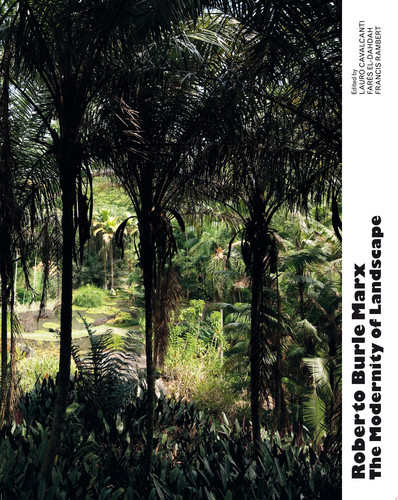
Roberto Burle Marx: the modernity of landscape

Marx, Roberto Burle
Roberto Burle Marx (Sao Paulo, 1909-Rio de Janeiro, 1994) is known as a landscape architect, but also as a painter, botanist, gardener, chef and jewellery designer. He considered the garden to be one of the fine arts, as "the adaptation of the biome to civilisation's natural requirements." This book introduces the realm of the full sensory experience. Burle Marx's work with plants becomes highly pictorial--everything is drawn, colored and constructed. In this symbiosis between aesthetics and botany, Burle Marx is the master of both species and spaces. His work is the embodiment of the "nature-city," a concept developed from the garden cities of the late 19th century, which has become compromised in the 21st century due to the compact city model. This new publication focuses on Burle Marx's scientific interest in the landscape and his relationship with the environment. Concepts that continue to be of major significance in contemporary landscape architecture, such as ecology, garden as an art form and landscape design in the urban structure, are some of the subjects the book deals with. The visual information of the book is complemented by the texts by Fares El-Dahdah, Francis Rambert, Jacques Leenhardt, Jose Tabacow, Lelia Coelho Frota, Andre Correa do Lago, Dorothee Imbert, Valerie Fraser and Gilles Clement.
Cité de l'architecture & du patrimoine, Institut français d'architecture 2011 344 pages

Cities for a small planet

Rogers, Richard
Nothing else damages the earth's environment more than our cities. As the world's population has grown, our cities have burgeoned, and their impact on the environment worsened. Meanwhile, from the isolated, gated communities within Houston and Los Angeles, to the millions of residents of Bombay living in squalor, the city has failed to serve its ideal function—as the cradle of civilization, the engine of culture, and the inspiration for community and citizenship. In Cities for a Small Planet , Sir Richard Rogers, one of the world's leading architects and the designer of the Pompidou Center in Paris, demonstrates how future cities could provide the springboard for restoring humanity's harmony with its environment.Rogers outlines the disastrous impact cities have had and will continue to have on our world, from waste-saturated Tokyo Bay, to the massive plumes of pollution caused by London's traffic, to the depleted water resources of Mexico City. He traces these problems to the underlying social and cultural values that create them—unchecked commercial zeal, selfish individualism, and a lack of community. Bringing to bear concepts such as that of “open-minded” space—places within cities that serve multiple functions such as markets, parks, and sidewalk cafes—he explains how urban design can be used to give citizens a sense of shared experience. The city built with comfortable and safe public space can bring diverse groups together and breed a sense of tolerance, awareness, identity, and mutual respect. He calls for a new theoretical shift in the way cities do business and interact with the environment, arguing that many products come to market and are sold without figuring their social or environmental cost.Rogers goes on to describe the city of the future: one that is sustainable within its own environment; that can make a positive impact on its surroundings; that encourages communication among its citizens; that is compact and focused around neighborhoods; and that is beautiful, a city whose buildings and spaces spark the creative potential of its inhabitants.As our population grows larger, our planet grows smaller. Cities for a Small Planet is a passionate and eloquent blueprint for the cities we must create in response, cities that provide for the needs of both their residents and the earth on which they live.
Faber and Faber 1997 180 pages

The dialectical biologist

Levins, Richard
Scientists act within a social context and from a philosophical perspective that is inherently political. Whether they realize it or not, scientists always choose sides. The Dialectical Biologist explores this political nature of scientific inquiry, advancing its argument within the framework of Marxist dialectic. These essays stress the concepts of continual change and codetermination between organism and environment, part and whole, structure and process, science and politics. Throughout, this book questions our accepted definitions and biases, showing the self-reflective nature of scientific activity within society.
Harvard University Press 1985 303 pages

Nancy Cohen Hackensack Dreaming

Nancy Cohen,Anne Swartz,Midori Yoshimoto,Beth Ravit
Nancy Cohen achieves a delicate balance between celebration and critique in her large installation 'Hackensack Dreaming' of 2013-15. She revels in natural beauty and fecundity as she also comments on reckless environmental disregard. With this amalgamation, Cohen fills the gallery space with numerous images and forms recalling Mill Creek Marsh, a wetlands section of the Hackensack River. The topic of Cohen's installation is an area of New Jersey that is over-built. Principally, it is an environment of interlacing highways with massive big box stores offset by the Manhattan skyline in the distance. This portion of the New Jersey Meadowlands is lowlands, situated between the Palisades cliffs and the Watchung Mountains. Cohen's work recalls these specific surrounds while considering the environment and our relationship with it.
Independent Publisher 2015-08 29 pages

The book of the dead

Rukeyser, Muriel
"Written in response to the Hawk's Nest Tunnel disaster of 1931 in Gauley Bridge, West Virginia, The Book of the Dead is an important part of West Virginia's cultural heritage and a powerful account of one of the worst industrial catastrophes in American history. The poems collected here investigate the roots of a tragedy that killed hundreds of workers, most of them African American. They are a rare engagement with the overlap between race and environment in Appalachia. Published for the first time alongside photographs by Nancy Naumburg, who accompanied Rukeyser to Gauley Bridge in 1936, this edition of The Book of the Dead includes an introduction by Catherine Venable Moore, whose writing on the topic has been anthologized in Best American Essays."--From jacket flap.
West Virginia University Press 2018-02 125 pages

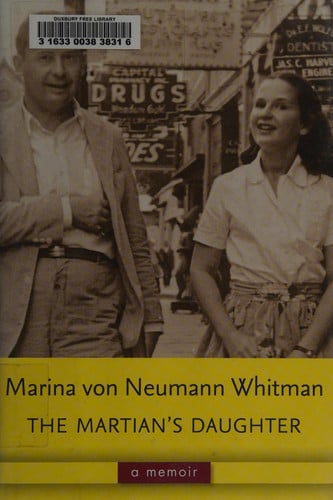
The Martian's daughter: a memoir

Whitman, Marina von Neumann
One of the five Hungarian scientific geniuses dubbed "the Martians" by their colleagues, John von Neumann is often hailed as the greatest mathematician of the twentieth century and even as the greatest scientist after Einstein. He was a key figure in the Manhattan Project; the inventor of game theory; the pioneer developer of the modern stored-program electronic computer; and an adviser to the top echelons of the American military establishment. In The Martian's Daughter , Marina von Neumann Whitman reveals intimate details about the famed scientist and explores how the cosmopolitan environment in which she was immersed, the demanding expectations of her parents, and her own struggles to emerge from the shadow of a larger-than-life parent shaped her life and work. Unfortunately, von Neumann did not live to see his daughter rise to become the first or highest-ranking woman in a variety of arenas. Whitman became a noted academic during the 1960s and '70s, casting her teaching and writing in the framework of globalization before the word had been invented; became the first woman ever to serve on the President's Council of Economic Advisers and participated actively in U.S. efforts to reshape the international monetary and financial system during the early 1970s; pioneered the role of women on the boards of leading multinational corporations; and became the highest-ranking female executive in the American auto industry in the 1980s. In her memoir, Whitman quotes from personal letters from her father and describes her interactions with such figures as Roger Smith of GM and President Nixon. She also details the difficulties she encountered as an early entrant into a world dominated by men and how she overcame the obstacles to, in her words, "have it all."
University of Michigan Press 2012-08-31 308 pages

California Jews

Ava F. Kahn,Marc Dollinger
The nation's thirty-first state emerged early as one of its most diverse as people immigrated to the west. California's indigenous tribes were forced off their lands first by Spanish settlers, then by the arrival of gold miners from every corner of the world. Because of its Catholic missionary history, Gold Rush California did not experience a more exclusive eastern-style Protestantism. This permitted more rapid and inclusive acculturation. California Jews, unlike their eastern counterparts whose arrival often followed that of European Protestants, were often among the first settlers to establish a west coast community. Jewish immigrants to California took advantage of its physical environment, ethnic diversity, and cultural distinctiveness to fashion a form of Judaism unique in the American experience. California Jews enjoyed unprecedented access to political power a generation earlier than their New York counterparts. They thrived in the multicultural mix, redefining the classic black-white racial binary by forging relations with a variety of religious and ethnic groups in both San Francisco and Los Angeles.
Brandeis University Press 2012 196 pages

Reimagining Britain: foundations for hope

Welby, Justin
In a time of political turbulence, and as the Welfare State totters under the strain in a country that has changed dramatically since 1945, Archbishop Justin Welby sets out to identify the values that will enable us to reimagine, and to enact, a more hopeful future. The thesis is that the work of reimagining is as great as it was in 1945, and will happen either by accident – and thus badly – or deliberately. The author draws on Britain's history and Christian tradition to identify this country's foundational values, and the building blocks necessary to implement them in a post-Brexit, multicultural society. He explores the areas in which values are translated into action, including the traditional three of recent history: health (especially public, and mental), housing and education. To these he adds family; the environment; economics and finance; peacebuilding and overseas development; immigration; and integration. He looks particularly at the role of faith groups in enabling, and contributing to, a fairer future. When so many are immobilized by political turmoil, this book builds on our past to offer hope for the future, and practical ways of achieving a more equitable society.
Bloomsbury 2018 300 pages

The presidency of Barack Obama: a first historical assessment

Julian E. Zelizer
"Barack Obama's election as the first African American president seemed to usher in a new era, and he took office in 2009 with great expectations. But by his second term, Republicans controlled Congress, and, after the 2016 presidential election, Obama's legacy and the health of the Democratic Party itself appeared in doubt. In The Presidency of Barack Obama, Julian Zelizer gathers leading American historians to put President Obama and his administration into political and historical context. These writers offer strikingly original assessments of the big issues that shaped the Obama years, including the conservative backlash, race, the financial crisis, health care, crime, drugs, counterterrorism, Iraq and Afghanistan, the environment, immigration, education, gay rights, and urban policy. Together, these essays suggest that Obama's central paradox is that, despite effective policymaking, he failed to receive credit for his many achievements and wasn't a party builder. Provocatively, they ask why Obama didn't unite Democrats and progressive activists to fight the conservative counter-tide as it grew stronger." -- Publisher's description
Princeton University Press 2018-03-13 346 pages

The No-nonsense Guide to Science

Jerome R. Ravetz
Science is still the great intellectual adventure, but now it is also seen as an instrument of profit, power, and privilege. Wrongly used, it might yet make the 21st century our last.To make sense of all this, we need to let go of old ideas and assumptions. In the No-Nonsense Guide to Science, Jerome Ravetz introduces the "post-normal" way of thinking about science. We are to transcend the old simplistic ideas of perfect certainty and objectivity in science-they have failed to protect people and the environment when science has gone wrong and they have enabled flat, dogmatic teaching in our schools. We must now accept that value-loading, uncertainty, and ignorance are very real parts of science, and that citizens must participate in the policies that shape its evolution. The book also includes a refreshing new look at the history of science, and concludes with a series of questions that anyone can use to start their own exploration of the present and future of science.
Between the Lines 2005 143 pages