58,196 results in 0.07 seconds

The desert remembers my name: on family and writing

Alcalá, Kathleen
My parents always told me I was Mexican. I was Mexican because they were Mexican. This was sometimes modified to ÒMexican American,Ó since I was born in California, and thus automatically a U.S. citizen. But, my parents said, this, too, was once part of Mexico. My father would say this with a sweeping gesture, taking in the smog, the beautiful mountains, the cars and houses and fast-food franchises. When he made that gesture, all was cleared away in my mindÕs eye to leave the hazy impression of a better place. We were here when the white people came, the Spaniards, then the Americans. And we will be here when they go away, he would say, and it will be part of Mexico again. Thus begins a lyrical and entirely absorbing collection of personal essays by esteemed Chicana writer and gifted storyteller Kathleen Alcal‡. Loosely linked by an exploration of the many meanings of Òfamily,Ó these essays move in a broad arc from the stories and experiences of those close to her to those whom she wonders about, like Andrea Yates, a mother who drowned her children. In the process of digging and sifting, she is frequently surprised by what she unearths. Her family, she discovers, were Jewish refugees from the Spanish Inquisition who took on the trappings of Catholicism in order to survive. Although the essays are in many ways personal, they are also universal. When she examines her family history, she is encouraging us to inspect our own families, too. When she investigates a family secret, she is supporting our own search for meaning. And when she writes that being separated from our indigenous culture is Òa form of illiteracy,Ó we know exactly what she means. After reading these essays, we find that we have discovered not only why Kathleen Alcal‡ is a writer but also why we appreciate her so much. She helps us to find ourselves.
University of Arizona Press 2007 204 pages

We are their voice: young people respond to the Holocaust

Kacer, Kathy
Do young people today find meaning in the Holocaust? That's the question that prompted a writing project across North America, Italy, and Australia asking young people to share their ideas about this time in history. Some students wrote short stories. Some discussed the impact of books they had read and wrote about the messages that they understood from these books. Several interviewed survivors and recorded their impressions. Many talked about how they have tried to make sense of this history in the world in which they now live. Others created works of art. Children wrote from their hearts with sensitivity, thoughtfulness, and great insight. Their teachers saw this opportunity as a gift, and it proves to all that young people can make a meaningful connection to the Holocaust. Their contributions give hope for a more peaceful and tolerant future.
Second Story Press 2012 232 pages

Jewish Theology Systematically and Historically Considered

Kaufmann Kohler
"The most important book on Jewish learning of this season, and one of the leading works published within the past few years....The work is a pioneer of its kind, in English as well as in other languages, in so far as it is a 'systematic' study of the subject....All other attempts made hitherto by German and other Jewish scholars at a presentation of Jewish theology have been of a limited scope....Kohler, on the other hand, through writing from the standpoint of the Reformer, does not refrain from giving the viewpoint of Orthodox or Conservative Judaism, which he endeavors to present fairly, howsoever much he disagrees with it....And never does Dr. Kohler better sustain his reputation as a scholar, nor use his vast learning to greater advantage, than in this splendid compendium of Jewish theology....Kohler's work covers the entire range of Jewish theological development, thus justifying its claim that it is a 'systematic' exposition of the subject where other works of a like nature dealt only with a partial survey. A mere glance at the table of contents reveals the immensity of the task performed, while a careful study of the book itself shows that the work is not only all-inclusive and exhaustive, but that it was executed with a charm and grace seldom to be met with in a work of so 'dry' a nature....The book is a truly valuable contribution to the treasure-house of Jewish learning for which its eminent author deserves the gratitude of the Jewish community. It is a book which will be read with pleasure and profit by student and layman alike." -The American Jewish Chronicle "In truth, Dr. Kohler's extended work of Jewish theology, the first of its kind, is an epoch-making contribution not only in the field of Jewish theological study, but also in the larger field of the study of comparative religion. Judging by the many favorable and even enthusiastic criticisms with which the book was received by scholars in the non-Jewish world, we are justified in believing that this work was, and will be instrumental in no small degree in correcting the utterly vicious and false view of Jewish theology, broadcasted in Christian circles.... Father Time often rectifies the encomiastic estimates made of living men so that men who were exalted in their day sink into insignificance and sometimes into oblivion with the passing of those who knew them. In the case of Dr. Kohler, I believe, that we may say, even now, that in the light of his signal and path-finding contributions in the field of Jewish scholarship, his eminence as a scholar in Israel will not be fugitive." -Hebrew Union College Monthly "Of all branches of Jewish study theology was hitherto the most neglected one. While here and there articles were written dealing with certain theological problems, no comprehensive book covering the entire field of Jewish theology and presenting a systematic treatment of the fundamental beliefs and doctrines of Judaism has heretofore appeared. Dr. Kohler's book is the first attempt in this direction....The method of Dr. Kohler in treating the subject of Jewish theology is a very excellent one and should be take as a starting point by future writers on the subject. He divides the subject into three parts God, where all questions relating to God, his nature and relation to the world are discussed; Man, dealing with man's relation to God and the world; and Israel and the Kingdom of God, describing the Jewish Mission and the destiny of Israel in history...The great scholarship displayed in it, the warmth and enthusiasm, the beautiful and simple style...and the zeal and earnestness, as well as the store of knowledge on traditional theology contained in it, will always serve as a source of inspiration to all those who respect earnestness and scholarship no matter how much their opinions may differ from the author's." -The Jewish Forum
CreateSpace Independent Publishing Platform 2017-12-19 588 pages

Projection

Keith Ablow
Once an accomplished plastic surgeon, Trevor Lucas started using his scalpel to do very bad things... Locked in a Boston psychiatric hospital, Lucas is holding the ward hostage-and performing grisly "operations" on his prisoners... Lucas, calling for forensic psychiatrist Frank Clevenger, is willing to strike a deal... What Lucas knows about Clevenger could ruin the psychiatrist. What Clevenger can find out about Lucas could save the hostages. And he's got 24 hours to do it... As Clevenger feverishly delves into Lucas' past, what he discovers is chilling, disturbing, and all too familiar. For Clevenger can't help but wonder if his proximity to killers and madmen in coincidence, or something much more complex: Projection.
Macmillan 2000-11-15 352 pages

City by city: dispatches from the American metropolis

Keith Gessen,Stephen Squibb
"A collection of essays--historical and personal--about the present and future of American cities Edited by Keith Gessen and Stephen Squibb, City by City is a collection of essays--historical, personal, and somewhere in between--about the present and future of American cities. It sweeps from Gold Rush, Alaska, to Miami, Florida, encompassing cities large and small, growing and failing. These essays look closely at the forces--gentrification, underemployment, politics, culture, and crime--that shape urban life. They also tell the stories of citizens whose fortunes have risen or fallen with those of the cities they call home. A cross between Hunter S. Thompson, Studs Terkel, and the Great Depression-era WPA guides to each state in the Union, City by City carries this project of American storytelling up to the days of our own Great Recession"--
n + 1/FARRAR, Straus and Giroux 2015-05-12 483 pages

So You Wanna Go Back to Egypt and Songs from No Compromise

Green, Keith
Includes music from Keith Green for the following songs: Asleep in the Light, Grace By Which I Stand, How Can They Live Without Jesus, Pledge My Head To Heaven, I Want To Be More Like Jesus, If You Love The Lord, Lies, My Eyes Are Dry, Oh, Lord You're Beautiful, Romans VII, To Obey Is Better Than Sacrifice, So You Wanna Go Back To Egypt, Soften Your Heart, You, You Love The World, and Unless The Lord Builds The House.
Cherry Lane 1980 76 pages

Dahlia Black: a novel

Thomas, Keith
"Discovered by Dr. Dahlia Black, the mysterious Pulse was sent by a highly intelligent intergalactic species that called themselves the Ascendants. It soon becomes clear this alien race isn't just interested in communication--they are capable of rewriting human DNA, in an astonishing process they call the Elevation. Five years after the Pulse, acclaimed journalist Keith Thomas sets out to make sense of the event that altered the world. Thomas travels across the country to interview members of the task force who grappled to decode the Pulse and later disseminated its exact nature to worried citizens. He interviews the astronomers who initially doubted Black's discovery of the Pulse--an error that critics say led to the world's quick demise. Thomas also hears from witnesses of the Elevation and people whose loved ones vanished in the Finality, an event that, to this day, continues to puzzle Pulse researchers, even though theories abound about the Ascendants' motivation." --Amazon.com.
Atria/Leopoldo & Co 2019-08-13 271 pages

The Dunnie

Keith Thomas
Praise for Keith Thomas' work: "Keith Thomas has a handle on the mechanisms of fear and the tradition of the terror tale that makes him a salient voice in the genre today." - Guillermo del Toro, filmmaker "Taut, riveting... I wanted to read it all over again once I turned the last page." - James Rollins, New York Times bestselling author of Kingdom of Bones "Truly unforgettable..." - Suspense Magazine "Thomas maintains the believability of his tightly coiled plot throughout." - Publishers Weekly _______________________________________ From the writer/director of the critically acclaimed film THE VIGIL and director of the "Pickman's Model" episode of Guillermo del Toro's Cabinet of Curiosities (now on Netflix) comes a terrifying debut novella. _______________________________________ Over a long fall weekend, Asher, twelve, travels with his mother, Beth, to his beloved grandfather (Pa)'s house-a wild place stuffed with rare books, strange art, and collected curiosities. With Pa's dementia worsening, Beth and her sister, Zoe, plan to move him into a nursing home-this visit is to break the news and pack the house up. While Asher adores his doting grandfather, Beth recalls her dad as a very different person: a belittling man with a hair-trigger temper. Though Beth had been frightened of her father her whole childhood, he changed, seemingly overnight, ten years earlier into the affable man Asher now loves spending time with. But Pa's increasing forgetfulness masks a much more unsettling reality: his anger didn't just vanish; it was "excised" in an arcane ritual that birthed the horrifying creature he's locked away in the depths of his home- the Dunnie . And now, with Pa's memory failing, the Dunnie won't remain contained . . .
Night Platform Book Company 2022-10-31 150 pages

The newsroom: the complete scripts

Finkleman, Ken
When it hit the airwaves in 1996, “The Newsroom” – created, written, directed by, and starring Ken Finkleman – was hailed by the Montreal Gazette as “the funniest comedy series in the history of Canadian television.” And by the time its all-too-short run had concluded, it had secured a huge and devoted following across the country. “The Newsroom” won this legion of fans with its uniquely clever and provocative satire. Set inside Toronto’s CBC Broadcast Centre, the series blended fiction and reality in a brutally sardonic behind-the-scenes look at a fictitious TV news show and the selfish machinations of its ratings-obsessed director, George Findlay. Each episode left viewers gasping at the hilarious audacity of Ken Finkleman’s writing; in one front-page newspaper story, the series was described as “a Canadian comedy that is so irreverent it’s hard to imagine how it ever got on the air.” The Toronto Star called it “funny, nasty, unsettling…and the best thing Canadian series TV has offered. Ever.” And TV Guide pronounced it “wickedly funny satire…the hippest sitcom ever produced by the CBC.” The Newsroom: The Complete Scripts is for all those viewers who mourn the passing of this brilliantly written, subversive, and funny series. All thirteen episodes are here in their entirety.
McClelland & Stewart 1997 352 pages

Travels in translation: sea tales at the source of Jewish fiction

Frieden, Ken
"For centuries before its "rebirth" as a spoken language, Hebrew writing was like a magical ship in a bottle that gradually changed design but never voyaged out into the world. Isolated, the ancient Hebrew ship was torpid because the language of the Bible was inadequate to represent modern life in Europe. Early modern speakers of Yiddish and German gave Hebrew the breath of life when they translated dialogues, descriptions, and thought processes from their vernaculars into Hebrew. By narrating tales of pilgrimage and adventure, Jews pulled the ship out of the bottle and sent modern Hebrew into the world. In Travels in Translation, Frieden analyzes this emergence of modern Hebrew literature after 1780, a time when Jews were moving beyond their conventional Torah- and Zion-centered worldview. Enlightened authors diverged from pilgrimage narrative traditions and appropriated travel narratives to America, the Pacific, and the Arctic. The effort to translate sea travel stories from European languages--with their nautical terms, wide horizons, and exotic occurrences--made particular demands on Hebrew writers. They had to overcome their tendency to introduce biblical phrases at every turn in order to develop a new, vivid, descriptive language. As Frieden explains through deft linguistic analysis, by 1818, a radically new travel literature in Hebrew had arisen. Authors such as Moses Mendelsohn-Frankfurt and Mendel Lefin published books that charted a new literary path through the world and in European history. Taking a fresh look at the origins of modern Jewish literature, Frieden launches a new approach to literary studies, one that lies at the intersection of translation studies and travel writing"--OCLC
Syracuse University Press 2016-07-25 389 pages

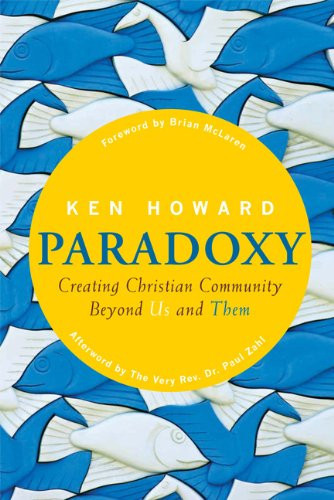
Paradoxy Creating Christian Community Beyond Us and Them

Ken Howard
Western Christianity is moving towards a religious realignment of epic proportions. How will your church navigate these changes? This is a book for those who will lead congregations in challenging times. Paradoxy helps you understand and explain what's happening, gives everyone a chance to speak and be heard, and moves you into the future as one body, together. Paradoxy resonates with my own experience. When the intention of people on opposite sides is to connect, not to win, they can bring forward the bes tof themselves. Deep human connection takes place in the presence of profound disagreement. It is a holy mystery.
Paraclete Press, Incorporated 2010-09 206 pages

New and Selected Poems

Fearing, K.
Author Jim Whitehead's copy. Signed by Whitehead FEP. Some very occasional underlining by him as well. Dust jacket chipped and aged, in mylar. A crisp, clean and tight copy. Size: 6 1/4" x 9 1/4". 143 pp. No marks. Binding is tight, covers and spine fully intact. Dust Jacket price-clipped. All edges are clean. Not Ex-Library. All books offered from DSB are stocked at our store in Fayetteville, AR. Save on shipping by ordering multiple titles. Category: Poetry; Inventory No: 027712.
Indiana University Press 1956-01 168 pages

Fidget

Goldsmith, Kenneth
Fidget is writer Kenneth Goldsmith's transcription of every movement made by his body during 13 hours on Bloomsday (June 16) 1997. It is a hypnotic work, strangely compelling and disorienting at the same time; you'll never think about your body in the same way again. Originally commissioned by the Whitney Museum of American Art as a collaboration with vocalist Theo Bleckmann, Fidget attempts to reduce the body to a catalogue of mechanical movements by a strict act of observation. The stress of this rigorous exercise creates a condition of shifting reference points and multiple levels of observation that inevitably undermines the author's objective approach, and the trajectory of the work begins to change. The text of Fidget is followed by an afterword written by Marjorie Perloff, which both explains the circumstances of the project's creation (including the important role Jack Daniel's plays in the latter part of the text) and explores its results.
Coach House Books 2000 107 pages