

3040 results for "Biography"

Life, animated: a story of sidekicks, heroes and autism

No ordinary genius: the illustrated Richard Feynman

Playing with myself
"Randy Rainbow, the man who conquered the Internet with a stylish pair of pink glasses, an inexhaustible knowledge of Broadway musicals, and the most gimlet-eyed view of American politics this side of Mark Twain finally tells all in Playing with Myself, a memoir sure to cause more than a few readers to begin singing one of his greatest hits like “A Spoonful of Clorox” or “Cover Your Freakin’ Face.” As Randy has said, “There’s so much fake news out there about me. I can’t wait to set the record straight and finally give people a peek behind the green screen.” And set the record straight he does. Playing with Myself is a first-hand account of the journey that led Randy Rainbow from his childhood as the over-imaginative, often misunderstood little boy who carried a purse in the second grade to his first job on Broadway as the host at Hooters and on to the creation of his trademark comedy character. In chapters titled “Pajama Bottoms” (a look back at the days when he wore pajama bottoms on his head to pretend he was Dorothy in The Wizard of Oz), “Yes, It’s My Real Name, Shut Up!” (no explanation necessary...) and “Pink Glasses” (a rose-colored homage to his favorite accessory), Playing with Myself is a memoir that answers the question “Can an introverted musical theatre nerd with a MacBook and a dream save the world, one show tune at a time?”"--förlagstext

The Ratline: the exalted life and mysterious death of a Nazi fugitive
"The life and mysterious death of Otto Wachter, former Governor of Nazi-occupied Poland, who died in the Vatican after World War II"--

Ethics into action: learning from a tube of toothpaste
More than twenty years after its publication, Peter Singer's Ethics into Action continues to inspire new generations of activists through its portrayal of Henry Spira and the animal rights movement. With a new preface from the author, this edition celebrates the continued importance of social movements and provides a path towards furthering changes in our world. Singer, one of the world's most influential living philosophers, reveals how Henry Spira influenced major corporations by simultaneously applying targeted pressures and removing existing obstacles to achieve his ethical goals. As people all over the world continues to struggle for justice, Spira's method of affecting change serves as a proven model for activists fighting across a wide range of causes

Clara and Davie
From bestselling author Patricia Polacco's family tree -- the true story of young Clara Barton. Animals and flowers were Clara's best friends. She had a special way with critters and found joy in the beauty that sprang from the soil. But whenever Clara talked, her words didn't come out right. As hard as she tried, she could not get over her lisp. Clara's older brother Davie understood that his sister was gifted. When folks made fun of Clara's stilted words, Davie was always at her side reminding her that she had a talent for healing creatures. Davie told his sister, "Some day you are going to be a very great lady." And that's exactly what happened. Clara Barton became one of the most famous medical practitioners of all time, and founded the American Red Cross.

Uncle Tungsten
In this memoir, Oliver Sacks evokes, with warmth and wit, his upbringing in wartime England, telling of the large science-steeped family who fostered his early fascination with chemistry. There follow his years at boarding school where, though unhappy, he developed the intellectual curiosity that would shape his later life. And we hear of his return to London, an emotionally bereft 10-year-old who found solace in his passion for learning. 'Uncle Tungsten' radiates all the delight and wonder of a boy's adventures, and provides an unforgettable portrait of an extraordinary young mind.

Tweak: (growing up on methamphetamines)
Nic Sheff was drunk for the first time at age 11. In the years that followed, he would regularly smoke pot, do cocaine and ecstasy, and develop addictions to crystal meth and heroin. Even so, he felt like he would always be able to quit and put his life together whenever he needed to. It took a violent relapse one summer to convince him otherwise. In a voice that is raw and honest, Nic spares no detail in telling us the compelling true story of his relapse and the road to recovery. He paints an extraordinary picture for us of a person at odds with his past, with his family, with his substances, and with himself. Tweak is a raw, harrowing, and ultimately hopeful tale of the road from relapse to recovery and complements his fathers parallel memoir, Beautiful Boy

The long hard road out of hell
The best-selling autobiography of America’s most controversial celebrity icon, Marilyn Manson (with a bonus chapter not in the hardcover). In his twenty-nine years, rock idol Manson has experienced more than most people have (or would want to) in a lifetime. Now, in his shocking and candid memoir, he takes readers from backstage to gaol cells, from recording studios to emergency rooms, from the pit of despair to the top of the charts, and recounts his metamorphosis from a frightened Christian schoolboy into the most feared and revered music superstar in the country. Illustrated with dozens of exclusive photographs and featuring a behind-the-scenes account of his headline-grabbing Dead to the World tour.

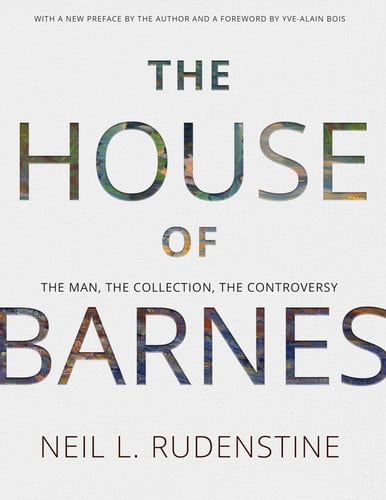
The house of Barnes: the man, the collection, the controversy
"The House of Barnes: The Man, The Collection, The Controversy is a beautifully written study of the extraordinary art collector and volatile personality Albert C. Barnes. The book places him in the context of his own era, shedding new light on the ideas and movements (about art collecting, education, and aesthetics) that shaped so much of his thinking"--
Fear no evil
The prison memoirs of the Soviet dissident and Jewish activist relate the harrowing events of his nine years in KGB custody, from interrogation to release.

Let the whole thundering world come home: a memoir
A powerful memoir from Natalie Goldberg—the woman who changed the way writing is taught in this country—sharing her experience with cancer grounded in her practice of writing and Zen Let the Whole Thundering World Come Home begins at the grave of Katagiri Roshi, Natalie’s Zen teacher, in Japan. Twenty years after Katagiri’s death and Natalie’s return to New Mexico, she is permanently settled in Santa Fe with her partner, Yukwan. Except that, as Buddhism teaches us, nothing is permanent. Natalie learns that she has CLL, a potentially fatal form of blood cancer. For two years, Natalie dances with her cancer—visiting doctor after doctor, attempting treatment after treatment. Nothing helps; in fact, one of the treatments only feeds the cancer and encourages its growth. Then Natalie’s partner, Yukwan discovers that she, too, has cancer—breast cancer—as well as an off-the-charts oncotype score that requires her to have surgery immediately. The cancer twins, as Natalie calls herself and Yukwan, now must each navigate her own illness, carve out her own cancer territory. Each can provide only limited emotional and physical energy for the other. And, somehow, they both need to find a way to stay together, to stay in love—and to heal. As the title expresses, Let the Whole Thundering World Come Home is so much more than a cancer memoir. Through a direct and grounded narrative, Natalie illuminates a path through illness: that we need to be in love with the lives we have, to embrace the dark and the light in our lives. For Natalie, writing and painting represent the light, and her cancer takes her deeper into her art practices. Balanced with a Zen practice that helps to her face death, this book is a moving meditation on living life in full bloom.

What they saved: pieces of a Jewish past
Winner of the 2012 Jewish Journal Book Prize After her father?s death, Nancy K. Miller discovered a minuscule family archive: a handful of photographs, an unexplained land deed, a postcard from Argentina, unidentified locks of hair. These items had been passed down again and again, but what did they mean? Miller follows their traces from one distant relative to another, across the country, and across an ocean. Her story, unlike the many family memoirs focused on the Holocaust, takes us back earlier in history to the world of pogroms and mass emigrations at the turn of the twentieth century. Searching for roots as a middle-aged orphan and an assimilated Jewish New Yorker, Miller finds herself asking unexpected questions: Why do I know so little about my family? How can I understand myself when I don?t know my past? The answers lead her to a carpenter in the Ukraine, a stationery peddler on the Lower East Side, and a gangster hanger-on in the Bronx. As a third-generation descendant of Eastern European Jews, Miller learns that the hidden lives of her ancestors reveal as much about the present as they do about the past. In the end, an odyssey to uncover the origins of her lost family becomes a memoir of renewal.

I slept with Joey Ramone: a punk rock family memoir

Feynman's rainbow: a search for beauty in physics and in life
In the early 1980's, Leonard Mlodinow came to the California Institute of Technology to begin a postdoctoral fellowship. Mlodinow had written a groundbreaking Ph.D. thesis, but he was afraid he was simply not smart enough to be at Caltech. In danger of losing himself watching hours of Rockford Files reruns while waiting for one good idea, Mlodinow took his doubts and insecurities to Caltech's intimidating resident genius and iconoclast, Richard Feynman. So began a pivotal year in a young man's life and a year of awakening. In the funny, inspiring, and revelatory book, Leonard Mlodinow looks back at the time he shared with Feynman: the ideas they explored, the views of life and physics they exchanged, and what Mlodinow learned from a mentor who had not only helped shape the landscape of physics, but whose mind was drawn to all aspects of human experience. In a series of fascinating, sprawling exchanges, Feynman delved into the nature of science, creativity, love, mathematics, happiness, God, art, pleasures and ambition. And as the relationship between the older scientist and Mlodinow deepened - at one point the two crashed a wedding buffet together - their conversations took on a sense of urgency. For while Mlodinow was floundering, Feynman was battling cancer - and confronting his own mortality.

Beyond the pale: the story of Sierra Nevada Brewing Co
Personal tales of perseverance and beer making from the founder of Sierra Nevada Brewing Co. Beyond the Pale chronicles Ken Grossman's journey from hobbyist homebrewer to owner of Sierra Nevada Brewing Co., one of the most successful craft breweries in the United States. From youthful adventures to pioneering craft brewer, Ken Grossman shares the trials and tribulations of building a brewery that produces more than 800,000 barrels of beer a year while maintaining its commitment to using the finest ingredients available. Since Grossman founded Sierra Nevada in 1980, part of a growing beer revolution in America, critics have proclaimed his beer to be "among the best brewed anywhere in the world." Beyond the Pale describes Grossman's unique approach to making and distributing one of America's best-loved brands of beer, while focusing on people, the planet and the product Explores the "Sierra Nevada way," as exemplified by founder Ken Grossman, which includes an emphasis on sustainability, nonconformity, following one's passion, and doing things the right way Details Grossman's start, home-brewing five-gallon batches of beer on his own, becoming a proficient home brewer, and later, building a small brewery in the town of Chico, California Beyond the Pale shows how with hard work, dedication, and focus, you can be successful following your dream.

Boy alone: a brother's memoir

Seduction: sex, lies, and stardom in Howard Hughes's Hollywood
In this riveting popular history, the creator of You Must Remember This probes the inner workings of Hollywood’s glamorous golden age through the stories of some of the dozens of actresses pursued by Howard Hughes, to reveal how the millionaire mogul’s obsessions with sex, power and publicity trapped, abused, or benefitted women who dreamt of screen stardom. In recent months, the media has reported on scores of entertainment figures who used their power and money in Hollywood to sexually harass and coerce some of the most talented women in cinema and television. But as Karina Longworth reminds us, long before the Harvey Weinsteins there was Howard Hughes—the Texas millionaire, pilot, and filmmaker whose reputation as a cinematic provocateur was matched only by that as a prolific womanizer. His supposed conquests between his first divorce in the late 1920s and his marriage to actress Jean Peters in 1957 included many of Hollywood’s most famous actresses, among them Billie Dove, Katharine Hepburn, Ava Gardner, and Lana Turner. From promoting bombshells like Jean Harlow and Jane Russell to his contentious battles with the censors, Hughes—perhaps more than any other filmmaker of his era—commoditized male desire as he objectified and sexualized women. Yet there were also numerous women pulled into Hughes’s grasp who never made it to the screen, sometimes virtually imprisoned by an increasingly paranoid and disturbed Hughes, who retained multitudes of private investigators, security personnel, and informers to make certain these actresses would not escape his clutches. Vivid, perceptive, timely, and ridiculously entertaining, The Seducer is a landmark work that examines women, sex, and male power in Hollywood during its golden age—a legacy that endures nearly a century later.

The impossible presidency: the rise and fall of America's highest office
Why have recent presidents failed to create the change they promised? Should we blame the individual men, all flawed in their own ways? Or are there fundamental reasons why modern presidents fail to deliver, time and time again? In The Impossible Presidency, historian Jeremi Suri charts the long rise and quick fall of the world's most important job, from the 1790s to the present day. As he shows, early presidents greatly expanded the power of the office beyond the limited role envisioned by the founders. Suri argues that the immense accomplishments of Washington, Jackson, Lincoln and FDR left their successors with outsized and unrealistic expectations. John F. Kennedy, Lyndon B. Johnson and Ronald Reagan lost control of their agendas as they were buffeted by the onrush of events and threats their predecessors never had to face. Clinton and Obama were propelled to the presidency by their personal stories but hamstrung by prurient, partisan, and prejudiced criticisms of their leadership. Contemporary presidents must react to a truly globalized world and a rapid twenty-four-our news cycle. There is little room left for bold, strategic thinking. Suri traces our disenchantment with recent presidents to the current mismatch between presidential promises and the limitations of the office.
