368 results for "Jewish History"

Facing the past: looking back at refugee childhood in New Zealand, 1940s-1960s

Beaglehole, Ann
Focuses on the lives of the children of wartime immigrants, whose perceptions and experiences of both the old and the new world were very different from their parents'. At school, in the neighbourhood, or on the sportsfield, many of them were painfully aware of being 'outsiders' in a society unused to cultural diversity. Yet their need to belong was frequently complicated by loyalty to the very different ideals and expectations of their parents. Based on a wide range of interviews as well as documentary evidence from second-generation refugees worldwide, this is an account of the lives of immigrant children growing up in the decades between the 1940s and the 1960s.
Allen & Unwin 1990 209 pages

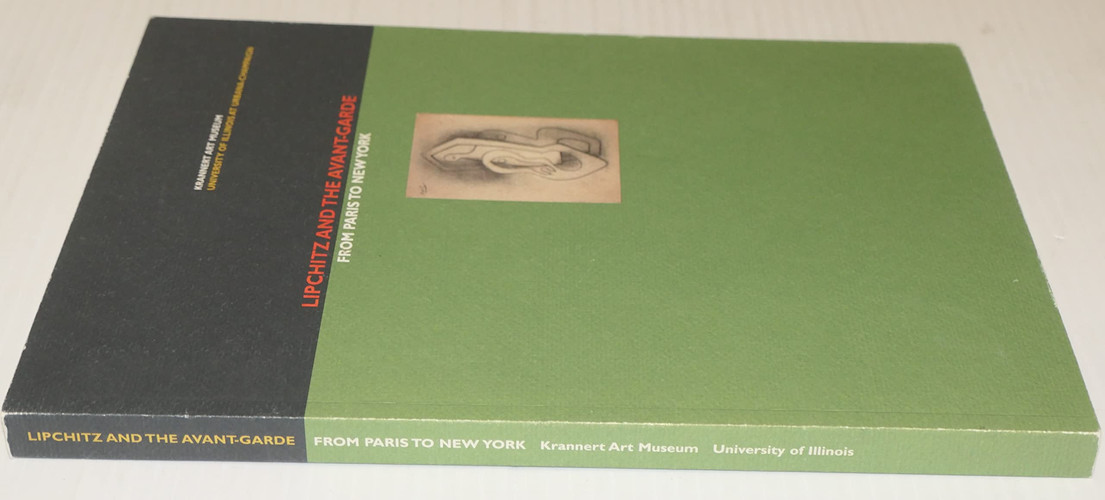
Lipchitz and the avant-garde: from Paris to New York

Lipchitz, Jacques
Utilizing works from museums across North America, Lipchitz and the Avant-Garde traces the path of the pioneering sculptor Jacques Lipchitz from his birthplace in Lithuania to his early work in Paris before World War I, where he was associated with the Parisian avant-garde and applied cubist principles to three-dimensional artwork. By breaking the volume and using different planes, Lipchitz created works that were a new force in the history of sculpture. His innovation of the transparents style in sculpture during the late 1920s was groundbreaking and was copied by many, including Picasso. At the outbreak of World War II the Jewish artist fled to New York, where he worked on increasingly monumental sculptures until his death in 1973. This substantive catalog contains new essays by internationally renowned scholars and translated articles by contemporaries Ramón Gómez de la Serna and Joaquin Torres-García that have not appeared in English before.
Krannert Art Museum and Kinkead Pavilion, University of Illinois at Urbana-Champaign 2001 152 pages

The rise of modern Yiddish culture

Fishman, David E.
The Rise of Modern Yiddish Culture explores the transformation of Yiddish from a low-status vernacular to the medium of a complex modern culture. David Fishman examines the efforts of east European Jews to establish their linguistic distinctiveness as part of their struggle for national survival in the diaspora. Fishman considers the roots of modern Yiddish culture in social and political conditions in Imperial Tsarist and inter-war Poland, and its relationship to Zionism and Bundism. In so doing, Fishman argues that Yiddish culture enveloped all socioeconomic classes, not just the proletarian base, and considers the emergence, at the turn of the century, of a pro-Yiddish intelligentsia and a Yiddishist movement. As Fishman points out, the rise of Yiddishism was not without controversy. Some believed that the rise of Yiddish represented a shift away from a religious-dominated culture to a completely secular, European one; a Jewish nation held together by language, rather than by land or religious content. Others hoped that Yiddish culture would inherit the moral and national values of the Jewish religious tradition, and that to achieve this result, the Bible and Midrash would need to exist in modern Yiddish translation. Modern Yiddish culture developed in the midst of these opposing concepts. Fishman follows the rise of the culture to its apex, the founding of the Yiddish Scientific Institute (YIVO) in Vilna in 1925, and concludes with the dramatic story of the individual efforts that preserved the books and papers of YIVO during the destruction and annihilation of World War II and in postwar Soviet Lithuania. The Rise of Modern Yiddish Culture , like those efforts, preserves the cultural heritage of east European Jews with thorough research and fresh insights.
University of Pittsburgh Press 2010-02-15 190 pages

A Documentary history of Jewish immigrants in Britain, 1840-1920

David Englander
A collection of documents and of excerpts from books, with brief comments. Pp. 91-94 contain documents showing evidence of antisemitic sentiments in London's East End vaunted against Jewish landlords. Ch. 8 (pp. 247-312), "The Jewish Question", deals with antisemitism and anti-alienism in Britain in the late 19th-early 20th centuries. Pp. 261-271 present excerpts from Arnold White's antisemitic book "The Modern Jew". Pp. 281-297 deal with the anti-Jewish disturbances in Limerick (Ireland) in 1904, in Tredegar (Wales) in 1911, in Leeds and in Bethnal Green (London) in 1917, and with press reactions to them. Pp. 347-349 give an example of antisemitism in the British Army in 1919 in Palestine.
Leicester University Press 1994 380 pages

"This is my new homeland": life stories of Turkish Jewish immigrants

Rıfat N. Bali
"This work is a compilation of life stories of twenty Turkish Jews, born and raised in Turkey, and who have settled in new homelands. They now live in the United States, Canada, France, Israel, Switzerland, the United Kingdom, and Australia. Through their stories the reader will be able to have glimpses of their lives before and after leaving Turkey and understand the resasons that pushed them to emigrate." -- back cover.
Libra Kitap 2016 139 pages

Gustav Mahler, Julius Korngold and the Neue Freie Presse

Korngold, Julius, 1860-1945
Zusammenfassung: "Gustav Mahler and Julius Korngold, critic at the highly influential newspaper Neue Freie Presse, had much in common. He, along with his fellow journalists, were close to and supportive of Mahler. For the first time, their essays on the man and his music are made available in English. The essays on Mahler and his time at Vienna's Imperial Opera were extensive and well informed. Julius Korngold had replaced Eduard Hanslick as principal music critic. Both Korngold and Mahler shared a common Moravian Jewish background, born in 1860 and both students of Anton Bruckner. Mahler also took an early interest in Korngold's son, the child prodigy Erich Wolfgang Korngold. The paper was Jewish owned, and Theodor Herzl, the founder of the Zionist Movement, was its cultural editor and Julius Korngold's employer. Claims that Mahler was driven out of a Vienna by an antisemitic press are wrong given Mahler's support by the most powerful critic of the day writing in the Empire's most influential newspaper. Importantly, the essays also reveal a world of Modernism that includes Mahler's innovations at the opera, and Modernism in music before departures from tonality. This book will interest Mahler enthusiasts, musicians and cultural historians. Mahler was claimed by Arnold Schoenberg as his musical hero, firmly placing him in the Modernist camp. Yet Korngold was universally seen as an archconservative and his relationship with Mahler was personal and his understanding profound. The book addresses the question of "Mahler, the first Modernist or the last Romantic?""--
Routledge 2025 209 pages