691 results for "Literature"

Communism and Nationalism in the Middle East

Walter Z. Laqueur
""Communism and Nationalism in the Middle East"" is a comprehensive analysis of the impact of communism and nationalism on the political landscape of the Middle East. Written by Walter Z. Laqueur, a renowned historian and political analyst, the book explores the historical roots of communism and nationalism in the Middle East and their influence on the region's political and social development.The book begins with an overview of the historical context of communism and nationalism in the Middle East, including the impact of colonialism, the rise of Arab nationalism, and the emergence of Soviet influence in the region. Laqueur then delves into the specific cases of communism and nationalism in several Middle Eastern countries, including Egypt, Syria, Iraq, and Iran.Throughout the book, Laqueur provides a nuanced and insightful analysis of the complex interplay between communism and nationalism in the Middle East. He examines the ideological and political differences between the two movements, their respective strengths and weaknesses, and the ways in which they have interacted with each other over time.Overall, ""Communism and Nationalism in the Middle East"" is a must-read for anyone interested in understanding the political and social dynamics of this complex and volatile region. Laqueur's clear and concise writing style, combined with his deep knowledge of the subject matter, make this book an indispensable resource for scholars, policymakers, and general readers alike.This scarce antiquarian book is a facsimile reprint of the old original and may contain some imperfections such as library marks and notations. Because we believe this work is culturally important, we have made it available as part of our commitment for protecting, preserving, and promoting the world's literature in affordable, high quality, modern editions, that are true to their original work.
Kessinger Publishing 2009-07 378 pages

Sepher Yosippon: a tenth-century history of ancient Israel

Steven B. Bowman
"Sepher Yosippon was written in Hebrew by a medieval historian noted by modern scholars for its eloquent style. This is the first known chronicle of Jewish history and legend from Adam to the destruction of the Second Temple, this is the first known text since the canonical histories written by Flavius Josephus in Greek and later translated by Christian scholars into Latin. Sepher Yosippon has been cited and referred to by scholars, poets, and authors as the authentic source for ancient Israel for over a millennium, until overshadowed by the twentieth-century Hebrew translations of Josephus. It is based on Pseudo Hegesippus’s fourth-century anti-Jewish summary of Josephus’s Jewish War. However, the anonymous author [a.k.a. Joseph ben Gurion Hacohen] also consulted with the Latin versions of Josephus’s works available to him. At the same time, he included a wealth of Second Temple literature as well as Roman and Christian sources. This book contains Steven Bowman’s translation of the complete text of David Flusser’s standard Hebrew edition of Sepher Yosippon, which includes the later medieval interpolations referring to Jesus. The present English edition also contains the translator’s introduction as well as a preface by the fifteenth-century publisher of the book. The anonymous author of this text remains unique for his approach to history, his use of sources, and his almost secular attitude, which challenges the modern picture of medieval Jews living in a religious age. In his influential novel, A Guest for the Night, the Nobel Laureate author Shmuel Yosef Agnon emphasized the importance of Sepher Yosippon as a valuable reading to understand human nature. Bowman’s translation of Flusser’s notes, as well as his own scholarship, offers a well-wrought story for scholars and students interested in Jewish legend and history in the medieval period, Jewish studies, medieval literature, and folklore studies." -- From publisher's website.
Wayne State University Press 2023 530 pages

Ben-Gurion and the Holocaust

Teveth, Shabtai
After World War II a flow of literature written by both Orthodox and left-wing Jewish writers, as well as academic works, appeared, defaming the attitude of Ben-Gurion and the Jewish Agency Executive toward the rescue of Europe's Jews during the Holocaust. The most slandering works were those by Rabbi M.D. Weissmandel and "The Seventh Million" by Tom Segev. Shows that Ben-Gurion, as early as 1932, foresaw the genocide of the Jews. He never favored the Zionist cause over the rescue of diaspora Jews, and did all he could for their rescue. However, he understood that little could be done by the Jewish Agency because it had no governmental authority. Ben-Gurion believed that the only way to save European Jews was to encourage immigration to Eretz Israel; therefore, most of his energy was directed to this cause. Examines Segev's book, as well as some other works, criticizing them for twisting the facts. Maintains that Weissmandel's rescue plan and other plans proposed by Zionist and non-Zionist leaders in Europe were not viable; therefore, their activities should not be juxtaposed with the alleged inactivity of the Yishuv and the JAE leadership.
Harcourt Brace & Company 1996-11 310 pages

Classics in the theory of public finance

Richard Abel Musgrave,Alan T. Peacock
This book was prepared mainly for specialists on the assumption that it would provide the background to an important neglected field of discussion in public finance. Since it was first published in 1958, the theory of public goods and its implications for public policy have become incorporated in the main body of the economic analysis of public finance in the literature. A glance at the footnotes of some of the standard textbooks on public finance indicates that this assembly of articles has not been in vain. Probably the most influential part of this collection has been the papers concerned with the theory of public expenditure, which contains two closely related elements. The first is as a part of welfare economics: under what conditions can Pareto optimality be achieved in an economic system in which some goods supplied are indivisible? The other strand of thought is concerned with the positive theory of the public sector: how can economic analysis be used in order to explain how the size and composition of the budget is actually determined?
Macmillan in association with the International Economic Association 1958 244 pages

The children of Noah: Jewish seafaring in ancient times

Patai, Raphael
Here the late Raphael Patai (1910-1996) recreates the fascinating world of Jewish seafaring from Noah's voyage through the Diaspora of late antiquity. In a work of pioneering scholarship, Patai weaves together Biblical stories, Talmudic lore, and Midrash literature to bring alive the world of these ancient mariners. As he did in his highly acclaimed book The Jewish Alchemists, Patai explores a subject that has never before been investigated by scholars. Based on nearly sixty years of research, beginning with study he undertook for his doctoral dissertation, The Children of Noah is literally Patai's first book and his last. It is a work of unsurpassed scholarship, but it is accessible to general readers as well as scholars.An abundance of evidence demonstrates the importance of the sea in the lives of Jews throughout early recorded history. Jews built ships, sailed them, fought wars in them, battled storms in them, and lost their lives to the sea. Patai begins with the story of the deluge that is found in Genesis and profiles Noah, the father of all shipbuilders and seafarers. The sea, according to Patai's interpretation, can be seen as an image of the manifestation of God's power, and he reflects on its role in legends and tales of early times. The practical importance of the sea also led to the development of practical institutions, and Patai shows how Jewish seafaring had its own culture and how it influenced the cultures of Mediterranean life as well. Of course, Jewish sailors were subject to the same rabbinical laws as Jews who never set sail, and Patai describes how they went to extreme lengths to remain in adherence, even getting special emendations of laws to allow them to tie knots and adjust rigging on the Sabbath.The Children of Noah is a capstone to an extraordinary career. Patai was both a careful scholar and a gifted storyteller, and this work is at once a vivid history of a neglected aspect of Jewish culture and a treasure trove of sources for further study. It is a stimulating and delightful book.
Princeton University Press 1999-12-05 224 pages

Through the Years An Autobiography

Nathan S. Jonas
Through The Years: An Autobiography is a memoir written by Nathan S. Jonas, detailing his life from childhood to adulthood. The book offers a comprehensive account of Jonas' experiences, including his upbringing, education, career, and personal life. It covers his early years growing up in a small town, his academic pursuits, and his eventual rise to success in his chosen field. The book also delves into his personal relationships, including his marriage and family life. Throughout the book, Jonas reflects on the challenges he faced and the lessons he learned, offering readers a unique perspective on his life and the world around him. The book is a compelling read for anyone interested in personal memoirs and the journey of self-discovery.This scarce antiquarian book is a facsimile reprint of the old original and may contain some imperfections such as library marks and notations. Because we believe this work is culturally important, we have made it available as part of our commitment for protecting, preserving, and promoting the world's literature in affordable, high quality, modern editions, that are true to their original work.
Literary Licensing, LLC 2013-03 450 pages

The Jewish Religion

Michael Friedländer
The Jewish Religion is an unchanged, high-quality reprint of the original edition of 1891. Hansebooks is editor of the literature on different topic areas such as research and science, travel and expeditions, cooking and nutrition, medicine, and other genres.As a publisher we focus on the preservation of historical literature.Many works of historical writers and scientists are available today as antiques only. Hansebooks newly publishes these books and contributes to the preservation of literature which has become rare and historical knowledge for the future.
hansebooks 2016-10-12 546 pages

Ballet class: an American history

Klapper, Melissa R.
Surveying the state of American ballet in a 1913 issue of Clure's Magazine, author Willa Cather reported that few girls expressed any interest in taking ballet class and that those who did were hard-pressed to find anything other than dingy studios and imperious teachers. One hundred years later, ballet is everywhere. Beginning with the arrival of Russian dancers like Anna Pavlova, who first toured the United States on the eve of World War I, 'Ballet Class: An American History' explores the growth of ballet from an ancillary part of nineteenth-century musical theater, opera, and vaudeville to the quintessential extracurricular activity it is today, pursued by countless children nationwide and an integral part of twentieth-century American childhood across borders of gender, class, race, and sexuality. 0A social history, 'Ballet Class' takes a new approach to the very popular subject of ballet and helps ground an art form often perceived to be elite in the experiences of regular, everyday people who spent time in barre-lined studios across the United States. Drawing on a wide variety of materials, including children's books, memoirs by professional dancers and choreographers, pedagogy manuals, and dance periodicals, in addition to archival collections and oral histories, this pathbreaking study provides a deeply-researched national perspective on the history and significance of recreational ballet class in the United States and its influence on many facets of children's lives, including gender norms, consumerism, body image, children's literature, extracurricular activities, and popular culture
Oxford University Press 2020 403 pages

Renoir Drawings

John Rewald
Renoir Drawings is a comprehensive collection of drawings by the renowned French artist Pierre-Auguste Renoir, compiled and curated by art historian John Rewald. The book features over 300 drawings, including sketches, studies, and finished works, spanning Renoir's entire career from his early years as a student to his later years as a master painter. The drawings are accompanied by insightful commentary and analysis by Rewald, providing readers with a deeper understanding of Renoir's artistic process and techniques. The book is a must-have for art lovers and collectors, as well as anyone interested in the history and evolution of Impressionism.This scarce antiquarian book is a facsimile reprint of the old original and may contain some imperfections such as library marks and notations. Because we believe this work is culturally important, we have made it available as part of our commitment for protecting, preserving, and promoting the world's literature in affordable, high quality, modern editions, that are true to their original work.
Literary Licensing, LLC 2012-05-12 94 pages

Lectures on Cauchy's Problem in Linear Partial Differential Equations

Jacques Hadamard
This book has been considered by academicians and scholars of great significance and value to literature. This forms a part of the knowledge base for future generations. So that the book is never forgotten we have represented this book in a print format as the same form as it was originally first published. Hence any marks or annotations seen are left intentionally to preserve its true nature.
Alpha Editions 2020-10-19 328 pages

Chinese and Jews: encounters between cultures = [Zhonghua yu youtai]

Eber, Irene
This book deals with the large variety of contacts that constitute intercultural relations. These studies suggest the different areas - literature, history, society - research can take to discover the interaction of ideas and peoples. It furthermore illustrates how widely disparate cultures can communicate over time and space as well as the different means that are employed in cultural adjustment. Contents include: Jewish Communities in China: A Brief Overview --- Kaifeng Jews: Sinification and the Persistence of Identity and History --- Destination Shanghai, Permits, and Transit Visas, 1938-1941 --- Translating the Ancestors: SIJ Schereschewsky's 1875 Chinese Version of Genesis --- Notes on the Early Reception of the Old Testament --- Several Psalms in Chinese Translation --- Translation Literature in Modern China: The Yiddish Author and his Tale --- Martin Buber and Daoism
Vallentine Mitchell 2008 187 pages

Three Hundred Years of Psychiatry, 1535-1860 A History Presented in Selected English Texts

Richard Hunter,Ida MacAlpine
""Three Hundred Years of Psychiatry, 1535-1860: A History Presented in Selected English Texts"" is a comprehensive book written by Richard Hunter. The book traces the history of psychiatry from the 16th century to the mid-19th century, focusing on the development of psychiatric theories and practices during this period. The author presents a collection of selected English texts that offer a glimpse into the evolution of psychiatric understanding, including the works of prominent figures such as John Locke, William Cullen, and Philippe Pinel. The book is divided into four parts, each representing a distinct period in the history of psychiatry. Part one covers the period from 1535 to 1700, during which time the concept of madness was still closely tied to religious beliefs. Part two covers the period from 1700 to 1800, during which time the focus shifted towards the medicalization of mental illness. Part three covers the period from 1800 to 1850, during which time the first psychiatric institutions were established and the study of mental illness became more scientific in nature. Part four covers the period from 1850 to 1860, during which time new theories of mental illness emerged, including the idea of moral treatment.Throughout the book, the author provides insightful commentary on the texts and their relevance to the broader history of psychiatry. The book is an essential resource for anyone interested in the history of mental health and the evolution of psychiatric theory and practice.This scarce antiquarian book is a facsimile reprint of the old original and may contain some imperfections such as library marks and notations. Because we believe this work is culturally important, we have made it available as part of our commitment for protecting, preserving, and promoting the world's literature in affordable, high quality, modern editions, that are true to their original work.
Literary Licensing, LLC 2013-07 1134 pages

Berkeley The Student Revolt

Hal Draper
"There's a time when the operation of the machine becomes so odious, makes you so sick at heart, that you can't take part! You can't even passively take part! And you've got to put your bodies upon the gears and upon the wheels ... upon the levers, upon all the apparatus, and you've got to make it stop!" These fiery words of protest, spoken by Mario Savio during the Berkeley Free Speech Movement, became a call to action that helped galvanize an entire generation of radicals during the 1960s. Led by student politicized through the fight for Civil Rights, the movement would reshape the American left and influence a generation of protesters across the globe. In this rousing and insightful participant's account, Hal Draper recounts the now iconic events of the FSM. From the impromptu speak out atop a police car after the administration decided to clamp down on students "distributing communist literature," to the inspiring Student Strike that shut down the entire campus, Draper's narrative captures the energy and dynamism of each twist and turn in the struggle, and offers invaluable analysis along the way. Brimming with lessons still relevant for today's activists, Berkeley: The Student Revolt is a classic of on-the-ground historical reportage.
Haymarket Books 2020-06-02 280 pages

The Armenian massacres in Ottoman Turkey: a disputed genocide

Lewy, Guenter
Utah Series in Middle East Studies In 1915, the Ottoman government, then run by the Young Turks, deported most of its Armenian citizens from their eastern Anatolian lands. According to reliable estimates, close to forty percent of the prewar population perished, many in brutal massacres. Armenians call it the first genocide of the twentieth century. Turks speak of an instance of intercommunal warfare and wartime relocation made necessary by the treasonous conduct of their Armenian minority. The voluminous literature on this tragic episode of World War I is characterized by acrimony and distortion in which both sides have simplified a complex historical reality and have resorted to partisan special pleading. The Armenian Massacres in Ottoman Turkey examines the rich historical evidence without political preconceptions. Relying on archival materials as well as eye-witness testimony, Guenter Lewy avoids the sterile “was-it-genocide-or-not” debate and presents a detailed account of what actually happened. The result is a book that will open a new chapter in this contentious controversy and may help achieve a long-overdue reconciliation of Armenians and Turks.
University of Utah Press 2005-11-30 370 pages

The Production and Distribution of Knowledge in the United States

Fritz Machlup
The Production And Distribution Of Knowledge In The United States is a comprehensive book written by Fritz Machlup that explores the ways in which knowledge is produced and disseminated in the United States. The book covers a wide range of topics related to knowledge production and distribution, including the role of universities, scientific research, and intellectual property rights. Machlup also examines the impact of technology on knowledge production and distribution, as well as the ways in which knowledge is used in various sectors of the economy. The book provides a detailed analysis of the complex processes involved in the creation and dissemination of knowledge, and offers insights into the challenges and opportunities facing knowledge-based industries in the United States. Overall, The Production And Distribution Of Knowledge In The United States is a valuable resource for anyone interested in understanding the dynamics of knowledge production and distribution in modern society.This scarce antiquarian book is a facsimile reprint of the old original and may contain some imperfections such as library marks and notations. Because we believe this work is culturally important, we have made it available as part of our commitment for protecting, preserving, and promoting the world's literature in affordable, high quality, modern editions, that are true to their original work.
Literary Licensing, LLC 2012-08 436 pages

Blood and belief: the circulation of a symbol between Jews and Christians

Biale, David
Ancient biblical Judaism ascribed magical and supernatural properties to blood. Both Rabbinic Judaism and Christianity inherited this attitude toward blood, and adopted, each in its own way, symbolic and spiritualized rituals connected with blood. Throughout the centuries, Judaism and Christianity borrowed beliefs and rituals from one another. Argues that the blood libel emerged as a negative by-product of an increase in popular eucharistic piety. Encouragement for this accusation was provided by the Fourth Lateran Council of 1215, which approved the doctrine of transubstantiation and heightened popular interest in blood, especially Christian blood. The alleged Jewish consumption of Christian blood seemed to prove the dogma of transubstantiation in popular consciousness. In the 19th century the blood libel emerged again in Europe, devoid of its theological underpinning but supplemented with a belief in blood as the bearer of heredity, and hence of the ethnic and racial traits of the person. Academic authorities, from August Rohling to the Nazi Erich Bischof, tried to prove the truth of the blood libel and created the theory of blood - i.e. racial pollution. It was in such a form that blood mysticism was picked up by the Nazis. The revival of the blood libel in the 19th century provoked a wave of literature refuting the accusation. Paradoxically, while Jews were vigorously rejecting the claim that human blood played a role in their rituals, some of them adopted the blood language of modern nationalism, a belief in the nation-making "Jewish blood".
University of California Press 2007-10-23 299 pages

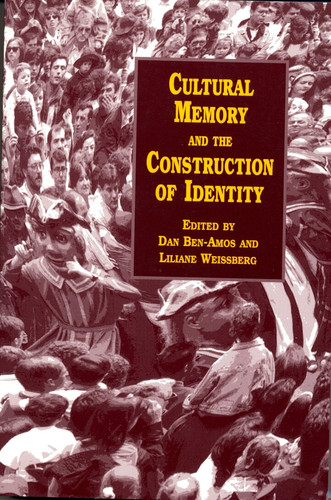
Cultural memory and the construction of identity

Dan Ben-Amos,Liliane Weissberg
This volume explores the dynamics of cultural memory in a variety of contexts. How do we remember persons, objects, events? Memory seems so personal, but, at the same time, it is shaped by collective experience and public representations. Newspapers, television, and even celebrations and festivities mark for us not only who we are, but also who we were and how we lived. Cultural Memory and the Construction of Identity brings together scholars of folklore, literature, history, and communication to explore the dynamics of cultural memory in a variety of contexts. The authors show how memory is shaped and how it operates in uniting society and creating images that attain the value of truth even if they deviate from fact. They point to the relationship between this memory and our notion of "culture." They also discuss this cultural memory on the level of everyday life. Building on research in the field, their contributions clearly show that cultural memory has become the creative invention of the past in service of both the present and an imagined future.
Wayne State University Press 1999 333 pages

The Century Dictionary And Cyclopedia The Century Dictionary ... Prepared Under The Superintendence Of William Dwight Whitney ... Rev. & Enl. Under The Superintendence Of Benjamin E. Smith

William Dwight Whitney,Benjamin Eli Smith
This extensive dictionary and encyclopedia was overseen by two highly respected scholars of the late 19th century. Its entries cover a wide range of topics, from English language usage and etymology to science, literature, and history. A valuable resource for anyone seeking a comprehensive understanding of the era. This work has been selected by scholars as being culturally important, and is part of the knowledge base of civilization as we know it. This work is in the "public domain in the United States of America, and possibly other nations. Within the United States, you may freely copy and distribute this work, as no entity (individual or corporate) has a copyright on the body of the work. Scholars believe, and we concur, that this work is important enough to be preserved, reproduced, and made generally available to the public. We appreciate your support of the preservation process, and thank you for being an important part of keeping this knowledge alive and relevant.
Creative Media Partners, LLC 2023-07-18 834 pages

The Blood libel legend: a casebook in anti-Semitic folklore

Alan Dundes
Alan Dundes, in this casebook of an anti-Semitic legend, demonstrates the power of folklore to influence thought and history. According to the blood libel legend, Jews murdered Christian infants to obtain blood to make matzah. Dundes has gathered here the work of leading scholars who examine the varied sources and elaborations of the legend. Collectively, their essays constitute a forceful statement against this false accusation. The legend is traced from the murder of William of Norwich in 1144, one of the first reported cases of ritualized murder attributed to Jews, through nineteenth-century Egyptian reports, Spanish examples, Catholic periodicals, modern English instances, and twentieth-century American cases. The essays deal not only with historical cases and surveys of blood libel in different locales, but also with literary renditions of the legend, including the ballad “Sir Hugh, or, the Jew’s Daughter” and Chaucer’s “The Prioress’s Tale.” These case studies provide a comprehensive view of the complex nature of the blood libel legend. The concluding section of the volume includes an analysis of the legend that focuses on Christian misunderstanding of the Jewish feast of Purim and the child abuse component of the legend and that attempts to bring psychoanalytic theory to bear on the content of the blood libel legend. The final essay by Alan Dundes takes a distinctly folkloristic approach, examining the legend as part of the belief system that Christians developed about Jews. This study of the blood libel legend will interest folklorists, scholars of Catholicism and Judaism, and many general readers, for it is both the literature and the history of anti-Semitism.
University of Wisconsin Press 1991-10-15 385 pages