57 results for "American History"

Each Mind A Kingdom: American Women, Sexual Purity, And The New Thought Movement, 1875-1920

Satter, Beryl
The New Thought Movement was an enormously popular late nineteenth-century spiritual movement led largely by and for women. Mary Baker Eddy's Christian Science is but one example of the fascinating range of these groups, which advocated a belief in mind over matter and espoused women's spiritual ability to purify the world. This work is the first to uncover the cultural implications of New Thought, embedding it in the intellectual traditions of nineteenth-century America, and illuminating its connections with the self-help and New Age enthusiasms of our own fin-de-siècle. Beryl Satter examines New Thought in all its complexity, presenting along the way a captivating cast of characters. In lively and accessible prose, she introduces the people, the institutions, the texts, and the ideas that comprised the New Thought movement. This fascinating social and intellectual history explores the complex relationships among social reform, alternative religion, medicine, and psychology which persist to this day.
Diane Pub Co 2004-04 382 pages

Antebellum American Culture An Interpretive Anthology

David Brion Davis
First published in 1979, this volume offers students and teachers a unique view of American history prior to the Civil War. Distinguished historian David Brion Davis has chosen a diverse array of primary sources that show the actual concerns, hopes, fears, and understandings of ordinary antebellum Americans. He places these sources within a clear interpretive narrative that brings the documents to life and highlights themes that social and cultural historians have brought to our attention in recent years. Beginning with the family and the issue of socialization and influence, the units move on to struggles over access to wealth and power; the plight of "outsiders" in an "open" society; and ideals of progress, perfection, and mission. The reader of this volume hears a great diversity of voices but also grasps the unities that survived even the Civil War.
Pennsylvania State University Press 2007-09-04 496 pages

A Living Wage American Workers and the Making of Consumer Society

Lawrence B. Glickman
The fight for a "living wage" has a long and revealing history as documented here by Lawrence B. Glickman. The labor movement's response to wages shows how American workers negotiated the transition from artisan to consumer, opening up new political possibilities for organized workers and creating contradictions that continue to haunt the labor movement today. Nineteenth-century workers hoped to become self-employed artisans, rather than permanent "wage slaves." After the Civil War, however, unions redefined working-class identity in consumerist terms, and demanded a wage that would reward workers commensurate with their needs as consumers. This consumerist turn in labor ideology also led workers to struggle for shorter hours and union labels. First articulated in the 1870s, the demand for a living wage was voiced increasingly by labor leaders and reformers at the turn of the century. Glickman explores the racial, ethnic, and gender implications, as white male workers defined themselves in contrast to African Americans, women, Asians, and recent European immigrants. He shows how a historical perspective on the concept of a living wage can inform our understanding of current controversies.
Cornell University Press 1999-03-11 240 pages

Kings or people: Power and the mandate to rule..

Bendix, Reinhard
From the Preface: The world in which we live has its roots far back in history, and as a world power America must come to terms with countries which were formed in their present mold long before the American, revolution. All those to whom an exploration of this historical background will appeal probably share with me an immediate empathy with the anguish of nation-building around the world. This book is a study of what that anguish meant in times past when countries were first developing their political institutions and when they turned more recently from royal authority to a popular mandate. The problems of developing such institutions are formidable, then as well as now. A scholarly concern with these problems must touch on many subjects in social stratification, religion, political sociology, and the history of ideas, and the book treats these and related themes in their specific historical contexts. This interpretive work is addressed not only to students of political development but also to the general reader who is interested in a large view of history. That reader is provided with sufficient detail and annotation so that the many diverse contexts with which this study deals can be understood. A thematic outline of the book is presented on the first pages of the introduction, which deals as well with the reasons for my approach to historical sociology.
University of California Press 1980-04-08 692 pages

Protestant, Catholic, Jew: an essay in American religious sociology

Herberg, Will
"The most honored discussion of American religion in mid-twentieth century times is Will Herberg's Protestant-Catholic-Jew . . . . [It] spoke precisely to the mid-century condition and speaks in still applicable ways to the American condition and, at its best, the human condition."—Martin E. Marty, from the Introduction "In Protestant-Catholic-Jew Will Herberg has written the most fascinating essay on the religious sociology of America that has appeared in decades. He has digested all the relevant historical, sociological and other analytical studies, but the product is no mere summary of previous findings. He has made these findings the basis of a new and creative approach to the American scene. It throws as much light on American society as a whole as it does on the peculiarly religious aspects of American life. Mr. Herberg. . . illumines many facets of the American reality, and each chapter presents surprising, and yet very compelling, theses about the religious life of this country. Of all these perhaps the most telling is his thesis that America is not so much a melting pot as three fairly separate melting pots."—Reinhold Niebuhr, New Yorks Times Book Review
University of Chicago Press 1983-10-15 309 pages

The Exile Cuba in the Heart of Miami

David Rieff
This is a fascinating portrait of Miami's Cuban population, the most successful group of immigrants to settle in the United States since the Jews of the nineteenth century. David Rieff has provided an engrossing look at a group exiled from its homeland, showing how America has affected these immigrants, and what it means to become an American in the late twentieth century.
Simon and Schuster 1994-08-31 224 pages

Facing up to modernity: excursions in society, politics, and religion

Berger, Peter L.
PETER BERGER, renowned sociologist and social critic, theologian and novelist, here brings his many gifts to bear on the endlessly interesting, if also painful, predicament of living in the modern world. In discussions ranging all the way from such private experiences as marriage and psychoanalysis to such public issues as the secularization of religion, the corruptions of pornography, or the growing indifference to murder, he brilliantly demonstrates how that predicament has grown out of the modern disbelief in God and the weakening of the institutions of community. The modernity which constitutes the central preoccupation of this book raises questions of both a very general and a very particular kind: "How," in Peter Berger's own words, "can one understand that peculiar reality we know as modern society?" Beyond understanding it, how can one actually engage in meaningful political action in its American version? And how does modernity constrain or condition a man's religious quest? The author's answers, based on a sure sense of history combined with an infinitely patient yet toughminded grasp of the way societies actually work, bring new illumination to virtually every page. For those who have not accepted Peter Berger's views about the nature of our present predicament as well as for those who have-indeed, for everyone concerned with understanding himself as a modern person and as a citizen of a modern state-Facing Up to Modernity is an experience in self- discovery
Basic Books 1977 233 pages

The new science of the enchanted universe: an anthropology of most of humanity

Sahlins, Marshall
From the perspective of Western modernity, humanity inhabits a disenchanted cosmos. Gods, spirits, and ancestors have left us for a transcendent beyond, no longer living in our midst and being involved in all matters of everyday life from the trivial to the dire. Yet the vast majority of cultures throughout human history treat spirits as very real persons, members of a cosmic society who interact with humans and control their fate. In most cultures, even today, people are but a small part of an enchanted universe misconstrued by the transcendent categories of “religion” and the “supernatural.” The New Science of the Enchanted Universe shows how anthropologists and other social scientists must rethink these cultures of immanence and study them by their own lights. In this, his last, revelatory book, Marshall Sahlins announces a new method and sets an exciting agenda for the field. He takes readers around the world, from Inuit of the Arctic Circle to pastoral Dinka of East Africa, from Araweté swidden gardeners of Amazonia to Trobriand Island horticulturalists. In the process, Sahlins sheds new light on classical and contemporary ethnographies that describe these cultures of immanence and reveals how even the apparently mundane, all-too-human spheres of “economics” and “politics” emerge as people negotiate with, and ultimately usurp, the powers of the gods.
Princeton University Press 2023-12-05 208 pages

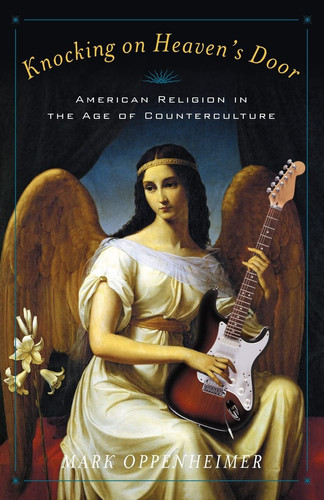
Knocking on Heaven's Door American Religion in the Age of Counterculture

Mark Oppenheimer
A witty and provocative reappraisal of the impact of the cultural upheavals of the sixties on American religious life What happened to American religion during the cultural revolution of the 1960s and early 1970s? The era has long been associated with the ascendancy of Eastern religions and fringe cults. But in this provocative book, Mark Oppenheimer demonstrates that contrary to conventional wisdom, most Americans did not turn on, tune in, and drop out of mainstream religious groups during the Age of Aquarius. Instead, many Americans brought the counterculture with them to their churches and temples, changing the face of American religion. Introducing us to America's first gay ministers and first female priests, to hippie Jews and folk-singing Catholics, Oppenheimer demonstrates that this was an era of extraordinary religious vitality. Drawing on a rich range of archival material as well as interviews with many of the protagonists, Knocking on Heaven's Door offersa wry and iconoclastic reappraisal of the ways in which the upheavals of the sixties changed America's relationship with God.
Yale University Press 2003 284 pages

Hail Babylon! NPR's Road Scholar Goes in Search of the American City

Andrei Codrescu
Andrei Codrescu takes us cross-country through the withered, yet alluring American urban landscape, visiting New York, Baltimore, New Orleans, Little Rock, San Antonio, Albuquerque, Las Vegas, and Portland, Oregon. He discovers that cities are at the very center of the forces determining our future, in this major work by one of America's most gifted social critics.
Macmillan 1999-06-19 272 pages

Revealing lives: autobiography, biography, and gender

Susan Groag Bell,Marilyn Yalom
In this book gender is the lens through which autobiography and biography are scrutinized. The authors show what is revealed when they magnify the gendered aspects of both men’s and women’s writing. The eternal questions of identity, choice, responsibility, happiness, tragedy, and even death are interpreted in terms of gender analysis. The book presents a sequence of studies from the early nineteenth to the late twentieth century that includes individuals such as American poet Anne Sexton and German writers Christa Wolf and Paul Celan, and groups such as nineteenth-century Mexican women and members of the British working class. It extends the paradigm of “self-reflexive” literature to include and highlight the overlap between autobiography and biography, especially in the case of women who often wrote their lives obliquely through the biographies of their famous male relatives, e. g., Adèle Hugo and Anne Thackeray Ritchie. The authors refuse to accept a monolithic conception of gender. The studies of Charles and Mary Lamb, Nadezhda Durova, and John Stuart Mill demonstrate that even in the nineteenth century, a binary gender system is inadequate as a mode of approach to actual life stories.
State University of New York Press 1990-10-18 255 pages

Strangeland: how Britain stopped making sense

Sopel, Jon
From Jon Sopel, bestselling author and presenter of hit podcast The News Agents , comes an incisive examination of post-Brexit Britain and what it means for our future. 'I like and trust Jon Sopel and you should too' JOE LYCETT 'A thrilling, nerve-wracking book. You couldn't make the last ten years up; thanks to Jon Sopel, you don't have to' PETER FRANKOPAN 'A hugely entertaining and quite traumatic rollercoaster' ARMANDO IANNUCCI 'Acute and unflinching - Sopel deploys his foreign correspondent skills on home shores as well as far ones, and brings together the story of a tumultuous few years on both sides of the Atlantic' MISHAL HUSAIN Returning to the UK in some ways has been disconcerting - or maybe discombobulating would be a better word. It is, after all, my home; it is where I grew up, a country I love and am proud of. But either it' s changed, or I have. Maybe both. It just feels like a strange land. After eight years of political reporting in the US, Jon Sopel returned home to the UK to find a very different place than the one he left. In his first book since launching the global hit podcast The News Agents , Jon explores what has happened to the country he once knew. Either Britain has changed dramatically, or he has. Perhaps it' s both. As a second Trump administration begins, and a new chapter of American history exerts its influence over our own isle, Strangeland paints an unforgettable portrait of a country gone through the looking glass.
Ebury Press 2025-05-29 352 pages

Irving Howe

Gerald Sorin
A New York Times “Books for Summer Reading” selection Winner of the 2003 National Jewish Book Award for History By the time he died in 1993 at the age of 73, Irving Howe was one of the twentieth century’s most important public thinkers. Deeply passionate, committed to social reform and secular Jewishness, ardently devoted to fiction and poetry, in love with baseball, music, and ballet, Howe wrote with such eloquence and lived with such conviction that his extraordinary work is now part of the canon of American social thought. In the first comprehensive biography of Howe’s life, historian Gerald Sorin brings us close to this man who rose from Jewish immigrant poverty in the 1930s to become one of the most provocative intellectuals of our time. Known most widely for his award-winning book World of Our Fathers, a rich portrayal of the East European Jewish experience in New York, Howe also won acclaim for his prodigious output of illuminating essays on American culture and as an indefatigable promoter of democratic socialism as can be seen in the pages of Dissent, the journal he edited for nearly forty years. Deeply devoted to the ideal of democratic radicalism and true equality, Howe was constantly engaged in a struggle for decency and basic fairness in the face of social injustice. In the century of Auschwitz, the Gulag, and global inter-ethnic mass murder, it was difficult to sustain political certainties and take pride in one's humanity. To have lived a life of conviction and engagement in that era was a notable achievement. Irving Howe lived such a life and Gerald Sorin has done a masterful job of guiding us through it in all its passion and complexity.
New York University Press 2002 386 pages

The Goffman reader

Goffman, Erving
The Goffman Reader aims to bring the most complete collection of Erving Goffman's (1922-1982) writing and thinking as a sociologist. Among the most inventive, unique and individualistic of thinkers in American sociology, his works first appeared in the early 1950's at a time when a more formal, traditional sociology dominated the scene. In this collection, Goffman's work is arranged into four categories: the production of self, the confined self, the nature of social life, and the framing of experience. Through this arrangement, readers will not only be presented with Goffman's thinking in chronological order, but also with a framework of analysis that clearly introduces the social theoretical ideas by which Goffman shaped the direction of sociological thought through the late twentieth century.
Blackwell 1997-07-07 285 pages

Politics in Black and White Race and Power in Los Angeles

Raphael Sonenshein
This book reaches deep into the past of the city of Los Angeles and carries through to the dramatic events that have recently received global attention--the Rodney King beating and the uprising in South Central L.A. Tracing the evolution of an extraordinary biracial coalition in Los Angeles behind Mayor Tom Bradley, Raphael Sonenshein shows how "crossover" politics and racial violence coexist in urban America. While challenging the prevailing pessimism about biracial coalitions in general, he also compares their relative successes in Los Angeles to their disheartening failures in New York City. What emerges is a probing look at a crucial issue of politics in the United States: can whites and minorities find common ground?
Princeton University Press 1993 301 pages

The calling of sociology and other essays on the pursuit of learning

Shils, Edward
This third volume of the Selected Papers of Edward Shils brings together ten essays, three of which have never been published before and all the others of which have been completely revised and elaborated. They deal with the history of American and European sociology as an intellectual undertaking and as a means to the attainment of practical ends. Professor Shils's main themes are the influence of ethical and practical intentions on scholarly study in the social sciences, the autonomy of the intellectual tradition of sociology, and the significance of the institutional organization of sociological teaching and research.
University of Chicago Press 1980 498 pages

Antisemitism: an American tradition

Nadell, Pamela Susan
"Jews experienced antisemitism the moment they landed on what would become the United States. When they first arrived in New Amsterdam in 1654, Peter Stuyvesant tried but failed to deport them. As historian Pamela S. Nadell tells in Antisemitism, an American Tradition, this was only antisemitism's beginning on our shores, as negative European stereotypes about Jews rooted into American soil. Compared with the Old World, with its expulsions, Inquisitions, ghettos, and Holocaust, America's Jews have a different history -- but one where antisemitism, even if it has had fewer dramatic eruptions, is deeply embedded. Jews in America faced restrictions on holding office and getting financial credit. Universities set quotas to limit the number of Jews attending and businesses refused to hire them. Jews endured verbal and physical attacks, and their synagogues and cemeteries, continuing to this day, were vandalized and desecrated. Antisemitism, an American Tradition investigates the depths of this fraught history and its recent manifestations: white nationalists chanting "Jews will not replace us" in Charlottesville, Virginia, and a gunman murdering eleven worshipers of Pittsburgh's Tree of Life synagogue building. Nadell also shows Jews responding to prejudice and hate. America's Jews created advocacy organizations. They turned to the courts to safeguard their constitutional rights. They made common cause with allies to confront all types of hate. They even used their fists when needed. At a time when prejudice, discrimination, and hate against Jews is flaring across the country, Antisemitism, an American Tradition argues that we must understand the past. This momentous work reveals how antisemitism -- and resistance to that hatred -- endures, representing not a rupture from America's history, but a centuries-old legacy." -- Book jacket.
W. W. Norton & Company 2025-10-14 332 pages

Of One Blood Abolitionism and the Origins of Racial Equality

Paul Goodman
The abolition movement is perhaps the most salient example of the struggle the United States has faced in its long and complex confrontation with the issue of race. In his final book, historian Paul Goodman, who died in 1995, presents a new and important interpretation of abolitionism. Goodman pays particular attention to the role that blacks played in the movement. In the half-century following the American Revolution, a sizable free black population emerged, the result of state-sponsored emancipation in the North and individual manumission in the slave states. At the same time, a white movement took shape, in the form of the American Colonization Society, that proposed to solve the slavery question by sending the emancipated blacks to Africa and making Liberia an American "colony." The resistance of northern free blacks was instrumental in exposing the racist ideology underlying colonization and inspiring early white abolitionists to attack slavery straight on. In a society suffused with racism, says Goodman, abolitionism stood apart by its embrace of racial equality as a Christian imperative. Goodman demonstrates that the abolitionist movement had a far broader social basis than was previously thought. Drawing on census and town records, his portraits of abolitionists reveal the many contributions of ordinary citizens, especially laborers and women long overshadowed by famous movement leaders. Paul Goodman's humane spirit informs these pages. His book is a scholarly legacy that will enrich the history of antebellum race and reform movements for years to come. "[God] hath made of one blood all nations of men for to dwell on all the face of the earth."—Acts 17:26
University of California Press 2000-11-02 324 pages

In Love with Night The American Romance with Robert Kennedy

Ronald Steel
More than three decades have passed since Robert Kennedy was assassinated seeking the Democratic nomination for the presidency. During that time, a powerful legend has grown around him, decreeing that he would have quickly ended the Vietnam War, violence in the cities, and racial and social injustice across the land. Millions of Americans continue to believe that legend. Drawing on his striking interpretation of RFK's character, award-winning historian Ronald Steel examines the life against the legend that Kennedy consciously helped create.
Thorndike Press 2000 413 pages

Stranger and friend: the way of an anthropologist

Powdermaker, Hortense
"Her book is all about people. . . . The publishers say of it that 'field work in its personal and objective dimension is placed under a kind of microscope. The book is a must for all field workers in the social sciences.' That claim does not seem to me excessive." -Edmund Leach, New York Review of Books "There are few books which are as informative of what it means to be a field-worker in social science as Hortense Powdermaker's Stranger and Friend. This book should be must reading both for scholars and students." -Seymour M. Lipset, Harvard University "Stranger and Friend is a passionate plea for anthropology as a human discipline as well as a science, as an all-engrossing life experience as well as a profession, and increasingly as a subject in the curriculum of graduate and undergraduate studies." -Margaret Mead, American Museum of Natural History "This is just the kind of book needed in anthropology today. It tells objectively, but in warm and human terms, how important research was done. It contributes to methodology and to the history of the science of anthropology." -Charles Wagley, Columbia University "This is an essential book for anyone interested in the problems of an anthropologist at work." -Cornelius Osgood, Peabody Museum of Natural History
W. W. Norton 1966 315 pages