329 results for "Biology"

It's So Amazing! A Book about Eggs, Sperm, Birth, Babies, and Families

Robie H. Harris
From the trusted team of Robie H. Harris and Michael Emberley, a classic resource for younger children receives its most ambitiously updated edition yet. How does a baby begin and how is it born? How did I begin? Why are some parts of kids' bodies different from some parts of other kids' bodies? Most younger kids have questions about reproduction, babies, love, sex, and gender, too. Some also have concerns. For over twenty years, It's So Amazing! has provided children age seven and up with the honest answers they're looking for through age-appropriate, reassuring words and accurate, up-to-date, inclusive art. Throughout the book, two cartoon characters, Bird and Bee, are the voices of kids. They talk together to help children feel that they are not the only ones wondering how we all began. Rigorously vetted by experts and featuring updated and new facts on pregnancy, birth, adoption, bodies, sexuality, gender identity, OK touches, not OK touches, straight and LGBTQ+ families and people, and many other topics, this comprehensive resource for kids, parents, librarians, teachers, booksellers, and healthcare providers is the book that can help younger kids and their families talk together and find answers to their many questions.
Candlewick Press 2024-01-09 144 pages

Kay's Incredible Inventions

Adam Kay
Do you ever wonder where the stuff around you all came from? No, not from eBay. I mean, who had the amazing idea of making a mobile phone or the annoying idea of building a school? For example, did you know that Velcro was invented by a dog and WiFi by a movie star? (Spoiler alert - it wasn't Zendaya.) In the fourth laugh-out-loud book from Adam Kay and Henry Paker, you'll learn all about the coolest, grossest and most ridiculous inventions in the world. You'll meet the queen who used the first ever toilet, learn why margarine used to be full of maggots and find out why Ancient Greeks wiped their bums on dinner plates. Oh, and hopefully some slightly more useful facts as well... An A to Kay to Z of the random, ridiculous and revolutionary inventions that changed our lives. (And some that definitely didn't . . .) Praise for Kay's Anatomy- 'An enjoyably gross look at the human body. Hours of gruesome fun guaranteed' i 'Like listening to a teacher who makes pupils fall about' Sunday Times 'Totally brilliant!' Jacqueline Wilson 'Fun and informative' Malorie Blackman 'Very funny - this exciting book is bound to inspire the next generation of medics' Sunday Express Praise for Kay's Marvellous Medicine- 'A ridiculously funny read that will delight, gross out and educate all at the same time' Independent 'Educational and entertaining. It should be on the national curriculum!' Harry Hill 'Completely marvellous and very funny' BookTrust
Penguin Random House 2023-11-02 429 pages

How sex works: why we look, smell, taste, feel, and act the way we do

Moalem, Sharon
Neurogeneticist Moalem takes us on a trip from prehistory to the forefront of cutting-edge medical research, and through a bedroom or two, to tell the story of how human sexuality has developed over time. This book challenges common perceptions about our bodies and presents astonishing discoveries from the frontiers of science as it traces the transformation of sex across species and through time to its current role in human societies. Find out the answers to such provocative questions as: Can the birth control pill influence the type of men women are attracted to? What do men and honeybees have in common when it comes to sex? When are women most likely to cheat? From the composition and function of human sex organs to the fascinating biochemistry behind sexual attraction, How Sex Works presents captivating new ideas and surprising answers to questions about contraception, fertility, circumcision, menopause, STDs, homosexuality, orgasms, and more.--From publisher description.
HarperCollins 2009-04-28 274 pages

Sex is a funny word: a book about bodies, feelings, and YOU

Silverberg, Cory,Smyth, Fiona
"A comic book for kids that includes children and families of all makeups, orientations, and gender identies, Sex Is a Funny Word is an essential resource about bodies, gender, and sexuality for children ages 8 to 10 as well as their parents and caregivers. Much more than the "facts of life" or "the birds and the bees," Sex Is a Funny Word opens up conversations between young people and their caregivers in a way that allows adults to convey their values and beliefs while providing information about boundaries, safety, and joy. The eagerly anticipated follow up to Lambda-nominated What Makes a Baby, from sex educator Cory Silverberg and artist Fiona Smyth, Sex Is a Funny Word reimagines "sex talk" for the twenty-first century."--
Seven Stories Press 2015-07-28 159 pages

Why is the Penis Shaped Like That? And Other Reflections on Being Human

Jesse Bering
"Titillating and provocative essays from one of the freshest voices in science today -- Why do testicles hang the way they do? Is there an adaptive function to the female orgasm? What does it feel like to want to kill yourself? Does "free will" really exist? And why is the penis shaped like that anyway? In Why Is the Penis Shaped Like That?, the research psychologist and award-winning columnist Jesse Bering features more than thirty of his most popular essays from Scientific American and Slate, as well as two new pieces, that take readers on a bold and captivating journey through some of the most taboo issues related to evolution and human behavior. Exploring the history of cannibalism, the neurology of people who are sexually attracted to animals, the evolution of human body fluids, the science of homosexuality, and serious questions about life and death, Bering astutely covers a generous expanse of our kaleidoscope of quirks and origins. With his characteristic irreverence and trademark cheekiness, Bering leaves no topic unturned or curiosity unexamined, and he does it all with an audaciously original voice. Whether you are interested in the psychological history behind the many facets of sexual desire or the evolutionary patterns that have dictated our current mystique and phallic physique, Why Is the Penis Shaped Like That? is bound to create lively discussion and debate for years to come"--
Transworld Publishers Limited 2012 320 pages

What Darwin got wrong

Fodor, Jerry A.
With a New Afterword What Darwin Got Wrong is a remarkable book, one that dares to challenge the theory of natural selection as an explanation for how evolution works--a devastating critique not in the name of religion but in the name of good science. Combining the results of cutting-edge work in experimental biology with crystal-clear philosophical arguments, Fodor and Piattelli-Palmarini mount a reasoned and convincing assault on the central tenets of Darwin's account of the origin of species. This is a concise argument that will transform the debate about evolution and move us beyond the false dilemma of being either for natural selection or against science.
Picador/Farrar, Straus and Giroux 2011-03-01 292 pages

How to clone a mammoth: the science of de-extinction

Shapiro, Beth Alison
"An insider's view on bringing extinct species back to life. Could extinct species, like mammoths and passenger pigeons, be brought back to life? In How to Clone a Mammoth, Beth Shapiro, evolutionary biologist and pioneer in ancient DNA research, addresses this intriguing question by walking readers through the astonishing and controversial process of de-extinction. From deciding which species should be restored to anticipating how revived populations might be overseen in the wild, Shapiro vividly explores the extraordinary cutting-edge science that is being used to resurrect the past. Considering de-extinction's practical benefits and ethical challenges, Shapiro argues that the overarching goal should be the revitalization and stabilization of contemporary ecosystems. Looking at the very real and compelling science behind an idea once seen as science fiction, How to Clone a Mammoth demonstrates how de-extinction will redefine conservation's future"--
Princeton University Press 2020-09-08 220 pages

The Anatomy of Hope (Pb)

Jerome Groopman
An inspiring and profoundly enlightening exploration of one doctor’s discovery of how hope can change the course of illness Since the time of the ancient Greeks, human beings have believed that hope is essential to life. Now, in this groundbreaking book, Harvard Medical School professor and New Yorker staff writer Jerome Groopman shows us why. The search for hope is most urgent at the patient’s bedside. The Anatomy of Hope takes us there, bringing us into the lives of people at pivotal moments when they reach for and find hope--or when it eludes their grasp. Through these intimate portraits, we learn how to distinguish true hope from false, why some people feel they are undeserving of it, and whether we should ever abandon our search. Can hope contribute to recovery by changing physical well-being? To answer this hotly debated question, Groopman embarked on an investigative journey to cutting-edge laboratories where researchers are unraveling an authentic biology of hope. There he finds a scientific basis for understanding the role of this vital emotion in the outcome of illness. Here is a book that offers a new way of thinking about hope, with a message for all readers, not only patients and their families. "We are just beginning to appreciate hope’s reach," Groopman writes, "and have not defined its limits. I see hope as the very heart of healing." From the Hardcover edition.
Picador

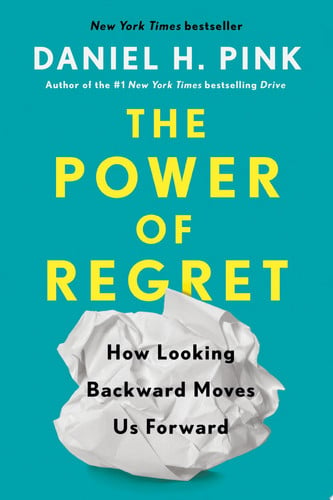
The power of regret: how looking backward moves us forward

Pink, Daniel H.
"From Daniel H. Pink, the #1 New York Times-bestselling author of When and Drive, a new book about the transforming power of that crucial and misunderstood emotion, regret. "Regret is not dangerous or abnormal, it is healthy and universal, an integral part of being human," Daniel H. Pink writes in his provocative and eye-opening new book. "Done right, it needn't bring us down; it can lift us up." Drawing from new research in social psychology, neuroscience, biology, and more, as well as from more than ten thousand people in thirty-five countries around the world who responded to his World Regret Survey-the largest of its kind ever conducted-Pink challenges the idea of regret being a drag on our self-esteem and outlook. In fact, understanding how regret actually works and using those insights to reframe our perspective of it will help us reclaim regret as an indispensable emotion that can help us make smarter decisions, perform better at work and school, and bring greater meaning to our lives. As he did in his other paradigm-changing books When, Drive, and A Whole New Mind, Pink sets down a dynamic new way of thinking about regret and frames his ideas in ways that are clear, accessible, and pragmatic. Packed with true stories of people's regrets as well as practical takeaways for reimagining regret as a positive force in your own life, this book shows how we can live richer, more engaged lives-with no regrets"--
Riverhead Books 2022-02-01 240 pages

The Dance Language and Orientation of Bees

Karl von Frisch
A detailed monograph on the language of bees - their ability to communicate through "dance" as well as bees' methods of orientation by use of landmarks and polarized light. From the Dust Jacket: Bees are unique in the whole animal kingdom in the extent of their ability to communicate with one another. Karl von Frisch, probably the world's most renowned authority on bees, has devoted more than fifty years of his life to research into their language, their methods of orientation, and their sensory faculties. This book describes in detail, in clear, nontechnical prose, what the author and his collaborators have discovered over the years, how he learned to understand the language of the honeybees, and the numerous experiments he conducted to implement his understanding. Through years of patient observation and research, Professor von Frisch learned to understand the communication dances of the bees so well that he could find a food source or new nesting site solely by observing a scout bee's dance int he hives. This book makes fascinating reading for anyone, scientist or layman, interested in these most sophisticated of insects.
Harvard 1967 566 pages

Introduction to biostatistics

Sokal, Robert R.
This popular and critically acclaimed text for undergraduate courses concentrates on the practical applications of statistics to biology. Its straightforward approach offers students with a minimal background in mathematics an accessible introduction to biostatistics. Worked-out examples appear throughout the book, illuminating highly relevant examples of solutions to problems in biological data analysis. The treatment progresses from descriptive statistics to fundamental distributions and the testing of elementary statistical hypotheses. It introduces the analysis of variance, presenting an in-depth survey that ranges from single-classification to two-way analysis of variance. Additional topics include regression, correlation, and analysis of frequencies. Numerous tables provide computational methods, from initial setup to final result, for solving a variety of biostatistical problems.
Freeman 1987 363 pages

The trouble with testosterone: and other essays on the biology of the human predicament

Sapolsky, Robert M.
Finalist for the Los Angeles Times Book Prize From the man who Oliver Sacks hailed as “one of the best scientist/writers of our time,” a collection of sharply observed, uproariously funny essays on the biology of human culture and behavior. In the tradition of Stephen Jay Gould and Oliver Sacks, Robert Sapolsky offers a sparkling and erudite collection of essays about science, the world, and our relation to both. “The Trouble with Testosterone” explores the influence of that notorious hormone on male aggression. “Curious George’s Pharmacy” reexamines recent exciting claims that wild primates know how to medicate themselves with forest plants. “Junk Food Monkeys” relates the adventures of a troop of baboons who stumble upon a tourist garbage dump. And “Circling the Blanket for God” examines the neurobiological roots underlying religious belief. Drawing on his career as an evolutionary biologist and neurobiologist, Robert Sapolsky writes about the natural world vividly and insightfully. With candor, humor, and rich observations, these essays marry cutting-edge science with humanity, illuminating the interconnectedness of the world’s inhabitants with skill and flair.
Scribner 1997 288 pages

Inheritance: how our genes change our lives, and our lives change our genes

Moalem, Sharon
In this book, the author, a physician and writer employs his wide-ranging and interdisciplinary approach to science and medicine, explaining how art, history, superheroes, sex workers, and sports stars all help us understand the impact of our lives on our genes, and our genes on our lives. He explains new concepts in human genetics and health that indicate that the fundamental nature of the human genome is much more fluid and flexible than originally thought. He reveals how genetic breakthroughs are completely transforming our understanding of both the world and our lives. Conventional wisdom dictates that our genetic destiny is fixed at conception. But this book shows us that the human genome is far more fluid and fascinating than your ninth grade biology teacher ever imagined. By bringing us to the bedside of his unique and complex patients, he demonstrates what rare genetic conditions can teach us all about our own health and well-being. In the brave new world we are rapidly rocketing into, genetic knowledge has become absolutely crucial. This book provides a roadmap for this journey by teaching: Why you may have recovered from the psychological trauma caused by childhood bullying, but your genes may remain scarred for life ; How fructose is the sugar that makes fruits sweet, but if you have certain genes, consuming it can buy you a one-way trip to the coroner's office ; Why ingesting common painkillers is like dosing yourself repeatedly with morphine, if you have a certain set of genes ; How insurance companies legally use your genetic data to predict the risk of disability for you and your children, and how that impacts the coverage decisions they make for your family ; How to have the single most important conversation with your doctor, one that can save your life ; And finally, Why people with rare genetic conditions hold the keys to medical problems affecting millions. This book will alter how you view your genes, your health, and your life.
Grand Central Publishing 2014 255 pages

Emotional

Mlodinow, Leonard
You make hundreds of decisions every day, from what to eat for breakfast to how you should invest, and not one of those decisions would be possible without emotion. It has long been said that thinking and feeling are separate and opposing forces in our behavior. But as Leonard Mlodinow, the best-selling author of Subliminal, tells us, extraordinary advances in psychology and neuroscience have proven that emotions are as critical to our well-being as thinking. How can you connect better with others? How can you make sense of your frustration, fear, and anxiety? What can you do to live a happier life? The answers lie in understanding your emotions. Journeying from the labs of pioneering scientists to real-world scenarios that have flirted with disaster, Mlodinow shows us how our emotions can help, why they sometimes hurt, and what we can learn in both instances. Using deep insights into our evolution and biology, Mlodinow gives us the tools to understand our emotions better and to maximize their benefits. Told with his characteristic clarity and fascinating stories, Emotional explores the new science of feelings and offers us an essential guide to making the most of one of nature's greatest gifts.[Bokinfo]
Random House US 2023-02-14 272 pages

Science ink: tattoos of the science obsessed

Zimmer, Carl
"This mind-blowing illustrated collection showcases hundreds of tattoos dedicated to numerous scientific arenas, from evolutionary biology and neuroscience to mathematics and astrophysics, with a brief note from each inked individual highlighting the reasons for selecting the tattoo. Best of all, each example is a leaping-off point for best-selling science essayist and lecturer Zimmer to muse about the subject, whether it's the importance of a tattoo of Darwin's finches or the significance of the uranium atom inked into the chest of a young radiologist"--
Sterling 2014 271 pages

Totem and Taboo

Sigmund Freud
"Totem and Taboo" is a collection of four essays by Sigmund Freud that were published together in German in 1913. Freud sought to apply his theories of psychoanalysis to the study of anthropology and early human history. The four essays cover a wide range of topics. In "The Horror of Incest", Freud examines the varied and common rules in primitive cultures that limit contact between members of the same family. In "Taboo and Emotional Ambivalence," Freud posits that primitive cultures and their attitudes about magical objects are similar to the behavior of people with neurotic psychological conditions in the modern world. In "Animism, Magic and the Omnipotence of Thought," Freud draws comparisons between the primitive belief in magic and magical animals to obsessive and compulsive disorders. Finally, in "The Return of Totemism in Childhood," Freud, influenced by one of Charles Darwin's theories about the male-dominated arrangement of early human societies, looks for parallels with his own Oedipus complex theory in the structure of primitive cultures. A classic and influential work of early psychoanalysis, "Totem and Taboo" is an important read for students of both psychology and social anthropology.
Lulu.com 2022-10-24 172 pages

Extraterrestrial Civilizations

Isaac Asimov
Isaac Asimov concludes that we are not alone! Using the most up-to-date astronomical research as the backdrop for speculation, Asimov confronts the possibilities of other-worldly life head-on in Extraterrestrial Civilizations . In what will surely become one of the most provocative books ever written on the possibilities of life elsewhere in the universe, the incomparable Isaac Asimov provides chilling, hopeful, and exciting new insights. Here is astounding speculation about where the next giant step for mankind will take us. . . . Praise for Extraterrestrial Civilizations "[Isaac] Asimov holds our attention as he builds a meticulous case. We are not alone. It's just a matter of time until we know for sure." -- Miami Herald "Intriguing" -- Publishers Weekly
Fawcett Columbine 1980 282 pages