97 results for "Business"

Retail gangster: the insane, real-life story of Crazy Eddie

Weiss, Gary
"A biography of the spectacular rise and fall of Eddie Antar, better known as "Crazy Eddie," whose home electronics empire changed the world even as it turned out to be one of the biggest business scams of all time Back in the fall of 2016 we heard the news about the passing of Eddie Antar, "Crazy Eddie" as he was known to millions of people, the man behind the successful chain of electronic stores and one of the most iconic ad campaigns in history. Few things evoke the New York of a particular era the way "Crazy Eddie! His prices are insaaaaane!" does. The journalist Herb Greenberg called his death the "end of an era" and that couldn't be more true. What's insane is that his story has never been told. Before Enron, before Madoff, before The Wolf of Wall Street, Eddie Antar's corruption was second to none. The difference was that it was a street franchise, a local place that was in the blood stream of everyone's daily life in the 1970s and early '80s. And Eddie pulled it off with a certain style, an in your face blue collar chutzpah. Despite the fact that then U.S. Attorney Michael Chertoff called him "the Darth Vader of capitalism" after the extent of the fraud was revealed, one of the largest SEC frauds in American history after Crazy Eddie's stores went public in 1984, Eddie was talked about fondly by the people who worked for him. They still do--there are myriads of ex-Crazy Eddie employee web pages that still attract fans, and the Crazy Eddie fraud scheme is now taught in every business school across the United States. Many years have passed since the franchise went down in spectacular fashion but Crazy Eddie's moment has endured the way that iconic brands and characters do--one only need Google the media outpouring that accompanied his death. Maybe it's because it crystallized everything about 1970s New York almost perfectly, the merchandise and rise of consumer electronics (stereos!), the ads (cheesy!), the money (cash!). In Retail Gangster, investigative journalist Gary Weiss takes readers behind the scenes of one of the most unbelievable business scam stories of all time, a story spanning continents and generations, reaffirming the old adage that the truth is often stranger than fiction"--
Hachette Books 2022 316 pages

My anecdotal life : a memoir

Reiner, Carl
More than once, Carl Reiner has had friends say, “Hey, Reiner, you ought to write those things down.” And at eighty, he finally has. In this funny and engaging memoir, one of the best raconteurs on the planet recalls his life in show business in short comic takes. Reiner tells of how, after answering an ad for free acting classes on his brother Charlie’s advice, he forsakes a budding career as a machinist for an acting career. In “Sidney Bechet and His Jazz Band Meet Franz Kafka,” he captivates the legendary jazz man and his band with an unusual reading of The Metamorphosis , during a thunderstorm at a Catskills resort in 1942. Reiner also recalls the highlights of the succeeding decades: his first sweaty audition, impersonating a dog impersonating movie stars; his forays into the theater; his work on Your Show of Shows and The Dick Van Dyke Show during TV’s golden days; and his long friendship and collaboration with Mel Brooks which gave birth to the Two Thousand Year Old Man. In “A Recipe to Remember,” he recites a recipe for cream cheese cookies to a star-studded audience that includes Paul Newman, Leonard Bernstein, and Barbra Streisand. In “The Gourmet Eating Club,” he gives an insider’s take on the now-legendary group that included Mario Puzo, Joseph Heller, Zero Mostel, and other luminaries. Mary Tyler Moore, Sid Caesar, Mickey Rooney, Johnny Carson, Cary Grant, Dinah Shore, Ann Bancroft, Jean Renoir – the list goes on and on – also appear in what Reiner calls the “literary variety show” that captures the highs and lows of his extraordinary life. Through it all, Reiner displays the wit and warmth that have made him one of the most beloved figures in the entertainment business. This charming memoir will delight anyone who wants a behind-the-scenes look at five decades of Hollywood and television history.
St. Martin's Press 2003-05-16 236 pages

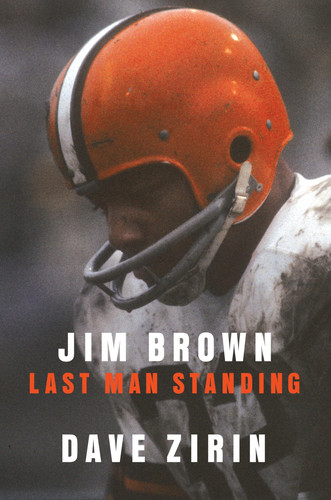
Jim Brown: last man standing

Zirin, Dave
A unique biography of Jim Brown—football legend, Hollywood star, and controversial activist—written by acclaimed sports journalist Dave Zirin. Jim Brown is recognized as perhaps the greatest football player to ever live. But his phenomenal nine-year career with the Cleveland Browns is only part of his remarkable story, the opening salvo to a much more sprawling epic. Brown parlayed his athletic fame into stardom in Hollywood, where it was thought that he could become “the black John Wayne.” He was an outspoken Black Power icon in the 1960s, and he formed Black Economic Unions to challenge racism in the business world. For this and for his decades of work as a truce negotiator with street gangs, Brown—along with such figures as Muhammad Ali, Bill Russell, and Billie Jean King—is revered as a socially conscious athlete. On the most hypermasculine cultural canvases of the United States—NFL football, the Black Power movement, Hollywood's blaxploitation films, gang intervention both inside and outside prison walls—Jim Brown has made his mark. Yet in the landscape of the most toxic expression of “what makes a man”—numerous accusations of violence against women—he has left a jagged mark as well. Dave Zirin's book redefines an American icon, and not always in a flattering light. At eighty-one years old, Brown continues to speak out and look for fights. His recent public support of Donald Trump and criticism of Colin Kaepernick are just the latest examples of someone who seems restless if he is not in conflict. Jim Brown is a raw and thrilling account of Brown's remarkable life and a must-read for sports fans and students of the black freedom struggle.
Blue Rider Press 2018-05-15 320 pages

One tough mother: taking charge in life, business, and apple pies

Boyle, Gert
When a heart attack claimed Gert Boyle's husband in 1970, the forty-six-year-old housewife and mother of three found herself at the helm of Columbia Sportswear, a small outerwear manufacturer in Portland, Oregon, that was struggling financially. With no business experience whatsoever, Boyle was faced with the challenge of running Columbia, which had been founded in 1937 by her father — a Jewish immigrant who had fled Hitler's Germany. Boyle and her son Tim persevered, turning a company that in 1970 had forty employees and less than 800,000 in annual sales into the leading seller of skiwear in the United States, with more than 2000 employees and over a billion in annual sales. Along the way, thanks in part to a creative marketing campaign that billed her as "one tough mother," Boyle established herself as an industry icon, and the first woman ever inducted into the International Sporting Goods Hall of Fame. One Tough Mother presents an honest and often irreverent account of Boyle's journey from a childhood in Nazi Germany to incredible success in America. She offers insights into succeeding in business and in life, and shares many of the advertisements and strategies that have made her so recognizable.
Carroll & Graf 2007 198 pages

From the ground up: a journey to reimagine the promise of America

Schultz, Howard,Gordon, Joanne
"From the longtime CEO and chairman of Starbucks, a bold, dramatic work about the new responsibilities that leaders, businesses, and citizens share in American society today--as viewed through the intimate lens of one man's life and work. What do we owe one another? How do we channel our drive, ingenuity, even our pain, into something more meaningful than individual success? And what is our duty in the places where we live, work, and play? These questions are at the heart of the American journey. They are also ones that Howard Schultz has grappled with personally since growing up in the Brooklyn housing projects and while building Starbucks from eleven stores into one of the world's most iconic brands. In From the Ground Up, Schultz looks for answers in two interwoven narratives. One story shows how his conflicted boyhood--including experiences he has never before revealed--motivated Schultz to become the first in his family to graduate from college, then to build the kind of company his father, a working-class laborer, never had a chance to work for: a business that tries to balance profit and human dignity. A parallel story offers a behind-the-scenes look at Schultz's unconventional efforts to challenge old notions about the role of business in society. From health insurance and free college tuition for part-time baristas to controversial initiatives about race and refugees, Schultz and his team tackled societal issues with the same creativity and rigor they applied to changing how the world consumes coffee. Throughout the book, Schultz introduces a cross-section of Americans transforming common struggles into shared successes. In these pages, lost youth find first jobs, aspiring college students overcome the yoke of debt, post-9/11 warriors replace lost limbs with indomitable spirit, former coal miners and opioid addicts pave fresh paths, entrepreneurs jump-start dreams, and better angels emerge from all corners of the country. From the Ground Up is part candid memoir, part uplifting blueprint of mutual responsibility, and part proof that ordinary people can do extraordinary things. At its heart, it's an optimistic, inspiring account of what happens when we stand up, speak out, and come together for purposes bigger than ourselves. Here is a new vision of what can be when we try our best to lead lives through the lens of humanity."--Dust jacket.
Random House 2019 352 pages

Harvey Milk: His Lives and Death

Faderman, Lillian
"Harvey Milk--eloquent, charismatic, and a smart-aleck--was elected to the San Francisco Board of Supervisors in 1977, but he had not even served a full year in office when he was shot by a homophobic fellow supervisor. Milk's assassination at the age of forty-eight made him the most famous gay man in modern history; twenty years later Time magazine included him on its list of the hundred most influential individuals of the twentieth century. Before finding his calling as a politician, however, Harvey variously tried being a schoolteacher, a securities analyst on Wall Street, a supporter of Barry Goldwater, a Broadway theater assistant, a bead-wearing hippie, the operator of a camera store and organizer of the local business community in San Francisco. He rejected Judaism as a religion, but he was deeply influenced by the cultural values of his Jewish upbringing and his understanding of anti-Semitism and the Holocaust. His early influences and his many personal and professional experiences finally came together when he decided to run for elective office as the forceful champion of gays, racial minorities, women, working people, the disabled, and senior citizens. In his last five years, he focused all of his tremendous energy on becoming a successful public figure with a distinct political voice."--Dust jacket.
Yale University Press 2018-01-01 283 pages

Murdoch's world: the last of the old media empires

Folkenflik, David
"NPR's media correspondent delves into the most influential media company in the world, News Corporation, showing how Murdoch survived the corruption scandal that nearly tore it apart In July 2012, testifying before a British parliamentary inquiry about the News of the World telephone hacking scandal, Rupert Murdoch experienced what he called "the most humble day of my life." Murdoch seemed certain to lose control of the monolithic news company he had built from a single Australian daily. The drama was all the more remarkable because of his unrivaled political and cultural influence worldwide, through Britain's take-no-prisoners tabloids, the top-rated Fox News Channel, the New York Post, and the Wall Street Journal. Within months, Murdoch, bloodied but not bowed, reasserted his hold by splitting News Corp into two companies. The summer's stories of the jockeying among Murdoch's children and corporate lieutenants to succeed him were silenced; what promised to be the second half of King Lear never unfolded. News Corp marched on, its king aging but firmly on the throne. In Murdoch's World, David Folkenflik tells the story of how News Corp survived this tumultuous chapter, and of the man who makes the news, literally: Rupert Murdoch"--
PublicAffairs 2013-10-22 373 pages

My journey

Karan, Donna
NAMED ONE OF THE BEST BOOKS OF THE YEAR BY HARPER’S BAZAAR • In this candid memoir, featuring a foreword by Barbra Streisand, renowned designer Donna Karan shares intimate details about her lonely childhood, her four-plus decades in the fashion industry, her two marriages, motherhood, and her ongoing quest for self-acceptance and spiritual peace. Donna Karan was born into the fashion business—her father was a tailor, and her mother was a showroom model and Seventh Avenue saleswoman—yet Karan dreamed of becoming a dancer like Martha Graham or a singer like Barbra Streisand. Fashion was her destiny, though. My Journey traces Karan’s early days as an intern at Anne Klein, the creation of her Seven Easy Pieces (which forever changed the way working women dressed), and the meteoric rise of her company. Along with juicy industry stories, Karan candidly discusses her difficult mother and traumatic childhood, her turbulent romantic life, all the loved ones she has lost over the years, and the personal awakening that occurred just as she reached the height of professional and financial success. That awakening set Karan down a path of spiritual discovery and self-improvement. From est to Kabbalah, from silent retreats to leech therapy, Karan tried everything to find, as she writes, “calm in the chaos.” But she also reveals how a chaotic life, fueled by endless curiosity and childlike impulses, helped her design seminal collections season after season for global powerhouse brands Donna Karan New York and DKNY. She also details how she has channeled her creativity (and her urge to solve problems and nurture others) into philanthropic work, particularly her early outspoken advocacy for AIDS awareness and research, and the creation of her Urban Zen Foundation, focusing on integrated healthcare and education as well as preservation of culture, which led to her current efforts in Haiti. Karan’s life has been crowded with glamorous characters and adventures around the world. But she sometimes still feels like that awkward teen from Long Island who never fit in—which makes her all the more endearing. Brimming with Karan’s infectious energy, My Journey is about much more than the fashion world: It is the story of a young woman whose vision and hard work made her a role model for women everywhere—a woman who dreamed big, fought to have it all, broke the rules, and loved passionately along the way. Praise for My Journey “By turns moving, insightful, and hilarious, yet always, always heartfelt . . . When you’re a true force of fashion, nothing holds you back.” — Vogue “When Donna Karan stepped down . . . it was the end of an era, so consider this autobiography her parting gift. . . . Expect a holistic view of the woman behind one of the most influential American labels.” — StyleCaster “Donna’s creativity and passion as a committed philanthropist are matched only by her gift for friendship. Whether she’s making the world more beautiful or giving a Haitian artisan the tools to create a sustainable business, Donna has always led with great heart and wonderful humor.” —President Bill Clinton “What we take for granted often comes from the most revolutionary of sources. In New York in the 1980s, no one was more radical than Donna Karan. She created a way of dressing that was womanly, practical, and empowering.” —Anna Wintour “An extraordinary personal, professional, and spiritual life . . . defined by Donna’s incredible resilience, her inward search for calm in the midst of success, and her insistence on always following her heart.” —Arianna Huffington
Ballantine Books 2015-10-13 363 pages

Good for the money: my fight to pay back America

Benmosche, Bob
"In 2009, at the peak of the financial crisis, AIG - the American insurance behemoth - was sinking fast. It was the peg upon which the nation hung its ire and resentment during the financial crisis: the pinnacle of Wall Street arrogance and greed. When Bob Benmosche climbed aboard as CEO, it was widely assumed that he would go down with his ship. In mere months, he turned things around, pulling AIG from the brink of financial collapse and restoring its profitability. Before three years were up, AIG had fully repaid its staggering debt to the U.S. government - with interest.Good for the Money is an unyielding leader's memoir of a career spent fixing companies through thoughtful, unconventional strategy. With his brash, no-holds-barred approach to the job, Benmosche restored AIG's employee morale and good name. His is a story of perseverance, told with refreshing irreverence in unpretentious terms.Called "an American hero" by Andrew Ross Sorkin, author of Too Big to Fail, Benmosche was a self-made man who never forgot what life is like for the nation's 99-percent; again and again, he pushed back against obstinate colleagues to salvage American jobs and industry. Good for the Money affords you a front-row seat for Benmosche's heated battles with major players from Geithner to Obama to Cuomo, and offers incomparable lessons in leadership from the legendary CEO who changed the way Wall Street does business"--
St. Martin's Press 2016-04-12 271 pages

I'm not really a waitress: how one woman revamped the beauty industry one color at a time

Weiss-Fischmann, Suzi
Inspiring women to pursue their own colorful dreams, I'm Not Really a Waitress tells the story of how Suzi Weiss-Fischmann transformed a small dental supply company into a #1 beauty brand around the world Today, OPI is known as a global beauty brand, famous for its trend-setting colors, unforgettable shade names, and celebrity collaborations with the biggest stars from film, television, music, and sports. But behind all the glamour is the little-known tale of OPI's unlikely origins-an intimate and inspiring story of a timid schoolgirl who arrives in this country with little money and no English and becomes the business leader and industry game-changer known worldwide as "Suzi, the First Lady of Nails." In I'm Not Really a Waitress --titled after OPI's top-selling nail color--Suzi reveals the events that led her family to flee Communist Hungary and eventually come to New York City in pursuit of the American dream. She shares how those early experiences gave rise to OPI's revolutionary vision of freedom and empowerment, and how Suzi transformed an industry by celebrating the power of color-and of women themselves.
Seal Press 2019-03-12 225 pages

Backstage pass

Stanley, Paul
The Starchild takes us behind the scenes, revealing what he's learned from a lifetime as the driving force of KISS, and how he brings his unique sensibility not only to his music career but to every area of his life. Stanley shares his fitness routine, philosophy, business principles, and how he maintains his inspiration, passion, and joy after nearly 50 years of mega success. He also divulges true stories of his relationships, hardships, and pivotal moments.
HarperOne, an imprint of HarperCollinsPublisher 2019-04-30 228 pages

3 shades of blue: Miles Davis, John Coltrane, Bill Evans, and the lost empire of cool

Kaplan, James
"From the author of the definitive biography of Frank Sinatra, the story of how jazz arrived at the pinnacle of American culture in 1959, told through the journey of three towering artists-Miles Davis, John Coltrane, and Bill Evans-who came together to create the most famous and bestselling jazz album of all time, Kind of Blue The myth of the 60s depends on the 1950s being the before times of conformity, segregation, straightness-The Lonely Crowd and The Organization Man. This all carries some truth, but it does nothing to explain how, in 1959, the great indigenous art form, jazz, reached the height of its power and popularity, led there by a number of Black geniuses so iconic they go by one name-Monk, Mingus, Rollins, Coltrane, and above all, Miles. 1959 saw Miles, Coltrane, Bill Evans, and the other members of Miles's sextet come together to record what is widely considered the greatest jazz album of all time, and certainly the best-selling: Kind of Blue. 3 Shades of Blue is James Kaplan's magnificent account of the paths of the three giants Miles, Coltrane and Evans to the mountaintop of 1959 and their path on from there. It's a book about music, and business, and race, and heroin, and the towns that gave jazz its home, from New York and LA to Philadelphia, Chicago and Kansas City. It's an astonishing meditation on creativity and the strange hothouses that can produce its full flowering. It's a book about the great forebears of this golden age, particularly Charlie Parker, and the people, like Ornette Coleman, who would take the music down strange new paths. And it's about why this period has never been replicated, why the world of jazz most people visit is a museum to it. But above all this is a book about three very different men-their struggles, their choices, their tragedies, their greatness. Bill Evans had a gruesome downward spiral, John Coltrane took the mystic's path into a space far away from mainstream concerns. Miles had three or four sea changes in him before the end. The tapestry of their lives is, in Kaplan's hands, an American Odyssey, with no direction home. It is also a masterpiece, a book about jazz that is as big as America"--
Penguin Press 2024-03-05 484 pages

Frozen in time: Clarence Birdseye's outrageous idea about frozen food

Kurlansky, Mark
"This biography--perfect for middle-grade readers--tells the life story of Clarence Birdseye, the man who revolutionized the frozen food industry, and is adapted from Mark Kurlansky's adult work Birdseye: The Adventures of a Curious Man. Adventurer and inventor Clarence Birdseye had a fascination with food preservation that led him to develop and patent the Birdseye freezing process and start the company that still bears his name today. His limitless curiosity spurred his other inventions, including the electric sunlamp, an improved incandescent lightbulb, and a harpoon gun to tag finback whales. This true story of an early entrepreneur is as thrilling as the story of Steve Jobs or Mark Zuckerberg. Includes an 8-page black-and-white photo insert"--
Delacorte Press 2014 165 pages

The Guttenberg bible: a memoir

Guttenberg, Steve
"Forget being an actor. You don't have the look, you don't have the talent, and your name is ridiculous. You are the last guy I would ever pick to be a movie star." This was the first piece of advice Steve Guttenberg ever received from an agent. Like many other times in his life, he didn't listen. In this honest, charming memoir, Guttenberg tells the unique story of his first decade in Hollywood, as he went from being a complete unknown to starring in some of the most successful blockbusters of all time. He spent his early days sneaking onto the Paramount lot and meeting more actors and casting agents than most aspiring actors ever would. Even before the hit Police Academy ---which his manager said would be a flop---he had already worked with such luminaries as Lord Laurence Olivier, Richard Widmark, and Gregory Peck. Later he shared the screen with actors such as Mickey Rourke and Sharon Stone long before they became household names. Guttenberg has lived through the addictive pull of show business and worldwide celebrity (you're no one until you have a stalker, he learns). With a clear-eyed appreciation for the one-of-a-kind experiences that the celebrity lifestyle has to offer, he knew that his family would keep him grounded throughout it all. And his self-awareness and sense of humor about the ups and downs of fame make The Guttenberg Bible one of the most candid Hollywood stories to date.
Thomas Dunne Books 2012-05-08 336 pages

Joan Rivers confidential: the unseen scrapbooks, joke cards, personal files, and photos of a very funny woman who kept everything

Rivers, Melissa,Currie, Scott
"Joan Rivers is an enduring icon of the 20th century, and her wildly popular humor has appealed to generations of fans. With a career that began in the late 1950s, Joan kept mementos over the course of her entire working life, and Joan Rivers Confidential is a compilation of never-before-seen personal archives. Assembled by her daughter Melissa with Scott Currie, the book contains scripts and monologues, letters from famous friends, exchanges with fans, rare photographs, as well as classic and never-before-heard jokes--many simply scribbled on everything from hotel stationery to airplane boarding passes. Touching on subjects from her 50 years in show business (The Tonight Show, Las Vegas, Elizabeth Taylor, Heidi Abromowitz, the red carpet, and Fashion Police), this is a revelatory and humor-filled insider look at the popular, multitalented comedian."--Provided by Amazon.com.
Abrams 2017-10-24 336 pages

The man who would not shut up: the rise of Bill O'Reilly

Kitman, Marvin
In the wake of the loss of TV's top anchormen, Tom Brokaw, Dan Rather, Peter Jennings, and Ted Koppel, a seismic shift has occurred in broadcast news. A revolution had already been taking place on the Fox News Channel about the way news was being presented on TV. Bill O'Reilly has been the spearhead in that radical movement, masterminded by Roger Ailes, founding father of Fox News. To some, O'Reilly is a semi-demented cable TV talk show host, who can be an obnoxious, insufferable, opinionated, rude loudmouth whose views, the kinder ones say, are typical right wing drivel. But there is much more to O'Reilly than what meets eye. O'Reilly is the paradigm of idosyncrasy in television journalism. On the rough road to the top, O'Reilly learned how to give the public what it wants and thinks it needs. From his early education at the hands of nuns to an advanced degree in Public Policy from Harvard, from working at local televisions stations and rising through the ranks to network news, O'Reilly spent nearly twenty-five years learning his craft before he became an overnight star at Fox News. In this very intimate look at the man and what matters to him, veteran media critic Marvin Kitman explores all the experiences that led to the making of Bill O'Reilly--a non-conformist in a business that demands conformity as the price of success and a man who has risen to the top by not playing by the rules of broadcast news. Kitman claims that O'Reilly is not a kneejerk conservative, but an "independent" freethinker with a mind of his own, and he believes what journalism needs is more Bill O'Reillys. Not screamers, the blowhards like the current O'Reilly clones rushed on the air since his success, but trained journalists, reporting the news and telling us why, in their opinion, the world is a crazy place. Supported by twenty-nine interviews with Bill O'Reilly, Marvin Kitman pulls no punches in this powerful and hard-hitting biography that will provoke both "Spinheads" and "Anti-Spinheads."
St. Martin's Press 2007-01-09 318 pages

Shari Lewis and Lamb Chop: the team that changed children's television

Segaloff, Nat,Lewis, Mallory
"For almost half a century, celebrated ventriloquist and entertainer Shari Lewis delighted generations of children and adults with the help of her trusted sock puppet sidekick Lamb Chop. For decades, the beloved pair were synonymous with children's television, educating and entrancing their young audience with their symbiotic personalities and their proclivity for song, dance, and the joy of silliness. But as iconic as their television personas were, relatively little inside knowledge has been revealed about Lewis herself and the life-changing moments that led her to the entertainment industry and perhaps, most importantly, to Lamb Chop. Renowned for her skills as a performer, Lewis was an equally skilled businesswoman. Operating in an era when women were largely left out of the conversation, she was one of the few women to run her own television production company. Whether it was singing, dancing, conducting, writing, drawing, or ventriloquism-a skill in which she was virtually unmatched-Lewis spent the entirety of her 65 years in pursuit of performative perfection. Constantly innovating and adapting to the needs of her audience and the market, Lewis extended the longevity of her career decade after decade. Her contributions, and that of Lamb Chop, and the rest of her puppet pals forever changed the history of children's television. Now, two decades after Lewis and Lamb Chop last graced television with their presence, Lewis' daughter Mallory and author Nat Segaloff have set the record straight about the iconic pair in Shari Lewis and Lamb Chop: The Team that Changed Children's Television. In this seminal biography, the pair pull the veritable wool from the eyes of audiences who adored the legendary entertainer to examine the joys, sorrows, triumphs, and sheer hard work that gave Lewis and Lamb Chop their enduring star power"--
The University Press of Kentucky 2022 191 pages

Media man: Ted Turner's improbable empire

Auletta, Ken
Ted Turner revolutionised television. Grasping cable's potential in its infancy, he transformed a tiny UHF station in Atlanta into a cable superstation; invented the world's first 24-hour cable news channel, CNN, and transformed the MGM film library into lucrative cable networks. Although Turner sold his company to Time Warner and was ousted, he is still influential. roller-coaster career won a National Magazine Award for Best Profile in 2001. In researching the book he received the active cooperation of Turner himself, including fifteen hours of taped interviews. Media Man is a captivating view of a daring entrepreneur, a pioneering company and the industry they helped create.
Norton 2004 205 pages