249 results for "Computers"

A New Kind of Science and a New Kind of Science Explorer

Stephen Wolfram
Physics and computer science genius Stephen Wolfram, whose Mathematica computer language launched a multimillion-dollar company, now sets his sights on a more daunting goal: understanding the universe. Wolfram lets the world see his work in A New Kind of Science , a gorgeous, 1,280-page tome more than a decade in the making. With patience, insight, and self-confidence to spare, Wolfram outlines a fundamental new way of modeling complex systems. On the frontier of complexity science since he was a boy, Wolfram is a champion of cellular automata--256 "programs" governed by simple nonmathematical rules. He points out that even the most complex equations fail to accurately model biological systems, but the simplest cellular automata can produce results straight out of nature--tree branches, stream eddies, and leopard spots, for instance. The graphics in A New Kind of Science show striking resemblance to the patterns we see in nature every day. Wolfram wrote the book in a distinct style meant to make it easy to read, even for nontechies; a basic familiarity with logic is helpful but not essential. Readers will find themselves swept away by the elegant simplicity of Wolfram's ideas and the accidental artistry of the cellular automaton models. Whether or not Wolfram's revolution ultimately gives us the keys to the universe, his new science is absolutely awe-inspiring. --Therese Littleton
Wolfram Media, Incorporated 2002-05 1197 pages

Bitcoin Billionaires A True Story of Genius, Betrayal, and Redemption

Ben Mezrich
From Ben Mezrich, the New York Times bestselling author of The Accidental Billionaires and Bringing Down the House, comes Bitcoin Billionaires --the fascinating story of brothers Tyler and Cameron Winklevoss's big bet on crypto-currency and its dazzling pay-off. Ben Mezrich's 2009 bestseller The Accidental Billionaires is the definitive account of Facebook's founding and the basis for the Academy Award–winning film The Social Network . Two of the story's iconic characters are Harvard students Tyler and Cameron Winklevoss: identical twins, Olympic rowers, and foils to Mark Zuckerberg. Bitcoin Billionaires is the story of the brothers’ redemption and revenge in the wake of their epic legal battle with Facebook. Planning to start careers as venture capitalists, the brothers quickly discover that no one will take their money after their fight with Zuckerberg. While nursing their wounds in Ibiza, they accidentally run into an eccentric character who tells them about a brand-new idea: cryptocurrency. Immersing themselves in what is then an obscure and sometimes sinister world, they begin to realize “crypto” is, in their own words, "either the next big thing or total bulls--t." There’s nothing left to do but make a bet. From the Silk Road to the halls of the Securities and Exchange Commission, Bitcoin Billionaires will take us on a wild and surprising ride while illuminating a tantalizing economic future. On November 26, 2017, the Winklevoss brothers became the first bitcoin billionaires. Here’s the story of how they got there—as only Ben Mezrich could tell it.
Flatiron Books 2020-08-04 288 pages

Fab: the coming revolution on your desktop--from personal computers to personal fabrication

Gershenfeld, Neil A.
What if you could someday put the manufacturing power of an automobile plant on your desktop? According to Neil Gershenfeld, the renowned MIT scientist and inventor, the next big thing is personal fabrication-the ability to design and produce your own products, in your own home, with a machine that combines consumer electronics and industrial tools. Personal fabricators are about to revolutionize the world just as personal computers did a generation ago, and Fab shows us how.
Basic Books 2007-02-06 278 pages

Age of Spiritual Machines

Ray Kurzweil
How We Will Live, Work, and Think in the New Age of Intelligent Machines; 1999...Computers able to perform a trillion calculations per second...Most routine business transactions take place between a human and virtual personality...Translating telephones are commonly used for most language pairs...Bioengineered treatments for cancer and heart disease greatly reduce the mortality from these diseases...Human musicians jam with cybernetic musicians. 2019...Computers equal the memory capacity and computational ability of the human brain...Interaction with computers is through gestures and two-way spoken communication...Most learning conducted through software-based teachers instead of paper books and documents...Automated driving systems installed in most roads...People have relationships with automated personalities. 2029...Computers have the computing capacity of 1 000 human brains...Majority of communication does not involve a human...There is no human employment in production, agriculture or transportation...Computers have read all available human- and machine-generated literature and are now learning on their own...Machines claim to be conscious. 2049...The common use of nanoproduced food means that the availability of food is no longer affected by limited resources and bad crop weather. 2072...Picoengineering (developing technology at the scale of picometers or trillionths of a meter) becomes practical. 2099...There is no longer any clear distinction between humans and computers...Most conscious entities do not have a permanent physical presence...The goal of education, and of intelligent beings, is discovering new knowledge to learn...Life expectancy is no longer a viable term in relation to intelligent beings.
New York: Viking 1999

Palo Alto: a history of California, capitalism, and the world

Harris, Malcolm
"Palo Alto's weather is temperate, its people are educated and enterprising, its corporations are spiritually and materially ambitious and demonstrably world-changing. Palo Alto is also a haunted toxic waste dump built on stolen Indian burial grounds, and an integral part of the capitalist world system. In Palo Alto, the first comprehensive, global history of Silicon Valley, Malcolm Harris examines how and why Northern California evolved in the particular, consequential way it did, tracing the ideologies, technologies, and policies that have been engineered there over the course of 150 years of Anglo settler colonialism, from IQ tests to the "tragedy of the commons," racial genetics, and "broken windows" theory. The Internet and computers, too. It's a story about how a small American suburb became a powerful engine for economic growth and war, and how it came to lead the world into a surprisingly disastrous 21st century. Palo Alto is an urgent and visionary history of the way we live now, one that ends with a clear-eyed, radical proposition for how we might begin to change course"--Provided by publisher.
Little, Brown and Company 2024-03-19 712 pages

THE EMPEROR'S NEW MIND: Concerning Computers, Minds, and the Laws of Physics

Penrose, Roger
For decades, proponents of artificial intelligence have argued that computers will soon be doing everything that a human mind can do. Admittedly, computers now play chess at the grandmaster level, but do they understand the game as we do? Can a computer eventually do everything a human mind can do? In this absorbing and frequently contentious book, Roger Penrose--eminent physicist and winner, with Stephen Hawking, of the prestigious Wolf prize--puts forward his view that there are some facets of human thinking that can never be emulated by a machine. Penrose examines what physics and mathematics can tell us about how the mind works, what they can't, and what we need to know to understand the physical processes of consciousness. He is among a growing number of physicists who think Einstein wasn't being stubborn when he said his "little finger" told him that quantum mechanics is incomplete, and he concludes that laws even deeper than quantum mechanics are essential for the operation of a mind. To support this contention, Penrose takes the reader on a dazzling tour that covers such topics as complex numbers, Turing machines, complexity theory, quantum mechanics, formal systems, Godel undecidability, phase spaces, Hilbert spaces, black holes, white holes, Hawking radiation, entropy, quasicrystals, the structure of the brain, and scores of other subjects. The Emperor's New Mind will appeal to anyone with a serious interest in modern physics and its relation to philosophical issues, as well as to physicists, mathematicians, philosophers and those on either side of the AI debate.
Oxford University Press 1990 466 pages

Distributed operating systems

Tanenbaum, Andrew S.
As distributed computer systems become more pervasive, so does the need for understanding how their operating systems are designed and implemented. Andrew S. Tanenbaum's Distributed Operating Systems fulfills this need. Representing a revised and greatly expanded Part II of the best-selling Modern Operating Systems, it covers the material from the original book, including communication, synchronization, processes, and file systems, and adds new material on distributed shared memory, real-time distributed systems, fault-tolerant distributed systems, and ATM networks. It also contains four detailed case studies: Amoeba, Mach, Chorus, and OSF/DCE. Tanenbaum's trademark writing provides readers with a thorough, concise treatment of distributed systems.
Prentice Hall 1995 614 pages

The mathematica book

Wolfram, Stephen
This book is intended to be a complete introduction to Mathematica. It describes essentially all the capabilities of Mathematica, assuming no prior knowledge of the system. Mathematica is a system build on a fairly small set of very powerful principles. This book describes those principles, but by no means spells out all of their implications. This book describes the standard Mathematica kernel, as it exists on all computers that run Mathematica. Most major supported features of the kernel in Mathematica Version 5 are covered in this book. Many important features of the front end are also discussed. This book describes what readers should do when interacting directly with the standard Mathematica kernel and notebook front end. Mathematica is an open software system that can be customized in a wide variety of ways. It is important to realize that this book covers only the full basic Mathematica system. If the system readers are using has been customized in any way, then Mathematica may behave differently from what is described in this book.
Wolfram Media 2003 1464 pages

Algorithms for the people: democracy in the age of AI

Simons, Josh
"Artificial intelligence and machine learning are reshaping our world. Police forces use them to decide where to send police officers, judges to decide whom to release on bail, welfare agencies to decide which children are at risk of abuse, and Facebook and Google to rank content and distribute ads. In these spheres, and many others, powerful prediction tools are changing how decisions are made, narrowing opportunities for the exercise of judgment, empathy, and creativity. In Algorithms for the People, Josh Simons flips the narrative about how we govern these technologies. Instead of examining the impact of technology on democracy, he explores how to put democracy at the heart of AI governance. Drawing on his experience as a research fellow at Harvard University, a visiting research scientist on Facebook’s Responsible AI team, and a policy advisor to the UK’s Labour Party, Simons gets under the hood of predictive technologies, offering an accessible account of how they work, why they matter, and how to regulate the institutions that build and use them. He argues that prediction is political: human choices about how to design and use predictive tools shape their effects. Approaching predictive technologies through the lens of political theory casts new light on how democracies should govern political choices made outside the sphere of representative politics. Showing the connection between technology regulation and democratic reform, Simons argues that we must go beyond conventional theorizing of AI ethics to wrestle with fundamental moral and political questions about how the governance of technology can support the flourishing of democracy." -- Publisher's description.
Princeton University Press 2025-07-08 303 pages

Free Software Free Society 3rd Edition

Richard M. Stallman
This collection of essays by FSF founder and president Richard M. Stallman is a thorough primer on the free software movement. Learn about free software ethics, licensing, and how the movement views particular problems. A pdf, source, cover art of the book is available at the GNU organization site. Reader Andreas Heil sent FSF/GNU this hack for the pdf edition.
Free Software foundation, Inc. 2015-10-03 293 pages

Mind change: how digital technologies are leaving their mark on our brains

Greenfield, Susan
"Google. Facebook. Twitter. Repeat. We live in a world unimaginable even a few decades ago, one like no other in human history. It's a parallel world where we can be on the move in the real world, yet always hooked into an alternative time and place. And although it's a two-dimensional world of sight and sound, it offers instant information, connected identities, and constant novelty. In this world, our screen technologies are increasingly where we work, where we unwind, where we relieve our boredom and where we learn. The subsequent transformation in how we live and think is a vitally important issue, perhaps even the most important issue of our time. When toddlers are given iPads, and adults spend ten hours a day staring at a screen, can we afford to assume that our brave new screen technologies are harmless tools? Blending a wide range of scientific studies, news events, and cultural criticism with brio and verve, Mind Change presents an incisive snapshot of the global 'now.' Greenfield examines how the dawn of the Digital Age has already altered our cultural landscape, fueled an epidemic of oversharing, and transformed how we learn, remember and spread information -- and how these innovations are changing our physical brains. A warning cry, a shot across the bow, and a call to action, Mind Change explores the social, cultural and physiological ramifications of our new digital lifestyle"--
Random House 2015-02-10 348 pages

The universal computer: the road from Leibniz to Turing

Davis, Martin
"The story begins with Leibniz in the 17th century and then focuses on Boole, Frege, Cantor Hilbert, and Gödel, before turning to Turing. Turing's analysis of algorithmic processes led to a single, all-purpose machine that could be programmed to carry out such processes--the computer. Davis describes how this incredible group, with lives as extraordinary as their accomplishments, grappled with logical reasoning and its mechanization. By investigating their achievements and failures, he shows how these pioneers paved the way for modern computing. Bringing the material up to date, this revised edition features a much expanded version of the discussion of artificial intelligence and current technology, and the way it confirms the significance of Turing's pencil-and-paper universal machine with infinite memory and unlimited time for computations. More is written about the events at Princeton involving Alonzo Church (who was the doctoral advisor of Davis as well as Turing), Stephen Kleene, and Kurt Gödel that led Turing to come there. Finally, further exploration of the relationship between Kronecker and Cantor can also be found" -- From the publisher.
CRC Press/Taylor & Francis Group 2018 222 pages

Life on the screen: identity in the age of the Internet

Turkle, Sherry
Millions of people worldwide now interact via computers, often assuming personalities of their own creation, but what are the psychological effects of such game playing? This book examines the wonders and dangers of virtual interaction and the profound impact it has on our lives. The author argues that what is emerging is a new sense of identity, one which is de-centred and multiple.
Phoenix 1997 347 pages

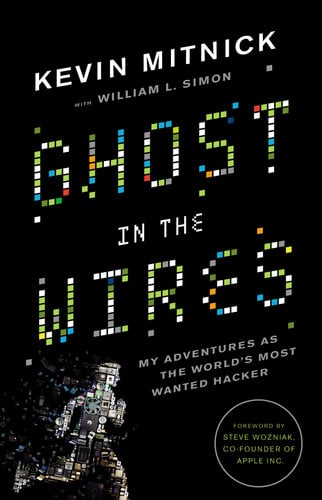
Ghost in the wires: my adventures as the world's most wanted hacker

Mitnick, Kevin
Kevin Mitnick was the most elusive computer break-in artist in history. He accessed computers and networks at the world's biggest companies--and however fast the authorities were, Mitnick was faster, sprinting through phone switches, computer systems, and cellular networks. He spent years skipping through cyberspace, always three steps ahead and labeled unstoppable. But for Kevin, hacking wasn't just about technological feats-it was an old fashioned confidence game that required guile and deception to trick the unwitting out of valuable information. Driven by a powerful urge to accomplish the impossible, Mitnick bypassed security systems and blazed into major organizations including Motorola, Sun Microsystems, and Pacific Bell. But as the FBI's net began to tighten, Kevin went on the run, engaging in an increasingly sophisticated cat and mouse game that led through false identities, a host of cities, plenty of close shaves, and an ultimate showdown with the Feds, who would stop at nothing to bring him down. Ghost in the Wires is a thrilling true story of intrigue, suspense, and unbelievable escape, and a portrait of a visionary whose creativity, skills, and persistence forced the authorities to rethink the way they pursued him, inspiring ripples that brought permanent changes in the way people and companies protect their most sensitive information
Little, Brown and Company 2011-08-15 413 pages

Sum Forty Tales from the Afterlives

David Eagleman
Sum is a stunning exploration of funny and unexpected afterlives that have never been considered--each presented as a vignette that offers a lens through which to see ourselves here and now. In one afterlife you may find that God is the size of a microbe and is unaware of your existence. In another, you work as a background character in other people's dreams. Or you may find that the afterlife contains only those people whom you remember. The stories in Sum are rooted in romance, science, and awe: a mixture of death, hope, computers, immortality, love, biology, and desire that cuts through human nature at new and exciting angles.
Penguin Books Canada 2009-02-17 128 pages