160 results for "Data Science"

Feynman lectures on computation

Feynman, Richard P.
From 1983 to 1986, the legendary physicist and teacher Richard Feynman gave a course at Caltech called “Potentialities and Limitations of Computing Machines.”Although the lectures are over ten years old, most of the material is timeless and presents a “Feynmanesque” overview of many standard and some not-so-standard topics in computer science. These include computability, Turing machines (or as Feynman said, “Mr. Turing's machines”), information theory, Shannon's Theorem, reversible computation, the thermodynamics of computation, the quantum limits to computation, and the physics of VLSI devices. Taken together, these lectures represent a unique exploration of the fundamental limitations of digital computers.Feynman's philosophy of learning and discovery comes through strongly in these lectures. He constantly points out the benefits of playing around with concepts and working out solutions to problems on your own-before looking at the back of the book for the answers. As Feynman says in the lectures: “If you keep proving stuff that others have done, getting confidence, increasing complexities of your solutions-for the fun of it-then one day you'll turn around and discovers that nobody actually did that one! And that's the way to become a computer scientist.”
Addison-Wesley 1996-09-08 303 pages

Multilevel statistical models

Goldstein, Harvey
This book provides a clear introduction to this important area of statistics. The author provides a wide of coverage of different kinds of multilevel models, and how to interpret different statistical methodologies and algorithms applied to such models. This 4th edition reflects the growth and interest in this area and is updated to include new chapters on multilevel models with mixed response types, smoothing and multilevel data, models with correlated random effects and modeling with variance.
Wiley 2011-01 358 pages

The ecology of human development: experiments by nature and design

Bronfenbrenner, Urie
Here is a book that challenges the very basis of the way psychologists have studied child development. According to Urie Bronfenbrenner, one of the world’s foremost developmental psychologists, laboratory studies of the child’s behavior sacrifice too much in order to gain experimental control and analytic rigor. Laboratory observations, he argues, too often lead to “the science of the strange behavior of children in strange situations with strange adults for the briefest possible periods of time.” To understand the way children actually develop, Bronfenbrenner believes that it will be necessary to observe their behavior in natural settings, while they are interacting with familiar adults over prolonged periods of time. This book offers an important blueprint for constructing such a new and ecologically valid psychology of development. The blueprint includes a complete conceptual framework for analysing the layers of the environment that have a formative influence on the child. This framework is applied to a variety of settings in which children commonly develop, ranging from the pediatric ward to daycare, school, and various family configurations. The result is a rich set of hypotheses about the developmental consequences of various types of environments. Where current research bears on these hypotheses, Bronfenbrenner marshals the data to show how an ecological theory can be tested. Where no relevant data exist, he suggests new and interesting ecological experiments that might be undertaken to resolve current unknowns. Bronfenbrenner’s groundbreaking program for reform in developmental psychology is certain to be controversial. His argument flies in the face of standard psychological procedures and challenges psychology to become more relevant to the ways in which children actually develop. It is a challenge psychology can ill-afford to ignore.
Harvard University Press 1981 330 pages

The Mind of a Mnemonist A Little Book about a Vast Memory

A R Luria
Product Description The Mind of a Mnemonist is a rare phenomenon―a scientific study that transcends its data and, in the manner of the best fictional literature, fashions a portrait of an unforgettable human being. Review A distinguished Soviet psychologist's study…[of a] young man who was discovered to have a literally limitless memory and eventually became a professional mnemonist. Experiments and interviews over the years showed that his memory was based on synesthesia (turning sounds into vivid visual imagery), that he could forget anything only by an act of will, that he solved problems in a peculiar crablike fashion that worked, and that he was handicapped intellectually because he could not make discriminations, and because every abstraction and idea immediately dissolved into an image for him. It is all fascinating and delightful. ( New Yorker) Luria's essay is a model of lucid presentation and is an altogether convincing description of a man whose whole personality and fate was conditioned by an intellectual idiosyncrasy. ( Times Literary Supplement) [A] compassionate and vivid portrait. ( Los Angeles Times Book Review) A welcome re-issue of an English translation of Alexander Luria's famous case-history of hypermnestic man. The study remains the classic paradigm of what Luria called 'romantic science,' a genre characterized by individual portraiture based on an assessment of operative psychological processes. The opening section analyses in some detail the subject's extraordinary capacity for recall and demonstrates the association between the persistence of iconic memory and a highly developed synaesthesia. The remainder of the book deals with the subject's construction of the world, his mental strengths and weaknesses, his control of behaviour and his personality. The result is a contribution to literature as well as to science. ( Psychological Medicine) About the Author A. R. Luria was Professor of Psychology at Lomonosov Moscow State University. Jerome Bruner is University Professor at New York University.
Harvard University Press 1989-12 160 pages

The American occupational structure

Blau, Peter Michael
Peter M. Blau and Otis Dudley Duncan pen a classic source of empirical information on the patterns of occupational achievement in American society. Based on an unusually comprehensive set of data, The American Occupational Structure is renowned for its pioneering methods of statistical analysis, as well as its far-reaching conclusions about social stratification and occupation mobility in the United States. Presenting “sociology at its scientific best” (Fortune), The American Occupation Structure received the Sorokin Award of the American Sociological Association in recognition of its significant contribution to the social sciences.
Free Press 1978-06-01 520 pages

Why Does My Dog Act That Way? A Complete Guide to Your Dog's Personality

Stanley Coren
We've shared our lives with dogs for thousands of years, but they still act in ways that baffle us. To help us understand them better, Dr. Stanley Coren, the undisputed expert on dog behavior, intelligence, and training, tells the story of how dogs evolved over time into the myriad forms and breeds we love today. Not simply domesticated wolves, dogs are actually much more complex than wild canines; their ability to adapt to a man-made world is far more flexible, their personalities far more diverse. Fascinating findings reveal which breeds were bred to become more dominant, affectionate, cooperative, or even dangerous. This practical, surprising book also presents -- for the first time -- the "Dog Behavior Inventory," a simple, fun test based on the personality-profiling questionnaires used in human psychological studies that you can administer to your own dog to get a detailed picture of his personality and how he compares to other members of his breed. Then, using the findings of the U.S. Army's once- classified studies of "Superdogs," you can train your pet to become a real-life equivalent of Lassie and Rin Tin Tin -- a dog who is not disturbed, angered, or frightened by anything. Filled with the entertaining anecdotes and scientific data that Dr. Coren's avid followers have come to expect and enjoy, this uniquely complete guide to dog psychology can help you to select a new companion and to understand and communicate better with your old friend.
Simon and Schuster 2007-12-04 304 pages

The language of thought

Fodor, Jerry A.
In a compelling defense of the speculative approach to the philosophy of mind, Jerry Fodor argues that, while our best current theories of cognitive psychology view many higher processes as computational, computation itself presupposes an internal medium of representation. Fodor’s prime concerns are to buttress the notion of internal representation from a philosophical viewpoint, and to determine those characteristics of this conceptual construct using the empirical data available from linguistics and cognitive psychology.
The Harvester Press 1978 214 pages

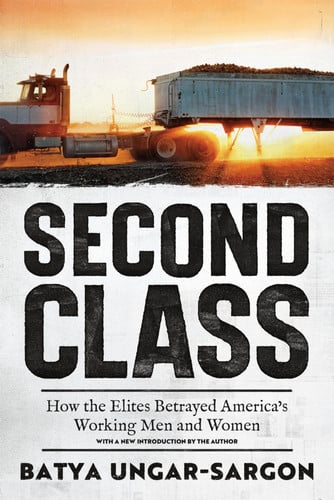
Second class: how the elite betrayed America's working men and women

Ungar-Sargon, Batya
A personal, journalistic ethnography of the modern American working class, based on the travels and interactions of the author through the American heartland. " Second Class is the most important book you will read all year. A political realignment is coming, and it's my hope that the end result will work in favor of our all-too-neglected American working class. When that realignment comes, Batya and her book will help lead the way." --Greg Lukianoff, CEO of the Foundation for Individual Rights in Education, and co-author of The Coddling of the American Mind Who is the American working class? Do they still have a fair shot at the American Dream? What do they think about their chances to secure the hallmarks of a middle-class life? While writing this book, Batya Ungar-Sargon visited states across the nation to speak with members of the American working class who are fighting tooth and nail to survive. In Second Class , working-class Americans of all races, political orientations, and occupations share their stories--cleaning ladies, health care aides, cops, truck drivers, fast food workers, electricians, and more. In their own words, these working-class Americans explain the struggles and triumphs of their increasingly precarious lives--as well as what policies they think would improve them. Second Class combines deep reporting with a look at the data and expert opinions on America's emergent class divide, in which the most basic elements of a secure and stable life are increasingly out of reach for those without a college education. America has broken its contract with its laboring class. So, how do we get back to the American Dream? How do we once again become the land of opportunity, the promised land, where hard work and commitment to family are enough to protect you from poverty? It's not that hard actually. All it would take, as this book illustrates, is for those in power to once again respect the dignity of work--and the American worker.
Encounter Books 2025 248 pages

Rethinking Thin The New Science of Weight Loss--and the Myths and Realities of Dieting

Gina Kolata
A New York Times Book Review Editors' Choice In this eye-opening report, New York Times science writer Gina Kolata shows that our society's obsession with dieting is less about keeping trim and staying healthy than about money, power, trends, and impossible ideals. Kolata's account of four determined dieters in a study comparing the Atkins diet to a low-calorie one becomes a broad tale of science and society, of social mores and social sanctions, and of the place of diets in American society. Brimming with anecdote, scientific data, and common sense, Rethinking Thin offers a challenge to the conventional wisdom about diets and weight loss.
Picador 2008-04-29 272 pages

The Nature of Mathematical Modeling (Cambridge Series on Information and the Natural Sciences)

Gershenfeld, Neil
This book first covers exact and approximate analytical techniques (ordinary differential and difference equations, partial differential equations, variational principles, stochastic processes); numerical methods (finite differences for ODE's and PDE's, finite elements, cellular automata); model inference based on observations (function fitting, data transforms, network architectures, search techniques, density estimation); as well as the special role of time in modeling (filtering and state estimation, hidden Markov processes, linear and nonlinear time series). Each of the topics in the book would be the worthy subject of a dedicated text, but only by presenting the material in this way is it possible to make so much material accessible to so many people. Each chapter presents a concise summary of the core results in an area, providing an orientation to what they can (and cannot) do, enough background to use them to solve typical problems, and pointers to access the literature for particular applications.
Cambridge University Press 2011-09-30

Cracking the Bible code

Satinover, Jeffrey
Cracking the Bible Code is the true account of the most amazing scientific research ever undertaken. References to important names, dates, and historical events have been found encoded in the book of Genesis. No individual could have known this informationfrom what grew in the garden of Eden to details of the Gulf War. Mystics and sages have long held that these codes existed, proving God's direct hand in all that was and is to be. Incredible? Yes. But some of today's greatest scientific minds have been unable as yet to disprove the codes.If the codes are genuine, they will forever change our view of God, faith, and our fate. Cracking the Bible Code explores the extraordinary possibilities and the furor surrounding the codes in a riveting story that is equal parts holy quest, Byzantine intrigue, and cutting-edge science.
W. Morrow 1997-10-08 346 pages

Genetic Algorithms

David E. Goldberg
This book, suitable for both course work and self-study, brings together for the first time, in an informal, tutorial fashion, the computer techniques, mathematical tools, and research results that will enable both students and practitioners to apply genetic algorithms to problems in many fields: programmers, scientists, engineers, mathematicians, statisticians and management scientists will all find interesting possibilities here. Major concepts are illustrated with running examples, and major algorithms are illustrated by Pascal computer programs. Chapter concludes with exercises and computer assignments. No prior knowledge of Gas or genetics is assumed.
Pearson Education India 2013-02 412 pages

Statistical Learning Theory

Vladimir Naumovich Vapnik
A comprehensive look at learning and generalization theory. The statistical theory of learning and generalization concerns the problem of choosing desired functions on the basis of empirical data. Highly applicable to a variety of computer science and robotics fields, this book offers lucid coverage of the theory as a whole. Presenting a method for determining the necessary and sufficient conditions for consistency of learning process, the author covers function estimates from small data pools, applying these estimations to real-life problems, and much more.
Wiley 1998 736 pages

Quantum mechanics: the theoretical minimum

Susskind, Leonard,Friedman, Art
From the bestselling author of "The Theoretical Minimum," a DIY introduction to the math and science of quantum physics. First he taught you classical mechanics. Now, physicist Leonard Susskind has teamed up with data engineer Art Friedman to present the theory and associated mathematics of the strange world of quantum mechanics. In this follow-up to "The Theoretical Minimum," Susskind and Friedman provide a lively introduction to this famously difficult field, which attempts to understand the behavior of sub-atomic objects through mathematical abstractions. Unlike other popularizations that shy away from quantum mechanics' weirdness, "Quantum Mechanics" embraces the utter strangeness of quantum logic. The authors offer crystal-clear explanations of the principles of quantum states, uncertainty and time dependence, entanglement, and particle and wave states, among other topics, and each chapter includes exercises to ensure mastery of each area. Like "The Theoretical Minimum," this volume runs parallel to Susskind's eponymous Stanford University-hosted continuing education course. An approachable yet rigorous introduction to a famously difficult topic, "Quantum Mechanics" provides a tool kit for amateur scientists to learn physics at their own pace.
Basic Books 2014 364 pages

Cuomo The Dark Prince Returns

Ross Barkan
As Andrew Cuomo storms back into the spotlight, this sharp political takedown exposes the machinery behind his return-and what it says about power, memory, and the state of New York politics. Andrew Cuomo was supposed to be finished. After resigning in disgrace--accused by at least 11 women of sexual harassment and facing near-certain impeachment--New York's three-term governor vanished from public view. Now, in 2025, he's back. Cuomo is leading the polls in the New York City mayoral race, poised to reclaim power and write his own second act. This new edition of The Prince unpacks Cuomo's long, bruising reign as governor and the forces that have enabled his climb back toward the spotlight. Barkan traces how Cuomo, once hailed as a pandemic hero, presided over a staggering public health failure--manipulating data, sending infected patients back into nursing homes, and pocketing a $5 million book deal for his self-mythologizing memoir. Cuomo: Return of the Dark Prince is a portrait of a man who refuses to go away--and a city that might just let him back in.
OR Books, LLC 2025-06-10 220 pages

Special Relativity and Classical Field Theory The Theoretical Minimum

Leonard Susskind,Art Friedman
A funny, insightful, and self-contained guide to Einstein's relativity theory and classical field theories--including electromagnetism Physicist Leonard Susskind and data engineer Art Friedman are back. This time, they introduce readers to Einstein's special relativity and Maxwell's classical field theory. Using their typical brand of real math, enlightening drawings, and humor, Susskind and Friedman walk us through the complexities of waves, forces, and particles by exploring special relativity and electromagnetism. It's a must-read for both devotees of the series and any armchair physicist who wants to improve their knowledge of physics' deepest truths.
Basic Books 2019-05-07 448 pages

Computer age statistical inference: algorithms, evidence, and data science

Efron, Bradley,Hastie, Trevor
The twenty-first century has seen a breathtaking expansion of statistical methodology, both in scope and influence. 'Data science' and 'machine learning' have become familiar terms in the news, as statistical methods are brought to bear upon the enormous data sets of modern science and commerce. How did we get here? And where are we going? How does it all fit together? Now in paperback and fortified with exercises, this book delivers a concentrated course in modern statistical thinking. Beginning with classical inferential theories - Bayesian, frequentist, Fisherian - individual chapters take up a series of influential topics: survival analysis, logistic regression, empirical Bayes, the jackknife and bootstrap, random forests, neural networks, Markov Chain Monte Carlo, inference after model selection, and dozens more. The distinctly modern approach integrates methodology and algorithms with statistical inference. Each chapter ends with class-tested exercises, and the book concludes with speculation on the future direction of statistics and data science.
Cambridge University Press 2021-06-17 491 pages

Data Science and Digital Business

Fausto Pedro García Márquez,Benjamin Lev
This book combines the analytic principles of digital business and data science with business practice and big data. The interdisciplinary, contributed volume provides an interface between the main disciplines of engineering and technology and business administration. Written for managers, engineers and researchers who want to understand big data and develop new skills that are necessary in the digital business, it not only discusses the latest research, but also presents case studies demonstrating the successful application of data in the digital business.
Springer International Publishing 2019-01-16 316 pages

GIS for science: applying mapping and spatial analytics. Volume 2

Diamond, Jared M.
"GIS for Science presents a collection of real-world stories about modern science and a cadre of scientists who use mapping and spatial analytics to expand their understanding of the world. The accounts in this book are written for a broad audience including professional scientists, the swelling ranks of citizen scientists, and people generally interested in science and geography. Scientific data are brought to life with GIS technology to study a range of issues relevant to the functioning of planet Earth in a natural sense as well as the impacts of human activity. In a race against the clock, the scientists profiled in this volume are using remote sensing, web maps, Esri StoryMaps, and spatial analysis to document an array of issues with a geographic dimension that range from climate change, natural disasters, and loss of biodiversity, to political strife, polar ice loss, and resource shortages. These stories present GIS ideas and inspiration that users can apply across many disciplines, making this volume relevant to diverse scientific audience. See how scientists working on the world's most pressing problems apply geographic information systems--GIS." -- Provided by publisher.
Esri Press 2020 203 pages

The ethics of influence: government in the age of behavioral science

Sunstein, Cass R.
"In recent years, 'Nudge Units' or 'Behavioral Insights Teams' have been created in the United States, the United Kingdom, Germany, and other nations. All over the world, public officials are using the behavioral sciences to protect the environment, promote employment and economic growth, reduce poverty, and increase national security. In this book, Cass R. Sunstein, the eminent legal scholar and best-selling co-author of Nudge, breaks new ground with a deep yet highly readable investigation into the ethical issues surrounding nudges, choice architecture, and mandates, addressing such issues as welfare, autonomy, self-government, dignity, manipulation, and the constraints and responsibilities of an ethical state. Complementing the ethical discussion, The Ethics of Influence: Government in the Age of Behavioral Science contains a wealth of new data on people's attitudes towards a broad range of nudges, choice architecture, and mandates"--
Cambridge University Press 2016-08-24 224 pages